The Openness of God (1994): Summary and Catholic Response
On This Page
When I was a junior at Ouachita Baptist University, I encountered The Openness of God while researching my undergraduate honors thesis on open theism. I was predisposed to like it. The book seemed to take the biblical text seriously, to defend human freedom robustly, and to offer a model of divine omniscience that didn’t require the hard metaphysical machinery of Molinism or the apparent fatalism of Calvinism. It was, I thought, the Goldilocks position—just right. Years later, after doctoral study, ordination, and eventually my conversion to Catholicism, I’ve come to see the book rather differently. Not as a false start, exactly, but as a sophisticated attempt to solve a genuine theological problem using tools that turn out to be inadequate to the task. This essay is both a summary of what the book argues and a reflection on why, for all its merits, it cannot be squared with Catholic doctrine or with the deeper resources of the classical theistic tradition it sought to reform.
Background and Intention
The Openness of God: A Biblical Challenge to the Traditional Understanding of God appeared in 1994 from InterVarsity Press. The book’s five authors—Clark Pinnock, Richard Rice, John Sanders, William Hasker, and David Basinger—came from evangelical Protestant backgrounds and were responding to what they perceived as a crisis in evangelical theology: the apparent incompatibility between divine omniscience as traditionally conceived and genuine human libertarian freedom.1 Rather than accept either strict Calvinist determinism or the Molinist middle knowledge framework, they proposed something radical for the evangelical context: that God knows the present and the past exhaustively, but the future remains genuinely open—known to God not as something fixed but as a landscape of possibilities, some of which will be actualized by free creatures.
The 1994 volume did not originate these ideas. Richard Rice had published The Openness of God: The Relationship of Divine Foreknowledge and Human Free Will in 1980 through Review and Herald Publishing, introducing both the term and the core theological framework that would name the movement. William Hasker’s God, Time, and Knowledge (Cornell University Press, 1989) built the rigorous philosophical case five years before the collaborative volume. Pinnock himself contributed “God Limits His Knowledge” to Predestination and Free Will: Four Views (IVP, 1986). Philosophers including Peter Geach, Richard Swinburne, and J. R. Lucas had advanced compatible ideas even earlier. As Manuel Schmid documents in God in Motion (Baylor, 2021), the “formative period of open theism” ran from 1980 to 1994, with the 1994 book marking the beginning of the “period of controversy.” The volume is best understood as a manifesto that brought pre-existing ideas to mainstream evangelical attention, catalyzing widespread debate rather than originating the movement.
The book was not simply academic theology. It was written with pastoral concern. The authors worried that classical divine foreknowledge robbed prayer of meaning, made God complicit in evil, and rendered human suffering incomprehensible. They believed open theism could preserve both God’s power and human dignity more faithfully than the alternatives. This combination of intellectual argument and pastoral motivation explains both the book’s appeal and, I would argue, some of its theological oversights.
The Five Chapters
Chapter 1: Richard Rice, “Biblical Support for a New Perspective”
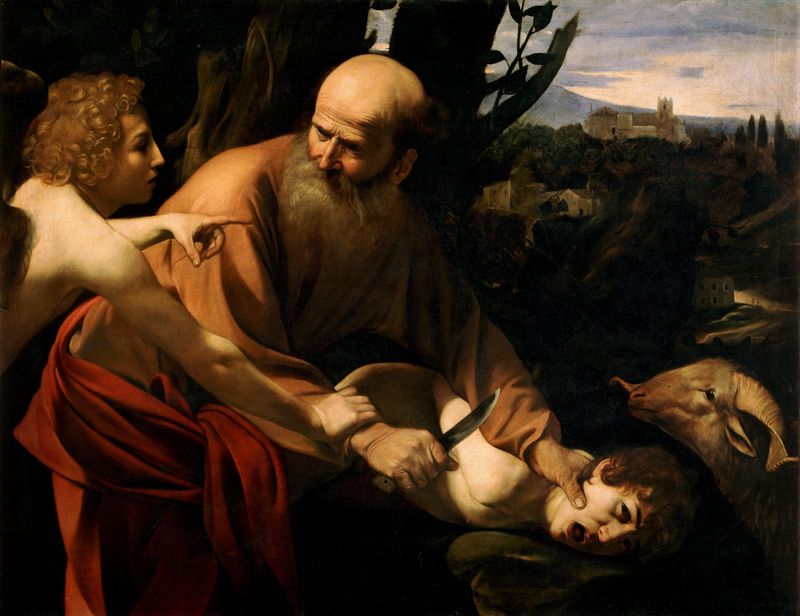
Rice opens by laying out the core problem in biblical and conceptual terms. He argues that the biblical portrait of God reveals a being who responds, who tests creatures to find out what they will do, who expresses genuine surprise and regret. The divine “perhaps” appears throughout Scripture: God tests Abraham not to foreknow his response but to discover it (Genesis 22). God says to Jeremiah that if Judah repents, He will not bring the threatened judgment (18:7-10). The flood narrative presents God as grieved by what He sees in creation, suggesting genuine shock at human wickedness.
Rice’s hermeneutical move is significant. Rather than reading these passages as anthropomorphic accommodations to human understanding—the traditional approach—he takes them at face value as evidence that God’s knowledge of the future is literally responsive and provisional. God knows what will happen if certain conditions obtain, but not the absolute future, because the future contains genuinely open possibilities that depend on libertarian free choices.
The chapter is theologically sophisticated, engaging both biblical exegesis and analytic philosophy. Yet it makes assumptions that Catholic theology, drawing on Augustine and Aquinas, would immediately question: the assumption that “real knowledge” must work the way human knowledge works, moving from past to present to future; the assumption that God’s knowledge must operate through time rather than from above it; the assumption that divine simplicity (the doctrine that God is not composed of parts, including the parts of knowledge and being) is less important than preserving a particular conception of freedom.
Chapter 2: John Sanders, “God’s Strategy in the World”
Sanders provides the historical argument. He traces how classical theism developed out of the synthesis of Christian theology and Greek philosophy, particularly Neoplatonism. He argues that the concept of divine impassibility, immutability, and omniscience—as traditionally understood—owe more to Aristotle’s eternal, unmoved mover than to the God of Abraham, Isaac, and Jacob. Classical theism, in Sanders’s analysis, is a hellenization of biblical faith, a compromise with pagan philosophy that evacuated God of the dynamic responsiveness that characterizes the biblical narrative.
This historical narrative has real force. The influence of Middle Platonism on early Christian theology is undeniable. Yet Sanders conflates two distinct questions: (1) whether Greek philosophy influenced Christian theology (yes), and (2) whether that influence was malign or produced incoherence (this requires more nuance). Aquinas, for instance, was deeply influenced by Aristotle yet produced a synthesis that Thomists argue integrates divine transcendence and biblical responsiveness without the atomization of the divine nature that Sanders fears. Moreover, Sanders sometimes treats patristic theology as more straightforwardly biblical-personalist than it actually was—Augustine’s doctrine of predestination, for instance, is far closer to Calvin than to open theism.
Chapter 3: Clark Pinnock, “A Systematic Theology of the Open God”
Pinnock offers the constructive theological vision. He argues that God’s omniscience should be reconceived: not as the knowledge of a totality of facts about a fully determined future, but as knowledge of all possibilities and all actualities, with the future known only as an open landscape of contingencies. God is omniscient in that nothing actual escapes His knowledge and no possibility is hidden from Him—but His knowledge matches reality. Since the future is genuinely open, God cannot know it as actual. This is not a limit on God’s power but a reflection of God’s perfect conformity to reality as it actually is.
Pinnock further reconceives the traditional divine attributes. Omnipotence means the ability to do all that is possible, not the ability to force libertarian free choices (which would be a logical contradiction, in Pinnock’s view, since a forced choice is a contradiction in terms). Immutability can be preserved in God’s character and purposes even if God’s knowledge and actions change in response to creature behavior. Impassibility is reinterpreted: God may be impassive in the sense of being emotionally invulnerable, but God is not passionless—the divine nature includes suffering love that enters genuinely into the pain of creation.
This is intellectually bold and emotionally compelling. And yet it rests on philosophical assumptions that the classical tradition would reject. The claim that “God cannot know libertarian free choices before they occur” treats logical possibility and God’s omnipotence very differently than classical theism does. Thomas Aquinas would argue that God’s eternity—His existence outside time—allows Him to know all moments simultaneously without determining them, and that the laws of logic bind creatures but not God’s mode of knowing.2 Pinnock’s framework, by contrast, assumes that God must know the way creatures know (sequentially, through time) and that God’s knowledge must have the same structure as human knowledge, only more extensive.
Chapter 4: William Hasker, “Divine Foreknowledge and Human Freedom: A Philosophical Problem”
Hasker, a trained analytic philosopher, defends open theism against what he sees as the fundamental incoherence of traditional foreknowledge. He argues that if God knows infallibly that I will choose X, then it is logically impossible for me not to choose X. If it is logically impossible for me not to choose X, then my choice is not free in the libertarian sense. Therefore, either God’s foreknowledge must be qualified (as open theism holds) or human freedom must be compromised.
Hasker examines and rejects the Molinist solution—that God knows counterfactuals of creaturely freedom (what each creature would freely do in any situation) and uses this knowledge to ordain a world in which His purposes are accomplished while creatures remain free. Hasker contends that this merely pushes the problem back: if God knows that in circumstances C I would freely choose X, then given that God creates C, it is again logically necessary that I choose X.
This is the argument that originally persuaded me. It seems airtight. Yet the classical response—whether Thomistic or Molinist—would argue that Hasker’s reasoning works only if we assume that God knows the way humans know, in a temporal sequence. If God’s knowledge is eternal and intuitive rather than discursive, if God’s “knowing” that I will freely choose X is not prior to but coexistent with my actual free choice in time, then there is no logical compulsion. God knows what I freely will, but the knowledge does not determine the willing. This requires accepting divine simplicity and a more robust doctrine of God’s transcendence than Hasker’s framework allows.
Chapter 5: David Basinger, “Practical Implications: Prayer, Providence, and Evil”
Basinger brings the abstract theology into pastoral focus. He argues that open theism better preserves the meaningfulness of prayer. If the future is open, then prayer is not merely bringing our desires into alignment with what God has already eternally decreed; prayer genuinely changes what will occur. God sometimes does not know what humans will choose, and our prayers, by changing our choices or by prompting God to intervene, can change the future. This restores petitionary prayer to genuine causal efficacy.
Similarly, open theism promises a better theodicy. The problem of evil—why does a good, omnipotent, omniscient God permit evil?—becomes less intractable if God’s foreknowledge is limited. God did not permit a particular evil while foreknowing with certainty that it would occur; rather, God created a world where freedom was possible, and tragedy emerged from creature choices that even God could not have infallibly predicted. This preserves God’s goodness while explaining why God does not prevent all evil.
These pastoral intuitions have weight. Yet they rest on a confusion. The Catholic tradition does not teach that prayer is meaningless or that petitionary prayer cannot change the course of events. But it locates the efficacy of prayer not in informing God of unknown futures but in our cooperation with God’s provident will. When we pray, we are incorporated into God’s plan; our prayer is part of how God ordains that events unfold. Moreover, the theodicy offered by open theism is arguably weaker than the Catholic and classical approaches, which can appeal to the mystical value of redemptive suffering, to divine permission ordered toward goods beyond our comprehension, and to the eschatological hope that all evil will be vindicated in light of the resurrection. Open theism, with its emphasis on creature autonomy, seems harder pressed to explain why God permits evils that serve no purpose for the creature who suffers them.
Catholic Evaluation: What the Book Gets Right
I am not unsympathetic to The Openness of God. Indeed, I think it deserves credit for three things that Catholic theologians should acknowledge.
First, the book takes Scripture seriously. It refuses to dismiss the anthropomorphic passages—the divine repentance, the testing, the divine “perhaps”—as mere accommodation. This takes biblical text at face value in a way that honors the density and strangeness of revelation. Catholic theology does not require that we read these passages as anthropomorphism, only that we integrate them with the doctrine of God’s eternity and immutability, which the book treats too quickly as alien to the biblical vision.
Second, the book raises a real philosophical problem. The relationship between divine omniscience and human freedom is genuinely difficult, and the authors deserve credit for refusing to pretend it is simpler than it is. Many evangelical treatments of the issue rely on hand-waving or appeal to mystery in ways that shut down inquiry. Pinnock, Hasker, and the others engage the logic honestly, and they show why naive divine omniscience (the idea that God simply knows all facts, and this exhaustive knowledge is compatible with freedom) seems to entail determinism. Even if open theism’s solution fails, it succeeds in sharpen the question.
Third, the book exemplifies intellectual charity. The authors disagree with classical theists, Calvinists, and Molinists, but they do not caricature these positions. They engage the strongest versions of these views and explain where and why they believe those views fail. This is how theological disagreement should be conducted.
What the Book Gets Wrong
Yet these virtues do not overcome what I now see as fundamental flaws.
The most serious is that open theism contradicts defined Catholic dogma. The First Vatican Council teaches that God “with one eternal and changeless act of knowledge sees all things—past, present, and future.”3 This is not peripheral doctrine; it follows from the core claims that God is eternal, immutable, and utterly simple. A Catholic theologian may engage open theism as a philosophical alternative worthy of study, but she cannot assent to it as true. The arguments advanced in The Openness of God do not overturn this defined doctrine; they simply reveal the cost of accepting open theism: you must reject divine simplicity, eternity, and immutability as classically understood.
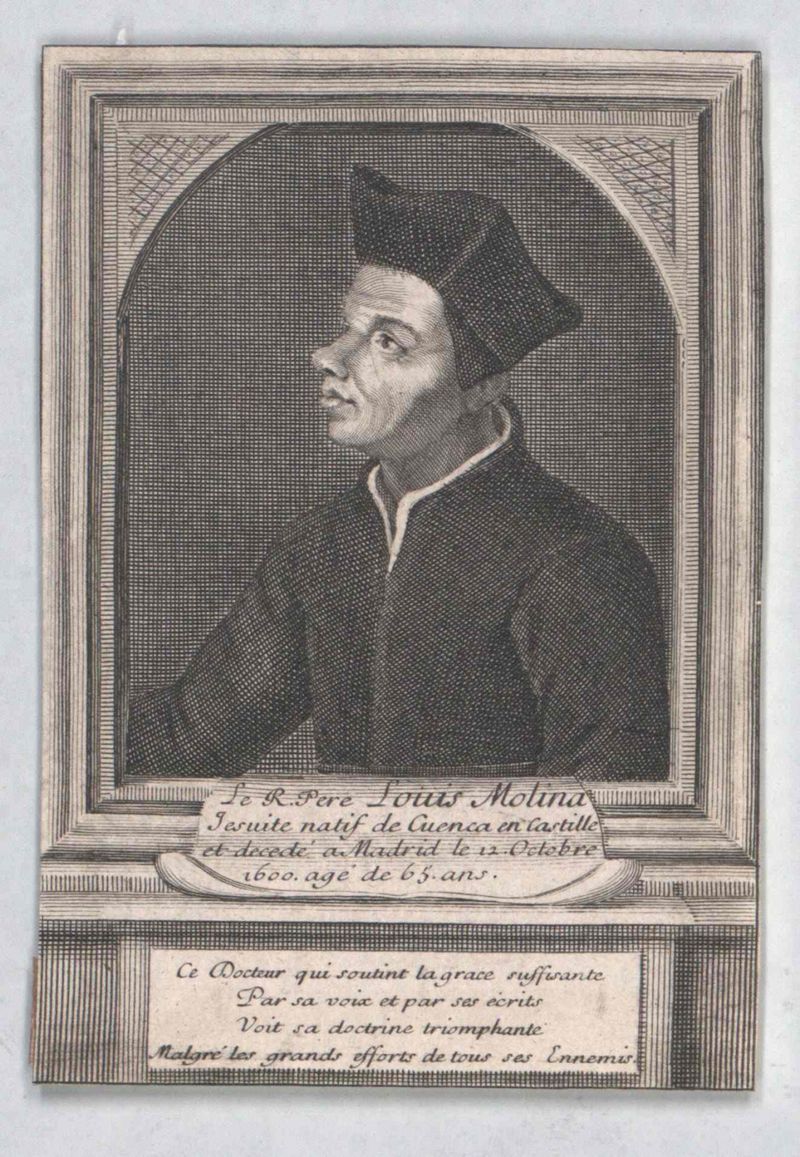
Second, the book underestimates the resources of the classical theistic tradition. I was an open theist precisely because I did not yet understand Thomism or Molinism deeply. Both of these approaches—the divine timelessness of Aquinas and the middle knowledge of Molina—offer sophisticated responses to the problem Hasker identifies. They explain how God’s knowledge can be exhaustive and infallible while human choices remain free. The explanations require accepting claims about eternity, immutability, and divine simplicity that open theism rejects. But that is not a failure of classical theism; it is a feature. These doctrines are intrinsic to Christian orthodoxy, affirmed in the early councils and refined through medieval theology. Open theism’s implicit claim is that these classical doctrines must be jettisoned to preserve freedom. The classical theist’s claim is that these doctrines are not obstacles to freedom but rather the conditions for understanding what freedom really is.
Third, the book dismisses too quickly the patristic tradition. Sanders argues that the patristic fathers were less committed to classical metaphysics than later medieval theology, and therefore that open theism is closer to patristic faith. But this is tendentious. The Cappadocian fathers affirmed God’s immutability and eternity. Augustine developed a philosophy of divine knowledge and predestination that is, in many respects, closer to Aquinas and Calvin than to open theism. The patristic tradition is richer and more various than Sanders acknowledges, and its resources for thinking about divine knowledge and human freedom are not exhausted by the dichotomy open theism proposes.
Fourth, the book’s philosophical framework is not as secure as it appears. The claim that “God cannot know a libertarian free choice before it occurs” is treated as self-evident, but it is not. It rests on assumptions about the nature of knowledge, causality, and time that are contestable. One can coherently hold that God knows timelessly (not “before”) all things, including free choices, without determining those choices, if one accepts that God’s eternity transcends temporal sequence. This requires more metaphysical commitment than open theism demands, but it is not irrational.
The Book’s Legacy
The Openness of God succeeded in bringing open theism to mainstream evangelical attention, catalyzing a period of intense controversy. Open theism became, for a time, a significant force in evangelical and free church theology. It attracted serious scholars like Greg Boyd and D.J. Bartholomew. It provoked the Evangelical Theological Society into debates about its creedal commitments and whether open theists should be expelled for denying omniscience.4 The book became the foundational text for anyone wanting to understand the position, consulted by seminarians and pastors grappling with theodicy and prayer.
In academia, however, the book’s influence has waned. Analytic philosophers of religion—both Christian and secular—have continued to debate the problem Hasker identifies, with significant voices arguing it can be solved without open theism through appeals to divine timelessness (Stump, Craig) or through a more rigorous analysis of the logical coherence of Molinism (Flint, Pruss). At the same time, prominent analytic philosophers including Peter Van Inwagen, Richard Swinburne, and Hasker himself have continued to defend open theism, and the question remains a live and contested debate in the field.
The pastoral motivations behind the book remain live, however. Theodicy, the meaning of prayer, and the reality of human freedom continue to trouble Christian believers, particularly when they encounter serious suffering or when they reflect on divine love. Open theism will continue to attract those who feel that classical theism cannot adequately address these concerns. But the solution it proposes requires theological costs—the loss of divine simplicity, eternity, immutability—that most Christians, and all Catholics, will judge too high.
Personal Reflection
I began this essay by noting that I read The Openness of God as an undergraduate, found it compelling, and built my honors thesis around it. What changed? Not my love of Scripture or my commitment to human freedom, but my understanding of the classical tradition and my encounter with Catholic theology.
As an evangelical, I was taught that classical theism meant Calvinist determinism or, at best, an impersonal deity shaped by Greek philosophy. No one taught me Augustine carefully, or Aquinas, or the Molinist tradition within Catholicism. I assumed that defending human freedom required rejecting classical metaphysics. But this was an assumption born of ignorance.
When I began doctoral study at a Catholic seminary, I encountered theologians who were thoroughly classical—affirming divine simplicity, eternity, and immutability—while taking human freedom, biblical narrative, and theodicy with utmost seriousness. I discovered that Aquinas’s doctrine of providence is not less biblical than open theism’s; it is more penetrating. And I learned that the problem open theism attempts to solve can be solved without sacrificing the classical doctrines that safeguard God’s transcendence and the unity of the divine nature.
This is not to say that open theism has nothing to teach Catholic theology. It demonstrates, forcefully, that any adequate theistic account must take seriously the biblical language of divine responsiveness, must preserve a robust account of human freedom, must address the pastoral reality of prayer and suffering. These concerns cannot be dismissed as merely anthropomorphic or relegated to the pastoral order. They must be integrated into systematic theology, which is precisely what Catholic theology attempts to do through the synthesis of Aquinas, Scotus, Molina, and the later scholastics.
The Openness of God is a book I continue to recommend to students and seminarians, not because I believe open theism is true, but because it models serious theological thinking about hard problems. And it reminds us that if classical theism cannot make room for genuine human freedom, biblical responsiveness, and the efficacy of prayer, then classical theism has failed. The claim of Catholic theology is not that open theism is the only alternative; it is that open theism is not necessary, because the classical tradition, properly understood, provides resources for addressing all of these concerns while preserving the deeper truths on which the faith depends.
Further Reading
- Clark Pinnock et al., The Openness of God: A Biblical Challenge to the Traditional Understanding of God (InterVarsity Press, 1994).
- Greg Boyd, God of the Possible: A Biblical Introduction to the Open View of God (Baker Books, 2000).
- D.J. Bartholomew, God, Chance, and Purpose (Cambridge University Press, 2008).
- Thomas G. Weinandy, Does God Suffer? (University of Notre Dame Press, 2000).
- Eleonore Stump, Aquinas (Routledge, 2003), chapters 4-5 on divine knowledge and predestination.
- Alfred Freddoso, “Introduction” to Luis de Molina’s On Divine Foreknowledge (Cornell University Press, 1988).
- Romanus Cessario, “Divine Providence and Human Freedom,” The New Catholic Encyclopedia, 2nd ed. (Catholic University of America Press, 2003).
- Vatican I, Dei Filius, Chapter I (De Deo Rerum Omnium Creatore), on God’s knowledge of all things, including free future acts: vatican.va
Footnotes
- For a comprehensive overview of the philosophical issues surrounding open theism, see the Stanford Encyclopedia of Philosophy entries on "Foreknowledge and Free Will" and "Omniscience," which situate the movement in the broader context of philosophical theology.
- Aquinas argues in *Summa Theologiae* I, q. 14, a. 13 that God's knowledge is not discursive (moving from premise to conclusion) but intuitive and eternal, whereby all moments are present to God simultaneously. This allows for infallible foreknowledge without causation. See also I, q. 19, a. 8, on how God's eternal will embraces all contingencies.
- Vatican Council I, *Dei Filius* (1870), Chapter I (*De Deo Rerum Omnium Creatore*): "Omnia enim nuda et aperta sunt oculis eius, ea etiam, quae libera creaturarum actione futura sunt"—"All things are naked and open to His eyes, even those which by the free action of creatures are in the future." The council defines that God, with one eternal and unchangeable act of knowledge, sees all things—past, present, and future—and this knowledge extends to free human acts.
- The Evangelical Theological Society's debates over open theism occurred primarily in the 1990s and 2000s. In November 2003, the ETS voted on expelling both Clark Pinnock and John Sanders; neither was expelled, as the votes fell short of the required two-thirds supermajority. The controversy revealed tensions over the doctrine of omniscience as a matter of evangelical identity.
- The Cappadocian fathers—Basil the Great, Gregory of Nazianzus, and Gregory of Nyssa—affirmed both God's transcendence and immutability. Their Trinitarian theology, particularly the formula of one *ousia* in three *hypostaseis* ratified at Constantinople I (381), presupposes a divine substance that is immutable, simple, and eternal. See especially Gregory of Nazianzus, *Theological Orations* (Orations 27–31), on the divine attributes.
- For Augustine on divine knowledge and predestination, see *Confessions* XI.13-14 (on time and eternity) and *City of God* V.9-10 (on providence and free will). Augustine is far closer to Aquinas's doctrine of God's eternal act of knowledge than to open theism's vision of a temporally responsive God.
- William Hasker, "A Philosophical Perspective," in *The Openness of God*, 126–154. Hasker's argument assumes what logicians call "the fixity of the past": if it is past that God knew X, then it is now necessary that X be true. This is true of human knowledge but requires careful analysis when applied to God's eternal knowledge. See also Hasker's earlier article "Foreknowledge and Necessity," *Faith and Philosophy* 2, no. 2 (1985): 121–157, which develops the argument in greater technical detail.
- For classical theist responses to theodicy that preserve mystery while affirming both divine omniscience and human freedom, see Eleonore Stump, *Wandering in Darkness: Narrative and the Problem of Suffering* (Oxford University Press, 2010), and David B. Burrell, C.S.C., *Deconstructing Theodicy: Why Job Has Nothing to Say to the Puzzle of Suffering* (Brazos Press, 2008). See also the work of Wendy Doniger on Hindu theodicy as a comparative resource for Christian theologians.
- For Molina's doctrine of middle knowledge, see Luis de Molina, *Liberi Arbitrii cum Gratiae Donis* (1588), Part IV, Disputations 47–53. Molina argues that God has knowledge of counterfactuals of creaturely freedom, by which God knows what each free creature would choose in any possible circumstance. For the standard English translation, see Alfred Freddoso's edition of *On Divine Foreknowledge* (Cornell University Press, 1988).
- The International Philosophical Quarterly and *Modern Theology* have published numerous peer-reviewed articles on the debate between classical theism, Molinism, and open theism since 1995. The prevailing view among many analytic philosophers of religion is that open theism's arguments do not definitively overturn classical positions, though the debate remains active, with prominent defenders on both sides.
Garrett Ham
Garrett Ham is an attorney, military veteran, and holds a Master of Divinity from Yale Divinity School. He writes from Northwest Arkansas on theology, law, and service.
More about Garrett →Related Posts
Open Theism: A Catholic Evaluation
What is open theism? A Catholic evaluation of the open model of God, its scriptural case, philosophical arguments, and why it falls outside defined Catholic dogma.
Greg Boyd's Open Theism: A Catholic Critique
Gregory Boyd is arguably the most publicly visible advocate of open theism. A Catholic evaluation of his major works—God of the Possible, Satan and the Problem of Evil, and Is God to Blame?—and the theological vision they present.
Molinism: Divine Sovereignty and Human Freedom
What is Molinism? Luis de Molina's middle knowledge (scientia media), the De Auxiliis controversy, and how Molinism compares to Thomism and Calvinism.
Stay Informed
Get new writing on faith, law, and service delivered to your inbox.
No spam. Unsubscribe anytime.