My Dinner With Rich Lowry
On This Page
In this post in my series “God and Man at Yale Divinity,” I discuss the fifth week of my second semester at Yale and my dinner with Rich Lowry, editor of National Review.
I just completed the fifth week of my second semester at Yale. As I discussed in my post on the opportunities at Yale Divinity School, the experiences here are remarkable. The highlight of my week—and what may end up being the highlight of my entire time at Yale—was having dinner with Rich Lowry, the editor of National Review.
Rich Lowry’s Lecture and Dinner at Yale
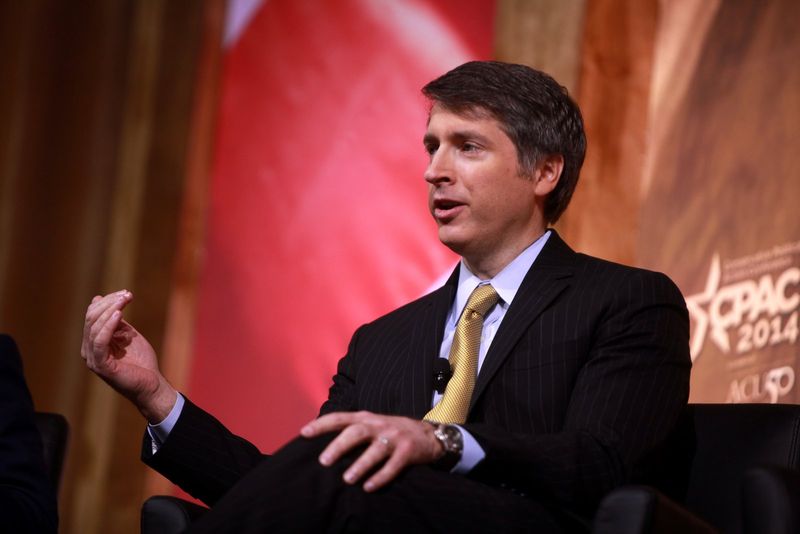
This week, I had dinner with Rich Lowry. It’s hard to think of a better week than that.
On Thursday, Mr. Lowry gave a lecture on nationalism, the subject of his latest book, The Case for Nationalism. The lecture was open to the public, and I, of course, attended. Since I was one of the first four Fellows to show up, I also got a free copy of his new book. So, that’s hard to beat.
The Dinner
After the lecture, Rich Lowry had dinner with a group of select Buckley Fellows. I had to apply to be a part of this group, and, fortunately, I was selected.
I had previously applied to attend a similar dinner with Carlos Eire, one of the few openly conservative professors at Yale, but I did not make the cut. So, I was extremely excited to get in this time.
About fourteen other people were selected to have dinner with Rich Lowry at a local restaurant off the New Haven Green. It was fascinating to listen to Mr. Lowry. He is clearly a brilliant man.
The Icarus Effect
One thing about the dinner that stood out to me, however, was how bold Yale students are. I have always considered listening to be the politest thing you can do.
Rich Lowry allowed us to ask him questions over dinner. I asked him one question about whether he thought the diminishment of nationalist feelings has contributed to the decline of military service among the elites, but that’s all I said the entire night.
Rich Lowry is the editor of the National Review and a protégé of William F. Buckley. As I wrote in my post on America as the greatest country, I believe shared patriotism can unite us, and Lowry’s arguments about nationalism resonated with me. I wanted to hear what he had to say, not push him into responding to what was on my mind.
There is an odd effect at a place like Yale, though. We are regularly exposed to very prominent people to the point that being around that fame and prestige becomes a bit ho-hum. You get used to it. You grow comfortable with it.
There is some good associated with this. It makes it easy to recognize that these people are just people. They are not gods.
At the same time, however, it almost immunizes us to greatness. We become less deferential of people who deserve deference, and we begin to think we don’t have much to learn from anyone else, at least not any more than they have to learn from us.
Opportunities for Humility
This is wrongheaded. The environment at Yale helps me better understand why many ancient rulers insisted on maintaining an aura of mystery about themselves through scripted public appearances and overt showings of pomp and ceremony.
Familiarity breeds contempt. In an educational environment, that can be both a good and a bad thing. When we fail to recognize the need to sit and listen to people like Rich Lowry, however, I think we have veered into an unhealthy extreme such an environment allows.

The Buckley Program
Don’t get me wrong. I am delighted to be here, and I thank God every day for the opportunity to study at Yale. I am also very grateful to be a part of the William F. Buckley Program and to be exposed to so many extraordinary people.
Not only have I had the chance to spend time with prominent people like Rich Lowry, but I have had the opportunity to meet and interact with other Yale students with whom I would never otherwise interact.
That in and of itself is exciting. There are a lot of exceptional people attending Yale, as you would expect. Those in the Buckley Program have to be people who buck the trend of the university because it is so fantastically—and fanatically—left-wing here.
These students are smart and thoughtful. If Yale had more people like them—and I don’t just mean politically—the university would not have its unfortunate reputation—whether deserved or not—for ridiculousness and political correctness, run by pusillanimous administrators kowtowing to delicate students with glass skulls.
The Buckley Program is producing the type of people that an elite university should want to produce, and I’m glad to know these students.
Study Abroad Opportunities
This week, I also had the opportunity to meet with the administrator of the study abroad program at the Divinity School. We discussed the program at Cambridge and the programs in Germany.
It quickly became apparent that the Cambridge Program was not for me. It is geared toward Episcopal students and focuses on a semi-monastic way of life. Since I am joining the Catholic Church, I don’t think that would work, and it’s not the academic focus for which I am striving anyway.
I was already more interested in Germany since I would like to become proficient in the language before applying to Ph.D. programs.
The German Programs
Three German universities participate in the German exchange program: Heidelberg, Tübingen, and Freiburg. I’ve heard of Heidelberg, and Tübingen is a very famous and prestigious university, having one of the best theological programs in the world. I wasn’t previously familiar with Freiburg, but perhaps I should have been.
The expectation is that I should have significant ability with German before I go. While there are some English-language courses available, the impression I got was that I should probably be able to take classes in German.
I would like to be able to do this. Consequently, I’m going to start working on German. I plan to take Beginning German I in the fall and Beginning German II next spring. I could then take Intermediate German I and II during the following summer. Yale has an intermediate summer course in Germany, so it’s supposed to be a pretty intensive experience.
If I’m able to do all of that—a year of German next academic year, intermediate German in Germany over the summer, and then a semester studying in a university setting in Germany—I should be near fluent by the time I return for my last semester at Yale.
Understanding German well is essential in this academic field since there are a lot of scholarly publications in German. So, I need to start working on this now.
Planning for the Future
There are still a lot of details to work out, and I still have time to do it. I hope, however, that I can make it work, and that I can get all the academic credits in Germany that I need to keep my degree on track.
It’s funny. I’m only in my second semester of a three-year program. I have more than two years left. On the one hand, that seems like a long time. As I start to plan out the remainder of my time at Yale Divinity School, however, the time seems short.
There’s so much that I want to do during my time here, and I know that I’m not going to have the time to do everything that I want to do. There are a few things, however, that I am hoping that I can make happen, and studying abroad is one of them.
I intended to study abroad in college, but I never did. I’ve always regretted it, and I hope that I can rectify that mistake here at Yale.
James Cone
We are currently reading James Cone in Systematic Theology, specifically A Black Theology of Liberation2.
His Work
I am attempting to approach his writing with humility and consideration, doing the best that I can to put myself in his shoes—knowing, of course, that I really cannot. And, there is much in his writing that I have found compelling. His identification of Jesus with the poor and the oppressed is a vital emphasis and an often necessary refocus.
The anger and hatred that permeates his work, however, is off-putting, and his less than subtle calls for violence are troubling.
Dr. Volf told us that we need to understand James Cone by reading his earlier writings in light of his latter. The Cross and the Lynching Tree is next on the reading list, so I’ll take the professor’s advice and wait until I read that to conclude how I feel about Cone’s work.
The Seeds of Wokeness
One thing I have noticed thus far, however, is how many of James Cone’s ideas have permeated modern woke thought. For example, Cone states that the oppressor cannot engage with the oppressed; that is, white people and African Americans cannot dialogue with one another.
Similarly, the oppressor cannot criticize or judge the morality of the oppressed.
Of course, by the oppressor, he does not mean specific individuals but white people in general. This kind of talk is surprisingly similar to the way the woke crowd speaks, defining everything through the lens of race, oppression, and power dynamics.
While not necessarily an outgrowth of Cone’s work, there is a movement toward what might be called the fetishization of victimhood that has taken hold at academic institutions, where a person’s status in the woke hierarchy is determined by the oppression they or their ancestors suffered.
There is a commitment to this view, even at the expense of objective truth. For example, during a lecture in my Systematic Theology course with Dr. Miroslav Volf, one of the Teaching Fellows referred to the “murder of Michael Brown.”
Michael Brown wasn’t murdered. The Justice Department under President Obama concluded that the evidence did not support prosecution of Officer Darren Wilson and that the physical evidence corroborated the officer’s account.1
This intentional disregard of truth and facts is troubling and undermines the message its advocates seek to promote. Indeed, police do sometimes use excessive force, and some police officers perpetrate terrible crimes. Pushing a debunked narrative, however, undermines all accounts of police brutality, even credible ones.
One fake victim suppresses the stories of ten real ones.
Pushing this narrative also diminishes the supposedly scholarly work of those who promote it, undermining their credibility and calling into question their concern for the truth. It reminds me of a headline from The Babylon Bee: “It Is More Important To Be Morally Right Than Factually Correct, Says Woman Who Is Neither.”
Reading Week
The Divinity School’s reading week was sandwiched awkwardly between my engagement with Rich Lowry and my continued immersion in James Cone. While my colleagues had Wednesday off to study, I had my Roman Law class downtown and spent the remaining time on practical matters—renewing my Global Entry credentials, administrative tasks that kept me tethered to the everyday rather than lost in reflection.
Preparing for Ph.D. Work
On Friday, there was no class because of the reading week. I did, however, go to campus to meet with Dean Sterling. I asked him for a little bit of time to get his advice about applying for Ph.D. programs.
He stressed the importance of language study, particularly Greek and German. So, I plan to tailor my course load accordingly. I have a lot of Greek already, but I need a lot more. Hopefully, I can fit all of that in during the time I have left.
This week was a reminder of why I came to Yale—for experiences like dinner with Rich Lowry and for the intellectual challenges that come from engaging with thinkers like James Cone, even when I disagree. The work of discernment continues, and there is much more to do.
This post is part of the “God and Man at Yale Divinity” series. See the full series index for more.
1. It is worth noting that a separate DOJ investigation did find a pattern of racial discrimination in the Ferguson Police Department—but that is a different matter from the specific facts of this case.
2. James H. Cone, A Black Theology of Liberation (1st ed., J.B. Lippincott, 1970). Cone's work was groundbreaking in articulating liberation theology from a specifically Black American perspective, centering Jesus's identification with the oppressed. His later work, The Cross and the Lynching Tree (2011), deepens these themes by connecting the crucifixion to the American legacy of racial violence.
Garrett Ham
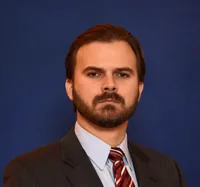
Garrett Ham is an attorney, military veteran, and holds a Master of Divinity from Yale Divinity School. He writes from Northwest Arkansas on theology, law, and service.
More about Garrett →Related Posts
The Buckley Program at Yale: Intellectual Diversity on a Progressive Campus
A firsthand account of the William F. Buckley Jr. Program at Yale—what it does, why it matters, and what it's like to be a conservative Fellow on a campus that would rather you weren't.
God and Man at Yale Divinity
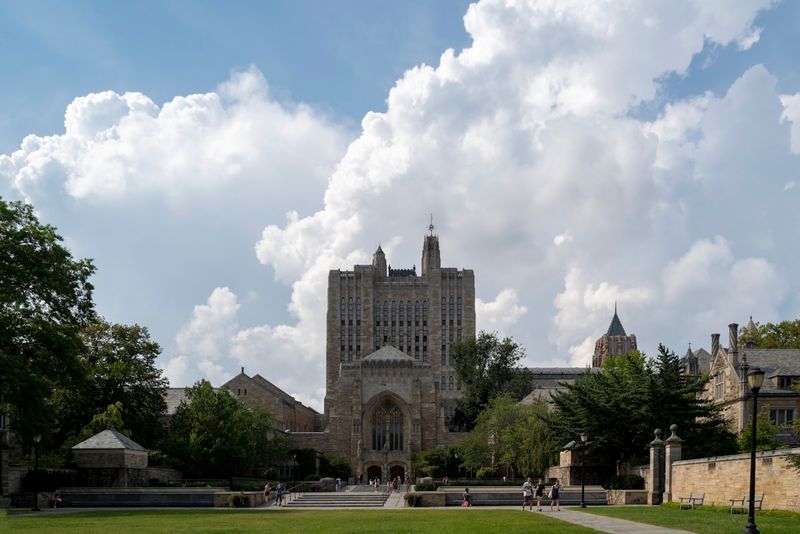
Complete Yale Divinity School guide: how to apply, personal statement, GI Bill benefits, financial aid, acceptance, and thriving in the M.Div. program.
Ivy League Buzzwords
An insider's look at how Ivy League students use buzzwords like 'oppression,' 'power dynamics,' and 'create a space' to such excess that they dilute the meaning of justified critique and desensitize people to real injustice.
Stay Informed
Get new writing on faith, law, and service delivered to your inbox.
No spam. Unsubscribe anytime.