Modalism: The Trinitarian Heresy That Collapsed the Persons of God
On This Page
Duos quidem definimus, Patrem et Filium et iam tres cum Spiritu Sancto, secundum rationem oeconomiae quae facit numerum.
“We define that there are two, the Father and the Son, and three with the Holy Spirit, according to the principle of the divine economy which introduces distinction.” — Tertullian, Adversus Praxean 13
Of all the early heresies about the Trinity, Modalism is the one most likely to be held by people who do not know they hold it. It is the heresy of the well-meaning Sunday school teacher who tells her class that God is “like water”—sometimes ice, sometimes liquid, sometimes steam, but always the same substance. It is the heresy that lurks behind every analogy that treats the Father, Son, and Holy Spirit as roles played by a single actor rather than as distinct persons in eternal relation. And it is, in historical terms, one of the earliest and most persistent distortions of the Christian doctrine of God.
Modalism—known also as Sabellianism (after its most famous proponent) and Patripassianism (from the Latin pater passus est, “the Father suffered,” since the heresy implies the Father himself died on the cross)—teaches that the one God successively manifests himself in three different modes or masks: first as Father in creation, then as Son in redemption, then as Holy Spirit in sanctification. There are not three persons; there is one person who wears, as it were, three costumes. The Greek word for an actor’s mask was πρόσωπον (prosōpon), which is precisely why the Church had to clarify that the divine “persons” are not masks at all but subsistent relations within the one God.1
Understanding Modalism matters not merely for historical completeness but because it illuminates, by contrast, what the Church actually confesses about the Trinity. To see what the doctrine of God is not is to understand more deeply what it is.
Origins and Key Proponents
Noetus of Smyrna
The earliest figure associated with Modalism is Noetus of Smyrna, active in the late second century. Hippolytus of Rome, who wrote against him, reports that Noetus taught that Christ was the Father himself, and that the Father was born, suffered, and died.2 When confronted by the presbyters of Smyrna, Noetus is said to have asked, “What evil, then, am I doing in glorifying Christ?” (Contra Noetum 1). In Hippolytus’s broader account of Noetian theology, the position is fleshed out further: Noetus glorified one God and knew no other besides him who was born, suffered, and died (cf. Contra Noetum 2; Refutation 9.5). The appeal was to monotheism—but it was a monotheism that had consumed the distinctions Scripture preserves.
Noetus’s theology was driven by an understandable anxiety. In a world where pagan polytheism was the ambient cultural reality, the confession of one God was the irreducible center of Christian and Jewish faith. If the Son is really distinct from the Father, does that not introduce a second God? Noetus answered no, by the simple expedient of denying the distinction. The price, however, was exorbitant: it meant that the Father himself hung on the cross at Calvary.
Praxeas
The figure known to us as Praxeas is shadowy—some scholars have speculated that the name may be a pseudonym—but Tertullian’s polemic against him in Adversus Praxean (c. 213 AD) is one of the most consequential theological texts of the pre-Nicene period. Praxeas arrived in Rome from Asia Minor and, according to Tertullian, accomplished two notable feats of mischief: he persuaded the bishop of Rome to withdraw his recognition of the Montanist movement, and he propagated a theology that collapsed the Son into the Father.
Tertullian’s famous quip captures the Modalist problem in a single sentence: if the Son has no real personal existence distinct from the Father, then it was the Father who suffered on the cross. This is Patripassianism—and it was, for the early Church, not a subtle metaphysical mistake but a soteriological disaster. The entire economy of salvation, as Scripture presents it, depends on the Son being sent by the Father, praying to the Father, and returning to the Father. Remove the personal distinction and the narrative of redemption collapses into divine soliloquy.3
Tertullian’s response in Adversus Praxean is remarkable for its theological precision. He forged the key Latin terminology una substantia, tres personae—“one substance, three persons”—which would become, in its Greek equivalent (μία οὐσία, τρεῖς ὑποστάσεις / mia ousia, treis hypostaseis), the foundational grammar of Trinitarian orthodoxy. The substance is what God is; the persons are who the Father, Son, and Spirit each are. Modalism confuses the two by treating the persons as modes of a single personal subject.4
Sabellius
The figure who gave the heresy its most enduring name was Sabellius, active in Rome in the early third century. Sabellius refined the Modalist position into something more systematic than what Noetus or Praxeas had offered. He taught that God is a single monad (μονάς / monas) who expands or projects himself into three successive operations—Father in creation, Son in redemption, Spirit in sanctification—and then contracts back into the undifferentiated unity.5 The persons are not eternal relations but temporary roles. When the work of redemption is complete, the “Son” ceases to exist as such, and the monad simply is.
This is, in a sense, the most philosophically sophisticated version of Modalism, and it had considerable appeal in a Hellenistic intellectual environment shaped by Neoplatonic categories of the One. But it suffers from the same fatal defect: it cannot account for the simultaneous personal activity of Father, Son, and Spirit that Scripture everywhere attests.
The Theological Problem
Modalism is not merely a speculative error; it is incompatible with the testimony of Scripture at the most basic narrative level. The biblical text repeatedly presents the Father, Son, and Spirit as simultaneously active and relationally engaged—something that is flatly impossible if they are successive modes of a single person.
The Baptism of Jesus
At the baptism of Jesus in the Jordan (Matt 3:16–17; Mark 1:9–11; Luke 3:21–22), the Son stands in the water, the Spirit descends upon him in the form of a dove, and the Father speaks from heaven: “This is my beloved Son, in whom I am well pleased.” Three distinct agents are presented as simultaneously active. If Modalism were true, this scene would require a single person to address himself from heaven while simultaneously descending upon himself as a dove—a theological contortion that does violence to the plain sense of the text.6
Jesus’s Prayers to the Father
Throughout the Gospels, Jesus prays to the Father—in Gethsemane (Matt 26:39), at Lazarus’s tomb (John 11:41–42), and in the great High Priestly Prayer (John 17). The language of prayer presupposes a genuine relational distinction between the one who prays and the one addressed. If the Son is merely a “mode” of the Father, then Jesus is praying to himself—not in the trivial sense of interior dialogue, but in the sense that there is no second person to receive the prayer. This empties the prayer of its relational content and reduces the most intimate communion in the Gospels to an elaborate performance for the disciples’ benefit.
The Great Commission
In Matthew 28:19, the risen Christ commands the apostles to baptize “in the name of the Father and of the Son and of the Holy Spirit.” The singular “name” (ὄνομα / onoma) indicates the unity of the divine essence; the threefold enumeration of Father, Son, and Spirit indicates the real distinction of persons. Modalism can account for the singular name but not for the threefold distinction, which on its terms would be merely a list of temporary costumes the one God has worn.
John 1:1–2
The prologue of John’s Gospel is one of the most important Trinitarian texts in the New Testament, and it stands as a direct refutation of Modalist thinking. As I explored in detail in my reflection on John 1:2, the evangelist writes that the Word “was with God” (πρὸς τὸν θεόν / pros ton theon)—a phrase that implies relational distinction, directional orientation toward God, and personal communion. The Word was not merely identical with God but was with God, and this relational “withness” existed ἐν ἀρχῇ—“in the beginning,” before creation, in the eternal life of God himself. Modalism cannot account for this eternal relation, since on its terms the “Son” does not exist as a distinct person prior to the Incarnation.7
The Church’s Response
The Church did not wait for the ecumenical councils to reject Modalism. The refutation began in the second and third centuries, driven by theologians who recognized that Modalism’s apparent simplicity came at the cost of scriptural fidelity and soteriological coherence.
Hippolytus of Rome
Hippolytus (c. 170–235 AD) wrote against Noetus in a work traditionally titled Contra Noetum and addressed the broader phenomenon of Modalism in the Refutation of All Heresies (though the unified authorship of these two works has been contested since Nautin’s influential 1947 study, with Brent and Cerrato arguing for two separate authors—a question that remains open in current scholarship). Hippolytus insisted that the Father and the Son are really distinct—not two Gods, but two persons within the one God. His theology is sometimes criticized for subordinationist tendencies (presenting the Son as somehow less than the Father), but his core anti-Modalist argument is sound: the scriptural narrative requires personal distinction within God.8
Tertullian’s Adversus Praxean
Tertullian’s treatise is the single most important pre-Nicene anti-Modalist text. Writing in Latin, Tertullian forged the conceptual vocabulary that would shape Western Trinitarian theology for centuries. His distinction between substantia (substance—what God is) and persona (person—who the Father, Son, and Spirit each are) provided the Church with the grammar it needed to confess one God in three persons without either collapsing the persons into one (Modalism) or dividing the substance into three (tritheism).9
Pope Callixtus I and the Roman Response
The Roman bishop Callixtus I (pope from c. 217–222 AD) navigated a difficult course between the Modalism of Sabellius and what he perceived as the ditheistic tendencies of Hippolytus. Callixtus excommunicated Sabellius, making clear that the Roman church rejected the collapse of personal distinctions. At the same time, he was wary of any formulation that seemed to introduce two Gods. The tension between these two concerns would take another century and a half to resolve fully, but Callixtus’s rejection of Sabellius was an important marker: the bishop of Rome declared Modalism incompatible with the apostolic faith.10
The Council of Constantinople (381 AD)
The First Council of Constantinople expanded and confirmed the Nicene Creed, adding the article on the Holy Spirit that confesses him as “the Lord and Giver of Life, who proceeds from the Father, who with the Father and the Son together is worshipped and glorified.” The Council’s primary targets were Arianism and the Pneumatomachi who denied the Spirit’s full divinity, but Canon 1 also explicitly anathematized Sabellianism, and the creed’s distinct personal language for the Spirit carries anti-Modalist force as well: the Spirit is not a mode of the Father but a distinct person who proceeds from the Father and who is co-worshipped with the Father and the Son. The creed affirms both the unity of divine worship and the trinity of divine persons—precisely what Modalism denied.
The Catechism of the Catholic Church
The Catholic Church continues to confess the Trinitarian faith articulated in these early centuries. The Catechism of the Catholic Church §§252–256 provides a concise summary of the dogmatic content: the Trinity is one God in three persons; the persons are really distinct from one another; the divine persons are relative to one another. The Catechism explicitly notes that the divine persons do not “share the one divinity among themselves but each of them is God whole and entire” (§253)—a formulation that excludes both Modalism (which denies the real distinction) and tritheism (which divides the substance).
Modalism in Modern Dress
If Modalism were simply a third-century relic, it would be of merely historical interest. But the instinct behind it—the desire to simplify the Trinity by eliminating the real distinction of persons—remains very much alive.
The Water Analogy
The most common popular Modalist analogy is that of water: God is like H2O, which can exist as ice, liquid, or steam. The problem is that water is never ice, liquid, and steam simultaneously (except at the triple point, and even that does not help the analogy). The Trinity is not a substance that shifts between states. The Father does not become the Son; the Son does not become the Spirit. All three persons exist eternally and simultaneously. The water analogy, however well-intentioned, teaches Modalism by default.
Other popular analogies suffer from the same defect. The “one man who is a father, a son, and a husband” analogy confuses personal identity with social roles. A man who is a father, a son, and a husband is still one person with one consciousness. The Trinity is three persons with one nature—a mystery that no analogy from created experience can adequately capture, which is precisely why the Church has always insisted that the Trinity is known by revelation, not by natural reason alone.
Oneness Pentecostalism
The most significant modern movement that holds a recognizably Modalist theology is Oneness Pentecostalism (sometimes called “Jesus Only” Pentecostalism), which emerged in the early twentieth century and today numbers several million adherents worldwide. Oneness Pentecostals reject the doctrine of the Trinity as traditionally formulated and teach instead that there is one God who is Jesus, and that “Father,” “Son,” and “Holy Spirit” are titles or manifestations of the one divine person, Jesus Christ. They baptize in the name of Jesus alone rather than using the Trinitarian formula of Matthew 28:19.
It would be unfair to caricature Oneness Pentecostals, many of whom are sincere believers with a deep devotion to Christ. Their theology is widely categorized by Trinitarian theologians as a contemporary form of Modalism (cf. Boyd, Oneness Pentecostals and the Trinity, 1992), though specialists note structural differences—particularly the rejection of strictly successive modes and the grounding of the Father/Son distinction in the incarnation rather than temporal masks (cf. Reed, In Jesus’ Name, 2008). Nevertheless, measured against the doctrinal standards of the ecumenical councils and the consistent teaching of the Catholic Church, Oneness theology shares Modalism’s fundamental defect: the denial of real, eternal personal distinctions in God. The problem is not one of piety but of precision: a God who is one person in three modes is not the God confessed in the creeds, and the relational life of the Trinity—the eternal communion of Father, Son, and Spirit—is precisely what makes Christianity’s understanding of God distinctive.
Why It Matters
The doctrine of the Trinity is not a theological puzzle to be solved but a reality to be contemplated. The reason Modalism was rejected is not that it was too simple but that it was not true—not true to Scripture, not true to the Church’s worship, and not true to the God who reveals himself as a communion of persons.
If God is one person wearing three masks, then the love between Father, Son, and Spirit is an illusion—a performance with no audience. But if the persons are really distinct, if the Father truly begets the Son and the Spirit truly proceeds from the Father (and, in the Western formulation, from the Son), then love is not something God does but something God is. The inner life of God is relational. And this has profound implications for what it means to be made in the image of such a God: we are made for communion, not isolation; for self-gift, not self-enclosure.
This is why the precision of John 1:2—“this one was in the beginning with God”—matters so much. The “with” (πρός) is not a throwaway preposition. It is the scriptural anchor for the real distinction of persons within the eternal life of God. And it is the reason Modalism, for all its apparent simplicity, fails: it cannot account for the “withness” that Scripture everywhere affirms.
As I argued in my examination of Apollinarianism, each heresy the Church confronts illuminates some facet of the truth it was protecting. Apollinarianism revealed the necessity of a complete human nature in Christ. Modalism reveals the necessity of real personal distinction in God. The pattern is the same: the Church does not invent doctrine in response to heresy but discovers, under the pressure of error, the fuller implications of what it has always believed.
Frequently Asked Questions
What is Modalism in simple terms?
Modalism is the belief that God is one person who appears in three different forms or “modes”—first as the Father, then as the Son, then as the Holy Spirit—rather than being three distinct persons who exist simultaneously and eternally. The orthodox Christian teaching, by contrast, holds that the Father, Son, and Holy Spirit are three really distinct persons who share one divine nature.
What is the difference between Modalism and the Trinity?
The doctrine of the Trinity teaches that God is one being (one substance or essence) in three co-eternal, co-equal persons—Father, Son, and Holy Spirit—who are really distinct from one another. Modalism teaches that there is only one person who manifests himself in three different ways at different times. The key difference is the reality of the personal distinctions: in Trinitarian theology the persons are eternally real; in Modalism they are temporary masks.
Is Oneness Pentecostalism Modalism?
Oneness Pentecostalism teaches that God is one person (Jesus) and that “Father,” “Son,” and “Holy Spirit” are titles or roles rather than distinct persons. Trinitarian theologians widely categorize this as a modern form of Modalism, though specialists note differences from classical Sabellianism—particularly the rejection of strictly successive modes and the grounding of the Father/Son distinction in the incarnation. By the standards of the ecumenical councils and Catholic dogmatic teaching, Oneness theology shares Modalism’s core error: the denial of real personal distinctions in God.
Where does the Bible refute Modalism?
Several passages present the Father, Son, and Spirit as simultaneously active and relationally distinct: the baptism of Jesus (Matt 3:16–17), where the Son is baptized, the Spirit descends, and the Father speaks; Jesus’s prayers to the Father (John 17; Matt 26:39); the Great Commission’s Trinitarian formula (Matt 28:19); and the prologue of John’s Gospel (John 1:1–2), which presents the Word as both distinct from God and fully God, existing in eternal relational communion “with” the Father.
For Further Study
- Tertullian, Adversus Praxean: https://www.newadvent.org/fathers/0317.htm
- Hippolytus, Refutation of All Heresies: https://www.newadvent.org/fathers/0501.htm
- Catechism of the Catholic Church §§252–256: https://www.vatican.va/archive/ENG0015/__P17.HTM
- J.N.D. Kelly, Early Christian Doctrines, 5th ed. (London: A&C Black, 1977)
- Jaroslav Pelikan, The Emergence of the Catholic Tradition (100–600), vol. 1 of The Christian Tradition (Chicago: University of Chicago Press, 1971)
1. The Greek πρόσωπον originally referred to a theatrical mask and, by extension, a character or role. Its Latin equivalent, persona, carried a similar range of meaning. The Church’s adoption of this term to designate the Father, Son, and Spirit was thus a contested theological process—the Eastern Church, in fact, preferred ὑπόστασις (hypostasis) over πρόσωπον precisely because the latter retained too much of its “mask” connotation, which risked sounding Sabellian. In the Latin West, persona advanced further toward the meaning of “individual person,” helping to establish that the divine “persons” are not masks or roles but subsistent realities. See J.N.D. Kelly, Early Christian Doctrines, 5th ed. (London: A&C Black, 1977), 115–119.
2. Hippolytus, Refutation of All Heresies 9.5–7; also Contra Noetum 1–2. For a discussion of Hippolytus’s account of Noetus, see Kelly, Early Christian Doctrines, 120–121.
3. Tertullian, Adversus Praxean 1. Trans. Ernest Evans, Tertullian’s Treatise Against Praxeas (London: SPCK, 1948). The quip about Praxeas driving out the Paraclete and crucifying the Father is the opening salvo of the treatise and captures Tertullian’s view that Modalism is both christologically and pneumatologically destructive.
4. Tertullian, Adversus Praxean 2, 12. On Tertullian’s Trinitarian vocabulary, see Kelly, Early Christian Doctrines, 113–115.
5. Our knowledge of Sabellius’s theology comes entirely from his opponents—most importantly Hippolytus (Refutation of All Heresies 9), Epiphanius (Panarion 62), Athanasius (Contra Arianos; De Synodis), Basil of Caesarea (Epistles 207, 210, 214), and Novatian (De Trinitate), among others. On the reconstruction of Sabellian teaching, see Kelly, Early Christian Doctrines, 121–123; and Jaroslav Pelikan, The Emergence of the Catholic Tradition (100–600), vol. 1 of The Christian Tradition (Chicago: University of Chicago Press, 1971), 179–181.
6. Pelikan, The Emergence of the Catholic Tradition, 176–177, notes that the baptismal theophany was consistently cited by anti-Modalist writers as the most vivid scriptural demonstration of simultaneous Trinitarian activity.
7. Brown’s exegesis of πρὸς τὸν θεόν emphasizes the personal distinction and relational communion between the Logos and God—a distinction that carries anti-Modalist implications. See Raymond E. Brown, The Gospel According to John I–XII, Anchor Bible 29 (Garden City, NY: Doubleday, 1966), 4–5, 24–25.
8. On Hippolytus’s anti-Modalist theology and its subordinationist tendencies, see Kelly, Early Christian Doctrines, 121–123.
9. Tertullian, Adversus Praxean 2: “tres autem non statu sed gradu, nec substantia sed forma, nec potestate sed specie; unius autem substantiae et unius status et unius potestatis.” See Kelly, Early Christian Doctrines, 113–115.
10. On Callixtus’s excommunication of Sabellius and his attempt to steer between Modalism and ditheism, see Hippolytus, Refutation of All Heresies 9.7; Kelly, Early Christian Doctrines, 124–126; Pelikan, The Emergence of the Catholic Tradition, 180–182. The Catechism of the Catholic Church §§252–256 provides the contemporary dogmatic summary of the Trinitarian faith these early controversies helped to define.

Garrett Ham
Garrett Ham is an attorney, military veteran, and holds a Master of Divinity from Yale Divinity School. He writes from Northwest Arkansas on theology, law, and service.
More about Garrett →Related Posts
The First Council of Nicaea: What It Decided and Why It Matters
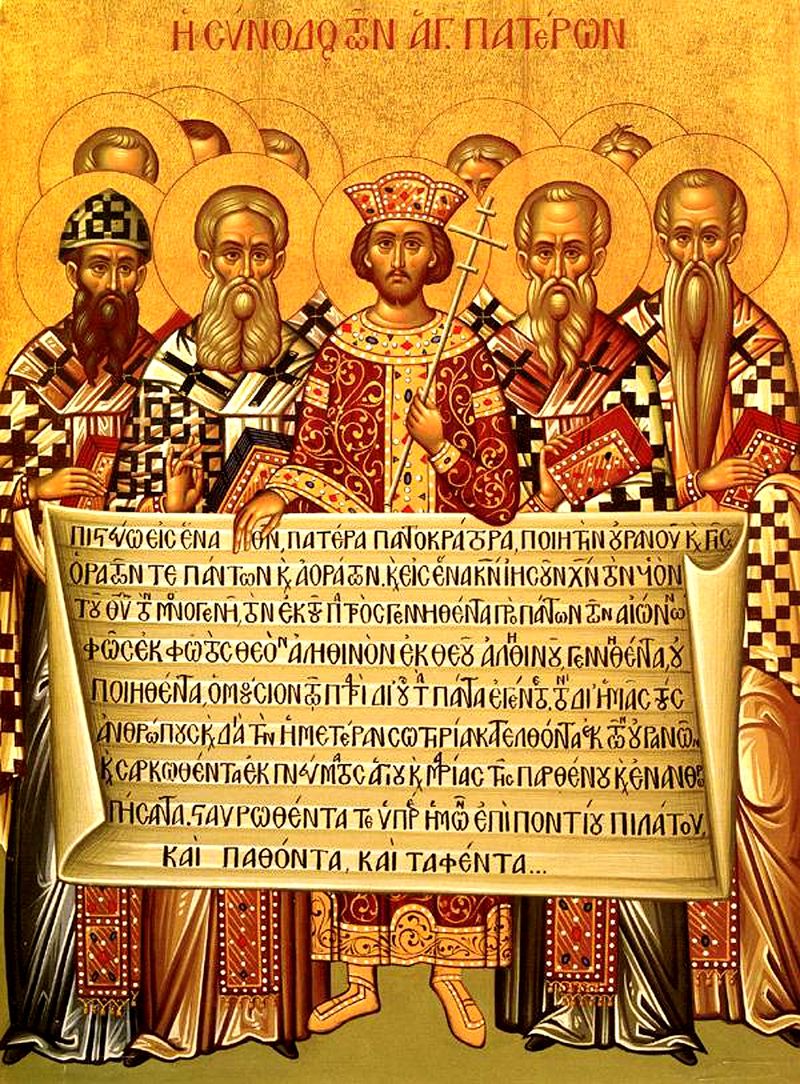
What happened at the First Council of Nicaea in 325 AD? A Catholic examination of the Arian crisis, the meaning of homoousios, and why the Nicene Creed still defines Christian orthodoxy.
Apollinarius of Laodicea and His Christological Heresy
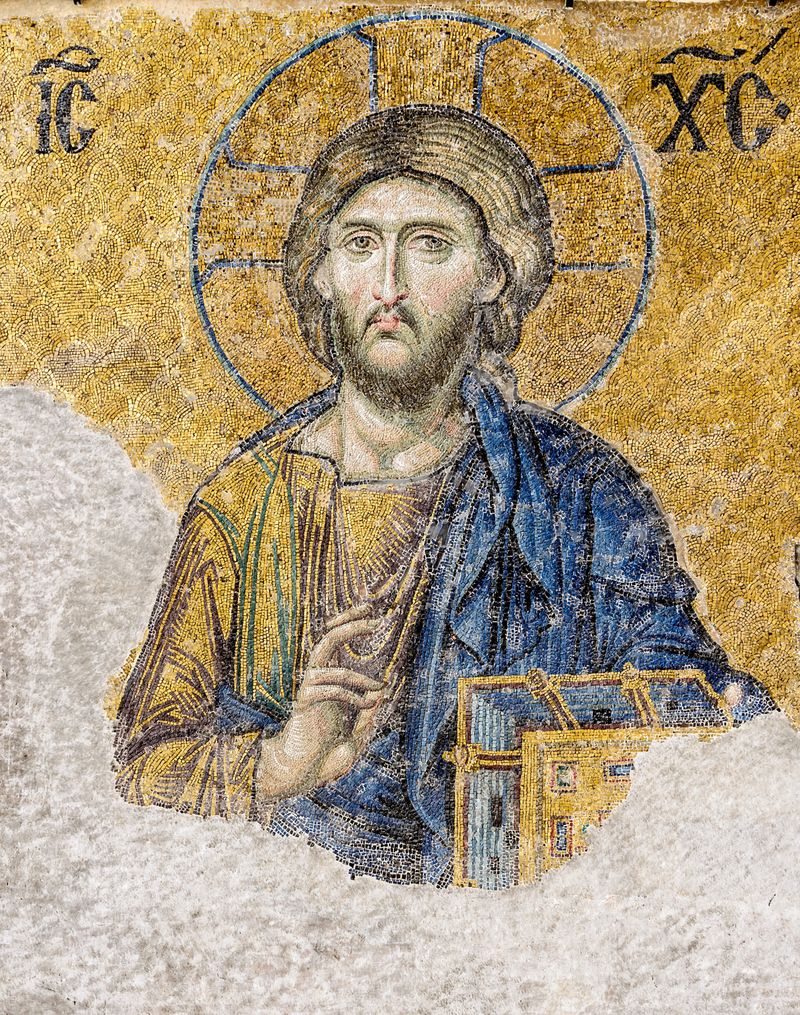
Apollinarius of Laodicea denied that Christ had a human rational mind, replacing it with the divine Logos. Gregory of Nazianzus's devastating reply—'what is not assumed is not healed'—sealed the condemnation at Constantinople I (381).
Pelagianism and Semi-Pelagianism: Why the Church Condemned Both
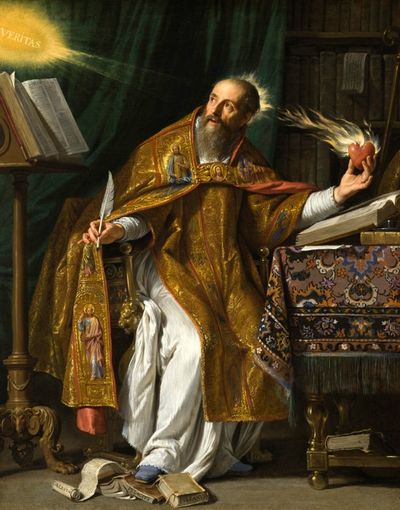
Understand Pelagianism vs. semi-Pelagianism: why both heresies were condemned, their impact on theology, and what they teach about grace and salvation.
Stay Informed
Get new writing on faith, law, and service delivered to your inbox.
No spam. Unsubscribe anytime.