Lumen Gentium and Salvation Outside the Church
On This Page
One of the most misunderstood teachings of Vatican II is what the Catholic Church actually believes about salvation for those outside her visible boundaries. I’ve encountered everything from the extreme position that only baptized Catholics can be saved, to the opposite extreme that all religions are equally valid paths to God. The truth, as articulated in Lumen Gentium, is more nuanced—and more hopeful—than either extreme.
The question isn’t merely academic. It touches something deeply personal: the fate of beloved non-Catholic family members, the moral character of those in other faiths, and the credibility of the Church’s claim to possess the fullness of truth. How can these reconcile?
Extra Ecclesiam Nulla Salus: The Traditional Teaching
The phrase extra ecclesiam nulla salus—“outside the Church, there is no salvation”—has been associated with Catholic teaching since at least the third century. But like many ancient formulas, it requires careful unpacking.
St. Cyprian of Carthage (d. 258) is closely associated with this teaching. His famous formulation is “salus extra ecclesiam non est” (“there is no salvation outside the Church”), from Epistle 73. He also used “bosom” language in On the Lapsed, writing that “Mother Church receives you in her bosom.” He invoked these principles to argue against schismatics and heretics who had separated from communion with the bishop of Rome. For Cyprian, being “outside the Church” meant being in schism—in rebellion against the Church’s hierarchical unity.
The Church Fathers repeated this teaching, often in its starkest form. Fulgentius of Ruspe (d. 527) was perhaps the strictest: his De Fide ad Petrum declares that no one outside the Catholic Church—“even if he sheds his blood for Christ”—can be saved. The Council of Florence would later adopt his formulation almost verbatim. Augustine, for his part, held that the Old Testament saints were saved through anticipatory faith in the coming Christ. On those ignorant of the Gospel, Augustine taught that ignorance could diminish punishment but never opened a path to salvation apart from divine grace and faith. His massa damnata theology left little room for optimism about those outside the Church’s visible structures.
The Fourth Lateran Council (1215) affirmed that “there is one Universal Church of the faithful, outside of which there is absolutely no salvation,” establishing both the unity of the Church and the necessity of belonging to it. The Council of Florence (1442), in its decree Cantate Domino, went further still, declaring that “none of those existing outside the Catholic Church, not only pagans, but also Jews and heretics and schismatics, can have a share in life eternal” unless they are joined to the Church before death. The Florence text contains no exceptions—not for those before Christ, not for invincible ignorance. Those qualifications would develop over the following four centuries, principally through Pius IX’s Singulari Quadam (1854) and Quanto Conficiamur Moerore (1863), the 1949 Holy Office letter, and Vatican II’s Lumen Gentium §16.
Here is the crucial point: This teaching has never been revoked. Vatican II did not abandon extra ecclesiam nulla salus. Rather, it clarified and developed what it means.
This teaching has never been revoked. Vatican II did not abandon extra ecclesiam nulla salus. Rather, it clarified and developed what it means.
The Development Before Vatican II
By the modern period, the tension between the ancient formula and pastoral reality had become acute. Did it really mean that unbaptized infants were damned? That sincere seekers of truth who never encountered the Gospel were lost? Did God’s mercy have such narrow bounds?
The answer came through slow doctrinal development.
In 1863, Pope Pius IX issued the encyclical Quanto Conficiamur Moerore, which taught that those “struggling with invincible ignorance about our most holy religion,” provided they sincerely observe the natural law and live honest lives, “are able to attain eternal life by the efficacious virtue of divine light and grace.” This was not a new doctrine—it was already implicit in earlier teaching—but it was a crucial clarification. The Pope was teaching that the ancient formula required interpretation in light of God’s justice and mercy.
Then came Fr. Leonard Feeney and his followers in Boston. Feeney preached a rigid interpretation: the only path to salvation was water baptism in the Catholic Church. No exceptions. The Holy Office responded in two distinct stages. First, the doctrinal correction: the letter Suprema haec sacra, dated August 8, 1949 (approved by Pius XII on July 28, 1949) and addressed to Archbishop Cushing of Boston, ruled that Feeney had misinterpreted Church teaching and that his rigid interpretation contradicted the Church’s consistent acknowledgment of God’s grace working outside visible structures. Then, when Feeney refused to appear when summoned to Rome, he was excommunicated on February 13, 1953—not for heresy, but for “grave disobedience of Church Authority.” These two actions are significant for different reasons: the 1949 letter told us that certain interpretations of extra ecclesiam nulla salus could be wrong, while the 1953 excommunication was a disciplinary matter about obedience to Church authority.
Pope Pius XII’s 1943 encyclical Mystici Corporis further refined the teaching. The Pope distinguished between the visible body of the Church (the sacramental, hierarchical structure) and those who, through genuine faith and grace, are joined to the Church’s spiritual reality even if not to its visible organization. This opened theological space for a more hopeful view without abandoning the Church’s fundamental claims.
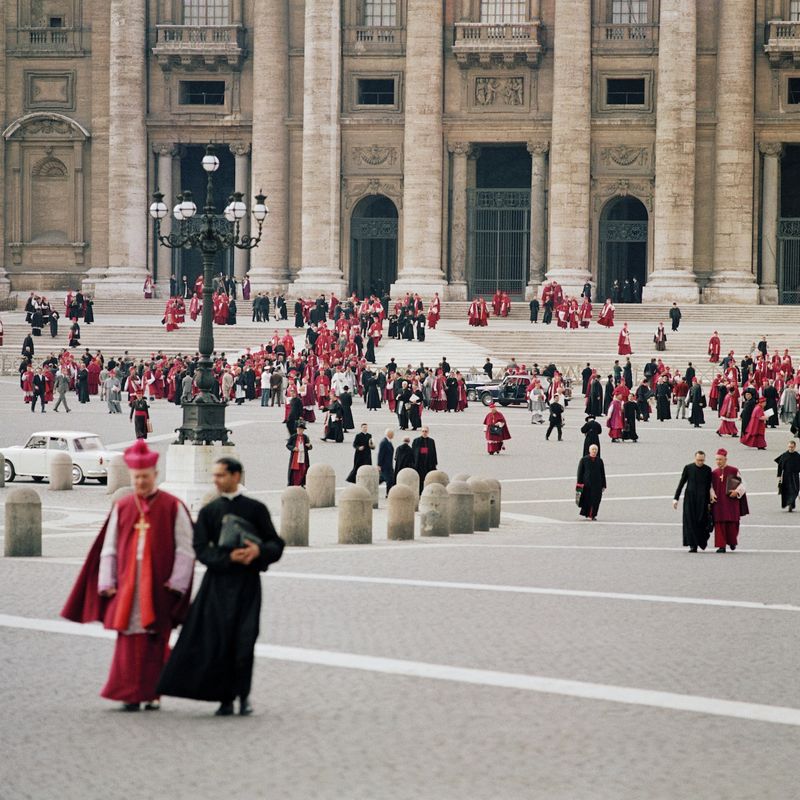
By the time Vatican II convened in 1962, the groundwork for a careful, developed statement was already laid.
Lumen Gentium §14-16: The Conciliar Teaching
The Second Vatican Council’s constitution on the Church, Lumen Gentium, addresses our question directly in sections 14-16. This is the authoritative conciliar statement, and understanding it requires reading carefully what it actually says.
Full Incorporation Through the Church (§14)
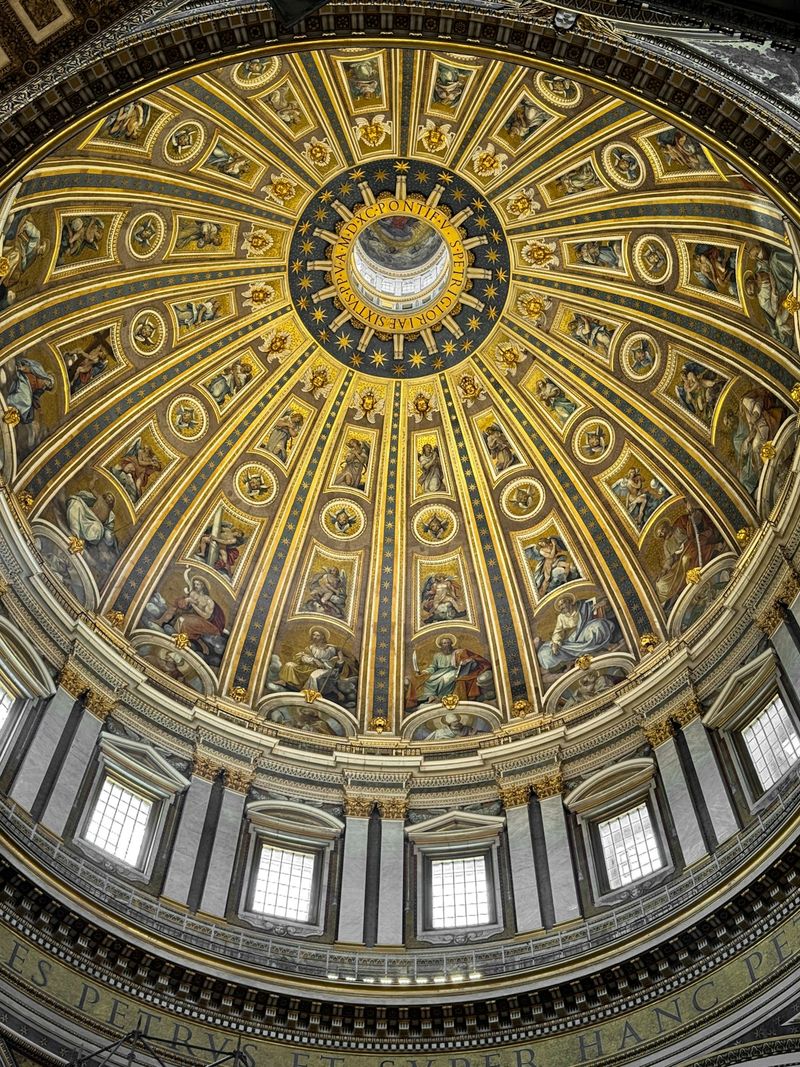
§14 establishes what it means to be fully incorporated into the Church and the necessity of belonging to it. The related language about the Church as the means of salvation is expressed most directly in the Vatican II Decree on Ecumenism, Unitatis Redintegratio §3: “For it is through Christ’s Catholic Church alone, which is the universal help toward salvation, that the fullness of the means of salvation can be obtained.” Full incorporation requires baptism, profession of faith, governance by the bishops in communion with the Pope, and participation in the Eucharist and other sacraments.
Other Christians and Imperfect Communion (§15)
§15 addresses other Christians: “The Church recognizes that in many ways she is linked with those who, being baptized, are honored with the name of Christian, though they do not profess the faith in its entirety or do not preserve unity of communion with the successor of Peter.” Other Christians possess baptism, Scripture, genuine prayer life, and faith in Christ. They possess real but imperfect communion with the Church. The Council calls them “joined to the Church in many ways,” not simply “outside” it.
Lumen Gentium 16: The Crucial Paragraph
Then comes §16, the paragraph that has done more than any other to shape modern Catholic teaching on salvation outside the visible Church. Here the Council addresses non-Christians directly:
“Finally, those who have not yet received the Gospel are related in various ways to the people of God. In the first place we must recall the people to whom the covenants and promises were made and from whom Christ was born according to the flesh. But the plan of salvation also includes those who acknowledge the Creator. In particular, there are the Mohammedans, who, professing to hold the faith of Abraham, adore the one God, submitting themselves whole-heartedly to his bidding as Abraham did in his faith.
Those also can attain to salvation who through no fault of their own do not know the Gospel of Christ or His Church, yet sincerely seek God and, moved by grace, strive to fulfill His will as it is known to them through the dictates of their conscience.”
This is the Council’s inclusive statement. But notice the qualifications: through no fault of their own (not culpably ignorant), sincerely seek God (not indifferent to truth), and moved by grace, strive to fulfill His will as known to them (actively cooperating with what grace makes known through conscience).
The Council then adds a sober warning that must not be minimized: “But often men, deceived by the Evil One, have become vain in their reasonings and have exchanged the truth of God for a lie, serving the creature rather than the Creator.” The Latin at saepius—“but very often”—indicates the Council expected the conditions of the preceding paragraph to be frequently unmet. The hope of §16 is real, but the Council deliberately counterbalanced it with this darker assessment of the human condition without grace.
This is not soft universalism. It is hope tempered by realism.
The Council’s companion decree Ad Gentes §7 holds both truths together explicitly: “Though God in ways known to Himself can lead those inculpably ignorant of the Gospel to find that faith without which it is impossible to please Him, yet a necessity lies upon the Church, and at the same time a sacred duty, to preach the Gospel.” John Paul II would later reinforce this balance in Redemptoris Missio §9 (1990): “It is necessary to keep these two truths together, namely, the real possibility of salvation in Christ for all mankind and the necessity of the Church for salvation.”
What “Invincible Ignorance” Means (and Doesn’t Mean)
To understand §16 properly, we must grasp what the Church means by “invincible ignorance”—and what she does not mean.
Invincible ignorance is ignorance that is not the person’s fault. It means the person had no reasonable opportunity to learn the truth despite genuine seeking. A person in a remote area where Christianity has never reached, genuinely seeking truth and morality—this person might qualify. Someone who never encountered genuine Christian witness, who was taught lies about Christianity, or who lived before the Gospel was preached—these persons might be invincibly ignorant.
What invincible ignorance does not mean:
It is not a blanket exemption from moral responsibility. The person must still be seeking God sincerely and attempting to live according to conscience. It is not permission to be indifferent to truth or to deliberately avoid learning. It is not an excuse for willful blindness.
Most importantly: the Church makes no judgment about individual cases. Only God knows the heart. The doctrine of invincible ignorance is not an escape hatch we can sprinkle on people we wish to save. It is a statement about God’s justice—that God does not condemn the innocent.
The Church makes no judgment about individual cases. Only God knows the heart.
The Catechism of the Catholic Church (§846-848) synthesizes this teaching:
“How are we to understand this affirmation, often repeated by the Church Fathers? Re-formulated positively, it means that all salvation comes from Christ the Head through the Church which is his Body.”
The Catechism immediately adds, citing Lumen Gentium 14, that those who know the Catholic Church was founded as necessary by God through Christ yet refuse to enter or remain in her cannot be saved. But it continues:
“This affirmation is not aimed at those who, through no fault of their own, do not know Christ and his Church: ‘Those who, through no fault of their own, do not know the Gospel of Christ or his Church, but who nevertheless seek God with a sincere heart, and, moved by grace, try in their actions to do his will as they know it through the dictates of their conscience—those too may achieve eternal salvation.’”
And later (§1260), quoting the Second Vatican Council’s Gaudium et Spes §22: “Since Christ died for all, and since all men are in fact called to one and the same destiny, which is divine, we must hold that the Holy Spirit offers to all the possibility of being made partakers, in a way known to God, of the Paschal mystery.”
The Church’s position is neither universalism nor excessive particularism. It trusts in God’s mercy and justice while maintaining that the Church is, objectively, the fullness of means for salvation.
Dominus Iesus and the Guard Against Relativism
Not everyone appreciated Vatican II’s openness. In 2000, the Congregation for the Doctrine of the Faith, under then-Cardinal Ratzinger (the late Pope Benedict XVI), issued Dominus Iesus, reasserting crucial boundaries. The declaration affirmed that Christ is “the one mediator” and that the Church is “the universal sacrament of salvation.”
Dominus Iesus §4 explicitly rejects “relativistic theories which seek to justify religious pluralism,” while §16 draws on Lumen Gentium’s language of “elements of sanctification and of truth” (LG §8) to acknowledge that God’s grace is at work beyond the Church’s visible boundaries. Section 21 insists that other religions are not “complementary to the Church or substantially equivalent to her”—genuine religious elements exist in them, but these do not make them equal paths to salvation.
Dominus Iesus caused controversy when it appeared. Some saw it as walking back Vatican II’s openness. But it did something necessary: it prevented the legitimate openness of §16 from collapsing into the illegitimate claim that all religions are equal. The declaration reasserted that while God’s grace is universally offered and available, the fullness of revelation and sacramental means is found in the Catholic Church.
This is a delicate balance, but it is theologically coherent. One can believe that God’s mercy extends beyond the Church’s visible boundaries while maintaining that the Church possesses truths and means that others do not. These are not contradictory; they are complementary.
The Catechism’s Synthesis
The Catechism of the Catholic Church offers the most accessible synthesis. Paragraphs 846-848 restate extra ecclesiam nulla salus while explaining its meaning: the Church is indeed the universal sacrament of salvation, yet Christ’s saving work is not limited to those visibly incorporated into her. Those outside the Church who seek God sincerely and cooperate with grace may achieve salvation—not because other religions are equally true, but because God is just and merciful. Paragraph 1260 extends this to those who die without baptism but cooperate with grace.
Underlying all of this is a fundamental principle: God’s universal salvific will. As Paul writes in 1 Timothy 2:4, “God desires all men to be saved and to come to the knowledge of the truth.” This is not one doctrine among others in the Church’s teaching—it is foundational.
How, then, can we reconcile these two truths?
- God genuinely desires the salvation of all.
- The Church possesses the fullness of revelation and sacramental means.
- Therefore, God provides the means for salvation even to those who lack access to the Church’s visible structures.
This is neither pluralism (all religions equally true) nor excessive pessimism (only Catholics can be saved). It is what the theologians call inclusivism—the belief that Christ and the Church are the objective fullness, but that God’s grace works more widely than the Church’s visible boundaries.
A Personal Reflection
I confess I find myself wrestling with this teaching in a deeply personal way. I believe, as the Church teaches, that Catholicism possesses the fullness of truth revealed by Christ. The sacraments, the Magisterium, the apostolic succession, the communion with Peter—these are not small matters. They are precious gifts.
Yet I also know sincere, holy non-Catholic Christians. I have seen the genuine fruit of the Holy Spirit in their lives. I have watched Muslims live with a devotion to God’s will that puts many Catholics to shame. I have known atheists of such moral integrity that I cannot imagine God condemning them for intellectual honesty.
How do I hold both these convictions? Through the doctrine we’ve examined here.
The teaching of Lumen Gentium and its development does not ask me to pretend that all religions are the same. It asks me to trust God’s justice and mercy more than I might naturally trust them—to believe that God, who knows all hearts, provides a way of salvation for those who genuinely seek Him within the limits of their understanding.
This is not lowering the bar for truth. It is raising my conception of God’s justice and love.
As I explore in my post on God Desires All Men To Be Saved, this principle undergirds all of Catholic soteriology. And for a more detailed academic treatment of the pluralism versus inclusivism debate, see Pluralism v. Inclusivism: Salvation and Diversity.
The question of who can be saved is ultimately a question about who God is. The Church’s teaching, properly understood, reveals a God who is just, merciful, and far more generous than we might assume—while still insisting that truth matters and that Christ and His Church are genuinely the full truth.
Frequently Asked Questions
What does Lumen Gentium 16 actually say?
Lumen Gentium 16 teaches that those who, through no fault of their own, do not know the Gospel of Christ or his Church—yet sincerely seek God and, moved by grace, strive to do his will as known through conscience—can attain eternal salvation. The same paragraph also recognizes the religious value of Judaism and Islam in their relation to the God of Abraham, while warning that human beings have often “exchanged the truth of God for a lie.”
Did Vatican II teach that everyone is saved?
No. Lumen Gentium did not teach universalism. It taught that the Catholic Church is the ordinary means of salvation and that full incorporation requires baptism, faith, communion with the bishops in union with the Pope, and the sacraments. It also taught, alongside that, that God’s grace is not bound to the visible structure of the Church and can save those who sincerely seek him in invincible ignorance of the Gospel.
Does the Catholic Church still believe in extra ecclesiam nulla salus?
Yes. The phrase has never been revoked. The Catechism (§846–848) restates it and explains it positively: all salvation comes from Christ the Head through the Church which is his Body. What has been clarified is who counts as being related to the Church—not whether the Church is necessary for salvation.
Can Muslims and Jews go to heaven?
The Catholic Church teaches that they can. Lumen Gentium 16 explicitly mentions the people of Israel “to whom the covenants and promises were made” and Muslims who “profess to hold the faith of Abraham.” Both are described as related in real ways to the people of God. Salvation in either case is still through Christ—whose grace is universally available, in ways known to God.
What is invincible ignorance, and is it just an escape hatch?
Invincible ignorance is ignorance that is not the person’s fault—ignorance the person had no reasonable opportunity to overcome despite genuine seeking. It is not a blanket exemption. The person must still seek God sincerely and try to live by conscience. And the Church makes no judgment about individual cases—only God knows the heart. The doctrine is a statement about God’s justice, not a way of declaring particular people saved.
How does Dominus Iesus fit in?
The Congregation for the Doctrine of the Faith’s 2000 declaration Dominus Iesus, issued under then-Cardinal Ratzinger, reasserted that Christ is the unique mediator and that the Church is the universal sacrament of salvation. It explicitly rejected “relativistic theories which seek to justify religious pluralism.” Dominus Iesus did not contradict Lumen Gentium 16—it prevented the inclusivist reading from collapsing into pluralism.
Is this position pluralism or inclusivism?
Inclusivism. Pluralism holds that all religions are equally valid paths to God. Inclusivism holds that Christ and his Church are the objective fullness of salvation, but that God’s grace works more widely than the visible boundaries of the Church. The Catholic Church teaches inclusivism, not pluralism. For a detailed comparison, see pluralism vs. inclusivism.
Sources
- Lumen Gentium: Dogmatic Constitution on the Church (Vatican II) — §14-16 specifically address our question
- Dominus Iesus: On the Unicity and Salvific Universality of Jesus Christ and the Church — The CDF’s 2000 clarification against relativism
- Catechism of the Catholic Church §846-848, §1260 — The Church’s contemporary synthesis on salvation outside the Church
- Quanto Conficiamur Moerore (Pius IX, 1863) — The encyclical acknowledging invincible ignorance
- Mystici Corporis Christi (Pius XII, 1943) — On the Mystical Body of Christ
- Ad Gentes §7 (Vatican II, 1965) — The necessity of mission alongside the possibility of salvation
- Redemptoris Missio (John Paul II, 1990) — Holding together the possibility of salvation and the necessity of the Church

Garrett Ham
Garrett Ham is an attorney, military veteran, and holds a Master of Divinity from Yale Divinity School. He writes from Northwest Arkansas on theology, law, and service.
More about Garrett →Related Posts
God Desires All Men To Be Saved
What does 1 Timothy 2:4 mean for Catholic theology? A reflection on Catechism §74, predestination, free will, and God's universal desire for salvation.

Pluralism v. Inclusivism: Salvation and Diversity
What's the difference between inclusivism and pluralism? Understand how these competing theologies address salvation, religious diversity, and the role of Christ.

Effort and Faith in the Catholic Church
Our salvation requires effort, our effort. This does not mean that our efforts save us, but rather is simply an admission that becoming who God would...
Stay Informed
Get new writing on faith, law, and service delivered to your inbox.
No spam. Unsubscribe anytime.