The Gnostic Gospels: A Catholic Guide to the Nag Hammadi Texts
On This Page
What Are the Gnostic Gospels?
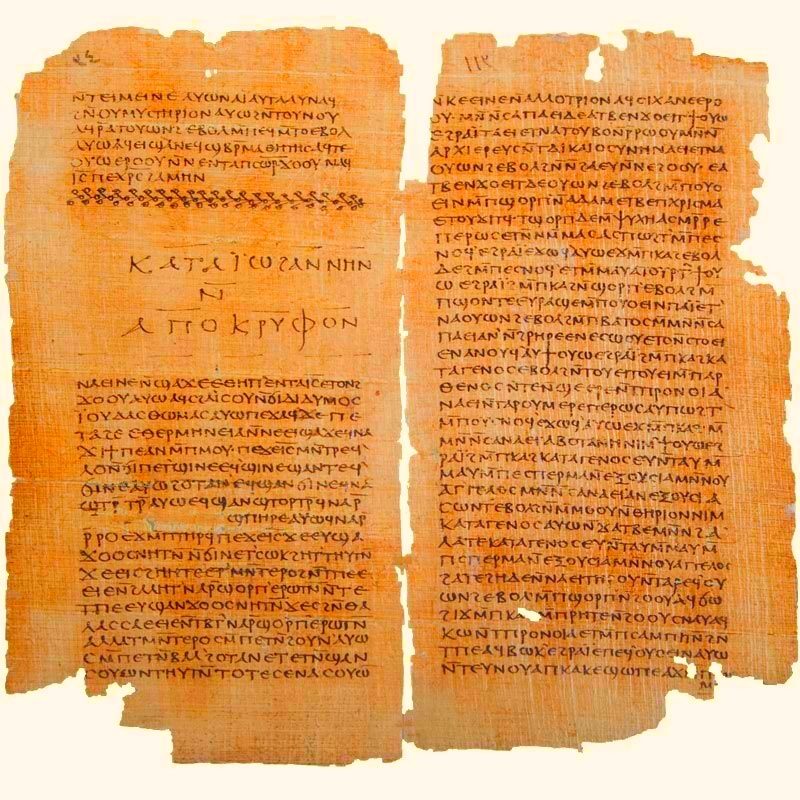
In December 1945, near the Upper Egyptian city of Nag Hammadi, an Arabic farmer named Muhammad Ali al-Samman uncovered a sealed ceramic jar at the base of the Jabal al-Tarif cliff. Inside were fragments of ancient papyrus books, written in Coptic, containing texts the early Church had rejected as heretical. Among them were the Gospel of Thomas, the Gospel of Philip, and the Apocryphon of John—now collectively known as the Gnostic Gospels.
These discoveries have captured the popular imagination. Books like The Da Vinci Code and breathless documentaries suggest these texts represent a “lost Christianity” suppressed by an oppressive hierarchy. But the scholarly reality is more nuanced. These are not forgotten eyewitness accounts of Jesus. They are products of the 2nd through 4th centuries—with the best-known texts composed roughly 80–150 years after Jesus’ ministry, and some written even later—and they represent theological systems fundamentally at odds with the apostolic faith.
The term “Gospel” itself is misleading. A gospel is supposed to be “good news” about salvation in Christ. But the Gnostic Gospels proclaim salvation through secret knowledge (gnosis) of a hidden divine spark trapped in matter. This is not the Gospel of Jesus Christ. It is a reinterpretation of Christian themes through the lens of Gnosticism, a dualistic philosophical movement that despises the material world and the God who created it.
Yet these texts deserve serious study—not as Scripture, but as historical windows into early Christian diversity and the spiritual crises of the late ancient world.
The Gospel of Thomas
The Gospel of Thomas is the most famous of the Gnostic texts. It consists of 114 sayings (logia) attributed to Jesus, with minimal narrative or context. It begins: “These are the hidden words that the living Jesus spoke and Didymos Judas Thomas wrote down.”1
The resemblance to the canonical Gospels is surface-level. Many sayings parallel Matthew and Luke—the beatitudes, the parable of the sower, the mustard seed—but they are often stripped of their original meaning and recast in a Gnostic framework. Where Matthew’s Jesus says, “Blessed are the merciful,” Thomas’s Jesus says:
This is a dramatically different message. In Thomas, salvation belongs to those who are already elect—those who possess the divine spark. Mercy and justice have vanished. What remains is elitism and a mystical sense of cosmic return.
Scholars fiercely debate Thomas’s date and significance. Some argue it is an independent tradition possibly dating to the 1st century, potentially contemporary with the canonical Gospels. Others, more persuasively, place it in the 2nd century as a late reinterpretation of gospel material through a Gnostic lens. The manuscript evidence is complex: Greek fragments from Oxyrhynchus date to the 2nd–3rd centuries, while the complete Coptic manuscript dates to c. 340 AD.
What makes Thomas theologically troubling for Christians is its silence about the Incarnation, the Cross, and the Resurrection. Jesus is not God made flesh. The text contains no passion narrative, no crucifixion, no resurrection account. Instead, Jesus appears as a revealer of hidden wisdom accessible only to those who “enter the kingdom as little children”—meaning, paradoxically, as those who already possess the esoteric knowledge of their true nature.2
The Gospel of Philip
The Gospel of Philip is a miscellaneous collection of sayings, parables, and mystical reflections on Gnostic sacraments. Written in the 2nd or 3rd century (most scholars favor the latter), it is attributed (falsely) to the apostle Philip and reflects Valentinian theology—a more sophisticated and philosophical form of Gnosticism.
Philip is particularly interested in the sacraments: baptism, the anointing, and a mysterious ritual called “the bridal chamber.” For Philip, these are not merely outward signs of grace, but instruments of gnosis, ways to recover one’s original divine nature and escape the prison of flesh.
The most infamous passage in Philip concerns Mary Magdalene:
Dan Brown seized on this fragment in The Da Vinci Code, claiming it proved Jesus married Mary Magdalene. The scholarly consensus is unanimous: Brown misread a broken, fragmentary text to fit a fictional narrative. The word “companion” translates the Coptic koinōnos, a Greek loanword whose range spans “companion,” “associate,” “partner,” and occasionally “spouse”—scholars stress its ambiguity. In Gnostic usage it most likely means “spiritual partner,” and the “kiss on the mouth” is a symbol of spiritual transmission of divine knowledge. There is no historical support here for a marriage. The text itself is undoubtedly late (most scholars favor the 3rd century, with a range of c. 180–300 AD), theologically heterodox, and preserved in manuscripts so fragmented that confident interpretation is impossible even without sensationalism.
Philip’s real significance lies in his attempt to Christianize Gnostic practice. In Philip’s system, sacramental ritual becomes the vehicle of gnosis. This represents a middle ground between pagan Gnosticism and Christian theology—but it is a compromise that evacuates Christian sacraments of their true meaning. In the Catholic tradition, sacraments are encounters with Christ’s grace through the Church he founded. For Philip, they are techniques for mystical self-discovery.
The Apocryphon of John
If Thomas and Philip are popular, the Apocryphon of John is the most theologically elaborate of all the Gnostic texts. This secret teaching of John (the apostle) presents an elaborate cosmology explaining why the world is evil and how the divine spark became trapped in matter.
The Apocryphon opens not with Jesus, but with the transcendent God of the pleroma (fullness)—utterly remote, utterly unknowable, beyond all categories. From this supreme God emanate lower divine beings called aeons. One of these, Sophia (Wisdom), makes a catastrophic error. Filled with presumption, she creates a being in isolation from the other aeons. This being is the demiurge (literally “craftsman&rdquo)—a flawed, ignorant god who believes himself to be the supreme deity.
The demiurge is the God of the Old Testament. He creates the material world and the human body—prisons for the divine sparks trapped within matter. He decrees “I am God and there is no other God beside me,” unaware that he is speaking blasphemy against the true transcendent God above him.
This serpent-demiurge becomes the Gnostic reinterpretation of the God of Genesis. The God who creates humanity, who walks in the garden, who demands obedience—in Gnostic mythology, he is the Archon, the false god, the jailer of human souls.
This cosmology is significant because it reveals the core metaphysical problem Gnosticism is trying to solve: If God is good, why is the world evil? Why is the body shameful? Why must we suffer? The Gnostic answer: the world is not God’s creation. A lesser being created it. God is not responsible for matter, evil, or the Law of Moses.
For the Catholic Church, this mythology is destructive. It denies God’s goodness as Creator. It makes evil a fundamental feature of reality. It portrays the Old Testament, the God of Abraham, Isaac, and Jacob, as false and evil. The Apocryphon of John represents precisely the kind of dualistic heresy the early Church Fathers spent decades refuting.
The Gospel of Judas
In 2006, the scholarly world was startled by the publication of the Gospel of Judas, a Sethian Gnostic text discovered in Egypt decades earlier but kept under wraps during restoration and scholarly analysis. The National Geographic documentary that accompanied its publication suggested a bombshell: the “heretical” Gospel of Judas rehabilitated Judas Iscariot as a hero who obeyed Jesus’ secret commands.
The reality is more complex. In Judas, Jesus reveals to his disciples a complex cosmology of aeons and archons. He teaches that the twelve disciples are so deluded by worldly powers that they don’t understand his true nature. But Judas, alone, perceives the truth. Jesus asks Judas to betray him to the authorities—not out of malice, but because Judas understands that the body of Jesus is mere matter, a garment for his true divine essence. Sacrificing the body liberates the spirit.
Judas complies, and is immediately rewarded with esoteric knowledge of the true God and the pleroma. He is portrayed as the enlightened one, the only disciple who truly understands Jesus. By contrast, the other apostles are deluded into believing in the bodily resurrection and a God who demands sacrifice.
What makes Judas particularly revealing is how thoroughly it dismantles Christian theology. There is no atonement, no redemption through Christ’s death, no bodily resurrection. The Crucifixion is merely a shedding of corporeal matter. The “God” who demands sacrifice is an ignorant archon. And the apostolic faith—belief in Jesus’ bodily resurrection and the sacramental redemption of the world—is exposed as delusion.
The media sensationalism around Judas may have overstated its importance, but scholars recognized it as significant evidence of how thoroughly Gnostic groups sought to invert Christian faith at its core, transforming the betrayal into a salvific act and resurrection into irrelevance.
Other Notable Gnostic Texts
The Nag Hammadi library contains many other treasures worth brief mention.
The Hypostasis of the Archons (“Reality of the Rulers”) elaborates on the cosmology of the Apocryphon of John, describing how the archons (rulers of the lower world) try to prevent humanity from escaping their dominion. Here, the serpent of Genesis is recast as the archons’ enemy, helping humans to knowledge. The text is a direct inversion of biblical narrative.
The Testimony of Truth presents a more ascetic strain of Gnosticism, emphasizing renunciation of flesh, marriage, and procreation. It portrays sexual desire as entrapping and links procreation to spiritual bondage. It sharply criticizes the “foolishness” of the resurrection of the body and condemns the Church as deluded.3
The Gospel of Truth (genuinely Valentinian, possibly from the school of Valentinus himself) is more poetic and less overtly mythological than other Gnostic gospels. It uses the language of the canonical Gospels but reinterprets it through an emanationist lens. For Valentinus, salvation is not rescue from sin but recovery of one’s forgotten divine origin.
Thunder: Perfect Mind stands apart. It is not a gospel at all but a revelation discourse in which the divine stands as a hypostasis (a power or personified entity) called “Thought,” speaking in first person: “I am the knowledge of my name” and “I am shameless; I am ashamed. I am strength and I am fear.” This paradoxical self-revelation has fascinated scholars for decades, representing perhaps the most mystical and least explicitly dualistic of the Nag Hammadi texts.
Why Are the Gnostic Gospels Not in the Bible?
A legitimate question arises: How do we know the Church didn’t simply suppress inconvenient texts? Why trust the canon?
The answer requires understanding how the biblical canon was formed. It was not the product of imperial conspiracy. Rather, it emerged gradually over the first four centuries through a combination of four criteria:
Apostolicity: Was the text written by an apostle or an apostolic figure, in the 1st century, giving eyewitness testimony to Christ?
Orthodoxy: Does the text teach the apostolic faith—Christ as divine, incarnate, crucified for our sins, risen bodily from the dead?
Catholicity: Was the text recognized and used across the Church, from East to West, from the earliest times?
Antiquity: Was the text ancient enough to plausibly originate in the apostolic period?
By every measure, the Gnostic texts fail these tests. All are dated to the 2nd through 4th centuries—later than the canonical Gospels, and late enough that they postdate the living memory of the apostles. None claim apostolic authorship without fraud; the Gospel of Thomas attributes itself to Didymos Judas Thomas—one of the Twelve Apostles of Jesus, not the actual author. The Gospel of Philip falsely attributes itself to the apostle.
More fundamentally, these texts teach heterodox theology. They deny the Creator’s goodness, the salvation value of the Cross, and the bodily resurrection. The early Church Fathers—Irenaeus, Tertullian, Hippolytus, Epiphanius—did not simply ignore these texts. They read them carefully and refuted them systematically. Their rejection was motivated primarily by doctrinal fidelity to the faith once delivered to the saints—though scholars like Elaine Pagels have argued that institutional authority and organizational concerns were also intertwined with these theological judgments.
The Church did not suppress the Gnostic Gospels through blanket censorship. Rather, they were gradually abandoned because no Christian community found them edifying. They were the products of heterodox sects, not of the apostolic tradition.
The Catholic Assessment
What did the Church Fathers say about Gnosticism? Irenaeus of Lyons, writing in the late 2nd century, devoted five lengthy books to refuting gnostic systems. His Against Heresies is not an angry rant but a learned theological refutation, point by point. He accuses the Gnostics of empty speculation, of abandoning Scripture, of placing their “secret gospels” above the four canonical ones.
Irenaeus’ central argument is that Gnosticism destroys the Gospel by denying the incarnation. If God did not truly become flesh, suffer, die, and rise again, then there is no redemption of the body, no resurrection, no healing of the material world. There is only the cold escape of the divine spark into the pleroma. This is not Christianity; it is dualism.
The Catechism of the Catholic Church (par. 120) affirms that the Church’s tradition and Scripture together form one sacred deposit, transmitted by the apostles. The canon is not a human creation but the Church’s recognition of apostolic testimony. “It was by the apostolic Tradition that the Church discerned which writings are to be included in the list of the sacred books.”4
This does not mean the Gnostic texts have no value. They are invaluable historical sources for understanding 2nd-century Christianity, the diversity of early Christian speculation, and the spiritual hunger of the late ancient world. They show us what the apostolic faith rejected—and by contrast, illuminate what the apostles affirmed.
Catholics can study these texts with confidence and curiosity. Their exclusion from the canon is justified by their late date, false apostolic attribution, and theological incompatibility with the faith handed down from the apostles. But understanding their claims, their appeal, and their doctrinal errors enriches our grasp of what makes the Gospel true.
FAQ
Q1: Are the Gnostic Gospels older than the canonical Gospels?
No. The canonical Gospels (Matthew, Mark, Luke, John) were all written in the 1st century, between approximately 65 and 100 AD. The Gnostic texts are 2nd–4th century compositions. The earliest surviving fragments of Thomas—Greek papyri from Oxyrhynchus—date to the 2nd–3rd centuries, though the complete Coptic text dates to c. 340 AD. No manuscript evidence places any complete Gnostic gospel before the canonical four.
The scholarly consensus (with some dissent) places Thomas as the latest to retain any possible link to 1st-century sayings material, but even sympathetic scholars acknowledge it was compiled and interpreted through a Gnostic lens in the 2nd century. The other texts (Apocryphon of John, Gospel of Philip, Gospel of Judas) are unambiguously 2nd–4th century in origin.
Q2: Did the Church suppress the Gnostic Gospels?
Not in the manner popular mythology suggests. The Church did not conduct secret burnings or ban these texts through imperial decree (at least not until the late 4th century, after they had already been abandoned). Rather, the Gnostic texts were abandoned because they were produced by marginal sects, not by the main Christian tradition.
The apostolic Church used the four Gospels from the early 2nd century onward. These were read in worship, quoted by Church Fathers, and recognized across the Christian world. The Gnostic texts never achieved this universal recognition. They circulated among heterodox groups in Egypt and Syria, and when the broader Church encountered them, theologians deliberately refuted them.
Suppression came later—not through conspiracy, but through the Church’s ordinary exercise of discernment. A text rejected as heretical in the 2nd century naturally fell out of use. By the time the Nag Hammadi library was buried (probably around the 4th century), these texts were already forgotten relics.
Q3: Was there a “lost Christianity” the Church hid?
This is the central claim of popular Gnosticism, from the Gospel of Mary Magdalene revival movements to The Da Vinci Code. The implication is that authentic, egalitarian, feminine-friendly Christianity was destroyed by patriarchal hierarchies.
The historical reality is less romantic. Gnosticism was elitist, not egalitarian. Salvation belonged to the select few with gnosis. Women in Gnostic texts are either ignorant archons or rare wisdom figures, but they occupy no more prominent a place than in the heretical speculations of men. Mary Magdalene in the Gnostic texts is no more “liberated” than she is in the canonical Gospels—she is simply repurposed for Gnostic theology.
Moreover, women in the early (apostolic) Church occupied significant roles: deacons (Phoebe, Rom 16:1), prophets (Philip’s daughters, Acts 21:9), co-workers who explained the faith (Priscilla, Acts 18:26), and house-church hosts (Nympha, Col 4:15). The apostolic tradition was not uniquely oppressive to women. What changed over time was the wider cultural absorption of later Roman patriarchy, a problem that emerged in the 3rd–4th centuries regardless of which Christian texts were in the canon.
The “lost Christianity” narrative is a modern projection onto ancient texts.
Q4: Should Catholics read the Gnostic Gospels?
Yes, with caution and proper context. These texts are historically and theologically significant. Reading the Apocryphon of John teaches you what the Church Fathers were combating. Reading the Gospel of Thomas shows you how Christian sayings can be radically reinterpreted. This deepens your understanding of what makes the canonical Gospels distinctive.
But reading the Gnostic texts is not like reading Scripture. They are not divine revelation. They are human documents, produced by heterodox communities, teaching falsehoods about the nature of God and the redemption of the world. One should approach them as a scholar approaches a heretical system—with intellectual rigor, historical sympathy, and theological clarity.
The Church teaches that Christ founded the Church, that he gave the apostles authority, and that the apostolic Tradition (including the canon) is the reliable witness to Christ’s teaching. This foundation is secure. Reading the Gnostic texts does not threaten it; it illuminates why the Church rightly rejected them.
See Also
- What Is Gnosticism? – A theological overview of Gnostic philosophy and worldview
- Neo-Gnosticism in Evangelical and Progressive Christianity – How Gnostic ideas resurface in modern theology
- John 1:1–5 and the Incarnation – The theology the Gnostics rejected
- Heresies Confronted in 1 John – Gnostic false teaching in the apostolic era
- Gnosticism vs. Christianity: Fundamental Differences – Why apostolic faith and Gnosticism are incompatible
- Gospel of Thomas, Prologue. Translation from Thomas O. Lambdin in James M. Robinson, ed., The Nag Hammadi Library in English (HarperSanFrancisco, 1990).
- Gospel of Thomas, Saying 22. The text is notoriously cryptic, and scholarly interpretation remains contested.
- Testimony of Truth, NHC IX,3. The text sharply critiques marriage and procreation, portraying them as instruments of spiritual bondage—a view starkly opposed to the Christian affirmation of sexuality within matrimony. Note: the manuscript is approximately 45% damaged, and much of its text is lost.
- Catechism of the Catholic Church, par. 120.

Garrett Ham
Garrett Ham is an attorney, military veteran, and holds a Master of Divinity from Yale Divinity School. He writes from Northwest Arkansas on theology, law, and service.
More about Garrett →Related Posts
What Is Gnosticism? A Catholic Guide to the Ancient Heresy
What is Gnosticism? A Catholic guide to proto-Gnostic currents, the 2nd-century systems, the Nag Hammadi texts, and the Church Fathers' response through canon, creed, and doctrine.

Neo-Gnosticism in Evangelical and Progressive Christianity
How both evangelical and progressive Christianity have absorbed Gnostic tendencies—rejecting the body in different ways while departing from historic Christian teaching.
John 1:5 Meaning Explained: The Light Shines in the Darkness
What does John 1:5 mean? A study of the Greek—the present tense of φαίνει, the double meaning of κατέλαβεν, and the already/not yet of eschatology.
Stay Informed
Get new writing on faith, law, and service delivered to your inbox.
No spam. Unsubscribe anytime.