The First Sale Doctrine
On This Page
Introduction: The Right to Own What You Buy
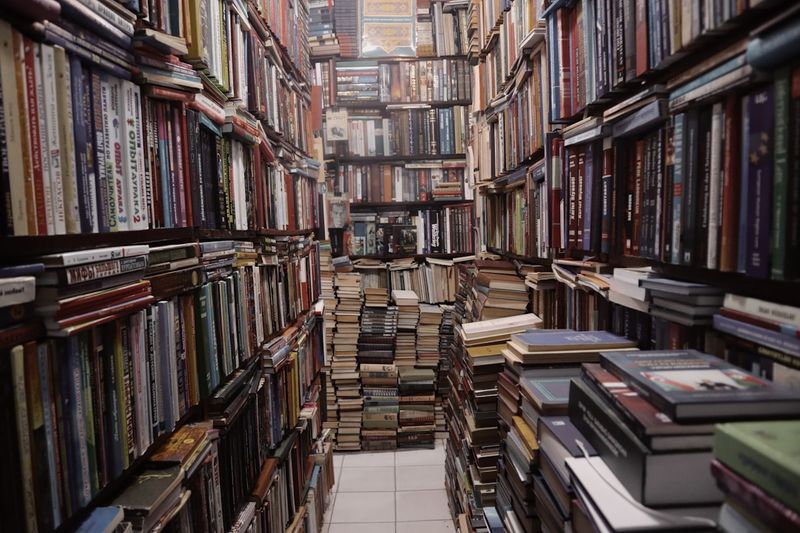
Imagine you buy a hardcover book from a bookstore. You read it, enjoy it, and decide to donate it to a local library. No permission required. You didn’t call the publisher. You didn’t pay a licensing fee. The author didn’t object. You simply owned the book, and you could do with it as you pleased.
This simple, taken-for-granted right — your ability to resell, lend, gift, or rent something you’ve legally purchased — exists because of a legal doctrine called the “first sale doctrine.”
Without the first sale doctrine, copyright holders would theoretically control every subsequent transaction involving their work. They could demand royalties every time a book changed hands. Publishers could prohibit used book sales. Libraries couldn’t lend materials without permission. The secondary market — that thriving ecosystem of used bookstores, rental shops, and gift-giving — would collapse.
The first sale doctrine stands as one of copyright law’s most important limitations on copyright holders’ rights. It protects consumer interests, enables public institutions like libraries to function, and ensures that once you buy something, you truly own it.
But in our increasingly digital world, the first sale doctrine is under unprecedented strain. Digital licensing has muddied the line between owning and renting. The courts have struggled to apply a twentieth-century doctrine to twenty-first-century problems. And copyright holders have repeatedly sought to circumvent the doctrine’s protections through licensing agreements and anti-circumvention technologies.
This post explores the first sale doctrine from its origins to its modern challenges. Whether you’re a student of law, a concerned copyright owner, or simply someone curious about your rights, understanding this doctrine matters.
What Is the First Sale Doctrine?
At its heart, the first sale doctrine is elegantly simple: it says that once a copyright holder sells a lawful copy of a work, their exclusive right to distribute that particular copy is exhausted. They’ve made their first sale. What happens to that copy after that sale is no longer their concern.
Legally, it’s codified in 17 U.S.C. § 109(a), which states:
“Notwithstanding the provisions of section 106(3), the owner of a particular copy or phonorecord lawfully made under this title, or any person authorized by such owner, is entitled, without the authority of the copyright owner, to sell or otherwise dispose of the possession of that copy or phonorecord.”
Section 106(3) is the exclusive right of the copyright owner to distribute copies or phonorecords of the work to the public by sale or other transfer of ownership, or by rental, lease, or lending. The first sale doctrine carves out an exception to that distribution right.
This is crucial: it’s about the right to distribute a particular copy, not the copyright itself.
When you buy a book, you’re buying the physical copy — not the copyright, not the right to reproduce it, not the right to make derivative works. You own that individual copy. The copyright holder still owns the copyright. But their control over that specific copy ends at the moment of first sale.
Ownership of a Copy vs. Ownership of Copyright
This distinction is fundamental to understanding the entire doctrine, so let’s be clear about it.
Copyright is a bundle of exclusive rights. According to 17 U.S.C. § 106, the copyright holder has the right to:
- Reproduce the work (make copies)
- Prepare derivative works (adaptations, translations, sequels)
- Distribute copies to the public
- Perform the work publicly
- Display the work publicly
- Perform the work publicly by means of digital audio transmission, in the case of sound recordings (added by the Digital Performance Right in Sound Recordings Act of 1995)
When you buy a book, you don’t get these rights. You can’t photocopy the entire book and sell those copies. You can’t make a film adaptation. You can’t translate it and publish it yourself.
What you do get is ownership of that physical copy. You can lend it. You can resell it. You can donate it. You can even burn it (though we wouldn’t recommend it for rare editions). You simply cannot copy it or violate the copyright holder’s exclusive rights.
The first sale doctrine protects this distinction. It says: yes, the copyright holder has an exclusive distribution right, but that right applies to the act of putting copies into circulation in the first place. Once they’ve done that, the right is spent.
The History: From Common Law to Statute
Bobbs-Merrill Co. v. Straus (1908)
The first sale doctrine didn’t emerge from thin air. Like many principles of law, it evolved from practical necessity and fairness.
The doctrine’s origin story begins with a Supreme Court case: Bobbs-Merrill Co. v. Straus, 210 U.S. 339 (1908).
In the early 1900s, the Bobbs-Merrill Company, a major publisher, found itself battling Isidor and Nathan Straus, the brothers who owned R. H. Macy & Company — one of America’s largest department stores. Bobbs-Merrill had printed a notice in its novel The Castaway: “The price of this book at retail is one dollar net. No dealer is licensed to sell it at a less price, and a sale at a less price will be treated as an infringement of the copyright.” The publisher hoped to maintain prices across the entire distribution chain.
Macy’s didn’t care. They sold the book at 89 cents, undercutting the publisher’s notice. Bobbs-Merrill sued, arguing that the copyright law’s exclusive distribution right allowed them to control the price of every book sold. They should be able to dictate who could sell their work and at what price.
The Supreme Court disagreed. Justice Day wrote for the majority that the copyright holder’s exclusive right to distribute copies extended only to the first sale. Once the book was sold, the copyright holder’s control ended. The purchaser owned the copy and could resell it at any price they chose.
The Supreme Court held that the copyright holder’s exclusive right to distribute copies extended only to the first sale. Once the book was sold, the copyright holder’s control ended.
This decision was revolutionary. It meant that copyright was not a tool for price-fixing. It was not a tool for controlling the secondary market. It was a limited monopoly, and that monopoly had limits — the limits of the first sale.
The Supreme Court grounded this conclusion in both practical fairness and constitutional limits on copyright. Copyright exists, the Court noted, to promote the progress of science and useful arts. But unlimited control over the secondary market would extend that monopoly far beyond what was necessary or constitutional.
Bobbs-Merrill wasn’t a statutory right; it was a common law doctrine derived from the Court’s interpretation of copyright law. But it was understood as a fundamental principle of copyright policy.
Codification in the Copyright Acts of 1909 and 1976
Just one year after Bobbs-Merrill, Congress codified the first sale doctrine in Section 27 of the Copyright Act of 1909, transforming the Court’s common-law holding into statutory law.
Fast forward to 1976. Congress was overhauling copyright law comprehensively, and one of its major tasks was re-codifying longstanding doctrines into a unified statute.
The result was the Copyright Act of 1976, which still governs copyright in the United States today (with various amendments). In that statute, Congress re-codified the first sale doctrine as Section 109.
Congress made clear that the doctrine was not merely a judge-made exception. It was a fundamental principle of copyright policy. Copyright holders get a distribution right, yes, but that right is exhausted upon the first authorized sale.
What the First Sale Doctrine Allows
Let’s be concrete about what the first sale doctrine permits you to do with a lawfully acquired copy.
Resale
The most obvious: you can resell it. You can sell your used book to a friend, to a used bookstore, or through an online marketplace. The copyright holder gets no payment, and you get paid nothing (except what the buyer gives you). The used book market is entirely legal and entirely protected by the first sale doctrine.
This is why there are billion-dollar industries built on resale. Amazon bought Goodreads, which includes massive used book recommendations. eBay has a thriving marketplace for used media. Poshmark facilitates the resale of clothing. All of this relies on first sale.
Lending
You can lend your copy to a friend. You can donate it to a library. Libraries can circulate copies thousands of times without paying a royalty. This is why public libraries have remained one of copyright law’s major success stories — they serve millions of people without violating copyright because they lend lawfully acquired copies.
Renting
Subject to exceptions we’ll discuss, you can rent your copy. Video rental stores once thrived on this principle — renting DVDs to customers. While Netflix and streaming have transformed that industry, the legal right to rent remains.
Giving Away
You can give your copy away as a gift. You can leave it in your will. You can donate it to charity. These aren’t commercial uses, but they’re uses that would be restricted if the copyright holder had unlimited distribution rights.
Display and Personal Use
You can read your book. You can display it on your shelf. You can refer to it, annotate it, and share it with family members. The first sale doctrine isn’t just about commerce; it’s about the right to actually use what you own.
One Critical Limit
However — and this is crucial — you cannot reproduce the work. You cannot make copies. If you resell a book, you’re selling that one copy, not multiple copies. You cannot scan the entire book and distribute it digitally. You cannot photocopy chapters for distribution. The first sale doctrine protects your right to transfer possession of the copy you own, not your right to make new copies.
Key Exceptions to the Doctrine
The first sale doctrine isn’t absolute. Congress carved out important exceptions, driven largely by powerful copyright holder lobbying. Understanding these exceptions is crucial to understanding the doctrine’s current scope.
The Record Rental Amendment (1984)
In 1984, the music industry successfully lobbied Congress to restrict the rental of sound recordings. The industry’s argument was straightforward: people were renting CDs, recording them, and returning them. This undermined sales.
Congress agreed and passed the Record Rental Amendment, which modified 17 U.S.C. § 109 to state that the first sale doctrine does not apply to sound recordings. You cannot rent a CD or vinyl record without the copyright holder’s permission. (You can still resell it, donate it, or lend it, but not rent it commercially.)
This exception has had real consequences. Video rental stores were able to rent movies because they’re audiovisual works, not sound recordings. But record stores couldn’t rent music CDs. The music industry successfully protected a revenue stream through this exception.
The Computer Software Rental Amendments Act (1990)
Six years later, in 1990, the software industry won a similar battle. Congress passed the Computer Software Rental Amendments Act, which modified the first sale doctrine to prohibit the rental of computer software.
The policy rationale was similar: the software industry argued that rental facilitated piracy. If people could rent software cheaply, record it, and return it, software sales would plummet.
Congress again agreed and limited the first sale doctrine. Software can be resold, but not rented (with limited exceptions for nonprofit libraries and educational institutions).
Why These Exceptions Matter
These exceptions reveal an uncomfortable truth about the first sale doctrine: it’s not a timeless principle. It’s a policy choice, and that choice can be modified when copyright holders lobby effectively enough.
The music and software industries argued that rental threatened their business models in a way that resale didn’t. And perhaps they had a point — rental does create a different economic incentive than resale. When you resell a book, you’re competing with the used market, which exists anyway. But rental creates a new use case: short-term access without purchase.
Yet the exceptions also show the doctrine’s limits. The first sale doctrine was meant to protect consumer interests and enable secondary markets. But when copyright holders’ interests conflicted with those consumer interests, the copyright holders won.
The Digital First Sale Dilemma
The real challenge to the first sale doctrine has come not from Congress but from technology and licensing.
In the digital age, it’s not clear whether the first sale doctrine applies at all. And copyright holders have actively structured their business models to avoid it.
The Problem: Licensing vs. Ownership
When you buy a physical book, you own it. The transaction is a sale. You have title to the copy.
When you buy a Kindle book, you don’t buy it. You license it. Amazon’s Terms of Service make this explicit:
“Kindle Content is licensed, not sold, to you by the Content Provider.”
If the transaction is a license, not a sale, then the first sale doctrine doesn’t apply. You don’t own the copy. You have a limited license to read it. You cannot resell it. You cannot give it to someone else. You cannot even be certain you’ll have it forever — Amazon can remotely delete it from your device (though they’ve pledged not to do so without cause).
When you buy a Kindle book, you don’t buy it. You license it. If the transaction is a license, not a sale, then the first sale doctrine doesn’t apply.
This distinction is not merely technical. It fundamentally changes the consumer’s rights. With a physical book, you have perpetual ownership of your copy. With a Kindle book, you have a revocable license.
The same applies to music, films, and software. You don’t own your Spotify subscription or Netflix account. You license access to the content. You don’t own your Adobe Creative Cloud software. You subscribe to it.
Capitol Records v. ReDigi: The Digital First Sale Debate
The question whether the first sale doctrine applies to digital files came before the courts in Capitol Records, LLC v. ReDigi Inc., 910 F.3d 649 (2d Cir. 2018).
ReDigi was a service that allowed users to resell digital music files they’d purchased on iTunes. Customers ran ReDigi’s software, which transferred their files in small packets to ReDigi’s servers and deleted the local copy as the upload progressed. ReDigi marketed this “data migration” process as ensuring that only one copy of the file existed at any given time.
From a consumer’s perspective, this looked like digital resale: the same principle as reselling a used CD. But Capitol Records, along with Capitol Christian Music Group and Virgin Records, sued, arguing that this violated their copyright and that the first sale doctrine didn’t apply.
The Second Circuit agreed. The court held that the uploading of the file created a new reproduction on ReDigi’s server, which infringed the copyright holder’s exclusive reproduction right. Because a reproduction occurred, and the first sale doctrine only applies to distribution of lawful copies (not to the creation of unlawful copies), ReDigi’s service was illegal. The court also rejected ReDigi’s single-copy claim, noting that “ReDigi here overclaims” — users could easily retain duplicates on USB drives, CDs, or other devices ReDigi’s monitoring software could not reach.
This reasoning has significant implications. It suggests that transferring a digital file, even from one personal device to another, creates a new copy in transmission. That new copy, if not authorized, infringes copyright. The first sale doctrine can’t protect a use that requires copyright infringement to accomplish.
The ReDigi court explicitly declined to read a digital first sale doctrine into the existing statute, concluding that any such expansion was a question for Congress, not the courts. Congress has not acted. Digital resale remains largely illegal, even when it’s functionally identical to resale of physical media.
The DMCA and Anti-Circumvention
The Digital Millennium Copyright Act (DMCA), passed in 1998, further complicated the digital first sale landscape. The DMCA prohibits circumventing technological protection measures (TPMs), even if circumventing them would be a lawful use (like using a DRM-free backup of a CD you own, or reselling a digital file).
Many digital works are protected by DRM (digital rights management). E-books have DRM. Music files have DRM. If the DMCA’s anti-circumvention provisions apply, you cannot remove that DRM even if you own the file. And without removing DRM, you cannot resell or transfer the file.
The DMCA thus creates a legal barrier to the first sale doctrine’s practical application. Even if the doctrine theoretically applies to digital files, the anti-circumvention rules may prevent you from exercising your rights.
A Contrast: The EU and UsedSoft v. Oracle
The European Union has taken a different approach. In UsedSoft GmbH v. Oracle International Corp., Case C-128/11 (CJEU, July 3, 2012), the Court of Justice of the European Union held that the principle of exhaustion can apply to downloaded software sold under a perpetual license.
Oracle distributes much of its software by download under perpetual licenses. The CJEU reasoned that the combination of a perpetual license plus a download — entitling the customer to use the program indefinitely in exchange for a one-time fee — should be characterized as a “sale” under Directive 2009/24/EC. Because it was a sale, Oracle’s distribution right in that copy was exhausted, and the customer could resell it. The Court was careful to limit the holding to perpetual licenses; pure subscription or time-limited licenses would not trigger exhaustion.
This represented a fundamentally different policy choice than the United States has made. The EU prioritized the consumer’s right to own and resell over the software publisher’s interest in controlling secondary markets.
The CJEU also imposed an important precondition: for exhaustion to apply, the original purchaser must make their own copy of the software unusable at the time of resale, so that two functional copies do not end up in circulation.
The UsedSoft decision remains exceptional in international law. Most countries have not followed Europe’s approach. The United States, in particular, has allowed copyright holders to use licensing agreements and DRM to avoid first sale protections in the digital realm.
Kirtsaeng v. John Wiley & Sons: International Exhaustion (2013)
While the courts have largely confined the first sale doctrine in the digital realm, they’ve also expanded it in an important way in the physical world.
Kirtsaeng v. John Wiley & Sons, Inc., 568 U.S. 519 (2013) is one of the Supreme Court’s most important recent copyright decisions. It clarified that the first sale doctrine applies even to copies manufactured abroad.
The Facts
Kirtsaeng was a student at Cornell University who bought cheap textbooks from Thailand, where John Wiley & Sons had the Thai publisher produce textbooks for the Thai market at a lower price than the U.S. market. Kirtsaeng imported these books and resold them in the U.S., undercutting Wiley’s prices.
Wiley sued, arguing that the first sale doctrine only applied to copies manufactured in the United States. Because these copies were made abroad, Wiley argued, the first sale doctrine didn’t protect their resale.
The Supreme Court disagreed. Justice Breyer, writing for the majority, held that the first sale doctrine applies to copies manufactured anywhere, so long as they’re lawfully made under the copyright holder’s authority.
This was crucial because it meant that copyright holders couldn’t segment global markets by manufacturing different versions in different countries and restricting resale across borders. The copy is the copy, wherever it was made.
Why This Matters
The Kirtsaeng decision protected the secondary market and international trade. Publishers had tried to use manufacturing location as a way to maintain price discrimination across countries. The decision foreclosed that strategy.
It also clarified that the first sale doctrine is about the copy, not about where the copy was made. This is consistent with the doctrine’s fundamental logic: once a copy is lawfully made and sold, the copyright holder’s distribution right is exhausted.
Kirtsaeng stands as a recent affirmation of the first sale doctrine’s importance. But it’s also a reminder that the doctrine applies primarily to physical copies. Digital copies remain in a different legal category.
The Modern Challenge: Software as a Service and Beyond
The first sale doctrine faces new challenges from emerging business models that blur the line between sale and service.
Software as a Service (SaaS)
Many software companies have shifted from selling software to offering software as a service (SaaS). Rather than selling you a perpetual license to install software on your computer, they offer cloud-based access to software you pay to use.
With SaaS, you don’t have a “copy” in the sense the first sale doctrine contemplates. You have an account with access to a service. The copyright holder retains all copies on their servers. You have a revocable license to access those copies remotely.
This business model largely sidesteps the first sale doctrine because there’s nothing to resell. You can’t transfer your Adobe Creative Cloud subscription to someone else. You can’t resell access to your Salesforce account. The first sale doctrine assumes you own a copy; SaaS models ensure you never own anything.
NFTs and Digital Ownership
NFTs (non-fungible tokens) have raised interesting questions about digital ownership and whether the first sale doctrine might apply in the blockchain era. An NFT purports to represent unique ownership of a digital asset.
However, NFTs don’t clearly solve the digital first sale problem. Most NFTs don’t grant copyright; they grant only a license or proof of ownership. The underlying digital content is still protected by copyright. Reselling an NFT doesn’t resolve whether you can resell the copyright holder’s work.
Moreover, most NFTs come with terms of service that restrict resale or impose royalties on resale. These contractual restrictions may prevent the first sale doctrine from applying even if it theoretically could.
NFTs promised a new model of digital ownership, but they haven’t yet fundamentally changed the first sale doctrine’s limited application to digital works.
Subscription and Ephemeral Access
The broader trend is toward subscription and ephemeral access models. You don’t own music on Spotify. You don’t own films on Netflix. You have access as long as you pay and as long as the provider wants to give you that access.
This represents a fundamental shift in copyright policy. Historically, copyright holders got a monopoly on the first sale, but consumers got ownership of the subsequent copies. Now, copyright holders are trying to retain control not just over the first sale but over all subsequent access.
The first sale doctrine, designed for a world of physical goods, struggles to apply to ephemeral digital access.
Why the First Sale Doctrine Matters
Understanding the first sale doctrine isn’t merely academic. It protects real interests and enables real institutions.
Libraries and Public Access
Public libraries serve millions of people precisely because the first sale doctrine allows them to lend copies without the copyright holder’s permission or payment. Libraries are institutions of public good that would be impossible without first sale protections. If copyright holders could demand royalties on every lending, the economics of libraries would collapse.
Some libraries have begun offering digital lending, but the legal status is complicated. E-book publishers often refuse to sell e-books to libraries or impose restrictive licensing terms. This is because the copyright holders view library lending as competitive with their sales, and licensing agreements allow them to prevent that competition.
Used Markets and Affordability
The first sale doctrine enables used markets, which make goods more affordable. Used textbooks, used furniture, used clothing — these markets exist partly because resale is legal.
This is especially important for high-priced items like textbooks. A student who can’t afford a $300 textbook might be able to afford a used one for $100. Without the first sale doctrine and the used textbook market it enables, educational access would be more limited.
Copyright holders sometimes complain that used markets harm their sales. That’s often true. But that’s not a basis to restrict the first sale doctrine. Copyright holders are not entitled to perpetual revenue from every use of their work. They’re entitled to a limited monopoly on distribution of the original copies.
Consumer Rights and Autonomy
At a deeper level, the first sale doctrine protects consumer autonomy and property rights. When you buy something, you should own it. You should be able to do what you want with it (subject to law, of course). You should be able to resell it, lend it, or gift it.
In a digital age where copyright holders are increasingly trying to control how consumers use digital goods they’ve purchased, the first sale doctrine stands as a check on that control. It says: once you’ve sold it, it’s theirs.
Implications for Content Creators and Copyright Holders
It’s worth noting that while the first sale doctrine limits copyright holders’ control, it doesn’t eliminate it. Copyright holders retain significant rights even after first sale.
They retain the right to reproduce, to create derivative works, to perform or display the work, and to distribute new copies. The first sale doctrine only exhausts the distribution right in the specific copies that have been sold.
Moreover, if you’re a creator interested in maximizing your control, the licensing model offers alternatives. By not selling copies but instead offering licenses, you can sidestep the first sale doctrine entirely. This is why SaaS and subscription models are increasingly popular — they give creators more control.
But this approach has tradeoffs. Consumers are rightfully skeptical of licensing models. They want to own what they buy. Transparent licensing may actually reduce demand. The first sale doctrine, by ensuring ownership, may ultimately be good for creators because it builds consumer trust.
Conclusion: A Doctrine Under Strain
The first sale doctrine is a fundamental principle of copyright law. It protects our ability to own copies we purchase, to resell goods, to lend to friends, and to gift to family. It enables libraries, used bookstores, and secondary markets. It prevents copyright holders from maintaining monopolistic control over every transaction involving their work.
But the doctrine is under strain. Copyright holders have successfully lobbied for exceptions (the Record Rental Amendment, the Computer Software Rental Amendments Act). They’ve structured digital transactions as licenses rather than sales, evading the doctrine’s reach. They’ve used technology and legal tools like the DMCA to make first sale protections practically inaccessible.
The future of the first sale doctrine is uncertain. Congress could extend it to digital works, as the EU has partially done. Or it could allow copyright holders to continue circumventing it through licensing models and technological controls.
The question is whether our legal system will fight to preserve consumers’ ownership rights in a digital age, or whether copyright holders will succeed in converting ownership into perpetual licensing.
What seems clear is that a doctrine designed for physical books is struggling to adapt to digital goods, subscription models, and software as a service. The question is whether our legal system will fight to preserve consumers’ ownership rights in a digital age, or whether copyright holders will succeed in converting ownership into perpetual licensing.
For now, the first sale doctrine remains part of copyright law. If you own a physical copy of a work, you can resell it. But if you own a digital copy, the answer is more complicated. The law hasn’t yet caught up with technology.
This post provides general information about copyright law and is not legal advice. For guidance specific to your situation, consult a qualified intellectual property attorney.
Frequently Asked Questions {#frequently-asked-questions}
Can I resell my textbooks?
Yes, you can legally resell textbooks you own under the first sale doctrine. Used textbook markets are entirely legal. Publishers sometimes try to prevent this by offering digital codes with textbooks that can’t be transferred, but traditional physical textbooks can be resold. However, if your textbook came with a license or digital access code, you may only be able to resell the physical book itself, not the accompanying digital materials.
Can I lend a book to a friend or library without permission?
Yes. The first sale doctrine protects your right to lend any lawfully acquired copy to others without the copyright holder’s permission or payment. This is how public libraries operate. However, if you’ve purchased a digital book (like a Kindle book), the licensing agreement may prohibit lending. Check your specific license.
Can libraries rent or lend e-books?
This is complicated. Libraries can legally lend physical books under first sale, but e-book publishers often restrict library lending through licensing agreements. Many major publishers limit how many times an e-book can be lent or charge licensing fees for library e-book access. The legal status remains contested, but publishers’ contractual restrictions often prevent the practical application of first sale doctrine to e-books.
Does first sale apply to software I purchase?
The first sale doctrine applies to physical software (you can resell a boxed copy of software), but not to software rentals (thanks to the Computer Software Rental Amendments Act). However, most modern software is sold via license (like Microsoft Office 365) rather than as a copy, so first sale may not apply. Check your software’s terms of service to see whether you own a copy or hold a license.
Can I sell a Kindle book I bought?
No. Kindle books are licensed, not sold. Amazon’s terms of service explicitly state that Kindle content is licensed to you, not sold. Because the transaction is a license rather than a sale, the first sale doctrine doesn’t apply. You cannot resell, transfer, or give away a Kindle book. The same applies to other digital books purchased through licensing agreements.
Is digital resale legal?
Digital resale is largely illegal in the United States, as established by Capitol Records v. ReDigi. The court held that uploading a file to a resale service creates an unlawful reproduction, even if only one copy exists afterward. The first sale doctrine doesn’t protect the resale of digital files because resale requires reproduction, and reproduction (even temporary reproduction) infringes copyright. The European Union has taken a different approach, permitting digital resale of software, but the U.S. has not extended this protection.
Sources:
17 U.S.C. § 109 — Cornell Law School
17 U.S.C. § 106 — Cornell Law School
Bobbs-Merrill Co. v. Straus, 210 U.S. 339 (1908)
Capitol Records, LLC v. ReDigi Inc., 910 F.3d 649 (2d Cir. 2018)
Kirtsaeng v. John Wiley & Sons, Inc., 568 U.S. 519 (2013)
UsedSoft GmbH v. Oracle International Corp., Case C-128/11 (CJEU 2012)
Record Rental Amendment of 1984, Pub. L. 98-450
Computer Software Rental Amendments Act of 1990, Pub. L. 101-650
17 U.S.C. § 109 — Limitations on exclusive rights: Effect of transfer of particular copy

Garrett Ham
Garrett Ham is an attorney, military veteran, and holds a Master of Divinity from Yale Divinity School. He writes from Northwest Arkansas on theology, law, and service.
More about Garrett →Related Posts
Understanding Copyrights
What is a copyright? Learn how the Copyright Act of 1976 protects original works and grants authors exclusive rights to reproduce, distribute, and display them.

Copyright Fair Use
Copyright Fair Use

Copyright Registration
In this post, I discuss the process and benefits of copyright registration and how it can provide greater protections to your intellectual property.
Stay Informed
Get new writing on faith, law, and service delivered to your inbox.
No spam. Unsubscribe anytime.