Evangelical to Catholic: The Intellectual Journey

On This Page
The road from evangelicalism to Catholicism is not a rejection of what came before — it is a discovery that the tradition goes deeper than you knew.
I grew up Southern Baptist in Arkansas. I went to Yale Divinity School a conservative evangelical and left even more conservative, pressing back beyond Martin Luther to the Church Fathers. Today I am a Roman Catholic — not because I rejected evangelicalism, but because I followed its deepest impulses to their logical conclusion.
This page collects my writing on the intellectual, theological, and personal dimensions of that journey. If you are an evangelical questioning your tradition, a Catholic trying to understand the evangelical world, or someone navigating the increasingly common passage from one to the other, I hope these articles help you think more carefully about what you believe and why.
The Foundational Questions
Every evangelical-to-Catholic conversion begins with a question — or a set of questions — that the evangelical framework cannot quite answer on its own terms. For me, that question was about authority.
Where Does Authority Come From?
The doctrine of sola scriptura — Scripture alone as the sole infallible rule of faith — was the bedrock of my evangelical upbringing. It was also the first thing to crack. Not because I lost confidence in Scripture, but because I came to see that the doctrine was logically self-defeating: Scripture itself never claims to be the sole authority, and the very canon of Scripture was determined by the Church’s authority. I explore this argument in detail in Sola Scriptura and the Journey Toward Catholicism.
This question of authority — who decides what Scripture means when sincere believers disagree? — is the hinge on which the entire Catholic-Protestant divide turns. In How to Talk to Protestants About Authority, I discuss how Catholics and Protestants can engage this question charitably and productively, recognizing that both sides take Scripture seriously even when they disagree about how it relates to Tradition and the Magisterium. The same interpretive tensions appear across many doctrinal domains, including the fundamental differences between Reformed and Catholic theology.
Can Scripture Contain Errors and Still Be Authoritative?
Closely related to the authority question is the question of scriptural inerrancy. Many evangelicals are taught that if the Bible contains a single error — even a minor historical or scientific imprecision — the entire edifice collapses. This all-or-nothing framework is fragile by design: it makes the faith vulnerable to any apparent discrepancy.
The Catholic tradition offers a more robust understanding. In Errors in Scripture and Biblical Authority, I argue that Scripture is infallible in all matters of faith and practice without requiring that every incidental historical detail be scientifically precise. This is not a liberal concession — it is the position of the Church Fathers, who read Genesis allegorically centuries before Darwin.
What About Tradition?
Protestants and Catholics often talk past each other on the subject of tradition. Protestants hear “tradition” and think of human additions to Scripture — the very thing the Reformers rightly rejected. Catholics mean something quite different: the apostolic Tradition that preceded and produced the New Testament itself. In How to Talk to Protestants About Tradition, I unpack this distinction and explain why Catholics hold that Scripture and Tradition are two streams from one source.
The Evangelical Heritage Within Catholicism
One of the most important things I have learned is that evangelicalism and Catholicism are not opposites. The evangelical impulse — the passion for Scripture, the insistence on a personal relationship with Christ, the urgency of sharing the Gospel — is alive within Catholic tradition. It has always been there.
In Evangelical Catholic Thought, I explore what it means to be an evangelical Catholic: someone who holds the fullness of the Catholic faith while cherishing the evangelical heritage that brought them to it. The great Catholic evangelists — from St. Paul to St. Francis to Bishop Barron — share the same burning urgency that characterizes the best of evangelicalism. The difference is that they operate within a tradition that has two millennia of theological, philosophical, and institutional depth behind it.
Navigating the Cultural Divide
The evangelical-to-Catholic journey is not purely intellectual. It also involves navigating deep cultural differences and, often, hostility from both sides.
Anti-Catholic Prejudice in Evangelicalism
Many evangelicals carry inherited anti-Catholic prejudices that date to the Reformation and were amplified by waves of nativist sentiment in American history. In Anti-Catholic Evangelicals, I reflect on what it is like to encounter this prejudice from the inside — as someone who once held it, and who now finds himself on the receiving end.
The Exvangelical Temptation
Not everyone who leaves evangelicalism enters the Catholic Church. Many leave for progressive Christianity, agnosticism, or atheism — and many adopt the “recovering evangelical” or “exvangelical” label as a badge of honor. In The Insufferable Recovering Evangelical, I push back on this posture: not because the pain is illegitimate, but because defining yourself by what you have rejected rather than what you have embraced is a dead end. The healthiest departures from evangelicalism are those that walk toward something — whether that is Catholicism, Orthodoxy, or a more historically grounded Protestantism.
The Protestant Ideal as a Logical Fallacy
One of the most common rhetorical moves in Catholic-Protestant debate is the comparison of Protestant ideals to Catholic realities. Protestants compare their best theology to the Church’s worst scandals and declare victory. In The Protestant Ideal as a Logical Fallacy, I explain why this comparison is fundamentally unfair — and why honesty requires comparing ideals to ideals and realities to realities.
The Broader Christian Landscape
The evangelical-to-Catholic journey does not happen in isolation. It takes place within a broader Christian landscape that includes Eastern Orthodoxy, the various Protestant traditions, and the Eastern Catholic churches that bridge East and West.
For those interested in how Catholicism compares to other Christian traditions, I have written several comparative pieces:
- Orthodox vs. Catholic — the theological and ecclesiological differences between Rome and Constantinople
- Orthodox vs. Protestant — how Orthodoxy and Protestantism compare on authority, Scripture, and Tradition
- Orthodox, Catholic, and Protestant Comparison — a three-way comparison of the major traditions
- Eastern Catholic Churches — the churches that maintain Orthodox liturgical traditions while accepting papal authority
- Catholic vs. Calvinist Predestination — how Catholics and Reformed Protestants differ on divine sovereignty and human freedom
- Can You Lose Your Salvation? Catholic Teaching — the Catholic understanding of perseverance and salvation as process
Where to Start
If you are new to this conversation, I would suggest the following reading order:
- Sola Scriptura and the Journey Toward Catholicism — The foundational question: where does authority come from?
- How to Talk to Protestants About Authority — How to have this conversation charitably
- Errors in Scripture and Biblical Authority — A more robust understanding of biblical infallibility
- Evangelical Catholic Thought — Why you don’t have to leave your evangelical heritage behind
- The Insufferable Recovering Evangelical — Why walking toward something matters more than running away
- Anti-Catholic Evangelicals — Understanding and overcoming inherited prejudice
The journey from evangelicalism to Catholicism is not easy. It cost me friendships, strained family relationships, and forced me to rethink convictions I had held since childhood. But it also gave me something I did not have before: a faith with roots deep enough to survive the storms — and a tradition capacious enough to hold both the evangelical passion for Christ and the intellectual rigor of two thousand years of theological reflection.
If you are on this road, keep walking. The destination is worth it.
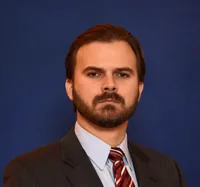
Garrett Ham
Garrett Ham is an attorney, military veteran, and holds a Master of Divinity from Yale Divinity School. He writes from Northwest Arkansas on theology, law, and service.
More about Garrett →Related Posts
Sola Scriptura and the Journey Toward Catholicism
In this post, I write about sola scriptura and what started my journey toward the Catholic Church.
The Insufferable Recovering Evangelical
The 'recovering evangelical' label has become a badge of honor—but does it hold up? A Catholic convert and former Southern Baptist pushes back on the exvangelical movement.
Evangelical Catholic Thought
In this post, I continue my reflections upon the Catechism of the Catholic Church with particular reflection upon the existence of evangelical Catholic...
Stay Informed
Get new writing on faith, law, and service delivered to your inbox.
No spam. Unsubscribe anytime.