Divine Foreknowledge and Free Will: The Catholic Answer
On This Page
I spent years as an open theist—someone who believed God knows all possibilities but not all actualities, that the future remains genuinely open to God just as it is to us. I found comfort in the idea that God does not predetermine our choices, that authentic freedom requires a God who takes genuine risks with creation. It was a theodicy that seemed to protect human agency and make God less culpable for evil.
Then I became Catholic, and I had to reckon with the testimony of the entire Christian tradition: God does know the future, completely and infallibly. And yet we are genuinely free. This is not a bug in the system waiting for open theism to fix it. This is a feature that the Church has defended, through careful metaphysical reasoning, for nearly two thousand years.
The problem is real. But the solutions are profound. And they’ve changed how I understand what it means to be free.
The Problem: The Logical Tension
Let me state the puzzle clearly, because precision matters here.
Suppose God infallibly knows that I will freely choose to have coffee at 8 AM tomorrow. Three premises seem self-evident:
-
God’s knowledge is infallible. If God knows X will happen, then X will definitely happen. Otherwise, God’s knowledge could be mistaken, which contradicts God’s omniscience.
-
My choice is free. If I freely choose coffee, then I could have done otherwise. Freedom (libertarian freedom, the kind most people mean when they worry about this) seems to require that my choice is genuinely open, genuinely mine, not already determined by something outside myself.
-
If X is infallibly foreknown, then X is necessary. If it is now a fixed fact of history that I will choose coffee, then the choice cannot be avoided. The past is fixed; facts about what God knew in eternity are like facts about the past—immutable.
From these three premises, the conclusion follows logically: I cannot be free if God foreknows my action. One of the three premises must be surrendered.
Open theists abandon premise 1: God’s knowledge is not infallible about future free choices. Calvinists abandon premise 2: our freedom is merely “compatible” with predetermined outcomes, not libertarian. Catholicism, in both its Thomistic and Molinist expressions, abandons premise 3. And this is the crucial move: they argue that God’s foreknowledge operates in a different mode than temporal causation. God’s knowledge is not a fact about the past that makes the future necessary. It is a fact about eternity, and eternity relates to time in a way that preserves both God’s infallibility and human freedom.
This is the terrain we must now map.
Boethius and the Watchtower: Classical Theodicy
The first serious attempt to reconcile God’s foreknowledge with human freedom comes from Boethius in the late fifth and early sixth century. His solution, offered to Lady Philosophy in the Consolation of Philosophy, would reverberate through medieval theology and remains philosophically powerful today.
Boethius argues that God’s knowledge is not foreknowledge at all—not knowledge of the future as future. Rather, God exists in an eternal present in which all moments of time are simultaneously visible. He uses an analogy:
If you should wish to consider his foreknowledge, by which he discerns all things, you will more rightly judge it to be not foreknowledge as it were of the future but knowledge of a never-passing instant... His knowledge too, having surpassed every motion of time, remains in the singleness of its present and, embracing the infinite spaces of the past and future, contemplates all things as they are in their presentiality in its simple cognition. — Boethius, Consolation of Philosophy, Book V, Prose 6
Imagine a watchtower high enough to see an entire landscape at once. The watchman sees the man on the road behind the hill, the woman crossing the bridge ahead, and the child playing in the field—all simultaneously. None of these observations determines what any of these people are actually doing. The watchman is not making them do anything. He simply sees the whole landscape at once. Similarly, God stands in an eternal “now” from which all of history is visible at once, without making anything necessary.
This is elegant, and it contains a profound truth: God transcends time and does not experience succession the way we do. But does it really solve the problem? Critics—including Aquinas—argued that Boethius had not fully addressed the logical difficulty. Even if God’s knowledge is simultaneous rather than successive, the problem remains: if God eternally knows that I choose coffee, how can that choice be avoidable? Boethius seems to assume that simultaneity solves the problem, but the logical constraint persists regardless of the temporal mode of the knower.
Still, Boethius gave us something crucial: the framework of God’s eternity as a solution space. From this point forward, the Catholic tradition would explore God’s atemporality not as a mere chronological trick, but as a genuine metaphysical condition that transforms how God’s knowledge relates to causation.
Aquinas and Divine Atemporality: The Thomistic Solution
Thomas Aquinas absorbs Boethius but goes further. His solution is more metaphysically demanding, and it requires understanding God not as existing “in the eternal now” but as not existing in time at all—as radically atemporal, pure actuality without succession or composition.
For Aquinas, the key is understanding God’s knowledge as causative. God does not know things because they exist; rather, things exist because God knows them. As he puts it in the Summa Theologiae:
His knowledge must be the cause of things, in so far as His will is joined to it. Hence the knowledge of God as the cause of things is usually called the "knowledge of approbation." — ST I, Q. 14, Art. 8
And on how God knows contingent futures:
God knows all contingent things not only as they are in their causes, but also as each one of them is actually in itself... All things that are in time are present to God from eternity, not only because He has the types of things present within Him, as some say, but because His glance is carried from eternity over all things as they are in their presentiality. — ST I, Q. 14, Art. 13
This raises the question: if God’s knowledge is causative, doesn’t this reinstitute the problem? Not in the way Aquinas means it. He distinguishes between absolute necessity (something that is necessary in itself, that cannot be otherwise) and conditional necessity (something that, given that God knows it, cannot fail to come to pass, but which may nonetheless be contingent in itself).
My choice of coffee is contingent in itself—I could have chosen tea. But once God knows it, it is conditionally necessary: it cannot fail to happen. The knowledge makes it certain, but not because it makes the choice necessary in its own nature. Rather, God’s knowledge, which is causative, brings into being a world in which I choose freely and the outcome of my free choice matches what God eternally knew.
This is not contradiction. It is a claim about the structure of causation: God’s causal knowledge is compatible with secondary causation. My freedom is genuine. My choice is mine. But my free choice is also caused by God—not by forcing me, but by sustaining the very condition of my freedom. God does not make me choose coffee; rather, God’s knowledge of my choice is itself part of the causal order in which my choice comes to be free.
Why does this work? Because it breaks the assumption that temporal facts determine temporal effects. God is not in time. God’s eternal knowledge is not a fact about the past that constrains my future. It is a fact about eternity, about God’s transcendent causation. God knows my choice and causes it to be free. These are not two separate things; they are one divine act viewed from two angles.
The problem with the Thomistic solution, however, is one of intelligibility. We are asked to understand God’s causation as non-coercive, God’s knowledge as simultaneously infallible and non-determinative. The mechanics remain difficult to visualize. For this reason, Luis de Molina offered an alternative framework that preserved the Thomistic intuitions but with a different architecture.
Molina and Middle Knowledge: The Molinist Solution
Luis de Molina (1535–1600), a Spanish Jesuit, inherited the Thomistic system but found it difficult to explain how God’s knowledge could be both causative and non-determinative. How can God foreknow my free choice without either determining it or being ignorant of it? His answer: God possesses a third kind of knowledge, standing between simple intelligence and foreknowledge, which he called scientia media—middle knowledge.
Molina’s framework distinguishes three “moments” of divine knowledge (not temporal moments, but logical moments in the divine act):
-
God’s knowledge of simple intelligence (scientia simplicis intelligentiae): God knows all necessary truths and all possibilities—everything that could happen, every logically possible state of affairs—whether or not those possibilities will ever be actualized. This is knowledge of what is possible, not yet of what would happen.
-
God’s middle knowledge (scientia media): God knows, for each free creature, what that creature would freely choose in any possible circumstance. God knows not just that you can choose coffee or tea, but what you would choose if placed in circumstance C, what you would choose if placed in circumstance D, and so forth. Crucially, this knowledge is of contingencies grounded in the creature’s own free nature.
-
God’s knowledge of vision (scientia visionis): On the basis of knowing what each creature would freely choose in each possible world, God decrees to actualize one particular world—the world where the actual history of created choices occurs.
Think of it this way. God does not determine your choice to have coffee. But God, by his omniscience, sees what you would choose in the actual circumstances in which you will be placed. This vision of your counterfactual freedom then becomes the basis for God’s decree to create this world rather than another. You are free because you are acting according to your own nature, your own inclinations, your own character. God’s foreknowledge is certain because God has the extraordinary knowledge of what every free creature would do in any circumstance. In biblical terms, God knows and foresees that Hophni and Phinehas will harden their hearts in 1 Samuel 2:25, and God’s decree to harden them operates through this middle knowledge of their free, stubborn refusal to listen to God’s voice through their father.
Why does this avoid determinism? Because the knowledge of your counterfactual freedom is grounded in you, not imposed from outside. God does not make you who you are in such a way that your choices are unfree. Rather, God knows who you would freely be and decrees to create you as such.
Why is this knowledge possible? This is the deepest question, and here we reach the limits of human comprehension. Molina argues that this knowledge is possible because free creatures themselves have a kind of reality—a “faculty of free choice” (facultas liberi arbitrii)—that is knowable even to God. The future free choice, while not yet actual, is not merely possible in an abstract sense; it is grounded in the creature’s own free nature, and God’s knowledge reaches this ground.
Critics have argued that this seems to make God’s knowledge dependent on creatures, or that it smuggles in a kind of determinism at the level of counterfactuals. Why would a creature would choose coffee in circumstance C if not because of some fact about the creature that makes it necessary? The Molinist response is that the creature’s free nature is such a fact, and it grounds the counterfactual without determining it. Freedom is the creature’s causal capacity, and God’s knowledge encompasses what a free creature would do with its freedom.
The Great Controversy: The De Auxiliis controversy, which raged in the sixteenth and seventeenth centuries, pitted Thomists against Molinists on precisely this point. The Thomists argued that Molina’s middle knowledge seemed to make God’s knowledge dependent on creatures and did not adequately explain God’s causation. The Molinists argued that Thomism did not preserve genuine libertarian freedom—that the divine knowledge of causation seemed to make the creature’s will determined by God’s knowledge.
The Church, summoned to judge, essentially refused to condemn either position. After formal congregations convened under Pope Clement VIII and continued under Pope Paul V, the papacy allowed both schools to coexist within Catholic theology, recognizing that each offered important insights into the mystery of divine-human causation. This remarkable act of theological humility preserved something vital: the Church’s commitment both to God’s omniscience and to human freedom, while admitting that the precise metaphysical mechanics of their reconciliation remain difficult to systematize.
From the Vatican’s perspective, this was wisdom. Both positions protected non-negotiable truths: God is omniscient and infallible (against Molina’s theological enemies); human beings are genuinely free agents, not puppets (against the Calvinist reading of predestination). How God’s omniscience and human freedom mesh is less important than that both are preserved.
Scotism, Augustinianism, and Why Open Theism Fails
Before we move to pastoral implications, I should acknowledge the other positions within Catholic thought.
Scotism, associated with John Duns Scotus and later Franciscan theologians, emphasized God’s freedom even more than Thomism. God’s will, for Scotus, holds a real though moderate primacy over God’s intellect. God does not simply know all possibilities and actualize the best; God freely determines what is good and then knows it. This framework gives unusual weight to the contingency of creation itself. While less common in contemporary theology, Scotism reminds us that God’s freedom matters: God was not obligated to create a world with free creatures, and God’s will is not determined by an eternal realm of essences.
Augustinianism, in its various forms, emphasizes divine grace and predestination in a way that sits uncomfortably with modern sensibilities but remains true to Augustine’s legacy. Augustine believed that God predestines the elect to salvation, not based on foreseen merits, but based on God’s free choice. This does not make freedom impossible, Augustine argued, because grace perfects rather than violates nature. The truly free will is the will turned toward God, and God brings this about through grace.
All of these positions, however, refuse the open theist solution: denying that God knows the future completely. Why? Because denying divine foreknowledge contradicts the unified testimony of Scripture and tradition, and because it diminishes the consolations of faith. If God does not know the future, then God cannot promise providence. God cannot be trusted in the way the Psalms invite us to trust. And God becomes, in some sense, a being limited by creation rather than the ground of all being. For a deeper examination of how God’s foreknowledge relates to the question of whether everything happens for a reason, see our exploration of divine providence and theodicy.
Open theism’s attractiveness lies in its promise to protect human freedom and to spare God complicity in evil. But it does so at the cost of coherence with the tradition and at the cost of real security. Better, the Catholic teaching says, to embrace the paradox of an omniscient God who is not a cosmic determiner, to trust that God’s transcendence includes the capacity to know and yet not determine, to sustain a world of real creaturely freedom.
The De Auxiliis Controversy and Living in Mystery
The De Auxiliis controversy deserves fuller attention because it illustrates an important principle about Catholic theology: the Church’s willingness to hold multiple frameworks in tension when the alternative is to sacrifice something essential.
In the late sixteenth century, Dominicans (following Aquinas and Banez) and Jesuits (following Molina) engaged in an extended debate, formally adjudicated by the Church, about the nature of divine “aid” (auxilium, hence the name) to human freedom. The Dominican position, called “Thomism” or “Banezian Thomism,” emphasized that God’s knowledge is causative and immediate. God’s “physical predetermination” (praemotio physica) moves the human will toward particular choices. This happens without violating the creature’s freedom because God’s causation is not coercive; it moves the will to choose freely.
The Molinist position rejected physical predetermination and argued instead for God’s knowledge of what the creature would freely do, with God then creating the circumstances in which that free choice occurs. This was called “congruism” or “concurrence,” and it emphasized that God’s aid is “moral” rather than “physical”—a matter of presenting motives and circumstances rather than moving the will itself.
The controversy became intense. Both sides accused the other of denying either God’s omniscience or human freedom. It reached the point that the papacy had to intervene. Pope Clement VIII convened a special commission—the Congregatio de Auxiliis—to examine both positions. The congregations met from 1597 to 1607, spanning two pontificates. After Clement VIII died in 1605, Pope Paul V brought the proceedings to a close. On September 5, 1607, he decreed that both positions are orthodox. Neither was to be condemned. Both schools may continue to teach their systems, and a prudent Catholic may accept either.
This decision, which might seem like a cop-out to modern ears, actually represents profound theological wisdom. The Church recognized that:
- The tension between divine omniscience and human freedom is real and genuine, not easily dissolved.
- Multiple coherent frameworks can capture important truths about God and human nature.
- Insisting on a single mechanistic solution was less important than preserving the mystery itself.
- Intellectual charity and institutional peace sometimes require tolerating pluralism.
If you are a Thomist, you emphasize God’s transcendent causation, God’s knowledge as prior to and constitutive of creaturely being. If you are a Molinist, you emphasize the integrity of creaturely freedom, the independence of the counterfactuals that ground it. Both are Catholic. Both remain.
Pastoral Implications: Prayer, Suffering, and Providence
All of this might seem abstruse, but it has profound pastoral consequences. How we understand divine foreknowledge shapes how we pray, how we suffer, and how we trust.
Prayer as Real Causation
If God’s knowledge is causative, then prayer is not merely expressing wishes to a God who already knows the outcome. Prayer is participating in the causal order itself. When you pray for someone’s conversion, you are not trying to change God’s mind—God already knows the full history of your prayer and its effects. But your prayer is part of the causal chain by which conversion happens. God’s omniscience encompasses your free intercession and its real efficacy. This is why the tradition insists that prayer changes things: not because God learns something new, but because your prayer is woven into the fabric of what God foreknows and causes.
This transforms prayer from information-giving into participation. You pray because your prayer is real, because it matters, because it is part of how God’s will is accomplished in the world.
Suffering and the Problem of Evil
Divine foreknowledge relates intimately to theodicy. If God foreknows all suffering, why does God create a world with that suffering? The foreknowledge solutions we’ve examined offer different angles on this problem.
The Thomist perspective emphasizes that God’s knowledge includes the suffering but also includes the redemptive use of that suffering. God is not ignorant of evil, but God permits it for reasons—reasons that include the free choices of creatures and the ultimate glorification of creation. We may not see these reasons in our present moment, but they are real.
The Molinist perspective emphasizes that God does not gratuitously create suffering. God surveys all possible worlds and decrees to actualize the world in which, given the free choices of creatures, the overall proportion of good to evil is highest, and the greatest goods are achieved. This does not mean there is no undeserved suffering—creation is free, creatures make terrible choices—but it means God’s choice of this world over all others is wise.
Both perspectives preserve God’s goodness while acknowledging that God does know and permit evil. Neither reduces God to helplessness in the face of creation (as open theism does), and neither makes God directly the author of moral evil.
Trust in Providence
Perhaps most importantly, understanding divine foreknowledge restores confidence in providence. The Psalms cry out with a confidence born of trust in God’s knowledge and care:
“The LORD is my shepherd, I shall not want… He leadeth me in the paths of righteousness for his name’s sake.” (Psalm 23)
This confidence is not naive. It is not ignorance of evil or suffering. It is trust that God’s knowledge encompasses all of history, that God’s purposes will not be thwarted, that even our free choices—our sins, our struggles, our failures—are known to God and can be redeemed. Providence is not a promise that nothing bad will happen. It is the deeper promise that God is present in all things, knowing all things, working all things toward redemption.
When you face uncertainty—a job decision, a relationship, an ethical dilemma—the doctrine of divine foreknowledge does not remove the genuineness of your choice or the weight of your responsibility. Rather, it reminds you that your choice is held in the knowledge of God, that you are not making it alone, that the God who knows all futures is trustworthy. You are free, and you are also in the hands of God. Both are true.
Conclusion: Embracing the Mystery
I came into Catholicism expecting to find an easy answer to the foreknowledge problem. Instead, I found something richer: a tradition that had wrestled with this question for two millennia, that had developed multiple sophisticated frameworks, and that had the humility to admit that the mystery could not be fully dissolved—only illuminated from different angles.
The Catholic intellectual tradition does not shy away from paradox. It neither collapses God into determinism nor reduces God to impotence. It holds that God is truly omniscient and truly transcendent, and that human beings are truly free. How these coexist is the kind of mystery that invites contemplation rather than resolution.
What matters is this: you are free. Your choices are yours. And God knows them, loves you in them, and can redeem even your failures. You can pray with confidence, trusting that your intercession matters. You can suffer with hope, knowing that God’s knowledge includes the redemption of suffering. You can live with integrity, choosing and striving, even as you rest in the truth that God’s providence encompasses all.
This is the Catholic answer: not a logical formula that dissolves the paradox, but a vision of reality in which divine omniscience and human freedom are not competitors for the same logical space, but inhabitants of different orders of being, orders that intersect in the mystery of creation itself.
Further Reading
Primary Sources:
- Aquinas, Thomas. Summa Theologiae, I, Questions 14, 19-23. Available at newadvent.org
- Boethius. The Consolation of Philosophy, Book V. (Penguin Classics or other translations)
- Molina, Luis de. On Divine Foreknowledge: Part IV of the Concordia. Translated by Alfred J. Freddoso. (Cornell University Press, 1988)
- Augustine. On Free Choice of the Will (De libero arbitrio voluntatis)
Secondary Sources:
- Freddoso, Alfred J. “Introduction” to On Divine Foreknowledge: Part IV of the Concordia. (Cornell University Press, 1988) — The most accessible introduction to Molinist thought.
- Cross, Richard. Duns Scotus. (Oxford University Press, 1999) — For the Scotist perspective on freedom and divine will.
- Flint, Thomas P. Divine Providence: The Molinist Account. (Cornell University Press, 1998) — Sophisticated contemporary Molinism.
- Davies, Brian. The Thought of Thomas Aquinas. (Oxford University Press, 1992) — Helpful chapters on divine knowledge and causation.
- Stanford Encyclopedia of Philosophy. “Free Will and Foreknowledge” — Comprehensive and philosophically rigorous.
- Internet Encyclopedia of Philosophy. “Foreknowledge and Free Will” — Accessible overview of the core philosophical problem and proposed solutions.
Theological Context:
- Garrigou-Lagrange, Réginald. God: His Existence and His Nature. (B. Herder, 1934) — Classical Thomist treatment; dense but authoritative.
- Goris, Harm J. M. J. Free Creatures of an Eternal God: Thomas Aquinas on God’s Infallible Foreknowledge and Irresistible Will. (Thomas Instituut te Utrecht, 1996) — Detailed Thomist analysis of foreknowledge and freedom.
- McCall, Thomas H. An Invitation to Analytic Christian Theology. (IVP Academic, 2015) — Contemporary evangelical engagement with these issues; useful for understanding where evangelicals and Catholics align and diverge.
Internal Links:
- Open Theism: Why Some Christians Deny God Knows the Future
- Molinism Explained: How God Knows What You Would Freely Choose
- Does God Know the Future?
- Divine Simplicity: What It Means That God Is Not Composed
- Divine Predestination vs. Free Will: The Calvinist and Catholic Divide
- Open Theism vs. Molinism: Which Better Protects Human Freedom?
- Process Theology and the Limits of God’s Power
- Vatican I and the Infallibility of the Magisterium
Garrett Ham
Garrett Ham is an attorney, military veteran, and holds a Master of Divinity from Yale Divinity School. He writes from Northwest Arkansas on theology, law, and service.
More about Garrett →Related Posts
Open Theism: A Catholic Evaluation
What is open theism? A Catholic evaluation of the open model of God, its scriptural case, philosophical arguments, and why it falls outside defined Catholic dogma.
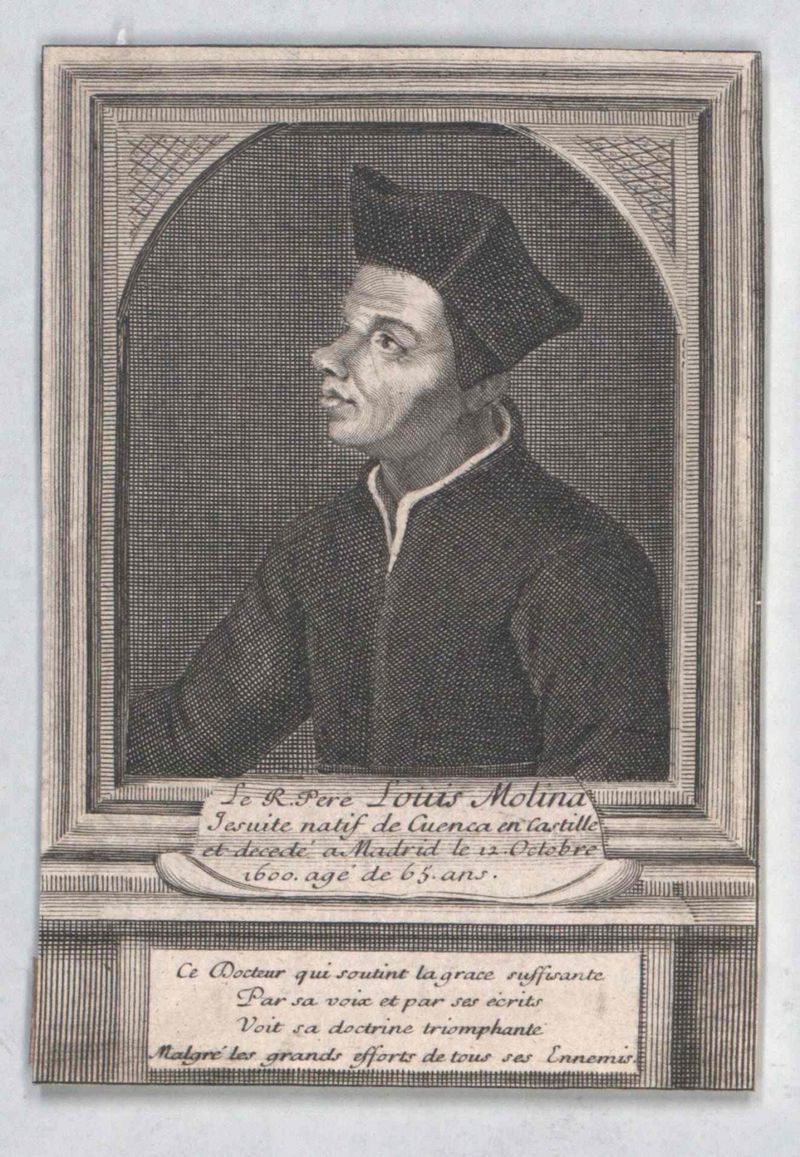
Molinism: Divine Sovereignty and Human Freedom
What is Molinism? Luis de Molina's middle knowledge (scientia media), the De Auxiliis controversy, and how Molinism compares to Thomism and Calvinism.
Does God Know the Future? What Catholics Believe
Does God know the future? The Catholic Church teaches that God's knowledge is exhaustive, encompassing even the free acts of creatures. Here's what that means and why it matters.
Stay Informed
Get new writing on faith, law, and service delivered to your inbox.
No spam. Unsubscribe anytime.