Did the Catholic Church Ban the Bible? What History Actually Shows

On This Page
Few anti-Catholic claims have proved as durable as the charge that Rome “banned the Bible.” You will hear it in Sunday-school classrooms, encounter it in Jack Chick tracts, and find it asserted as settled fact across the internet. Loraine Boettner’s Roman Catholicism—which Catholic Answers has called “the bible of the anti-Catholic movement”—put the claim most bluntly: “Up until the time of the Reformation the Bible had been a book for priests only.”1 As a Catholic, my instinct is to dismiss the whole thing as Reformation propaganda. But intellectual honesty demands more than instinct. The full picture is more complicated, more interesting, and ultimately more instructive than either the Protestant polemic or the triumphalist Catholic counter-narrative.
The short answer is this: no pope or ecumenical council ever issued a universal, absolute prohibition on all laypeople reading any Bible in any language. That much is clear, and it is confirmed by scholars of every confessional stripe. But a patchwork of regional restrictions—enacted by provincial synods in response to specific heretical movements—did affect portions of Europe for limited periods. And a post-Reformation permission-based regulatory system, particularly in Spain and Italy, functioned as a near-total prohibition for roughly two centuries. Understanding which parts of the Protestant charge are myth, which are exaggeration, and which are legitimate criticism requires careful attention to dates, geography, canonical authority, and the gap between formal policy and lived reality.
The Charge and Where It Comes From
The claim takes several forms. At its crudest: “The Catholic Church banned the Bible.” More specifically: “The Council of Toulouse placed the Bible on the Index of Forbidden Books in 1229.” And systemically: “Rome kept the Bible in Latin to prevent laypeople from reading it.” This last version is the most common in popular evangelical apologetics, where it functions as a foundational argument for the necessity of the Reformation.
Boettner’s catalogue of “Catholic inventions” lists as item #30: “Bible forbidden to laymen, placed on the Index of Forbidden Books by the Council of Valencia: A.D. 1229.”2 This is triply wrong: Valencia was under Muslim control in 1229 and held no such council; the Index of Forbidden Books was not established until 1559, three centuries later; and the actual council sometimes cited in this connection is the Council of Toulouse.3 The narrative has deeper roots in Reformation-era polemics—John Foxe’s Acts and Monuments (1563) built a powerful martyrological framework around the suppression of English Scripture, and Luther’s own rhetoric positioned Rome as the enemy of God’s Word.4 In the twentieth century, Jack Chick’s tracts (over 750 million publications distributed, by the company’s own count) depicted the Catholic Church as a sinister institution hiding Scripture from the faithful, often relying on the discredited claims of supposed ex-Jesuit Alberto Rivera.5
The evidence typically marshaled includes the canons of the councils of Toulouse (1229) and Tarragona (1234), Archbishop Arundel’s Constitutions of Oxford (1408), the Tridentine Index rules, and the execution of William Tyndale (1536). Each of these is a real historical fact. The distortion lies in presenting localized, contextual measures as evidence of a universal, systematic policy of suppression.
What the Church Fathers Actually Taught
The dominant patristic attitude toward lay Scripture reading was overwhelmingly positive. St. John Chrysostom explicitly insisted that Bible reading was not exclusively for monks: “Do not imagine that the monk alone stands in need of these lessons from Scripture. Of all others, the children just about to enter into the world specially need them.”6 St. Jerome—whose dictum “Ignorance of the Scriptures is ignorance of Christ” would later be quoted by Vatican II—recommended Scripture reading and study to laywomen in his correspondence.7 St. Augustine, in De doctrina christiana, treated knowledge of multiple translations as an aid to understanding Scripture and encouraged the faithful to read widely in the sacred text.8 Pope Gregory the Great powerfully encouraged Bible reading among all Christians, describing Scripture as “a letter from almighty God to his creature,” while maintaining the Church’s framework of guided interpretation.9
No Church Father or Doctor advocated restricting lay access to Scripture as a matter of principle. The Schaff-Herzog Encyclopedia—a standard Protestant reference work—confirms that in the early Church, Scripture reading was commonly practiced and was “not restricted in the first centuries.”10
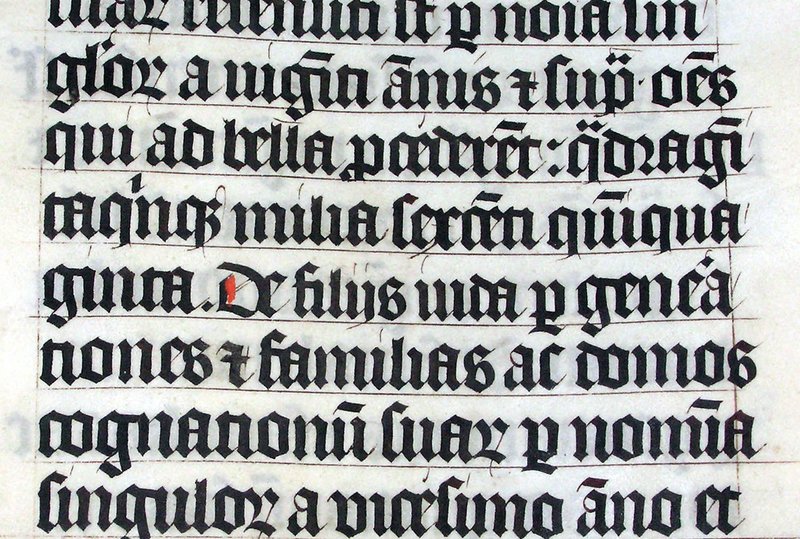
We should be honest about the practical barriers, though. A hand-copied Bible required hundreds of animal skins—the three great pandects commissioned by Abbot Ceolfrith around 700, of which the Codex Amiatinus is the sole survivor, required some 1,500 calfskins between them—and a fully illuminated copy could cost the equivalent of an entire estate, perhaps $100,000 or more in modern terms.11 Even after Gutenberg, a printed Bible cost roughly three years of a craftsman’s wages. Literacy rates hovered between 1 and 5 percent in the early medieval period, rising to perhaps 10 to 30 percent in prosperous urban areas by the fifteenth century. Most medieval Europeans could not have personally owned or read a Bible regardless of any Church policy.
— St. Jerome, Commentary on Isaiah, Prologue
This did not mean the laity lived in biblical ignorance. The medieval Church deployed multiple channels to convey Scripture to illiterate populations. The Mass itself centered on the oral reading of Scripture, often followed by vernacular paraphrase in the homily. Mystery plays—performed in the vernacular by trade guilds from the thirteenth century onward—dramatized the entire biblical narrative from Creation to Last Judgment. The York cycle alone comprised forty-eight pageants performed on the feast of Corpus Christi, running from dawn to dusk on a single day.12 Stained glass windows, wall paintings, sculptured portals, and mosaics served as what contemporaries called the “Bible of the illiterate.” Books of Hours—the most common surviving type of medieval illuminated manuscript—contained Gospel extracts, Psalms, canticles, and prayers, and were often used to teach children to read.13
A related Protestant argument concerns the practice of chaining Bibles to lecterns—presented as proof that the Church was keeping Scripture from the people. The reality is the opposite: chained books were the medieval equivalent of reference copies in a public library. A Bible worth more than a house could not simply be left on a table for anyone to walk off with. Chaining made public access possible by preventing theft, not by preventing reading. The practice applied equally to secular legal texts, medical treatises, and university manuscripts. Surviving chained libraries—such as the one at Hereford Cathedral, dating from 1611—were reading rooms, not prisons for forbidden books.
The Regional Restrictions: Real but Localized
Four medieval councils are routinely cited as evidence for a universal ban. Examining each reveals that all were provincial or diocesan measures—the lowest levels of synodal authority in Catholic canon law—enacted in response to specific heretical crises and binding only within their respective jurisdictions.
The Council of Toulouse (1229)
Canon 14 stated: “We prohibit also that the laity should be permitted to have the books of the Old and New Testament; unless anyone from the motives of devotion should wish to have the Psalter or the Breviary for divine offices or the hours of the blessed Virgin; but we most strictly forbid their having any translation of these books.”14 This was a provincial council called at the conclusion of the Albigensian Crusade in southern France, where the Cathar heresy—a radical dualist movement that denied the Trinity, the Incarnation, and the sacraments—had devastated the region. The Cathars had produced tendentious vernacular translations with heretical glosses to support their theology. The council’s canons applied only to the ecclesiastical province of Toulouse—a single province in southwestern France, not the universal Church.15
The Council of Tarragona (c. 1233–1234)
Canon 2 ordered that no one might possess the books of Scripture in Romance language, and that existing copies be surrendered for burning within eight days.16 This was a provincial council in Aragon, where Cathar influence had spread from Languedoc. It specifically targeted only Romance-language translations—not the Latin Vulgate—and was never ratified by any pope or ecumenical council as universal law.
The Synod of Trier (1231)
A diocesan synod—the lowest level of canonical authority—convened by Archbishop Theodoric II to address alleged heretics who had translated Scripture into German. Its decrees applied only to the Diocese of Trier and were never ratified by any higher authority.17
The Council of Oxford (1408)
Archbishop Arundel’s Constitution §7 (Periculosa) provided that no one should by his own authority translate any text of Holy Scripture into English, and that no one should read any such book composed “in the time of John Wycliffe or since” without episcopal approval, under pain of excommunication.18 This was a direct response to the Lollard movement and required episcopal approval for any new translation—regulation, not absolute prohibition. However, no mechanism was established for actually granting approval, making it a de facto prohibition in England. It applied only to the Province of Canterbury and was never extended to the universal Church.
The crucial analytical point, confirmed by scholars across confessional lines, is that none of these restrictions were ever formally ratified by a pope or ecumenical council as binding on the universal Church. The Cambridge History of the Bible states definitively: “No universal and absolute prohibition of the translation of the Scriptures into the vernacular nor of the use of such translations by clergy or laity was ever issued by any council of the Church or any pope.”19 At the Council of Constance (1414–1418), theologian Jean Gerson proposed extending a universal ban on unauthorized vernacular Scripture to the whole Church—and gained no traction.20
The scholarly consensus is articulated by Wim François of KU Leuven, whose 2018 study in the Catholic Historical Review concluded that the late medieval Catholic Church “did not forbid the reading of the Bible in the vernacular; there was no central Roman policy pertaining to Bible reading in the vernacular, and biblical books circulated in most of Europe’s linguistic regions.”21
The Bibles That Should Not Exist
The most powerful evidence against a universal prohibition is the sheer volume of vernacular Bible translations that existed before Luther’s 1522 New Testament. Eighteen complete printed German Bible editions—fourteen in High German and four in Low German—were published between 1466 and 1522, beginning with the Mentelin Bible at Strasbourg in 1466, the first Bible printed in any vernacular language.22 There is no record of any of these eighteen editions being condemned, suppressed, or placed on an index. They were commercial enterprises by Catholic printers for Catholic audiences.
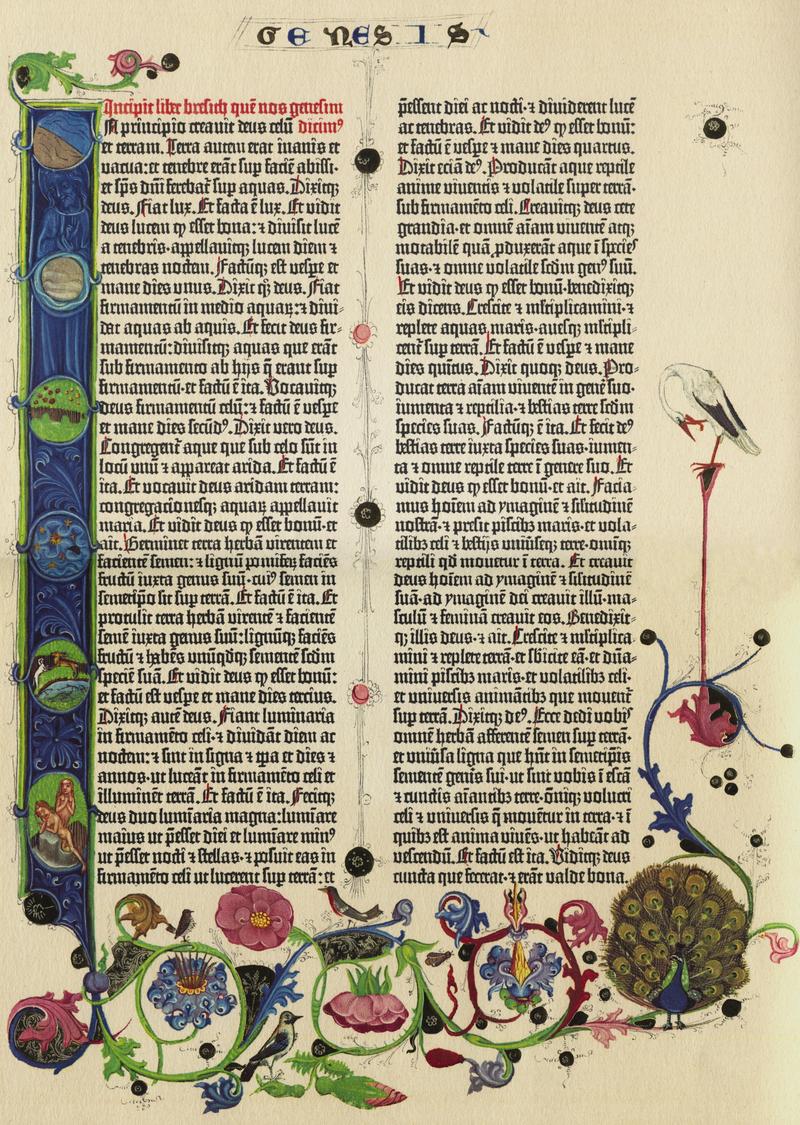
In Italy, the Malermi Bible (Venice, 1471), translated by Camaldolese monk Nicolò Malermi, went through multiple editions. Studies of six hundred inventories of medieval Italian private libraries show that vernacular Bibles were “a constant feature in the libraries of lay people.”23 In France, the Bible Historiale of Guyart des Moulins (1291–1295) was the predominant French translation for two hundred years, patronized by the royal family. The Prague Bible (1488) was the first complete Bible printed in Czech and the first in any Slavic language. Between 1450 and 1519, historian Andrew Gow estimates approximately 20,000 Germanic vernacular Bible copies and 13,450 Italian vernacular copies in circulation.24
Even in England, where restrictions were most severe, the Wycliffite Bible survives in over 250 manuscripts—the most common manuscript literature in Middle English. Peter Marshall observed that it seems implausible so many manuscripts could have survived if bishops had been determined to suppress it in all circumstances.25 Three kings of England—Henry IV, Henry VI, and Henry VII—owned copies. Scholar Kathleen Kennedy has demonstrated that Wycliffite Bibles were widely read by an orthodox audience in fifteenth-century England.26
As Frans van Liere summarizes: “Contrary to popular perception, there was no blanket prohibition against biblical translation in the vernacular in the Middle Ages. Vernacular Bibles, for the most part, flourished and were accepted by ecclesiastical authorities… as long as these texts and their uses avoided association with heretical groups.”27
— The Cambridge History of the Bible, vol. 2 (1969)
The Index, the Permission System, and What Went Wrong
The Index of Forbidden Books, established in 1559 under Paul IV, represents the first centralized attempt to regulate vernacular Bible access. Paul IV’s Index was extremely severe—it broadly forbade vernacular Bibles without Inquisitorial permission, and in Spain the parallel Valdés Index of the same year reinforced the prohibition in even stronger terms. This met intense opposition even within Catholic intellectual circles and was soon superseded.28
The Tridentine Index (1564), promulgated by Pius IV, replaced Paul IV’s rules with a more nuanced system. Rule IV is the critical provision. It acknowledged that permitting Scripture everywhere in the vernacular “without discrimination” could cause harm, and left the matter to the bishop or inquisitor, who could grant written permission to read approved Catholic vernacular translations to those who would derive spiritual benefit.29 This was a permission-based system—not an outright ban, but a requirement that laypeople obtain written episcopal authorization.
Clement VIII’s 1596 revision represents the most restrictive point in the history of these regulations. His Observatio to Rule IV effectively stripped bishops of their authority to grant permission, requiring that authorization come from the Pope or the Roman Inquisition directly. As Franz Heinrich Reusch documented, “the right of the bishops, which the fourth rule implies, is abolished by the ‘remark,’ and the bishop may grant a dispensation only when especially authorized by the pope and the Inquisition.”30 This made it practically impossible for ordinary laypeople to obtain permission in most places.
Benedict XIV’s 1757 modification reversed Clement VIII’s tightening, permitting vernacular Bible versions that were either approved by the Apostolic See or published with annotations from the Church Fathers and learned Catholic authors. This effectively re-authorized bishops to grant permission and led to the first approved Catholic vernacular Bibles in countries where access had been most restricted—most notably Archbishop Antonio Martini’s Italian Bible, which was praised by Pope Pius VI.31
The definitive answer to the question “Did any pope ever universally and absolutely prohibit all laypeople from reading any Bible in any language?” is no. But here is the strongest honest version of the claim: after Clement VIII’s 1596 Observatio, it became effectively impossible for ordinary laypeople in territories where the Index was enforced to read vernacular Bibles without extraordinary permission from Rome itself. In Italy and Spain, this amounted to a near-total prohibition—not universal, not technically absolute, but functionally devastating.
What the Council of Trent Actually Decreed
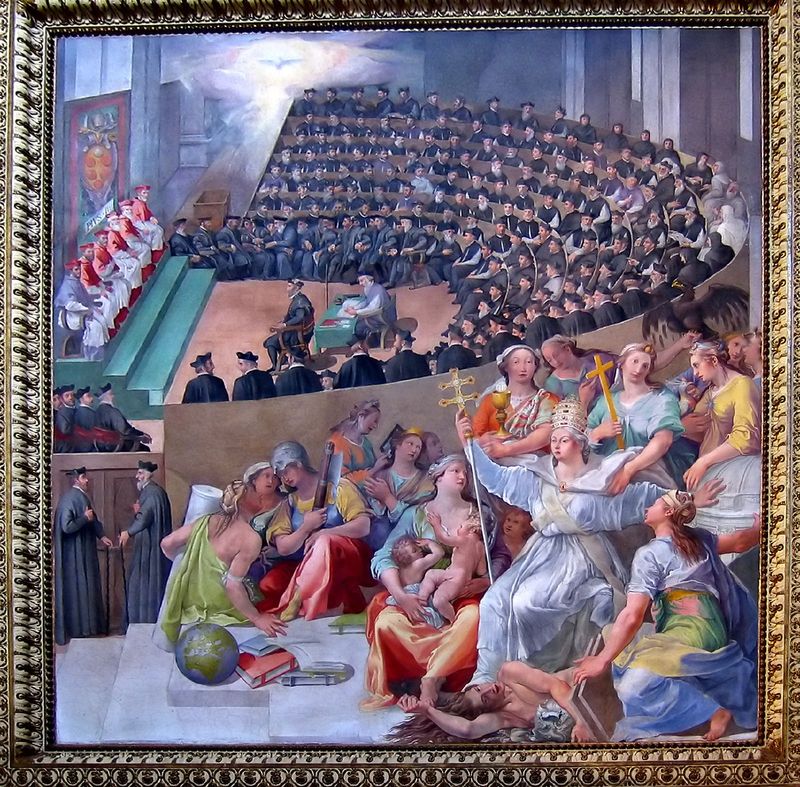
The Fourth Session of the Council of Trent (April 8, 1546) is routinely misrepresented. Its two decrees on Scripture affirmed the canon (including the deuterocanonical books), declared that saving truth is contained in both the written books and unwritten traditions, and designated the Vulgate as “authentic” for the Church’s public use. It forbade anyone from interpreting Scripture contrary to the sense held by the Church.32
Trent did not formally prohibit vernacular Bible reading. As Jesuit scholar Robert E. McNally concluded: “While it is true that the Council did not explicitly approve of translations of the Bible in the language of the people, it is equally true that it did not condemn the preparation and dissemination of such popular versions.”33 During the Council’s deliberations, Spanish Cardinal Pedro Pacheco proposed a blanket ban on all vernacular Bibles. The papal legates argued strenuously against this, noting that Germany, Italy, and Poland would never accept such a prohibition. The proposal was rejected.34
The Vulgate decree was about standardizing the Latin text for the Church’s public use amid a proliferation of competing editions, not about restricting access or suppressing the original languages. Pius XII’s Divino Afflante Spiritu (1943) later confirmed that the Vulgate’s “authenticity” meant freedom from dogmatic and moral error, not superiority over the Hebrew and Greek originals.35
Implementation varied dramatically. In Germany and the Low Countries, Catholic authorities selectively prohibited Reformation-aligned editions while permitting Catholic ones. In France, the situation was fluid, with Jansenist editions circulating widely. But in Italy, post-Tridentine enforcement was devastating: no new vernacular Bible was printed from approximately 1567 to 1773—a gap of over two hundred years.36 In Spain, the Inquisitor-General Valdés prohibited all vernacular Bibles in 1551, a ban not lifted until 1778.37
Where the Critique Has Genuine Merit
Honest engagement requires acknowledging the areas where the Protestant critique, properly qualified, identifies real problems. Catholic apologists who rush past these facts do the Church no favors.
The Spanish and Italian cases are damning
In Spain, the Inquisition progressively tightened restrictions until, by 1557, mere possession of a vernacular Bible was deemed heretical. The 1477–1478 Valencian Bible—the first printed Bible in a language of the Iberian Peninsula, traditionally attributed to Bonifaci Ferrer—was so thoroughly destroyed by the Inquisition that only a single final leaf was known to survive, now at the Hispanic Society of America in New York, though related manuscripts were reportedly identified at the Bibliothèque nationale de France in 2014.38 Julián Hernández was burned at the stake for smuggling Bibles into Seville. At the monastery of San Isidro del Campo near Seville, roughly forty monks received smuggled Spanish Bibles; a dozen or more fled the country (including the future translators Casiodoro de Reina and Cipriano de Valera), and those who remained faced Inquisition trials—several were burned, others imprisoned or otherwise penalized.39 Spain did not have a Catholic Bible in Spanish printed within its borders until 1791.
In Italy, as Gigliola Fragnito demonstrated from the Vatican’s own archives, the Counter-Reformation prohibition ensured that no vernacular Bible circulated from approximately 1567 to 1773, and its effects on Italian Catholic biblical engagement persist to this day.40
The timing is the most damaging fact
The Church intensified restrictions precisely when the printing press and rising literacy made individual Bible reading feasible for the first time. The restrictions escalated not during the period when Bible reading was impractical, but exactly when it became possible. Each successive heretical movement that appealed to Scripture triggered a further tightening: Waldensians led to Toulouse and Tarragona; Lollards to Oxford; Lutheranism to the Indices. The pattern is unmistakable. A Protestant looking at this record is entitled to ask: at what point does a “patchwork of regional restrictions” become, in practice, a systematic institutional posture against lay Bible access? Distinguishing between a universal policy and a universal pattern is important historically, but it offers cold comfort to the generations of believers who lived under the restrictions.
The license system functioned as a prohibition
Requiring written permission from an inquisitor to read Scripture created a system that, in practice, denied access to virtually all laypeople. After Clement VIII’s 1596 revision, licenses required papal or Inquisitorial authorization—a bureaucratic impossibility for ordinary people. The chilling effect was real: most laypeople would never dare approach an inquisitor to request a Bible-reading license.
William Tyndale’s fate is a real historical event
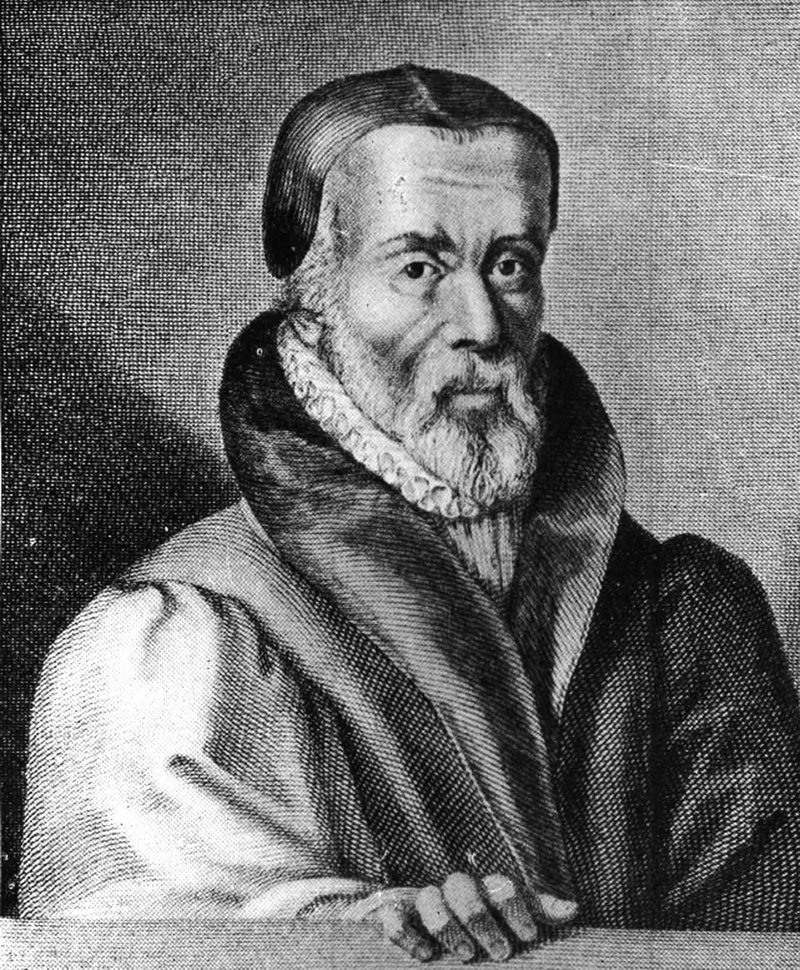
Tyndale sought permission from Bishop Cuthbert Tunstall to translate the Bible into English. Tunstall refused. Tyndale fled to Germany, completed his translation, had copies smuggled into England, was betrayed, arrested in Antwerp, imprisoned at Vilvoorde Castle, convicted of heresy, strangled, and burned in October 1536.41 The charges at his trial were for Lutheran heresy rather than translation per se, and his translation choices were theologically charged—he rendered ekklesia as “congregation” rather than “church,” presbyteros as “elder” rather than “priest,” and metanoeite as “repent” rather than “do penance,” each substitution undermining the vocabulary on which Catholic ecclesiology and sacramental theology depended. But the institutional resistance to an English Bible was real, and no amount of apologetic nuance changes the fact that a man died for wanting his countrymen to read the Scriptures in their own language.
The USCCB itself acknowledges the problem
The United States Conference of Catholic Bishops states: “Catholics meanwhile were discouraged from reading Scripture. Identifying the reading and interpreting of the Bible as ‘Protestant’ even affected the study of Scripture. Until the twentieth century, it was only Protestants who actively embraced Scripture study.”42 This frank admission—from the American bishops themselves—confirms that whatever the formal teaching, the practical reality for generations of Catholics was discouragement from direct biblical engagement.
— Vatican II, Dei Verbum 22 (1965)
The Modern Reversal
The trajectory from restriction to encouragement is traceable through four landmark documents. Leo XIII’s Providentissimus Deus (1893) urged that Scripture study be “the soul of sacred theology” and affirmed the importance of original languages.43 Benedict XV’s Spiritus Paraclitus (1920) quoted Jerome’s dictum about scriptural ignorance and praised the Society of St. Jerome for encouraging daily New Testament reading.44 Pius XII’s Divino Afflante Spiritu (1943)—called “the Magna Carta for biblical progress” by Scripture scholar Raymond Brown—was the true watershed. It encouraged study of original languages, the use of literary-form analysis, and modern critical methods, effectively overturning the caution that had dominated Catholic biblical scholarship.45
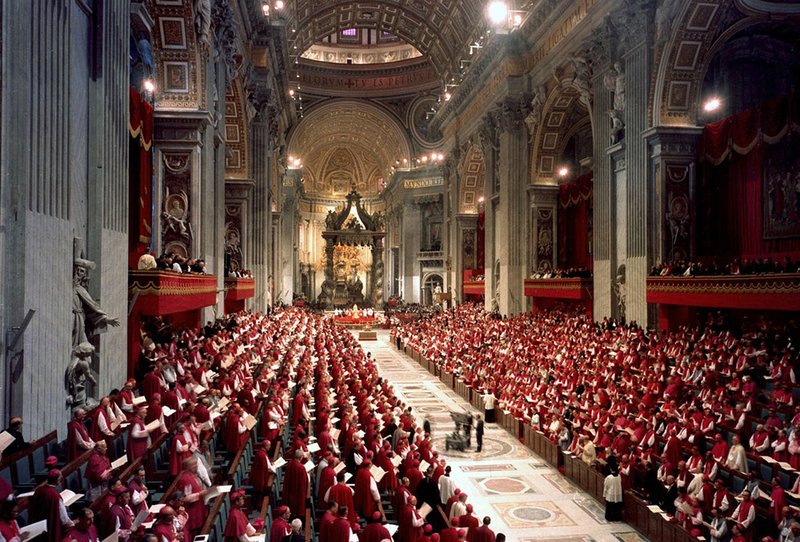
Vatican II’s Dei Verbum (1965) completed the transformation. Its opening chapter on Scripture placed the Bible alongside the Eucharist as the two tables from which the Church “unceasingly receives and offers to the faithful the bread of life” (§21). Chapter VI declared that “easy access to Sacred Scripture should be provided for all the Christian faithful” (§22), urged all the faithful “to learn by frequent reading of the divine Scriptures the ‘excellent knowledge of Jesus Christ’” (§25), and encouraged translations from original texts, including cooperative translations “produced in cooperation with the separated brethren” (§22).46 The Index of Forbidden Books was abolished in 1966.47
The twentieth century saw an explosion of Catholic Bible translation: the Knox Bible (1945–1950), the Jerusalem Bible (1966, the first Catholic English Bible translated from original languages), the New American Bible (1970), and numerous ecumenical editions. The Catholic American Bible, a further revision, is scheduled for release on Ash Wednesday 2027.48
The Theology Beneath the History
The historical dispute is ultimately downstream of a theological one. Catholic teaching holds that Scripture, Sacred Tradition, and the Magisterium together constitute the rule of faith—not Scripture alone. The Church’s historic caution was rooted in the conviction that Scripture requires an authoritative interpreter to function properly. The Council of Trent’s decree against private interpretation—forbidding anyone from wresting Scripture “contrary to that sense which holy mother Church… hath held and doth hold”—does not explicitly forbid reading; it forbids interpreting Scripture contrary to Church teaching.49 The Church considered this view supported by 2 Pet 3:16, where Peter warns that Paul’s letters contain “some things hard to understand, which the ignorant and unstable twist to their own destruction.”
The Protestant principle of sola scriptura—that Scripture is the only infallible authority—necessarily makes the Catholic permission-based system look like suppression. What Catholics framed as responsible stewardship, Protestants experienced as gatekeeping. From within the Catholic system, ensuring that Scripture is read within the community of faith rather than in isolation is an act of pastoral care. From without, it looks like institutional self-preservation through information control.
The genuine theological disagreement is about whether the meaning of Scripture is self-evident to the faithful reader—the Protestant claim of perspicuity—or whether it requires communal, tradition-informed, magisterially guided interpretation. The practical consequences of each position are visible in history: the Protestant approach produced interpretive pluralism and denominational fragmentation; the Catholic approach produced institutional control that, at its worst moments, prevented believers from direct engagement with the written Word of God.
An Honest Verdict
What Is False
There was no universal, systematic Catholic policy against lay Bible reading. No pope or ecumenical council ever issued an absolute prohibition. Vernacular Bibles circulated widely throughout most of Europe for centuries before the Reformation—at least eighteen printed German editions, multiple Italian and French translations, and partial translations in nearly every European language. The Church Fathers unanimously encouraged Scripture reading. The Latin Vulgate was not a deliberate conspiracy to keep the Bible from the people—it was itself a vernacular translation into the common language of the Roman world, and it remained the Church’s standard text for reasons of scholarly continuity, not secrecy.
What Is Exaggerated
The councils of Toulouse, Tarragona, and Oxford were real, and their canons were genuinely restrictive. But presenting them as evidence of a universal Catholic policy is a category error. Provincial synods have no authority over the universal Church. These were localized responses to specific heretical movements in specific regions at specific times. The Index regulated vernacular Bible access through a permission-based system, not an absolute ban. The conflation of these regional, contextual measures into a single narrative of systematic suppression is the core Protestant exaggeration.
What Is Fair Criticism
The permission-based system, particularly after Clement VIII’s 1596 tightening, functioned as a near-total prohibition in Spain and Italy for roughly two centuries. Real people were executed for translating, distributing, or reading the Bible. The entire Valencian Bible of 1478 was destroyed save one page. Italy went without a printed vernacular Bible from 1567 to 1773. The Church intensified restrictions precisely when technology and literacy made Bible reading feasible. The USCCB itself acknowledges that Catholics were “discouraged from reading Scripture.” The theological rationale was genuine, but the practical consequences amounted to clerical gatekeeping of the written Word of God.
A Church that truly believed Jerome’s dictum—that ignorance of the Scriptures is ignorance of Christ—should not have needed two hundred years and a Vatican Council to provide its faithful with easy access to Scripture in their own languages. Acknowledging that does not require abandoning the Catholic faith. It requires the kind of honesty that the faith demands of us.
The historical reality is neither the Protestant myth of a monolithic Bible-banning institution nor the Catholic apologetic fantasy of an institution that always and everywhere championed lay Bible access. It is the story of an institution that preserved, copied, and proclaimed the Bible for centuries while simultaneously, at critical junctures and in specific regions, restricting the very access it claimed to safeguard—driven by genuine theological concerns, institutional self-interest, and the recurring fear that an open Bible would produce an ungovernable Church. The Church has, by God’s grace, come out the other side. Dei Verbum is the law of the Church now. The Index is gone. Scripture and the Eucharist stand together as the two tables of the Lord’s nourishment. That is cause for gratitude—and for honesty about the road that brought us here.
Frequently Asked Questions
Did the Catholic Church ever officially ban the Bible?
No pope or ecumenical council ever issued a universal, absolute prohibition on lay Bible reading. The Cambridge History of the Bible states the matter definitively: “No universal and absolute prohibition of the translation of the Scriptures into the vernacular nor of the use of such translations by clergy or laity was ever issued by any council of the Church or any pope.” What did exist were regional restrictions enacted by provincial synods responding to specific heretical movements, and a later permission-based licensing system that, in Spain and Italy after 1596, functioned as a near-total prohibition in practice.
What did the Council of Toulouse (1229) actually decide?
Canon 14 of Toulouse prohibited laypeople in the ecclesiastical province of Toulouse from possessing books of the Old and New Testament, with an exception for the Psalter and Marian devotional books. The council was a provincial synod called at the conclusion of the Albigensian Crusade in southern France, where the Cathar heresy had produced tendentious vernacular translations with heretical glosses. Its decrees applied only within Toulouse—a single province in southwestern France—and were never ratified by any pope or ecumenical council as universal law.
Was the Index of Forbidden Books a Bible ban?
Not universally. The Tridentine Index of 1564 set up a permission-based system: bishops or inquisitors could grant written authorization to read approved Catholic vernacular Bibles. After Clement VIII’s 1596 Observatio, however, the bishop’s authority was effectively stripped, and authorization had to come from the Pope or the Roman Inquisition directly. In Spain and Italy, where the Index was vigorously enforced, this functioned as a near-total prohibition for roughly two centuries. Outside those territories, enforcement was uneven, and Catholic vernacular Bibles continued to circulate widely in Germany, France, and the Low Countries.
Were there really vernacular Bibles before Luther?
Yes—in great numbers. At least eighteen complete printed German Bible editions appeared between 1466 (the Mentelin Bible at Strasbourg) and 1522 (Luther’s New Testament). The Italian Malermi Bible (1471) went through multiple editions; the French Bible Historiale of Guyart des Moulins was the predominant translation for two hundred years and was patronized by the royal family; the Prague Bible (1488) was the first complete Czech Bible. Historian Andrew Gow estimates approximately 20,000 Germanic vernacular Bible copies and 13,450 Italian vernacular copies in circulation between 1450 and 1519, and these were commercial products of Catholic printers for Catholic audiences.
Why was William Tyndale executed?
Tyndale sought permission from Bishop Cuthbert Tunstall to translate the Bible into English. Tunstall refused. Tyndale fled to Germany, completed his translation, had copies smuggled into England, was betrayed, arrested in Antwerp, imprisoned at Vilvoorde Castle, convicted of heresy, strangled, and burned in October 1536. The formal charges at his trial were for Lutheran heresy rather than Bible translation per se, and his translation choices were theologically pointed—rendering ekklesia as “congregation” instead of “church,” presbyteros as “elder” instead of “priest,” and metanoeite as “repent” instead of “do penance.” But the institutional resistance to an English Bible was real, and no amount of apologetic nuance changes the fact that a man died for wanting his countrymen to read the Scriptures in their own language.
What did the Council of Trent say about vernacular Bibles?
Trent did not formally prohibit vernacular Bible reading. Spanish Cardinal Pedro Pacheco proposed a blanket ban during the Council’s deliberations; the papal legates argued strenuously against it, noting that Germany, Italy, and Poland would never accept such a prohibition, and the proposal was rejected. The Council’s Fourth Session affirmed the canon (including the deuterocanonicals), declared that saving truth is contained in both Scripture and Tradition, and designated the Vulgate as “authentic” for the Church’s public use. As Jesuit scholar Robert E. McNally summarized, the Council “did not explicitly approve of translations of the Bible in the language of the people” but “equally did not condemn the preparation and dissemination of such popular versions.”
When did Catholics regain free access to vernacular Bibles?
The reversal was gradual. Benedict XIV’s 1757 modification of the Index reversed Clement VIII’s tightening, leading to the first approved Catholic vernacular Bibles in countries where access had been most restricted—Archbishop Antonio Martini’s Italian Bible was praised by Pope Pius VI. Leo XIII’s Providentissimus Deus (1893) urged that Scripture study become “the soul of sacred theology.” Pius XII’s Divino Afflante Spiritu (1943) was the watershed, encouraging study of original languages and modern critical methods. Vatican II’s Dei Verbum (1965) declared that “easy access to Sacred Scripture should be provided for all the Christian faithful,” and the Index of Forbidden Books was abolished in 1966.
Did the Church Fathers oppose lay Bible reading?
No. The dominant patristic attitude was overwhelmingly positive. John Chrysostom explicitly insisted that Bible reading was not exclusively for monks. Jerome’s dictum that “ignorance of the Scriptures is ignorance of Christ” (later quoted by Vatican II) framed his correspondence with laywomen, whom he urged to study Scripture. Augustine treated knowledge of multiple Bible translations as an aid to understanding Scripture, and Pope Gregory the Great powerfully encouraged Bible reading among all Christians, describing Scripture as “a letter from almighty God to his creature.” The Schaff-Herzog Encyclopedia, a standard Protestant reference work, confirms that in the early Church Scripture reading was commonly practiced and was “not restricted in the first centuries.”
1. Loraine Boettner, Roman Catholicism (Philadelphia: Presbyterian and Reformed, 1962), 97.
2. Boettner, Roman Catholicism, 8–9.
3. The Index Librorum Prohibitorum was established under Paul IV in 1559. See Jesús Martínez de Bujanda, Index des livres interdits, 10 vols. (Sherbrooke: Centre d’Études de la Renaissance, 1984–1996), 8:13–28.
4. John Foxe, Acts and Monuments (London, 1563). For Luther’s rhetoric on Rome and Scripture, see Alister McGrath, The Intellectual Origins of the European Reformation (Oxford: Blackwell, 1987), 140–74.
5. On the Chick tracts and Alberto Rivera, see Daniel Raeburn, “The Holy Crusade Against All Things Fun,” The Imp 3 (2003): 1–30. Rivera’s claims have been repeatedly debunked; see Gary Metz, “The Alberto Story,” Cornerstone 9, no. 53 (1981): 29–31; and Metz, “Jack Chick’s Anti-Catholic Alberto Comic Book Is Exposed as a Fraud,” Christianity Today, March 13, 1981.
6. John Chrysostom, Homilies on Ephesians 21; cf. his Homilies on Matthew 2.5 and De Lazaro concio 3 for thematically similar exhortations to lay Scripture reading.
7. Jerome, Commentary on Isaiah, Prologue; cf. Epistulae 22.17, 107.9. Vatican II quotes the dictum in Dei Verbum 25.
8. Augustine, De doctrina christiana 2.11–16. Augustine discusses the diversity of Latin translations and the value of consulting multiple versions to illuminate the meaning of Scripture.
9. Gregory the Great, Registrum Epistularum 5.46 (to the physician Theodore): “What is Sacred Scripture but a letter from almighty God to his creature?” On Gregory’s encouragement of lay Bible reading, see Margaret Deanesly, The Lollard Bible and Other Medieval Biblical Versions (Cambridge: Cambridge University Press, 1920), 22–24.
10. Samuel Macauley Jackson et al., eds., The New Schaff-Herzog Encyclopedia of Religious Knowledge (New York: Funk and Wagnalls, 1908–1914), s.v. “Bible Versions.”
11. On the material costs of manuscript Bible production, see Christopher de Hamel, The Book: A History of the Bible (London: Phaidon, 2001), 114–17.
12. On the mystery play cycles, see V. A. Kolve, The Play Called Corpus Christi (Stanford: Stanford University Press, 1966), 33–56.
13. Eamon Duffy, The Stripping of the Altars: Traditional Religion in England, 1400–1580, 2nd ed. (New Haven: Yale University Press, 2005), 209–32.
14. Canon 14 of the Council of Toulouse (1229), in Giovanni Domenico Mansi, Sacrorum Conciliorum Nova et Amplissima Collectio, vol. 23 (Venice, 1779), col. 197.
15. Edward Peters, Heresy and Authority in Medieval Europe (Philadelphia: University of Pennsylvania Press, 1980), 194–97. On the Cathar crisis, see Mark Gregory Pegg, A Most Holy War: The Albigensian Crusade and the Battle for Christendom (Oxford: Oxford University Press, 2008).
16. Canon 2 of the Council of Tarragona (c. 1233–1234), in Mansi, Sacrorum Conciliorum, 23:329.
17. Karl Joseph Hefele, Conciliengeschichte, vol. 5 (Freiburg: Herder, 1863), 965–66.
18. Constitution §7 (Periculosa) of the Council of Oxford (1408), in David Wilkins, Concilia Magnae Britanniae et Hiberniae, vol. 3 (London, 1737), 317.
19. The Cambridge History of the Bible, vol. 2, The West from the Fathers to the Reformation, ed. G. W. H. Lampe (Cambridge: Cambridge University Press, 1969), 391.
20. On Gerson’s proposal at Constance, see Deanesly, The Lollard Bible, 315–18.
21. Wim François, “Vernacular Bible Reading in Late Medieval and Early Modern Europe: The ‘Catholic’ Position Revisited,” Catholic Historical Review 104, no. 1 (2018): 23.
22. Kenneth A. Strand, German Bibles Before Luther (Grand Rapids: Ann Arbor Publishers, 1966), 1–30.
23. Sabrina Corbellini et al., “Challenging the Paradigms: Holy Writ and Lay Readers in Late Medieval Europe,” Church History and Religious Culture 93, no. 2 (2013): 175.
24. Andrew Gow, “Challenging the Protestant Paradigm: Bible Reading in Lay and Urban Contexts of the Later Middle Ages,” in Scripture and Pluralism (Leiden: Brill, 2005), 161–91.
25. Peter Marshall, Heretics and Believers: A History of the English Reformation (New Haven: Yale University Press, 2017), 26.
26. Kathleen Kennedy, “Reintroducing the English Books of Hours, or ‘English Primers,’” Speculum 89, no. 3 (2014): 693–723; cf. Mary Dove, The First English Bible (Cambridge: Cambridge University Press, 2007).
27. Frans van Liere, An Introduction to the Medieval Bible (Cambridge: Cambridge University Press, 2014), 210.
28. On Paul IV’s Index, see Paul F. Grendler, The Roman Inquisition and the Venetian Press, 1540–1605 (Princeton: Princeton University Press, 1977), 115–36.
29. Pius IV, Dominici gregis custodiae (1564), Rule IV. Latin text in Heinrich Denzinger, Enchiridion Symbolorum, 43rd ed. (San Francisco: Ignatius Press, 2012), no. 1854.
30. Franz Heinrich Reusch, Der Index der Verbotenen Bücher (Bonn: Max Cohen, 1883–1885), 1:333; cf. 1:556.
31. On Benedict XIV’s 1757 modification and the Martini Bible, see Ellie Gebarowski-Schafer, “The Bible in Roman Catholic Theology, 1450–1750,” in New Cambridge History of the Bible, vol. 3 (Cambridge: Cambridge University Press, 2016), 510–15.
32. Council of Trent, Session IV (April 8, 1546). English text in H. J. Schroeder, Canons and Decrees of the Council of Trent (St. Louis: Herder, 1941), 17–20.
33. Robert E. McNally, “The Council of Trent and Vernacular Bibles,” Theological Studies 27 (1966): 225–26.
34. On the rejection of Pacheco’s proposal, see Hubert Jedin, A History of the Council of Trent, trans. Ernest Graf, vol. 2 (London: Thomas Nelson, 1961), 75–80.
35. Pius XII, Divino Afflante Spiritu (September 30, 1943), §§20–22.
36. Gigliola Fragnito, La Bibbia al rogo: La censura ecclesiastica e i volgarizzamenti della Scrittura (1471–1605) (Bologna: Il Mulino, 1997), 261–300.
37. On the Spanish Inquisition and vernacular Bibles, see Martínez de Bujanda, Index des livres interdits, 5:48–72.
38. The long-known surviving leaf of the Valencian Bible is Hispanic Society of America, MS HC397/703. In 2014, Catalan/Valencian Bible manuscripts were reportedly identified at the Bibliothèque nationale de France, though their relationship to the 1478 printed edition remains unconfirmed by peer-reviewed scholarship. On the traditional attribution to Ferrer (now debated), see Jordi Ventura, La Bíblia valenciana (Barcelona: Curial, 1993).
39. On Hernández and the monks of San Isidro del Campo, see A. Gordon Kinder, Spanish Protestants and Reformers in the Sixteenth Century (London: Grant and Cutler, 1983), 27–45.
40. Fragnito, La Bibbia al rogo, 301–32. The archives of the Congregation for the Doctrine of the Faith (formerly the Holy Office) were opened to scholars by John Paul II in 1998.
41. On Tyndale’s biography and trial, see David Daniell, William Tyndale: A Biography (New Haven: Yale University Press, 1994), 363–83.
42. Msgr. Daniel Kutys, “Changes in Catholic Attitudes Toward Bible Readings,” United States Conference of Catholic Bishops, accessed April 2026, https://www.usccb.org/offices/new-american-bible/changes-catholic-attitudes-toward-bible-readings.
43. Leo XIII, Providentissimus Deus (November 18, 1893), §§16–17.
44. Benedict XV, Spiritus Paraclitus (September 15, 1920), §§47–50.
45. Pius XII, Divino Afflante Spiritu, §§14–18. On Raymond Brown’s characterization, see his The Critical Meaning of the Bible (New York: Paulist Press, 1981), 18.
46. Vatican II, Dei Verbum (November 18, 1965), §§21–25.
47. The Notificatio of the Congregation for the Doctrine of the Faith (June 14, 1966) declared that the Index no longer had the force of ecclesiastical law.
48. On the forthcoming Catholic American Bible, see United States Conference of Catholic Bishops announcements. The Jerusalem Bible (1966) was the first complete Catholic English Bible translated from original languages rather than from the Vulgate.
49. Council of Trent, Session IV, in Schroeder, Canons and Decrees, 18–19. Cf. 2 Pet 3:16.

Garrett Ham
Garrett Ham is an attorney, military veteran, and holds a Master of Divinity from Yale Divinity School. He writes from Northwest Arkansas on theology, law, and service.
More about Garrett →Related Posts
Sola Scriptura and the Journey Toward Catholicism
In this post, I write about sola scriptura and what started my journey toward the Catholic Church.
The Counter-Reformation: Catholic Reform in the Wake of Luther
A comprehensive examination of the Catholic Counter-Reformation: the Council of Trent, the founding of the Jesuits, and the Church's response to the Protestant Reformation.

Inspiration of Scripture
Understand divine inspiration and biblical authority. Explore what Scripture inspiration means in Catholic theology and how to interpret the Bible's role.
Stay Informed
Get new writing on faith, law, and service delivered to your inbox.
No spam. Unsubscribe anytime.