Women in the Gospel of John
On This Page
The Fourth Gospel assigns women a theological prominence that has no parallel in the Synoptic tradition. In Matthew, Mark, and Luke, women appear at important moments, but they rarely drive the narrative forward or articulate its deepest claims. In John, the opposite is true. Women initiate signs, confess Christological truths, evangelize entire communities, and serve as the first witnesses to the resurrection. They are not passive recipients of grace but active agents of revelation.
This pattern is too consistent to be accidental. The mother of Jesus launches Jesus’ public ministry at Cana and stands at the cross when it concludes. The Samaritan woman engages Jesus in the most sustained theological dialogue in any Gospel and becomes the first person to evangelize on his behalf. Martha of Bethany delivers the supreme Christological confession of the Fourth Gospel. Mary of Bethany anoints Jesus for burial before the disciples understand what is coming. And Mary Magdalene is the first person to encounter the risen Christ, commissioned to carry the news to the others.
Raymond Brown observed that in the Johannine community, women “are presented as models of faith” in a manner that distinguishes the Fourth Gospel from its predecessors.12 Sandra Schneiders went further, arguing that the Evangelist deliberately constructed a narrative in which women function as the primary theological agents, making revelatory claims that male characters in the Gospel consistently fail to grasp.3 What follows is a comprehensive analysis of every major female figure in John’s Gospel and the cumulative picture they produce.
The Mother of Jesus: Bookending the Ministry
The mother of Jesus appears as an active character only at the wedding at Cana (2:1-12) and at the foot of the cross (19:25-27) — she is not named or addressed in the intervening chapters, though Jesus’ opponents refer obliquely to his known parentage in 6:42 — but those two appearances create an inclusio that frames the entirety of Jesus’ public ministry. She is present when the first sign is performed, and she is present when Jesus declares, “It is finished.” No other character in John occupies this structural position.
I have argued at length elsewhere that the mother of Jesus functions as a named source in the Gospel of John, providing the Beloved Disciple with the intimate knowledge of Jesus’ life that undergirds the Gospel’s claims of reliability. That analysis, adapted from a paper I wrote during my first semester at Yale Divinity School, centers on the commendation scene in John 19:26-27, where Jesus entrusts his mother to the Beloved Disciple. The claim is that this passage is not merely a filial provision but a citation of authority — the Evangelist’s way of indicating that the mother stood behind the Gospel’s testimony.
What matters for our purposes here is the role the mother plays as a theological actor in the narrative. At Cana, she does not merely attend a wedding. She identifies a need — “They have no wine” (2:3) — and pushes Jesus to act, even after his cryptic response about his hour not yet having come. Her instruction to the servants, “Do whatever he tells you” (2:5), is the last thing she says before her reappearance at the cross seventeen chapters later. It is a statement of both faith and authority, and it sets the first sign in motion.4
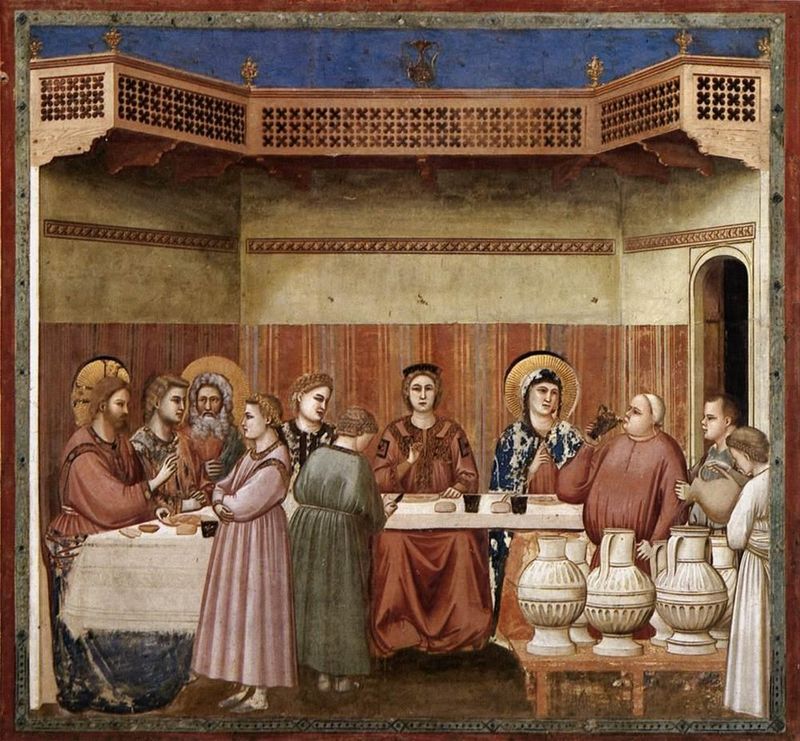
The parallels between Cana and Calvary are extraordinary. At Cana, Jesus provides wine for a thirsty crowd; at the cross, he himself thirsts. At Cana, water becomes wine; at the cross, blood and water flow from his side. At Cana, the hour has not yet come; at the cross, the hour has arrived. And at both moments, the mother is present — the only character who bookends the narrative in this way.5
Brown noted that unlike the Synoptics, where Jesus appears to distance himself from his mother (cf. Mark 3:31-35), the Fourth Gospel presents a relationship of genuine partnership.6 There is no rebuff at Cana, properly understood. Jesus’ question to his mother — rendered most faithfully by the NRSV as “What concern is that to you and to me?” — is not a dismissal but an acknowledgment of shared concern.7 She responds not with confusion or hurt but with confident instruction to the servants, fully expecting him to act. This is not a woman on the margins. This is a woman whose faith and initiative catalyze the first revelation of Jesus’ glory.
The significance of this becomes clearer when we consider why Jesus addresses his mother as “woman” at both Cana and Calvary (2:4; 19:26). The address is formal but not dismissive — it is the same word Jesus uses when speaking to the Samaritan woman (4:21) and to Mary Magdalene at the tomb (20:15). It connects these women across the Gospel as recipients of direct revelation, each addressed with a dignity that elevates rather than diminishes.
At the cross, Jesus’ commendation of his mother to the Beloved Disciple — and the Beloved Disciple to his mother — establishes a new familial relationship that transcends biological kinship. As I discuss in my analysis of why Jesus gave Mary to John, this act bypasses Jesus’ brothers, who had rejected him (7:5), and creates a household rooted in discipleship rather than blood. The mother becomes both a witness to the entirety of Jesus’ ministry and, through her incorporation into the Beloved Disciple’s household, a source for the Gospel itself.8
John does not need a birth narrative because the mother is the birth narrative. Her presence at the cross, juxtaposed with the blood and water flowing from Jesus’ side, attests to his full humanity — born of a woman, dead on a cross, truly human from beginning to end.9
The Samaritan Woman: The First Evangelist
The encounter between Jesus and the Samaritan woman at Jacob’s well (4:1-42) is, by any measure, the most theologically dense conversation in the Gospels. It is longer and more substantive than any exchange Jesus has with a male interlocutor in John, and it culminates in the first explicit messianic self-revelation in the Fourth Gospel: “I am he, the one who is speaking to you” (4:26).10
The Evangelist constructs this scene with deliberate care, placing it immediately after the encounter with Nicodemus in chapter 3. The contrast is devastating. Nicodemus is a Jewish male, a Pharisee, a “teacher of Israel” (3:10) — in every respect a person of status and theological credentials. He comes to Jesus at night, a detail scholars have long recognized as symbolically loaded in a Gospel that structures its entire worldview around the opposition between light and darkness.11 Nicodemus fails to understand Jesus’ teaching about being born from above (3:4), and the conversation ends without resolution. He appears twice more in John (7:50-52; 19:39), but never with a clear confession of faith.
The Samaritan woman, by contrast, is everything Nicodemus is not. She is female, Samaritan (and therefore religiously suspect to Jewish readers), and meets Jesus in the full light of midday. Where Nicodemus struggles and retreats into the night, she engages. Where he cannot move past literal misunderstanding, she presses deeper into the theological implications of what Jesus is saying.12
The conversation moves through several stages. It begins with a social transgression — a Jewish man speaking to a Samaritan woman — and progresses through living water (4:10-15), worship (4:20-24), and finally messianic identity (4:25-26). At each stage, the woman demonstrates a capacity for theological reasoning that the Evangelist denies to most of the male characters in the Gospel. When Jesus tells her that “the hour is coming when you will worship the Father neither on this mountain nor in Jerusalem” (4:21), he is disclosing to her the eschatological reorientation of worship — a revelation of enormous consequence, delivered not to the Twelve but to an unnamed woman at a well.13
Craig Keener has noted that the Samaritan woman functions as a foil for Nicodemus, with virtually every detail inverted: male/female, night/day, named/unnamed, Pharisee/Samaritan, confused/progressing.14 Ben Witherington III similarly argued that the narrative structure places the Samaritan woman in a more favorable light than any male character in the first half of the Gospel, since she alone moves from initial misunderstanding to a genuine confession that leads to missionary activity.15
For that is the climax of the passage. After her conversation with Jesus, the woman leaves her water jar — a detail suggesting the urgency and transformation of the moment — and returns to her city to say, “Come, see a man who told me everything I have ever done. He cannot be the Messiah, can he?” (4:29). Her testimony is effective: “Many Samaritans from that city believed in him because of the woman’s testimony” (4:39). She is, in the narrative logic of the Fourth Gospel, the first evangelist — the first person to bring others to faith in Jesus through her own witness.16
Adeline Fehribach argued that the Samaritan woman fulfills the role of the betrothal-type scene familiar from the Hebrew Bible, in which a man meets a woman at a well (cf. Genesis 24; 29; Exodus 2), but with the relationship recast in terms of discipleship and mission rather than marriage.17 The Evangelist draws on the conventions of the genre to signal that something of covenantal significance is taking place — not a marriage between individuals but a union between Jesus and the Samaritan community, brokered by a woman.
The Woman Caught in Adultery
The passage known as the Pericope Adulterae (7:53-8:11), in which a woman caught in adultery is brought before Jesus, occupies an unusual position in both the text and the scholarly tradition. The passage is absent from the earliest and most reliable Greek manuscripts and is widely regarded by textual critics as a secondary insertion into the Gospel.18 It does not appear in Papyrus 66, Papyrus 75, or Codex Sinaiticus, and early church fathers such as Origen and Chrysostom show no awareness of it.
The scholarly consensus, shared by Brown, Keener, and virtually every major commentary, is that the passage was not part of the original Gospel of John.19 Some manuscripts place it after Luke 21:38, others after John 7:36 or at the end of the Gospel, suggesting that scribes recognized it as an independent tradition searching for a home. Its vocabulary and style differ from the rest of John, further supporting its secondary character.
None of this means the passage is unimportant. The story has the character of an authentic Jesus tradition — its depiction of Jesus’ response to entrapment, his refusal to condemn, and his injunction to “sin no more” (8:11) are consistent with the Jesus portrayed across the Gospel tradition. What is significant for our purposes is the narrative’s treatment of the woman herself.
The scribes and Pharisees present her as an object — a test case for Jesus’ fidelity to the Law of Moses. Jesus refuses to participate in their framework. His famous response, “Let anyone among you who is without sin be the first to throw a stone at her” (8:7), reorients the scene entirely. The woman is no longer a legal exhibit but a person, and Jesus’ final words to her — “Neither do I condemn you. Go your way, and from now on do not sin again” (8:11) — combine mercy with moral seriousness in a manner characteristic of the Johannine Jesus.
Whether or not the passage belonged to the original Gospel, its placement here by later editors reflects a recognition that it cohered with the Fourth Gospel’s broader treatment of women as persons of dignity and theological significance, not as objects to be used for rhetorical or legal purposes.
Martha of Bethany: The Christological Confessor
The raising of Lazarus (11:1-44) is the climax of Jesus’ public ministry in the Fourth Gospel — the seventh and greatest sign, which provokes the authorities to plot his death (11:45-53). At the center of this narrative stands not Lazarus but his sister Martha, who delivers the most important Christological confession in the Gospel of John.
When Martha meets Jesus on the road outside Bethany, their exchange moves rapidly from grief to theology. Jesus tells her, “Your brother will rise again” (11:23). Martha replies with a statement of standard Jewish eschatological hope: “I know that he will rise again in the resurrection on the last day” (11:24). Jesus then makes one of the great “I am” declarations of the Fourth Gospel: “I am the resurrection and the life. Those who believe in me, even though they die, will live, and everyone who lives and believes in me will never die. Do you believe this?” (11:25-26).
Martha’s response is extraordinary: “Yes, Lord, I believe that you are the Christ, the Son of God, the one coming into the world” (11:27).
This confession is the Johannine equivalent of Peter’s confession at Caesarea Philippi in the Synoptic Gospels (Matt 16:16; Mark 8:29; Luke 9:20).20 But in John, it is not Peter who makes this declaration. It is Martha.21 The significance of this cannot be overstated. In the Fourth Gospel, the supreme confession of faith — identifying Jesus as the Messiah, the Son of God, the eschatological figure whose coming Israel has awaited — is placed on the lips of a woman.
Schneiders argued that Martha’s confession is deliberately constructed to parallel and even surpass Peter’s.22 Peter’s confession in the Synoptics identifies Jesus as the Christ, but in Matthew’s version, Jesus attributes this insight to divine revelation (Matt 16:17). Martha’s confession in John is unprompted by any such attribution — she simply believes. Moreover, her confession is more theologically complete than Peter’s, incorporating not only messianic identity (“the Christ”) but also divine sonship (“the Son of God”) and eschatological fulfillment (“the one coming into the world”).23
Brown noted that Martha’s confession in 11:27 uses language that closely mirrors the stated purpose of the entire Gospel as articulated in 20:31: “These things are written so that you may believe that Jesus is the Christ, the Son of God, and that through believing you may have life in his name.”24 The verbal parallels are striking. Martha confesses what the Gospel itself asks its readers to confess. In this sense, she is not merely a character in the narrative but the model reader — the person who understands and articulates the Fourth Gospel’s central claim before anyone else does.
This is all the more remarkable given that in Luke’s account of the Bethany household (Luke 10:38-42), Martha is gently rebuked for being distracted by domestic concerns while Mary sits at Jesus’ feet. The Evangelist of the Fourth Gospel either knew a different tradition about Martha or deliberately chose to present her in a radically different light — as the theological voice of the household, the one who confesses while others grieve.25
Mary of Bethany: The Anointing
Six days before Passover, at a dinner in Bethany, Mary — Martha’s sister — takes a pound of costly perfume made of pure nard, anoints Jesus’ feet, and wipes them with her hair (12:1-8). The act is extravagant, provocative, and deeply symbolic. Judas objects to the expense, but Jesus defends her: “Leave her alone. She bought it so that she might keep it for the day of my burial” (12:7).
Jesus’ interpretation is crucial. He identifies Mary’s act as preparation for his burial — a recognition of his impending death that the disciples themselves have not yet grasped. Throughout John’s Gospel, the disciples repeatedly fail to understand what Jesus means when he speaks of his departure, his hour, or his glorification. Mary, by contrast, acts with an intuitive understanding that precedes and surpasses the disciples’ comprehension.26
Fehribach argued that the anointing scene positions Mary as a figure of prophetic insight, performing an act that anticipates the hour to which the entire Gospel has been building.27 The anointing of feet, rather than the head (as in Mark 14:3), carries its own significance — it echoes the foot-washing Jesus will perform at the Last Supper (13:1-20), connecting Mary’s act of devotion to Jesus’ act of service and, by extension, to his death.28
There is an intimacy to the scene that the Evangelist does not soften. The detail that Mary wiped Jesus’ feet with her hair (12:3) would have been striking to ancient readers, for whom a woman’s unbound hair carried significant social weight. Keener noted that such an act would have been considered scandalous in many first-century contexts, and its inclusion in the narrative underscores the Evangelist’s willingness to present women who transgress social conventions in the service of faith.29
That the fragrance “filled the whole house” (12:3) functions as a literary signal of the act’s pervasive significance. Witherington suggested that the detail serves as an olfactory marker connecting the anointing to the burial — the fragrance that fills the house in Bethany will linger, in narrative memory, over the tomb scenes to come.30
Mary Magdalene: The First Witness
The resurrection narrative in John 20 is structured with extraordinary care, and at its center stands Mary Magdalene. She is the first person to arrive at the tomb (20:1), the first to discover it empty, and — most significantly — the first person to encounter the risen Christ (20:14-17). In a Gospel that has consistently elevated women as agents of faith and revelation, Mary Magdalene is the culmination of the pattern.
She comes to the tomb “while it was still dark” (20:1), a phrase that resonates with the Johannine symbolism of light and darkness that has operated since the Prologue (1:4-5). Her movement from darkness to the light of recognition mirrors the Gospel’s entire theological trajectory — from the world’s failure to recognize the light (1:10) to the moment when the light breaks through and is known.31
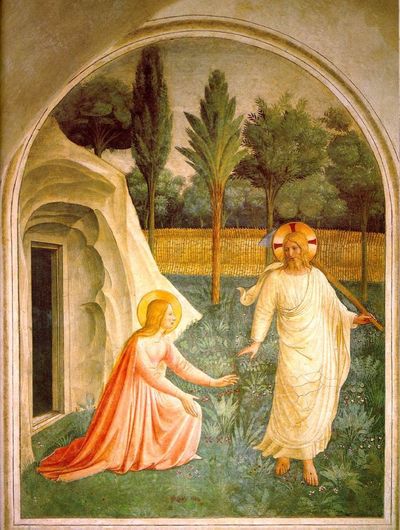
The scene between Jesus and Mary Magdalene in the garden (20:11-18) is among the most carefully constructed in the Fourth Gospel. Mary stands weeping outside the tomb. Two angels ask her why she is weeping. She turns and sees Jesus but does not recognize him, supposing him to be the gardener (20:15). Then Jesus says her name: “Mary” (20:16). And she recognizes him.
This moment echoes Jesus’ earlier teaching about the Good Shepherd: “He calls his own sheep by name and leads them out… the sheep follow him because they know his voice” (10:3-4). Mary is the first sheep to hear the shepherd’s voice after the resurrection, and she recognizes him precisely as Jesus said his own would — by the sound of her name on his lips.32
Schneiders argued that the garden setting evokes the Song of Songs, in which the beloved searches for her lover in a garden and, upon finding him, is instructed to share the news with others.33 Whether or not the allusion is intentional, the literary effect is powerful. The encounter is intimate, personal, and charged with the emotional weight of loss reversed.
Jesus’ instruction to Mary — “Go to my brothers and say to them, ‘I am ascending to my Father and your Father, to my God and your God’” (20:17) — is a commission. She is sent to announce the resurrection to the other disciples. The early church recognized the significance of this role, giving Mary Magdalene the title apostola apostolorum — the apostle to the apostles.34 In John’s narrative, the first proclamation of the resurrection is entrusted not to Peter, not to the Beloved Disciple, but to a woman.
Brown observed that the Johannine resurrection narrative gives Mary Magdalene a role that parallels the Synoptic accounts of Peter’s primacy — she is the first to see, the first to believe, and the first to be sent.35 The Gospel that began with a woman initiating the first sign at Cana concludes with a woman announcing the resurrection. The inclusio is complete.
For a discussion of the Prologue’s theological framework, in which the Word becomes flesh and dwells among us, see my analysis of John 1:1. That cosmic vision of revelation — light coming into darkness, the Word taking on flesh — finds its narrative fulfillment in the garden encounter between Jesus and Mary Magdalene, where the risen Word speaks a single name and is known.
The Pattern: Women as Theological Agents
When these figures are viewed together, the pattern becomes unmistakable. In the Fourth Gospel, women consistently demonstrate superior faith and deeper theological insight compared to male characters. They act where men hesitate. They confess where men equivocate. They understand where men are confused.
The mother of Jesus acts with confidence at Cana when the hour has not yet come. Nicodemus comes to Jesus at night and cannot understand what it means to be born from above. The Samaritan woman engages Jesus in the deepest theological conversation in any Gospel and becomes the first evangelist. The disciples, by contrast, are routinely confused by Jesus’ teachings about his departure and return. Martha delivers the Christological confession that the entire Gospel asks its readers to make. Peter, who holds that role in the Synoptics, receives no equivalent scene in John. Mary of Bethany understands the significance of Jesus’ approaching death before the disciples do. And Mary Magdalene is the first to encounter the risen Christ, commissioned to announce the resurrection to the men who will later receive the Spirit.
This is not to suggest that the Evangelist denigrates male characters entirely. The Beloved Disciple, after all, occupies a position of unique intimacy and authority. But I argue that the Beloved Disciple’s authority derives in part from his association with the mother of Jesus. The claim advanced in my longer study — that a woman is the source of his credibility — is not a standard position in Johannine scholarship but is the central thesis of that analysis and of the present one.
Fehribach proposed that the women in John function as what she calls “betrothal figures” and “nuptial figures,” drawing on Hebrew Bible type-scenes to signal covenantal relationships between Jesus and the communities they represent.36 Schneiders went further, arguing that the Evangelist’s treatment of women reflects a community in which women held significant leadership roles — and that the Gospel narrative legitimates those roles by placing women at every critical juncture of revelation and witness.37
Witherington, writing from a more conservative perspective, nonetheless acknowledged that John’s treatment of women is “remarkable” by the standards of first-century literature and that the Gospel “consistently presents women in the best possible light as examples of faith.”38 Keener similarly concluded that the Fourth Gospel gives women “a more prominent role than we would expect in most ancient literature” and that this prominence is theologically motivated rather than incidental.39
The theological logic is consistent with the broader Johannine theme of God working through unexpected channels. The Word becomes flesh (1:14). The Messiah comes from Nazareth (1:46). Living water is offered to a Samaritan. The supreme confession comes from a woman in Bethany. The resurrection is announced by a woman in a garden. In a Gospel that consistently subverts expectations about where God acts and through whom God speaks, the prominence of women is not an anomaly but the pattern itself.
Frequently Asked Questions
Why are women so prominent in John’s Gospel?
The Fourth Gospel gives women a more prominent theological role than any other Gospel. Scholars such as Sandra Schneiders and Raymond Brown have argued that this reflects the values of the Johannine community, in which women likely held significant roles in leadership, teaching, and witness — though the existence of a bounded “Johannine community” has itself been challenged by scholars such as Richard Bauckham and Adele Reinhartz. The Evangelist places women at every critical moment of revelation — initiating signs, making Christological confessions, evangelizing, and witnessing the resurrection — positioning them as the primary models of faith in the narrative. This prominence also coheres with the Gospel’s broader theme of God working through unexpected and socially marginal figures.
Who is the Samaritan woman in John 4?
The Samaritan woman who meets Jesus at Jacob’s well (John 4:1-42) is unnamed in the text but plays a central role in the narrative. She engages Jesus in the longest and most theologically substantive conversation in any Gospel, covering topics from living water to the nature of true worship. She is the first person to whom Jesus explicitly reveals his messianic identity (“I am he,” 4:26), and after their conversation, she returns to her city and brings many Samaritans to faith through her testimony (4:39). Scholars regard her as the first evangelist in the Fourth Gospel — the first person to bring others to believe in Jesus through personal witness.
What is the significance of Martha’s confession in John 11:27?
Martha’s confession — “I believe that you are the Christ, the Son of God, the one coming into the world” — is the supreme Christological statement in the Gospel of John. It closely parallels Peter’s confession at Caesarea Philippi in the Synoptic Gospels (Matthew 16:16; Mark 8:29), but in John, this declaration is given to Martha rather than Peter. Her words also mirror the stated purpose of the entire Gospel (20:31), making her confession a model of the faith the Evangelist hopes all readers will share. Raymond Brown and Sandra Schneiders have both argued that this placement is theologically deliberate, positioning a woman as the voice of the Gospel’s central claim.
Why was Mary Magdalene the first to see the risen Jesus?
In John 20:1-18, Mary Magdalene is the first person to arrive at the empty tomb and the first to encounter the risen Christ. Jesus calls her by name (20:16), echoing his earlier teaching that the Good Shepherd “calls his own sheep by name” (10:3). He then commissions her to announce the resurrection to the other disciples (20:17), a role the early church recognized with the title apostola apostolorum — apostle to the apostles. Her priority as the first resurrection witness is consistent with the Fourth Gospel’s broader pattern of placing women at the most theologically significant moments and entrusting them with the most important acts of testimony.
Footnotes
-
Raymond E. Brown, The Community of the Beloved Disciple (New York: Paulist Press, 1979), 183-98. Brown devotes an extended section to the role of women in the Johannine community, arguing that their narrative prominence reflects actual community practice. ↩
-
Brown’s influential reconstruction of a distinctive Johannine community, which grounds the narrative’s women prominently in actual community roles, has been substantially challenged in recent scholarship. Adele Reinhartz (Befriending the Beloved Disciple, 2001; Cast Out of the Covenant, 2018) and Richard Bauckham (The Gospels for All Christians, 1998) have each questioned whether the Gospel was composed for or by a bounded sectarian community at all. The reading advanced here does not depend on resolving that debate: what matters is the theological argument the text makes, whatever community produced it. ↩
-
Sandra M. Schneiders, Written That You May Believe: Encountering Jesus in the Fourth Gospel, rev. ed. (New York: Crossroad, 2003), 93-114. Schneiders’ work has been foundational for feminist Johannine scholarship, particularly her readings of the Samaritan woman and Mary Magdalene. ↩
-
See my extended analysis of the Cana scene and the partnership between Jesus and his mother in The Mother of Jesus as a Named Source in John. ↩
-
Joseph A. Grassi, “The Role of Jesus’ Mother in John’s Gospel: A Reappraisal,” The Catholic Biblical Quarterly 48, no. 1 (January 1986): 67-72. See also Raymond E. Brown, The Gospel According to John, ed. William Foxwell Albright and David Noel Freedman, 2 vols., The Anchor Bible (New York: Doubleday, 1966), 2:923. ↩
-
Brown, John, 1:108-09; cf. Mark 3:31-35, where Jesus redefines family in terms of doing God’s will, seemingly distancing himself from his mother and brothers. In John, no scene precisely parallel to Mark 3:31-35 occurs; John does not record Jesus gesturing to his disciples and declaring them his true family. Some scholars nonetheless read John 2:4 as involving a degree of relational distancing, and the contrast with the unbelieving brothers in 7:5 provides its own version of the Synoptic tension. The difference is that John never resolves this by replacing his mother — he elevates her. ↩
-
The NRSV’s rendering of ti emoi kai soi (2:4) as “What concern is that to you and to me?” is the most faithful to the Greek. See R. B. Woodworth, “The Marriage at Cana in Galilee: John 2:4,” Interpretation 1, no. 3 (January 1947): 372-73. ↩
-
For a full discussion of the commendation scene and its implications for the mother’s role as source, see The Mother of Jesus as a Named Source in John. ↩
-
Lilly Nortje-Meyer, “The Mother of Jesus as Analytical Category in John’s Gospel,” Neotestamentica 43, no. 1 (2009): 131, 139. John does not need a birth narrative because the mother is the birth narrative — her presence at the cross, alongside the blood and water from Jesus’ side, attests to his full humanity. ↩
-
The ego eimi (“I am he”) of 4:26 is the first instance of this revelatory formula applied to Jesus’ messianic identity in direct conversation. See Craig S. Keener, The Gospel of John: A Commentary, 2 vols. (Peabody, MA: Hendrickson, 2003), 1:616-20. ↩
-
The symbolism of Nicodemus coming “at night” (3:2) has been widely recognized. See Brown, John, 1:130; D. A. Carson, The Gospel According to John, The Pillar New Testament Commentary (Leicester: Apollos, 1991), 186. In a Gospel structured around light and darkness (1:4-5; 3:19-21; 8:12; 12:35-36), the detail is unlikely to be incidental. ↩
-
Keener, 1:585-94. Keener provides a thorough analysis of the social dynamics at work in the scene, including the transgression of gender and ethnic boundaries. ↩
-
The revelation about worship “in spirit and truth” (4:23-24) is among the most theologically significant statements in the Fourth Gospel, and Jesus delivers it to the Samaritan woman — not to the disciples or to any Jewish authority figure. ↩
-
Keener, 1:585-86. The structural parallels between John 3 (Nicodemus) and John 4 (Samaritan woman) are widely recognized in the scholarship. ↩
-
Ben Witherington III, Women in the Ministry of Jesus: A Study of Jesus’ Attitudes to Women and Their Roles as Reflected in His Earthly Life (Cambridge: Cambridge University Press, 1984), 58-62. See also Witherington, Women and the Genesis of Christianity (Cambridge: Cambridge University Press, 1990), 175-79. ↩
-
Brown, Community, 187-88. Brown notes that the Samaritan woman’s role as evangelist — bringing her community to faith through personal testimony — anticipates the missionary function that will later be given to the disciples after the resurrection. ↩
-
Adeline Fehribach, The Women in the Life of the Bridegroom: A Feminist Historical-Literary Analysis of the Female Characters in the Fourth Gospel (Collegeville, MN: Liturgical Press, 1998), 45-68. Fehribach’s reading of the betrothal type-scene is methodologically rigorous and illuminating for the Samaritan woman’s role. ↩
-
Bruce M. Metzger, A Textual Commentary on the Greek New Testament, 2nd ed. (Stuttgart: Deutsche Bibelgesellschaft, 1994), 187-89. The passage is absent from P66, P75, Codex Sinaiticus, Codex Vaticanus, and other early witnesses. Most modern critical editions bracket it or relegate it to a footnote. ↩
-
Brown, John, 1:335-36; Keener, 1:735-39; Carson, 333-34. The consensus is that the passage preserves an authentic Jesus tradition that was not originally part of the Fourth Gospel. ↩
-
A competing Johannine analogue to the Synoptic confession is Peter’s statement in 6:68-69 (“Lord, to whom shall we go? You have the words of eternal life. We have come to believe and know that you are the Holy One of God”). Some scholars — including Bultmann and Schnackenburg — identify this as the closer formal parallel to Matthew 16:16. The present analysis follows Brown and Schneiders in reading Martha’s confession as the more theologically complete statement, incorporating the Gospel’s full Christological vocabulary as it appears in 20:31. ↩
-
Brown, John, 1:434; Schneiders, Written That You May Believe, 104-08. The structural parallel with Peter’s confession has been noted by virtually every major commentary on John. ↩
-
Schneiders, Written That You May Believe, 104-08. Schneiders argues that the Evangelist’s placement of the Christological confession on Martha’s lips is a deliberate theological statement about the role of women as agents of faith in the Johannine community. ↩
-
Martha’s confession incorporates three titles — the Christ (Messiah), the Son of God, and the Coming One — making it the most comprehensive confession of faith in the Fourth Gospel. See Brown, John, 1:433-34. ↩
-
Brown, John, 1:434. The verbal correspondence between 11:27 and 20:31 is too close to be coincidental: both use ho Christos, ho huios tou theou, and the language of belief. ↩
-
Witherington, Women in the Ministry of Jesus, 108-12. The difference between Luke’s domestic Martha and John’s theological Martha has been the subject of considerable scholarly discussion. See also Fehribach, 93-115. ↩
-
Schneiders, Written That You May Believe, 109-11. Mary’s act of anointing is an embodied interpretation of Jesus’ approaching death, performed before the disciples have any such understanding. ↩
-
Fehribach, 117-38. Fehribach reads the anointing as a “nuptial” act that connects Mary to the broader pattern of women functioning as figures of covenantal relationship in the Fourth Gospel. ↩
-
The connection between the anointing of feet (12:3) and the foot-washing (13:1-20) has been noted by Brown, John, 1:454, and Keener, 2:861-63. Both acts involve the feet, both are acts of service, and both point toward the cross. ↩
-
Keener, 2:863-64. On the social significance of unbound hair in first-century contexts, see also Witherington, Women in the Ministry of Jesus, 113. ↩
-
Witherington, Women and the Genesis of Christianity, 182-83. The olfactory detail in 12:3 serves both realistic and symbolic functions, connecting the anointing to burial preparation. ↩
-
On the Prologue’s theology of light and darkness and its narrative unfolding throughout the Gospel, see my discussion of John 1:1 and the Word. ↩
-
Brown, John, 2:1009-10. The connection between 10:3-4 (the Good Shepherd calling his sheep by name) and 20:16 (Jesus calling Mary by name) is widely recognized in the scholarship. ↩
-
Sandra M. Schneiders, “John 20:11-18: The Encounter of the Easter Jesus with Mary Magdalene — A Transformative Encounter,” in “What Is John?” Readers and Readings of the Fourth Gospel, ed. Fernando F. Segovia (Atlanta: Scholars Press, 1996), 155-68. Schneiders’ reading of the garden scene as evoking the Song of Songs has been influential, though not universally accepted. ↩
-
The conceptual framework of Mary Magdalene as apostle to the apostles appears in Hippolytus of Rome’s Commentary on the Song of Songs (25.6-7; third century), and the crystallized Latin phrase apostola apostolorum became standard in medieval theology, appearing explicitly in Thomas Aquinas’s Super Evangelium Ioannis Lectura §2519. See Keener, 2:1192-93; Brown, John, 2:1003. On the patristic antecedents, see Katherine Ludwig Jansen, “Maria Magdalena: Apostolorum Apostola,” in Women Preachers and Prophets through Two Millennia of Christianity, ed. Beverly Mayne Kienzle and Pamela J. Walker (Berkeley: University of California Press, 1998), 57-96. ↩
-
Brown, Community, 190-91. Brown argues that Mary Magdalene’s role in John 20 is structurally parallel to Peter’s role in the Synoptic resurrection traditions — she is the first to see, the first to believe, the first to be sent. ↩
-
Fehribach, 1-30. Her methodological framework draws on Robert Alter’s work on biblical type-scenes to identify recurring patterns in the Fourth Gospel’s presentation of women. ↩
-
Schneiders, Written That You May Believe, 93-97. Schneiders argues that the Evangelist’s treatment of women is not merely descriptive but prescriptive — it legitimates women’s roles in the community by grounding them in the narrative of Jesus’ ministry. ↩
-
Witherington, Women in the Ministry of Jesus, 128. ↩
-
Keener, 1:540-42. ↩

Garrett Ham
Garrett Ham is an attorney, military veteran, and holds a Master of Divinity from Yale Divinity School. He writes from Northwest Arkansas on theology, law, and service.
More about Garrett →Related Posts
The Parallels Between Cana and Calvary in John's Gospel
The wedding at Cana and the crucifixion share extraordinary parallels — drink, thirst, the hour, and the mother of Jesus. These connections are the key to understanding John's Gospel.
The Mother of Jesus as a Named Source in John
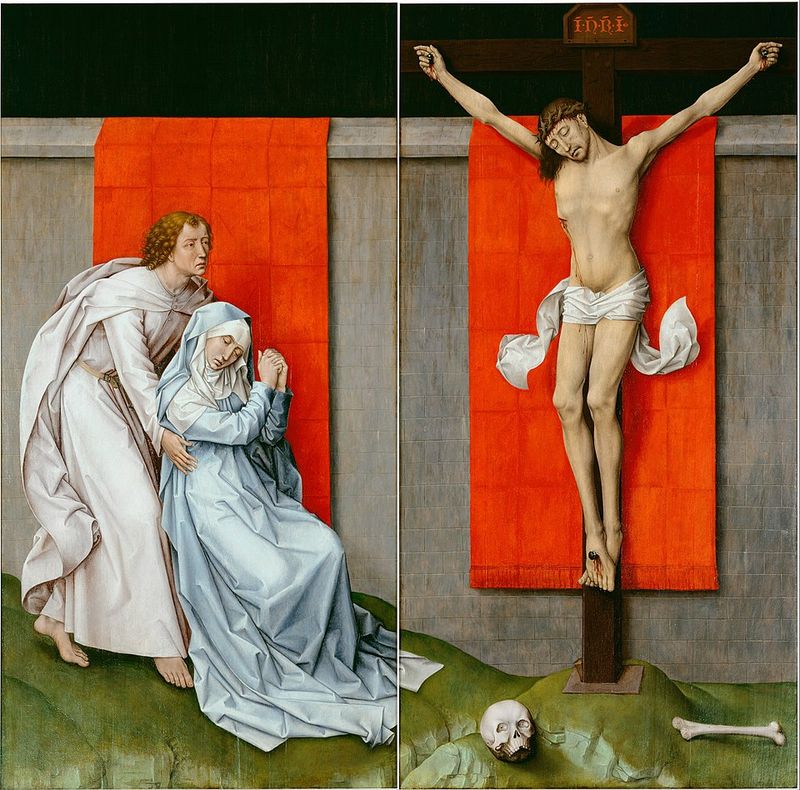
An analysis of John 19:26-27 arguing that Mary, the mother of Jesus, served as a named source for the Gospel of John. Based on a paper from Yale Divinity School.
Why Did Jesus Give Mary to John at the Cross?
Jesus bypassed his own brothers to commend his mother to the Beloved Disciple. This wasn't just filial care — it was a theological act that reshaped how we read John's Gospel.
Stay Informed
Get new writing on faith, law, and service delivered to your inbox.
No spam. Unsubscribe anytime.