What Is Process Theology?
On This Page
Process theology is a modern theological movement that reimagines God as a being who grows, changes, and is genuinely affected by the world—a radical departure from the classical Christian understanding of God as eternal, unchanging, and all-powerful. Rooted in the process philosophy of mathematician Alfred North Whitehead, process theology has attracted serious thinkers across Christian traditions for nearly a century. It offers a fresh way of thinking about God’s relationship to suffering, freedom, and creation. But it also raises profound questions about the nature of God, divine power, and the foundations of Christian faith.
If you’ve encountered the phrase “process theology” or “process theism” and wondered what it means, this post is for you. It’s designed as a gateway to a deeper theological evaluation, but it stands alone as a clear, introductory overview.
Where Did Process Theology Come From?
Process theology did not emerge from a church council or a theological school. It emerged from a mathematician’s metaphysical vision.
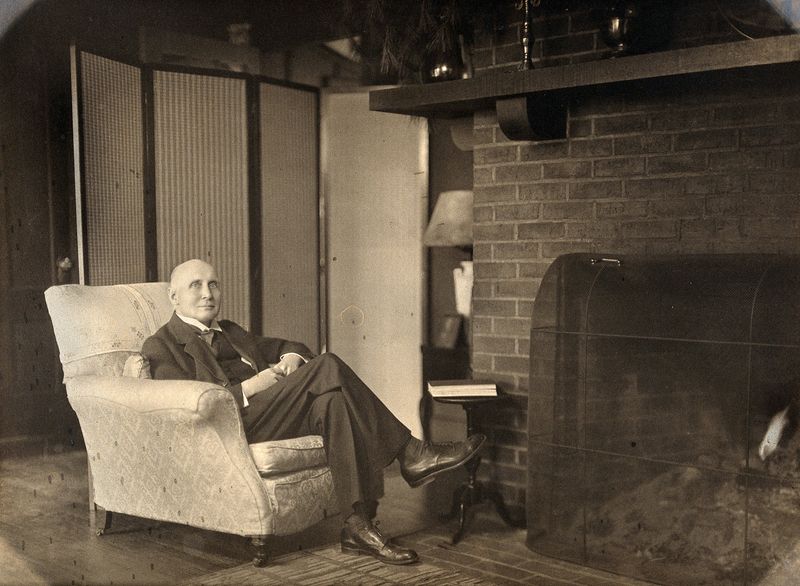
Alfred North Whitehead (1861–1947) spent most of his career at Cambridge, where he co-authored the groundbreaking Principia Mathematica with Bertrand Russell. Late in his life—at age sixty-three—he moved to Harvard University and began developing a sweeping metaphysical philosophy. His 1929 magnum opus, Process and Reality, laid out a vision of the universe as fundamentally dynamic: reality is not made of static things but of events, of perpetual becoming. God, in Whitehead’s system, is not exempt from this universal process. He is the supreme example of it, but he participates in it nonetheless.1
Whitehead was not primarily a theologian. Charles Hartshorne (1897–2000), a philosopher at the University of Chicago and later the University of Texas, was the one who fully developed Whitehead’s ideas into a systematic theology. Hartshorne coined the term “neoclassical theism” to describe his project: a deliberate contrast with classical theism. Where the classical tradition says God is absolutely unchanging, Hartshorne said God changes in his response to the world. Where it says God is impassible (incapable of suffering), Hartshorne said God suffers with every creature. Methodist theologian John B. Cobb Jr. brought process theology into conversation with Christian doctrine, and the movement has continued to develop through thinkers like David Ray Griffin and others based at the Center for Process Studies in California.
Today, process theology remains influential in academic theology, though it is far from mainstream Christian thought.
The Key Ideas: Actual Occasions, Dipolar Theism, and Persuasive Power
To understand process theology, you need to grasp a few technical concepts. Don’t worry—I’ll keep them simple.
Actual Occasions and Creativity
In Whitehead’s vision, reality is not composed of substances (things) but of momentary events he calls “actual occasions.” Each occasion is a flash of experience that takes in data from the past, synthesizes it into a unified moment, and then perishes—becoming data for the next occasion. This process of creative synthesis is always happening, everywhere, at every level of reality.
The key insight is that creativity is the ultimate reality, not God. God exemplifies creativity in the supreme way, but he does not create creativity itself. This is a fundamental departure from classical Christianity, which teaches that God is the ultimate source of all being. In process theology, God shapes and guides a world that is, in some sense, always already there.
God Has Two “Poles”
The most distinctive idea in process theology is divine “dipolarity.” God, Hartshorne argued, has two distinct aspects or natures:
The Primordial Nature is God’s eternal, abstract side. It is his vision of all possibilities. In this pole, God offers an “initial aim” to every creature—a lure toward the best possible outcome. This aspect of God is unchanging; it is the realm of pure possibility.
The Consequent Nature is God’s concrete, temporal, responsive side. It is his actual experience of the world. In this pole, God feels what creation feels. He is enriched by beauty and diminished by suffering. He grows as the world grows. This nature changes constantly as new events occur.
In this framework, God is both eternal and temporal, both unchanging and changing. Process theologians see this as more coherent and more biblical than the classical God who is said to be unchanging in every respect.
God as Persuasive, Not Coercive
Perhaps the most important practical claim of process theology is that God does not exercise coercive power. God cannot force anything to happen. Instead, God works through persuasion—by offering each creature an “initial aim” and then encouraging it toward the good. Creatures are genuinely free to accept or reject God’s aim.
This means God cannot prevent hurricanes, stop bullets, or rescue the innocent from suffering. He can only call the world toward beauty and goodness, and suffer alongside creation when it refuses his call. For many people struggling with the problem of evil, this sounds more compassionate and realistic than a God who could prevent suffering but allows it anyway.
Panentheism: God and the World
Process theology teaches “panentheism,” a view that is often confused with pantheism but is actually different.
- Pantheism says God is the world. They are identical. There is no distinction between Creator and creation.
- Classical theism says God is completely separate from the world. God created it freely, but it depends entirely on Him.
- Panentheism says the world is in God, but God is more than the world. God includes creation within himself, like a body includes organs.
In process theology, God needs the world as much as the world needs God. Without creatures to experience and interact with, God’s consequent nature would be empty—just abstract possibilities without concrete realization. The world provides the content of God’s experience. This mutual dependence is, for process thinkers, a feature of a truly relational, loving God, not a defect.
How Process Theology Differs from Classical Theism
Classical theism—the view affirmed by Catholic tradition, Orthodox Christianity, and classical Protestantism—holds that God has certain attributes that process theology rejects:
| Attribute | Classical Theism | Process Theology |
|---|---|---|
| Omnipotence | God can do anything logically possible | God’s power is persuasive, not coercive |
| Immutability | God never changes | God changes in his experience of the world |
| Impassibility | God does not suffer | God suffers with every creature |
| Simplicity | God has no parts or internal distinction | God has primordial and consequent poles |
| Creation ex Nihilo | God created from nothing | God shaped a pre-existing world |
| Aseity | God depends on nothing outside himself | God needs the world for his experience |
Each of these differences matters. They are not minor adjustments. They represent a fundamentally different understanding of who God is.
What Does the Catholic Church Think?
The Catholic Church has not issued a formal condemnation of process theology by name, but the core claims of process theology contradict defined Catholic dogma. The Fourth Lateran Council (1215) taught that God created all things “from nothing” by his “almighty power.”2 The First Vatican Council (1870) affirmed that God is “unchangeable spiritual substance” and that He created the universe in complete freedom, not by necessity. These are not optional doctrines; they are binding teachings of ecumenical councils.
The Catholic Church appreciates the concerns that drive process theology. She takes the problem of evil seriously. She affirms that God loves the world and desires the salvation of all people. She teaches that God’s grace works in ways beyond our ability to trace. But she cannot accept a God who lacks the power to create from nothing, who depends on the world for his own perfection, or who is subject to temporal change.
For a full exploration of why the Catholic tradition rejects process theology while acknowledging the questions it raises, see the complete evaluation.
Frequently Asked Questions
What’s the difference between process theology and open theism?
Both open theism and process theology reject the classical view that God knows the future with absolute certainty. Both emphasize God’s responsiveness to human choice. But open theism typically affirms creation ex nihilo (creation from nothing), divine omnipotence, and a more traditional Christian metaphysical framework. Process theology is more radical: it denies creation from nothing and redefines omnipotence as persuasive power. For a detailed comparison, see Open Theism vs. Process Theology.
If God can’t prevent evil, how is He all-good?
Process theology answers: God is perfectly good, but not omnipotent in the classical sense. He does everything in his power—he persuades, encourages, suffers alongside creation—but he cannot override creaturely freedom or natural laws. For God to be all-powerful in the classical sense while allowing innocent suffering seems, to process thinkers, to make God morally culpable. Catholics respond that God’s goodness operates within a framework of eternal, unchanging wisdom that we cannot fully comprehend, and that the Cross of Christ is God’s definitive response to suffering.
Is process theology heretical?
The Catholic Church has not formally condemned it by name, but its core claims contradict dogmatic teachings of ecumenical councils. A Catholic who affirms the key tenets of process theology—the denial of creation ex nihilo, divine simplicity, omnipotence, and aseity—is materially at odds with defined Catholic doctrine.
Can a Catholic be a process theologian?
Some Catholic philosophers and theologians have engaged constructively with process philosophy, such as Jesuit Joseph Bracken. But they have typically had to modify or abandon the claims that are most clearly incompatible with Catholic teaching. The question is whether a process theology modified to fit Catholicism is still recognizable as process theology.
Where to Go Next
This post is an introduction. If you want to dig deeper, start here:
- Process Theology: A Catholic Evaluation — A comprehensive examination of what process theology teaches and why the Catholic Church cannot accept it. This is the full theological response.
- Divine Simplicity — An exploration of one of the core doctrines that process theology rejects. This will help you understand why Catholics insist that God has no internal parts or distinctions.
- Open Theism vs. Process Theology — A side-by-side comparison of two modern movements that challenge classical theism in different ways.
- Classical Theism vs. Process Theology — A detailed comparison of the core metaphysical commitments of the two views.
1 Alfred North Whitehead, Process and Reality: An Essay in Cosmology, corrected edition, ed. David Ray Griffin and Donald W. Sherburne (New York: Free Press, 1978), 18–20, 337–351.
2 Fourth Lateran Council (1215), De Fide Catholica, cap. 1 (DS 800): “Firmiter credimus et simpliciter confitemur, quod unus est solus verus Deus… creator omnium visibilium et invisibilium, spiritualium et corporalium; qui sua omnipotenti virtute simul ab initio temporis creaturam ex nihilo produxit.”

Garrett Ham
Garrett Ham is an attorney, military veteran, and holds a Master of Divinity from Yale Divinity School. He writes from Northwest Arkansas on theology, law, and service.
More about Garrett →Related Posts
Process Theology: A Catholic Evaluation
What is process theology? An examination of Whitehead's dipolar theism, panentheism, and the rejection of classical divine attributes—and why the Catholic Church cannot accept it.
Open Theism vs. Process Theology: What's the Difference?
Open theism and process theology both reject exhaustive divine foreknowledge, but they differ profoundly on creation, omnipotence, and God's nature. A Catholic comparison of these two critiques of classical theism.
Divine Simplicity: God's Absolute Oneness
An exploration of divine simplicity—the doctrine that God is utterly simple, without composition or division. How this classical Catholic teaching shapes our understanding of God's nature and attributes.
Stay Informed
Get new writing on faith, law, and service delivered to your inbox.
No spam. Unsubscribe anytime.