What Is Gnosticism? A Catholic Guide to the Ancient Heresy
On This Page
“They claim to possess more gospels than there really are—but really no gospel that is not full of blasphemy. For with the gospels they really have, they are not in agreement; nor do they possess any gospel that is not full of forgeries.”
Irenaeus of Lyons, Against Heresies, III.11.9
What Is Gnosticism? Definition and Core Features
The term “Gnosticism”—from the Greek gnosis (knowledge)—is a modern scholarly construct that refers to a family of Christian-influenced religious systems that flourished mainly in the 2nd and 3rd centuries.1 Unlike Christianity, which proclaims salvation through faith in Jesus Christ and the grace of the Church, Gnosticism promised salvation through secret, esoteric knowledge revealed by a divine revealer. This knowledge was not available to all Christians—only to those initiated into the system.
The core features of Gnostic systems are remarkably consistent across their diversity:
1. Cosmic Dualism Gnostics posited a radical opposition between spirit (good, transcendent, divine) and matter (evil, corrupt, imprisoning). This dualism was not merely psychological or moral but cosmic and ontological. The physical universe itself was a trap.2
2. The Demiurge To account for the existence of an evil world within a framework claiming ultimate divine perfection, Gnostics posited a false or ignorant creator-god, the demiurge (Greek: demiourgos, craftsman). This figure was often identified with the God of the Old Testament. The true God, transcendent and wholly beyond matter, did not create the world; a lesser, often malevolent power did.3
3. Divine Sparks and Soteriology Humans of a special type—the pneumatics (the spiritual ones)—contained within them divine sparks or particles of the true God. These were trapped in flesh, ignorant of their origin. Salvation meant awakening to one’s true divine nature through secret knowledge and escaping the material prison entirely.
4. Jesus as Revealer, Not Redeemer For most Gnostic systems, Jesus was not a savior who died for sins or was resurrected in the flesh. Rather, he was a divine revealer or emanation of the true God, sent to awaken the divine knowledge within the elect. Many Gnostics denied that the divine Christ underwent real suffering or bodily resurrection—a denial called Docetism (from dokein, to appear).
“The difference between Christianity and Gnosticism is the difference between ‘God loves the world’ and ‘God is alien to the world.’”
Christoph Markschies, Gnosis and Christianity
Proto-Gnostic Currents in the First Century
Scholars debate extensively whether fully-fledged Gnosticism existed in the 1st century or whether the movement crystallized later. The term “Gnosticism” itself may obscure what were originally diverse, sometimes Jewish-mystical movements. Nevertheless, several figures and currents from the apostolic and sub-apostolic periods exhibit characteristics that later became recognizably Gnostic.
Simon Magus (Acts 8) The Acts account of Simon the magus in Samaria is the earliest reference to a figure later associated with heretical gnosis. Second-century sources (Justin Martyr, Irenaeus) expanded Simon into a systematic heresiarch who claimed to be a divine emanation. Whether the Simon of Acts and the Simon of patristic legend are the same remains disputed, but Simon came to symbolize the perversion of Christian belief by magical and dualistic pretensions.4
Cerinthus and Docetism Cerinthus, active in Asia Minor around 100 CE, denied that the God of Israel was the supreme God and taught that Jesus was the son of Joseph and Mary, upon whom a divine power descended at baptism. According to Irenaeus, Cerinthus taught a cosmological myth involving multiple divine emanations—hallmarks later associated with Gnosticism.5 Docetism, the claim that Christ’s body was illusory or merely appeared to suffer, appears in 1 John (2:22; 4:2–3) and later in the spurious Gospel of Peter.
The Colossian Heresy Paul’s letter to the Colossians (c. 55–60 CE) combats a heresy involving cosmic powers (stoicheia), the worship of angels, and the denial of Christ’s supremacy. Whether this was “proto-Gnostic” in a strict sense remains debated, but it exhibits the kind of cosmological speculation and spiritual elitism that would flourish in later Gnosticism.6
Critical Note on Dating We must be careful here. The development of Gnosticism was gradual. While elements that later became Gnostic appear in the 1st century, the systematic theological schemas—the emanation systems, the elaborate mythologies—belong mainly to the 2nd century. Historians like Michael Williams have challenged the very category of “Gnosticism” as imposing anachronistic coherence on disparate movements.7 Yet for pastoral and theological purposes, understanding these 1st-century currents as harbingers of Gnosticism remains useful.
The Major Gnostic Systems of the Second Century
By the early 2nd century, Gnosticism had evolved into sophisticated theological systems. Three figures and movements dominated:
Basilides (c. 125–160 CE) Basilides taught in Alexandria and created an elaborate cosmology. He posited that a supreme, utterly transcendent God generated a series of emanations. The material world was created not by the supreme God but by a lower power. Basilides explained suffering and injustice in the world by reference to karma-like mechanisms and differentiated humans into three classes: material, psychic, and spiritual.8 His writings survive only in fragments quoted by later heresiologists.
Valentinus (c. 100–160 CE) Valentinus was perhaps the most philosophically sophisticated Gnostic teacher. Educated in Alexandria, he taught in Rome and developed an elaborate system of aeons (divine emanations) proceeding from the Pleroma (the fullness of the divine world). His influence was immense; Tertullian complained that Valentinianism was winning over respectable Christians.9 Unlike some other Gnostics, Valentinus enjoyed a quasi-orthodox veneer, and his followers disputed with the proto-orthodox over biblical interpretation and christology.
Marcion (c. 85–160 CE) Marcion was not technically Gnostic, but his system shared crucial features. He posited a radical divide between the just God of the Old Testament (identified with the demiurge) and the loving God of Jesus revealed in the New Testament. He rejected the Old Testament entirely and created a canon of his own: Luke’s Gospel (edited) and Paul’s epistles. Though not Gnostic in every detail, Marcion’s dualism and canon-creation forced the Church to articulate and fix its own canon more rigorously.10
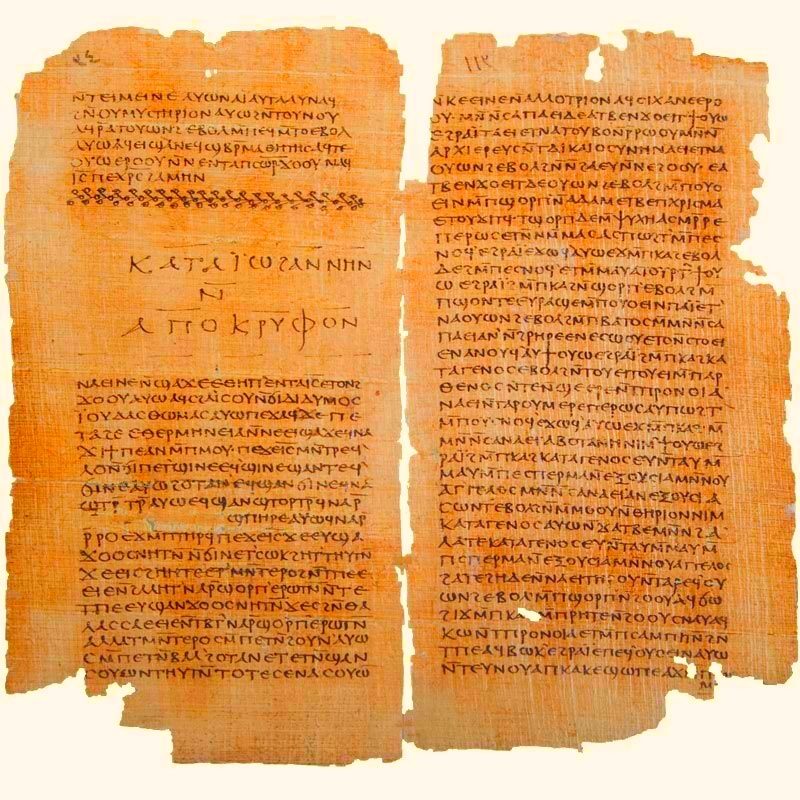
The Sethians Another major strand, the Sethians, viewed Seth (the third son of Adam) as the founder of a divine lineage. They developed elaborate creation myths in which the supreme God is utterly transcendent, and the visible world is the work of archons (rulers), often including the God of Genesis.11 The Apocryphon of John, discovered at Nag Hammadi, is a prime Sethian text.
The Nag Hammadi Discovery and Gnostic Texts
In December 1945, near the village of Nag Hammadi in Upper Egypt, a peasant discovered thirteen ancient codices buried in a jar. Dated to the 3rd–4th centuries, these codices contained over fifty texts—most previously known only through the polemics of their opponents.12
Key Texts Include:
- The Gospel of Thomas: A sayings-collection of Jesus without a passion narrative or resurrection account, emphasizing esoteric sayings and self-knowledge.
- The Gospel of Philip: A mystical reflection on sacraments and gnosis, fragmentary and challenging to parse.
- The Apocryphon of John: A cosmic revelation narrative in which John learns the truth of creation, the fall, and redemption from a divine revealer (Christ).
- The Hypostasis of the Archons: Another creation myth from a Sethian perspective.
- The Testimony of Truth: Polemics against proto-orthodox Christianity for trusting flesh and law.
These texts revolutionized our understanding of Gnosticism. Rather than relying solely on hostile patristic summaries, scholars could now examine Gnostic theology directly. What emerged was a picture of Gnosticism as theologically sophisticated, internally diverse, and more concerned with cosmology and pneumatic anthropology than with superficial libertinism.13 The texts also reveal Gnostic engagement with, and reinterpretation of, the canonical gospels—suggesting a living, polemical theological contest in the 2nd century.
“The discovery of the Nag Hammadi library was to Gnosticism studies what the Dead Sea Scrolls were to early Judaism: a sudden opening of primary sources that overturned older certainties.”
Bart Ehrman, Lost Christianities
The Catholic Response: Fathers, Canon, and Creed
The proto-orthodox Church (the forerunners of Catholic Christianity) responded to Gnosticism with three interlocking strategies: the formation of a fixed biblical canon, the articulation of the Rule of Faith, and the development of the ecumenical creeds. All three were animated by a theological conviction diametrically opposed to Gnosticism: that God’s creation is fundamentally good, and that the Incarnation is real.
Irenaeus of Lyons (c. 130–200 CE)
Irenaeus, bishop of Lyons, wrote the most systematic anti-Gnostic polemic: Against Heresies (or Refutation and Overthrow of Knowledge, Falsely So-Called). Irenaeus knew Valentinian and other Gnostic texts intimately; his refutation is detailed and often charitable in exposition. He attacked Gnosticism on multiple fronts:14
-
Against the demiurge: The God of Israel and of creation is the true God, not a false or ignorant power. Genesis 1:31 (“And God saw everything he had made, and behold, it was very good”) refutes the Gnostic vision of matter as intrinsically evil.
-
Against secret knowledge: Salvation comes through faith in Jesus Christ and the public tradition of the Church, not through esoteric gnosis accessible only to the elite. Irenaeus defended the apostolic succession: authentic Christian truth was transmitted openly from the apostles through bishops, not whispered in secret.
-
Against Docetism: Jesus Christ truly became incarnate, truly suffered, truly died, and truly rose in the flesh. The Incarnation is not illusory; it is God’s definitive yes to creation.
Tertullian (c. 160–220 CE)
Tertullian, the Latin Church Father, composed Against Marcion and Prescription Against Heretics. His work emphasized the rule of faith—the summarized, apostolic doctrine transmitted in the Church—as the criterion of truth. Heretics, he argued, had no “prescription” (legal claim) to scripture; they were latecomers who misinterpreted texts.15 Tertullian also developed the language of substance (substantia) and person to defend orthodox christology against both Gnostic and modalist distortions.
Hippolytus (c. 170–236 CE)
Hippolytus wrote the Refutation of All Heresies, cataloging Gnostic and other heretical systems with remarkable detail. His work, recovered in the 19th century, provides crucial evidence about Gnostic cosmologies and reveals the intellectual seriousness with which the Church engaged its adversaries.16
The Formation of the Biblical Canon
Gnosticism did not cause the formation of the biblical canon, but the Gnostic challenge forced the proto-orthodox Church to defend and clarify which writings possessed apostolic authority. Marcion’s radical canon (Luke and Paul only) prompted orthodox bishops and theologians to articulate why all four gospels were authoritative and why the Old Testament belonged in the Christian Bible. By the late 2nd century, a fourfold gospel, the apostolic epistles, and the Old Testament had won consensus in the proto-orthodox churches.17 The Muratorian Fragment (late 2nd century) preserves a list of accepted writings that closely resembles the New Testament canon.
The Rule of Faith
The “Rule of Faith” (regula fidei) was a summarized, baptismal creed affirming:
- One God, Creator of all things
- Jesus Christ, the Son of God, truly incarnate, truly suffered and died, truly rose
- The Holy Spirit
- Salvation through faith and the Church
This rule, transmitted orally and confirmed in writing, was public, not secret. It served as the criterion for interpreting scripture: texts must be read in light of the rule, not vice versa. This was a direct refutation of Gnostic hermeneutics, which often spiritualized away the literal sense of scripture in service of dualistic cosmologies.18
The Ecumenical Creeds
The First Council of Nicaea (325 CE) explicitly targeted Gnosticism and other heresies by affirming:
“[We believe in] God, the Father almighty, maker of heaven and earth, of all things visible and invisible”
The phrase “of all things visible and invisible” directly repudiated the Gnostic separation of a transcendent God from the material creator. It affirmed that the one true God is responsible for both the spiritual and material realms. Similarly, the creed’s affirmation that the Son is “of one substance (homoousios) with the Father” secured a genuine unity between the creator God and the incarnate Christ—impossible in Gnosticism, which radically separated divine and material.19
The Council also affirmed the incarnation against Docetism and the goodness of creation against Gnostic contempt for the flesh. The creed became a liturgical weapon against heresy.
Gnosticism and the Gospel of John: Why This Matters for Your John 1:5 Post
Here is where we arrive at the critical connection to the Gospel of John.
The Fourth Gospel was deeply misunderstood—and misused—by Gnostics. John’s use of dualistic language (light and darkness, spirit and flesh, above and below, truth and lie) seemed to Gnostics to provide biblical support for their worldview. Heracleon, a 2nd-century Valentinian, produced the first known biblical commentary, interpreting John through a Gnostic lens, spiritualizing the literal narrative and extracting esoteric meanings.20
Yet John’s Gospel is profoundly anti-Gnostic.
John’s Prologue (1:1–18) makes this clear. The Logos (Word) who was with God and was God became sarx—flesh (1:14). This is not a Docetic appearance or a divine being donning an illusory body. It is real incarnation, real descent into matter. The point is not that the divine spark within must escape flesh, but that the Logos entered flesh to illuminate it, to redeem it, to make it the vehicle of divine presence.
When John writes, “The light shines in the darkness, and the darkness has not overcome it” (1:5), he is not describing the cosmic exile of a divine spark in an evil material world. Rather, he is affirming that God’s creative light penetrates and transfigures the created order. The darkness (spiritual ignorance, sin, alienation from God) cannot extinguish this light. Creation is not a prison; it is the arena in which God acts to save.
This is the crucial distinction from Gnosticism: John shares with Gnosticism an affinity for dualistic, cosmic language rooted in Jewish apocalyptic and mysticism. But John’s light-darkness imagery is grounded in creation and incarnation, not in escape from creation. The light does not belong to an alien God utterly separate from the world; it belongs to the God who created all things and entered creation in the flesh.21
Jesus, in John’s Gospel, is not the revealer of hidden gnosis but the revealer of the Father’s love, and that revelation is enfleshed, historical, redemptive. When Jesus says, “I am the light of the world; whoever follows me will not walk in darkness, but will have the light of life” (8:12), he is not promising initiation into esoteric knowledge but a transformed relationship with God through faith and love—the same faith and love demanded of all believers, not a pneumatic elect alone.
“John uses light and darkness, but not as Gnosticism does. For John, light enters darkness not to escape it but to redeem it. The Word became flesh; creation is hallowed, not condemned.”
C. H. Dodd, The Interpretation of the Fourth Gospel
Is Gnosticism Still Alive Today?
Gnosticism as a live theological movement vanished after the 4th century. The proto-orthodox Church, armed with canon, creed, and patristic theology, had won decisively. Yet the Gnostic impulse—the dualism between spirit and matter, the suspicion of embodied life, the hunger for secret knowledge—recurs in various guises.
Modern echoes include:
- New Age spirituality: The belief that within each human lies a divine spark needing awakening, accessible through esoteric practices and teachers.
- Certain strands of mysticism: Emphasis on transcendence of the body and the material world, sometimes at the expense of incarnational theology.
- Conspiracy thinking: The belief that hidden elites possess secret knowledge withheld from the masses—a secularized gnosis.
- Popular Christianity: Occasional tendencies to spiritualize scripture away from its literal, incarnational, and ecclesial moorings.
But these are echoes, not continuities. The institutional Gnosticism of Valentinus or Basilides is gone. Modern Christians who drift toward Gnosticism do so unconsciously, often contradicting their baptismal faith. The antidote remains what it was in the 2nd century: a theology of creation as good, incarnation as real, and salvation as offered to all through the Church, not to the elite through secret knowledge.
FAQ: Common Questions About Gnosticism
Q: Were all Gnostics Christians?
A: Mostly yes, though some Gnostic systems incorporated Jewish mysticism, Platonic philosophy, and pagan mythology. What made them heretical from the proto-orthodox perspective was their denial of the goodness of creation and the reality of Christ’s incarnation and suffering. Some Gnostic sects explicitly rejected Christianity; others saw themselves as true Christians recovering ancient secrets. The proto-orthodox insisted that Gnosticism corrupted Christianity’s core claims.
Q: Did Jesus teach Gnosticism?
A: No. The Gospels—all four—nowhere teach that matter is evil, that creation is the work of a demiurge, or that salvation is escape from the body. Gnostics claimed that Jesus taught secret doctrines to the inner circle, recorded in texts like the Gospel of Thomas. But the Nag Hammadi texts themselves are 2nd- or 3rd-century compositions, not eyewitness accounts. They represent Gnostic reinterpretation of Jesus, not his actual teaching.
Q: Was Paul a Gnostic?
A: Emphatically no, though Gnostics tried to claim him. Marcion and the Valentinians appealed to Pauline passages about the “flesh,” the “law,” and the “spirit.” But Paul’s anthropology (his view of the human person) is Jewish, not dualistic. When Paul opposes flesh and spirit, he means the works of sinful human nature versus the fruits of the Holy Spirit—not matter versus spirit. His insistence on bodily resurrection (1 Corinthians 15) is decidedly anti-Gnostic. The 2nd-century Fathers rightly defended Paul against Gnostic appropriation.
Q: Did the Church suppress Gnosticism unfairly?
A: This is a complex historical and theological question. The Church Fathers genuinely believed Gnosticism contradicted the apostolic faith and led to spiritual error. From a Catholic perspective, their judgment was correct: Gnosticism denies creation’s goodness, the incarnation’s reality, and the universality of salvation. Whether the social mechanisms of suppression (exclusion from communion, condemnation of texts) were handled with perfect charity is another matter; the Church was not perfect in its discipline. But theologically, the refutation of Gnosticism was warranted and salutary.
Q: Why does Gnosticism appeal to modern people?
A: Gnosticism offers a grand cosmic narrative in which the individual soul has profound importance—as a spark of divinity. It promises secret knowledge and spiritual power. It explains suffering and injustice through cosmic, not personal, means. In an age of institutional skepticism, it appeals to those suspicious of institutional religion. It also resonates with certain philosophical temperaments that find the material world less real than the spiritual. These are powerful appeals, even if the theology is false.
Q: What was the Church’s greatest anti-Gnostic weapon?
A: Three, really: the Bible (canon), the creed (Rule of Faith), and the episcopate (succession of bishops as witnesses to apostolic doctrine). Together, these made Christian truth public, not secret; universal, not elite; incarnational and created, not dualistic and otherworldly. The creed—especially the affirmation that God is “maker of heaven and earth, of all things visible and invisible”—in three words demolished Gnosticism’s cosmic dualism.
Study & Reflection Questions
-
How does the Gnostic dualism (spirit good, matter evil) contradict the opening chapters of Genesis? Why would Irenaeus have appealed to Genesis 1:31 against Gnosticism?
-
Read John 1:1–18. Identify phrases that sound Gnostic (cosmic, otherworldly, about knowledge or revelation). Then identify phrases that refute Gnosticism (about incarnation, flesh, creation). What is John really saying?
-
Compare Marcion’s canon (Luke and Paul only) with the proto-orthodox canon (four gospels, Old Testament included). Why would affirming the Old Testament be anti-Gnostic? What does this tell us about the relation between creation theology and biblical interpretation?
-
The Council of Nicaea’s creed says God is the maker of “all things visible and invisible.” Why does this one phrase destroy the Gnostic dualism? Can you think of modern views that similarly deny God’s sovereignty over the material world?
-
Heracleon interpreted John 1:5 to mean that the divine light belongs to a transcendent God utterly separate from the darkness of creation. How would a Catholic interpretation differ? What is the “darkness” in John’s view?
-
Why would the Incarnation (God becoming flesh) be the greatest possible refutation of Gnosticism? What does Christ’s bodily resurrection add to this refutation?
-
Reflect: In your own spiritual life or in modern Christianity, do you see any echoes of Gnostic dualism—the idea that the spiritual is good but the bodily/material is bad or to be escaped? How does incarnational theology correct this?
Related Passages
For Further Study
Primary Sources:
- Irenaeus of Lyons, Against Heresies (Adversus Haereses). Translated by Dominic J. Unger. St. Paul Editions, 1992. [The foundational anti-Gnostic text; Book I is a detailed description of Valentinianism.]
- Tertullian, Against Marcion and Prescription Against Heretics. Translated by Peter Holmes. In Ante-Nicene Fathers, vol. 3.
- Hippolytus, Refutation of All Heresies. Translated by J. H. MacMahon. In Ante-Nicene Fathers, vol. 5.
- Nag Hammadi Library. General editor, James M. Robinson. Brill, 1996. [Complete translations of the Nag Hammadi texts with introductions.]
- The Gospel of Thomas, The Gospel of Philip, The Apocryphon of John. In The Nag Hammadi Scriptures, edited by Marvin Meyer. HarperOne, 2007.
Scholarly Secondary Sources:
- Birger A. Pearson, Gnosticism and Christianity in Roman and Coptic Egypt. T&T Clark, 2004. [Examines the Nag Hammadi texts in their Egyptian context; careful scholarship.]
- Christoph Markschies, Gnosis and Christianity. Translated by John Bowden. T&T Clark, 2003. [Sophisticated intellectual history; emphasizes diversity within Gnosticism and its engagement with philosophy.]
- David Brakke, The Gnostics: Myth, Ritual, and Diversity in Early Christianity. Harvard University Press, 2010. [Excellent recent overview; includes material on Gnostic practice and community.]
- Karen L. King, What Is Gnosticism? Harvard University Press, 2003. [Challenges older construals of Gnosticism; emphasizes the constructed nature of the category itself.]
- Michael A. Williams, Rethinking Gnosticism: An Argument for Dismantling a Dubious Category. Princeton University Press, 1996. [Critical examination of “Gnosticism” as a scholarly category; important methodological work.]
- Bart D. Ehrman, Lost Christianities: The Battles for Scripture and the Faiths We Never Knew. Oxford University Press, 2003. [Accessible overview of early Christian diversity; chapter on Gnosticism is clear and balanced.]
On Gnosticism and John:
- C. H. Dodd, The Interpretation of the Fourth Gospel. Cambridge University Press, 1953. [Classic work on Johannine theology; discusses Gnostic misreading of John and John’s anti-Gnostic intent.]
- R. E. Brown, The Gospel According to John I–XII (Anchor Bible). Doubleday, 1966. [The standard English commentary; detailed on Gnostic parallels and John’s response.]
Catholic Sources:
- Catechism of the Catholic Church, §§287–314 (Creation); §§456–483 (Incarnation); §§85–100 (Scripture and Tradition). [Official teaching on creation and incarnation as anti-Gnostic.]
- Second Vatican Council, Dei Verbum (Dogmatic Constitution on Divine Revelation). [On scripture, tradition, and the development of doctrine; relevant to canon formation.]
Footnotes
- The term “Gnosticism” was coined by the 18th-century scholar Henry More and popularized in the 19th century. Modern scholars debate whether it is a useful category. See Michael A. Williams, Rethinking Gnosticism: An Argument for Dismantling a Dubious Category (Princeton, 1996) and Karen L. King, What Is Gnosticism? (Harvard, 2003). For a defense of the category as heuristically useful, see Christoph Markschies, Gnosis and Christianity (T&T Clark, 2003), 15–21. ↩
- On cosmic dualism in Gnosticism, see Birger A. Pearson, Gnosticism and Christianity in Roman and Coptic Egypt (T&T Clark, 2004), 1–50; and David Brakke, The Gnostics: Myth, Ritual, and Diversity in Early Christianity (Harvard, 2010), 15–45. ↩
- The demiurge concept is most fully developed in the Apocryphon of John (Nag Hammadi texts). See James M. Robinson, ed., The Nag Hammadi Scriptures (HarperOne, 2007), 110–127. On the demiurge in Gnosticism generally, see Markschies, Gnosis and Christianity, 75–95. ↩
- Simon Magus is described in Acts 8:9–24. The later elaboration of Simon into a cosmic figure appears in Justin Martyr, Apology I, 26, and Irenaeus, Against Heresies I.23. On the historical Simon versus the legendary, see Brakke, The Gnostics, 73–80. ↩
- Cerinthus is described in detail by Irenaeus, Against Heresies I.26, and briefly by John’s disciple Polycarp (in Ignatius, Letter to Smyrna 5). On Cerinthus and proto-Gnosticism, see Pearson, Gnosticism and Christianity, 60–75. ↩
- The Colossian heresy is debated. Some scholars (e.g., Fred Francis) see it as Jewish mysticism; others see proto-Gnostic elements. Irenaeus and other Fathers did not explicitly identify it with Gnosticism. However, the cosmological language and the denial of Christ’s supremacy resemble later Gnostic concerns. See R. E. Brown, The Letters of John and the Gospel of John (Anchor Bible), 68–70, for nuance. ↩
- Michael A. Williams, Rethinking Gnosticism, argues that “Gnosticism” imposes false coherence on disparate Jewish-Christian and pagan-influenced movements. While his critique has merit for precision in scholarship, the category remains useful for pastoral and theological communication. For a measured response, see Markschies, Gnosis and Christianity, 1–30. ↩
- On Basilides, see Hippolytus, Refutation of All Heresies, Book VII.14–27, and Irenaeus, Against Heresies I.24. Modern analyses: Brakke, The Gnostics, 95–120; Markschies, Gnosis and Christianity, 110–135. ↩
- On Valentinus and Valentinianism, see Irenaeus, Against Heresies I.11 (detailed exposition of Valentinian cosmology), and Tertullian, Against Marcion I.2 (on Valentinianism’s appeal). Modern treatment: Brakke, The Gnostics, 123–160; Markschies, Gnosis and Christianity, 136–170. ↩
- On Marcion, see Tertullian, Against Marcion (5 books), and Irenaeus, Against Heresies I.27. Marcion is often called Gnostic but lacked the full cosmological system; his dualism was simpler. See Brakke, The Gnostics, 161–185, and Ehrman, Lost Christianities, 135–159. ↩
- On the Sethians, see the Apocryphon of John and Hypostasis of the Archons in Robinson, The Nag Hammadi Scriptures, 110–127, 160–175. Scholarly overview: Pearson, Gnosticism and Christianity, 112–160. ↩
- The Nag Hammadi discovery in December 1945 is described in the introduction to Robinson, The Nag Hammadi Scriptures, 1–5. The thirteen codices (MSS) contain fifty-two tractates (texts). Fifty-six are known; some are fragmentary. ↩
- On the sophistication and diversity of Gnosticism as revealed by Nag Hammadi, see Brakke, The Gnostics, 1–15, and Pearson, Gnosticism and Christianity, 1–25. The older portrait (from heresiologists alone) sometimes emphasized libertinism or libertine ethics; Nag Hammadi texts reveal ascetic and mystical interests instead. ↩
- Irenaeus, Against Heresies, Books I–IV. His refutation hinges on apostolic succession, the public rule of faith, and the goodness of creation. See also G. L. Prestige, God in Patristic Thought (SPCK, 1952), 70–86, for Irenaeus’s theological method. ↩
- Tertullian, Prescription Against Heretics (Praescriptio Haereticorum), trans. Peter Holmes, in Ante-Nicene Fathers, vol. 3. The “prescription” (legal bar) prevents heretics from appealing to scripture; they have no right to it because they violate the rule of faith transmitted in the Church. ↩
- Hippolytus, Refutation of All Heresies (Philosophumena), Books V–X. Recovered in 1842, it provides invaluable detail on Gnostic and other heresies. See Brakke, The Gnostics, 1–10, on Hippolytus as a source. ↩
- On canon formation, see Lee Martin McDonald, The Origin of the Bible (Oxford, 1997), and R. E. Brown and R. E. Collins, eds., Brown Driver Briggs Hebrew and English Lexicon. The anti-Gnostic function of canon fixation is emphasized by Ehrman, Lost Christianities, 224–244. See also Second Vatican Council, Dei Verbum, §8, on the development of the canon. ↩
- On the Rule of Faith, see Prestige, God in Patristic Thought, 1–30. The rule functioned as interpretive grid for scripture: texts had to align with apostolic doctrine, not the reverse. This was the counter to Gnostic spiritual exegesis that extracted dualistic meaning from innocent passages. ↩
- The First Council of Nicaea (325 CE) affimed the “Nicene Creed,” which includes the phrase “maker of heaven and earth, of all things visible and invisible.” This phrase—absent from earlier creeds—was added specifically to counter Gnosticism and Marcionism. See J. N. D. Kelly, Early Christian Doctrines (Harper & Row, 1978), 228–244. ↩
- Heracleon’s commentary on John survives in quotations by Origen. See Origen, Commentary on John, Books I–V (trans. Ronald E. Heine, Fathers of the Church series). On Heracleon’s Gnostic reading of John, see C. H. Dodd, The Interpretation of the Fourth Gospel (Cambridge, 1953), 10–115. ↩
- On John 1:1–18 as anti-Gnostic, see R. E. Brown, The Gospel According to John I–XII (Anchor Bible), 19–37, and Dodd, The Interpretation of the Fourth Gospel, 263–285. The affirmation that the Logos became flesh, that light shines in darkness, that God’s creation is good—these are all anti-Gnostic. John shares mystical and cosmic language with Gnosticism but uses it to opposite theological ends. ↩

Garrett Ham
Garrett Ham is an attorney, military veteran, and holds a Master of Divinity from Yale Divinity School. He writes from Northwest Arkansas on theology, law, and service.
More about Garrett →Related Posts
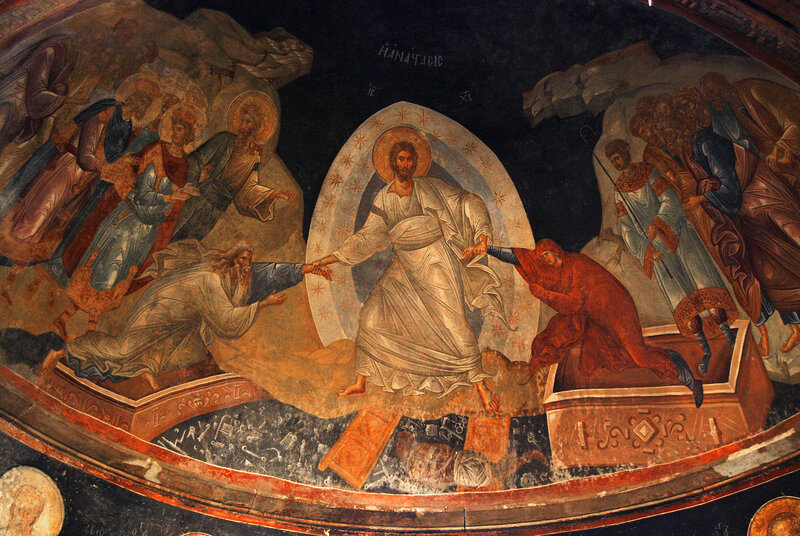
John 1:5 Meaning Explained: The Light Shines in the Darkness
What does John 1:5 mean? A study of the Greek—the present tense of φαίνει, the double meaning of κατέλαβεν, and the already/not yet of eschatology.
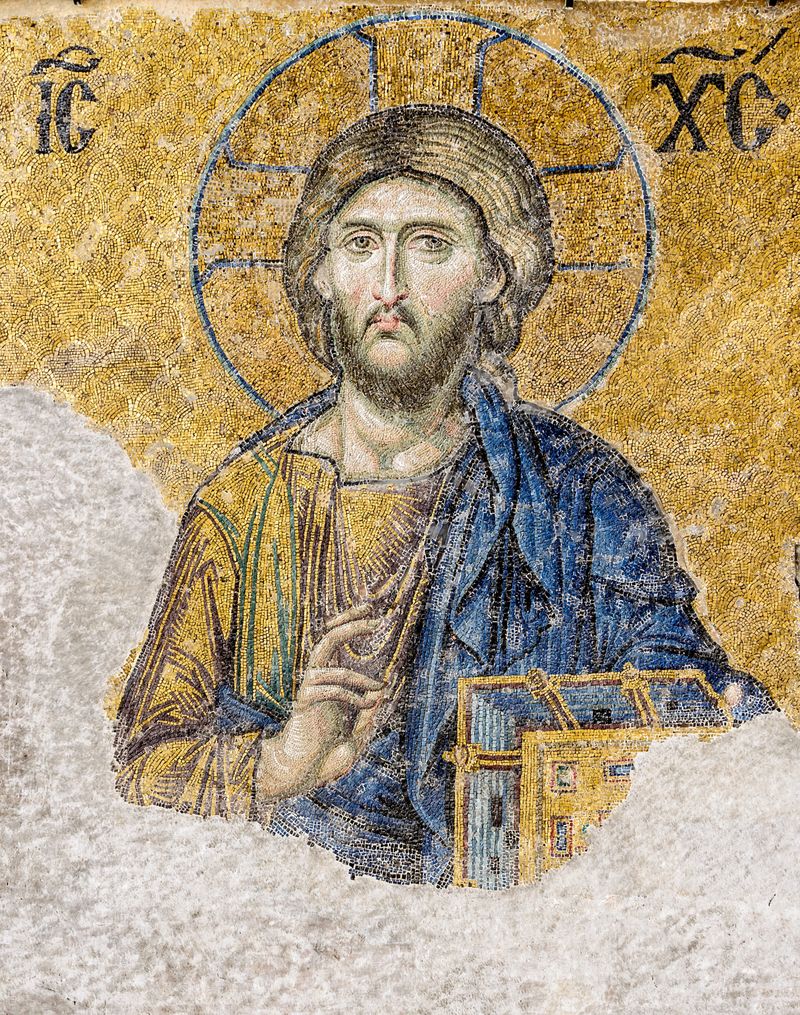
John 1:3–4 Meaning Explained: The Creator Who Became the Light
What do John 1:3–4 mean in the Gospel of John? A close reading in the original Greek — the punctuation of ὃ γέγονεν, Incarnation as life in the Word, and Chalcedonian Christology.

In the Beginning Was the Word: John 1:1 Explained
A deep dive into John 1:1 in the original Greek—the Logos, Colwell's rule, Nicene consubstantiality, and why this verse is the whole Gospel.
Stay Informed
Get new writing on faith, law, and service delivered to your inbox.
No spam. Unsubscribe anytime.