What is a Liberal?
On This Page
Lisa Simpson gave America a definition of liberalism. It sounded compassionate. It was also wrong.
A few years ago, The Simpsons aired the episode “The Kid is All Right.” While watching it, I was struck by the definition Lisa gives of a liberal: “Someone who believes that those who have more than enough should share a little with those who don’t.”
This is a widespread cliché about modern liberalism, perpetuated in popular culture and by the Democratic Party alike. The apparent compassion of liberal politicians seeking to help the less fortunate through new social programs easily overshadows the conservative concern for limited government—a position that is, at first glance, understandable.
But is the definition accurate? If we have to answer the question, “What is a liberal?” is Lisa Simpson’s definition an adequate one?
No.
What separates the conservative from the liberal is not a concern for the less fortunate but the willingness to use force to achieve broader policy goals.
It is the old freedom versus security controversy. On this issue, I side with Benjamin Franklin.
“Those who would give up essential Liberty, to purchase a little temporary Safety, deserve neither Liberty nor Safety.”
— Benjamin Franklin, reply on behalf of the Pennsylvania Assembly to the Governor, November 11, 1755
The Divisive Nature of Coercion
Coercion is the dividing line between liberalism and conservatism. It is not the desire to help the poor or to do what is best for the country—I believe both liberals and conservatives hold similar foundational values on these points. The fundamental difference is the willingness to use coercive means to accomplish policy objectives.
So, what is a liberal? Lisa Simpson’s answer should have been something closer to this: “A liberal is someone who believes the government should decide when you have ‘more than enough’—and then force you to hand it over to whomever the central planners in Washington see fit.”
I understand that this is an oversimplification—and that some conservatives fall into the same trap on social issues—but the fundamental principle holds.
“It is hard to imagine a more stupid or more dangerous way of making decisions than by putting those decisions in the hands of people who pay no price for being wrong.”
— Thomas Sowell
To ask, “What is a liberal?” we must formulate an answer that provides a meaningful point of contrast with the opposing point of view. Lisa’s response implies that conservatives do not believe those with “more than enough” should help out those who do not.
That is simply untrue.
Most conservatives believe that the rich are morally obligated to help the poor. (In fact, conservatives have traditionally been more generous with their own money than liberals.) Conservatives, however, deny that anyone should be forced to do so, and that is the foundational difference.
Conservatives value freedom. The intervention of the government at any point and for any reason always necessitates the curtailment of freedom. All government action is, in the final analysis, violence—because it requires the coercive imposition of a particular mode of behavior backed by the threat of force.
Government as a Necessary Evil
Recognizing the inherently violent nature of all government action does not necessarily point toward anarchy. Government is a necessary evil. There are times when coercive action is justified, but violence is only acceptable when refraining from it would result in even greater harm.
The criminal justice system, for example, forcefully locks people in prison—an inherent evil in that it deprives naturally free people of their liberty—but such action is necessary to prevent the perpetuation of greater violence against the innocent.
Taxes levied for the funding of national defense and law enforcement, while they constitute a forcible seizure of property, are necessary evils to counteract the violent ramifications that forgoing such protection would yield.
But forcibly taking one person’s money to give it to another is, in most cases, indefensible. Why should one person’s earnings be seized to provide subsidies for corn farmers in Iowa? Or to fund daycare centers in Minnesota?
“I think the government solution to a problem is usually as bad as the problem and very often makes the problem worse.”
— Milton Friedman
The government lays claim to the earnings of one person and hands them to another who did not earn them. This is vote-buying and, quite frankly, theft.
This does not mean that no safety net is justifiable—only that any safety net must be narrowly tailored and understood as a necessary evil. Once we are beyond people literally starving in the streets, we should appreciate that we forcibly violate someone else’s rights with every transfer payment.
Classical vs. Modern American Liberalism
Here is the great irony in all of this: the people who first articulated the principles I have been defending—limited government, individual liberty, the presumption against coercion—called themselves liberals.
John Locke was a liberal. Adam Smith was a liberal. The American Founders were steeped in the liberal tradition. When they insisted that government derives its just powers from the consent of the governed, they were making a classically liberal argument. The whole intellectual architecture of constitutionally limited government, free markets, natural rights, and the rule of law was built by men who would have identified, without hesitation, as liberals.
What happened?
In the early twentieth century, the progressive movement laid the intellectual groundwork—Wilson’s New Freedom expanded the scope of federal power in ways that classical liberals would have resisted—but the real linguistic theft came later. Franklin Roosevelt deliberately appropriated the word “liberal” for his New Deal coalition, choosing it over “progressive,” a label too closely tied to Theodore Roosevelt and the La Follette insurgency to serve as an exclusively Democratic brand.
By 1941, FDR could write that “the Democratic party has been the liberal party” as though it were self-evident—not unlike the communist states that, with no apparent sense of irony, style themselves “people’s republics.”
The New Deal cemented this redefinition. By the time the dust settled, “liberal” in American English had come to mean precisely the thing that classical liberals had organized against: the belief that an activist central government, guided by expert planners, could and should reshape society from the top down.
This is why I consider myself a classical liberal. The tradition of Locke, Smith, Mill, Bastiat, and Hayek—the tradition that regards government coercion as an evil to be tolerated only when strictly necessary—is my tradition. It is also, in American political terms, a conservative tradition, because what we are conserving is the classical liberal inheritance. The American conservative is the true liberal. The modern American “liberal” is something else entirely—a progressive who has kept the old name while abandoning the old principles.
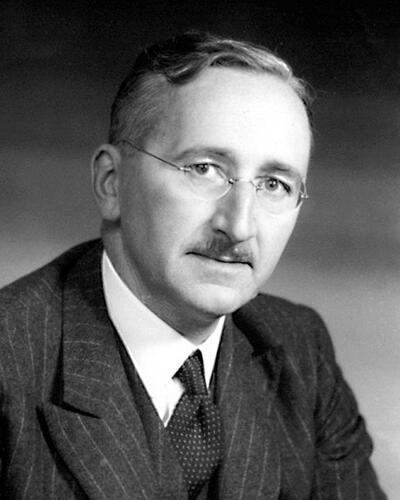
Hayek understood this. His Road to Serfdom is a classical liberal’s warning that comprehensive central planning—the state ownership and direction of economic life—leads not to the liberation of the individual but to his subjection. Hayek was not opposed to all government action; he explicitly endorsed a social safety net and basic social insurance. What he opposed was the conceit that expert planners could direct an economy without progressively destroying the freedom of the people living in it.
The road to serfdom is not paved with every government program. It is paved with the assumption that there is no limit to what the state may plan—and it leads somewhere Lisa Simpson would not want to go.
What Does Conservatism Conserve?
Conservatism must, by definition, seek to conserve something. We have asked, “What is a liberal?” So what, then, is a conservative? What is conservatism trying to conserve?
Freedom.
Conservatives recognized that with each new federal program, with each additional government action, we lose some freedom. It is that freedom—our freedom—that we must conserve.
“Concentrated power is not rendered harmless by the good intentions of those who create it.”
— Milton Friedman
There is meaning in fighting back against attempts to whittle away liberty at the margins, which has been the modus operandi of politicians in the United States for more than a century. Allowing benevolent leaders to eat away at our freedom merely lays the foundation for the day when the malevolent leader arises and squashes it.
If you allow others to wrap their fingers around your neck, eventually someone will squeeze.
Government Does Not Prosperity Create
I consequently find it interesting to hear liberals decry Trump’s alleged abuses of power and express fears about a dictatorship, the death of democracy, or whatever other sensationalist language they use.
There was little complaint when previous presidents consolidated this power into their office, little concern over the “pen and phone” approach to executive action. Only now that they do not like the person holding the office do they recognize the danger in the accumulation of such power into a single man.
Let us not be fooled by those who claim that we can achieve salvation and societal harmony through the enactment of the right government programs, if the government would only push the right buttons and make the right moves. Such thinking is the way of Robespierre. Eventually, this promise of liberty through solidarity will give way to a Terror.
There is never freedom in forced cooperation, and nothing is worth the sacrifice of individual liberty. It is too dear a price to pay, and its value only increases after it is lost.
Freedom is much cheaper to maintain than to acquire. What you exchange for a dollar today, you can only recover with blood tomorrow.
Recovering Our Freedoms
Unfortunately, we may have to accept that the freedoms we have already exchanged for services and security are gone. Without some kind of dramatic revolutionary event, we are unlikely to recover what we have lost.
But we can fight to preserve the freedoms we currently have and can oppose every effort to take them away. The government leviathan never says, Enough. It is never satisfied with the amount of power it has acquired over the masses.
So, we must fight it forever. We must jealously safeguard the freedom we have left.
When we vote, we should always ask ourselves whether we would be satisfied if the power we are seeking to exercise over another were later exercised over us. The freedom you take from another will eventually be taken from you.
This leads only to elections that devolve into candidates decrying the wealthy from their lake home in a never-ending competition over who can promise the masses the most bread and circuses.
“A government big enough to give you everything you want is a government big enough to take away everything that you have.”
Eventually, only the political elite will enjoy the fruits sown by the freedom we so freely exchanged as part of the Faustian bargain for government-provided security.
So, What Is a Liberal?
A liberal is one who, through compassion and good intentions, builds the road to serfdom with promises of a utopian freedom that will never come.
This is why the Buckley-era fusionist coalition mattered so much: it held together traditionalists, libertarians, and anti-communists around the common insight that freedom from state coercion was worth conserving. And it is why the seductions of a therapeutic, state-managed compassion—the kind I encountered every day in the Ivy League—should be resisted even when the intentions behind them are genuinely good.
Frequently Asked Questions
What is a liberal in simple terms?
In modern American usage, a liberal is someone who is generally willing to use the coercive power of government to achieve policy goals—redistributing wealth, regulating behavior, or expanding social programs—in the name of fairness, equality, or compassion. The shallow definition popularized by shows like The Simpsons (“someone who believes those who have more than enough should share a little with those who don’t”) misses the real dividing line: conservatives and liberals both believe in helping the poor, but they disagree about whether the government should force people to do it.
What is the real difference between liberals and conservatives?
The fundamental difference is not compassion but coercion. Conservatives and liberals largely share the same foundational values—concern for the less fortunate, a desire for a flourishing society—but they differ on whether the state should use force to achieve those ends. Conservatives view all government action as inherently coercive (backed ultimately by the threat of force) and therefore insist that such force be reserved for necessary functions like defense, law enforcement, and a narrowly tailored safety net. Liberals are more willing to expand the coercive reach of the state to accomplish social aims.
What does “classical liberal” mean?
Classical liberalism is the tradition of Locke, Adam Smith, John Stuart Mill, and later Friedrich Hayek, which emphasized individual liberty, limited government, free markets, and the rule of law. The tradition’s roots are in the 18th and 19th centuries, though Hayek carried its torch well into the 20th. In American political usage today, “classical liberal” and “modern conservative” overlap substantially—Hayek’s Road to Serfdom, for example, is a foundational classical-liberal text now mostly read and championed by American conservatives and libertarians. “Liberal” in contemporary American usage refers to the progressive left—a meaning Franklin Roosevelt deliberately appropriated in the 1930s—which is a very different tradition.
Is a liberal the same as a progressive?
In contemporary American political discourse the terms are often used interchangeably, though “progressive” usually signals a stronger commitment to structural change and a greater willingness to use government power to achieve redistributive and cultural ends. Most self-described progressives are liberals; not every liberal is a progressive. The underlying commitment to state coercion as a legitimate means of achieving policy goals is shared by both.
Is taxation theft, according to conservatives?
Most conservatives do not claim that taxation itself is theft. They accept that taxes are necessary to fund the legitimate functions of government—national defense, law enforcement, courts, and a limited safety net. What conservatives object to is redistributive taxation whose purpose is to take from one person in order to transfer wealth to another who has not earned it. That, in the conservative view, crosses the line from necessary evil into unjust coercion.
What did Benjamin Franklin mean by “those who would give up essential liberty”?
Franklin’s famous line—“Those who would give up essential Liberty, to purchase a little temporary Safety, deserve neither Liberty nor Safety”—comes from a 1755 reply written on behalf of the Pennsylvania Assembly to the colonial Governor, in the context of a dispute over whether the Penn family should be taxed to fund frontier defense. Franklin was not writing a libertarian slogan about personal privacy or government surveillance; he was defending the Assembly’s power to tax. But the principle travels well: the willingness to trade essential liberty for the promise of security tends to leave a people with neither.

Garrett Ham
Garrett Ham is an attorney, military veteran, and holds a Master of Divinity from Yale Divinity School. He writes from Northwest Arkansas on theology, law, and service.
More about Garrett →Related Posts

Angry All the Time in the Ivy League
Campus activists at elite colleges like Yale often appear perpetually angry. But beneath the outrage lies a deeper psychological need: the search for heroic purpose and significance.

Is Yale Divinity School Liberal? What a Conservative Graduate Discovered
Is Yale Divinity School liberal? A Yale MDiv graduate examines the Buckley Institute data, shares firsthand experience, and answers the most common questions about YDS.

Buckley's Fusionism and the Future of the Conservative Coalition
How William F. Buckley Jr. and Frank Meyer unified traditionalists, libertarians, and anti-communists into a movement—and whether that coalition can hold in the age of populism.
Stay Informed
Get new writing on faith, law, and service delivered to your inbox.
No spam. Unsubscribe anytime.