Theosis
On This Page
Of all the doctrines that distinguish Eastern Orthodox theology from its Western Catholic and Protestant counterparts, perhaps none is more central to the Orthodox spiritual vision than theosis—the doctrine of deification, or the divinization of humanity. The Orthodox understanding of salvation itself is fundamentally shaped by theosis: God became man in order that man might become god. Not god in the pantheistic sense, and not by losing his humanity, but by being transformed into a full participation in the divine life. It is a startling claim, yet it rests on biblical foundations and the witness of the early Church Fathers themselves. What may surprise many Western Christians is that theosis is not exclusively Orthodox doctrine. The roots of deification run deep in the Catholic tradition as well, emerging from Augustine, finding expression in Aquinas, and reaching full flower in the great Catholic mystics. To understand theosis is to understand something essential about Christianity itself—about what it means to be saved, and what God’s ultimate purpose for humanity truly is.
What is Theosis? A Definition
Theosis (from the Greek theōsis, meaning “deification”) refers to the process or reality by which human beings are gradually transformed through God’s grace to become partakers of the divine nature and to live in union with God. It is not a loss of human nature but a divinization of human nature—a transformation that makes one truly human by conforming one’s humanity to the divine image in which humanity was created.1
The term itself gained particular currency in Orthodox theology, where it has become the controlling metaphor for the entire Christian life. But the reality to which theosis points—humanity’s participation in divine life—runs throughout Christian Scripture and tradition. It is fundamentally different from the Western legal or forensic model of salvation, in which God “justifies” the sinner through an act of legal imputation. Theosis is not merely a change in God’s legal status toward us; it is a genuine transformation of our nature and our being, wrought by the action of the Holy Spirit in our lives.2
Some contemporary theologians have characterized the difference this way: whereas Western Christianity often asks “How can God forgive my sins?” theosis directs the question toward “How can I become united with God?” The first is a question of forensic justification; the second is a question of ontological transformation.3
Biblical Foundations
The doctrine of theosis, while most prominent in Orthodox theology, rests on solid biblical ground—ground that is equally available to Western Christians, if we have eyes to read it.
2 Peter 1:4 and the Divine Nature
The locus classicus for theosis in Scripture is 2 Peter 1:4. In this passage, Peter writes that through Christ’s promises, “you may become partakers of the divine nature, having escaped the corruption that is in the world on account of sinful desire.”4 The Greek word koinonoi (partakers) is crucial here. It does not mean merely to benefit from or imitate the divine nature, but to share in it, to participate in it. This is participation language, and it is unambiguous.
The text speaks of humans becoming metochoi tes theias physeōs—sharers in the divine nature. This is precisely what theosis claims: that the divine nature itself can be shared, participated in, by those whom God transforms through grace. The passage is all the more striking because Peter grounds this reality in the Incarnation itself: Christ came so that through his promises, we might become partakers of divine nature.
Psalm 82:6 and John 10:34-36
In Psalm 82:6, the psalmist writes, “I said, ‘You are gods, and all of you are sons of the Most High.’” The psalmist is addressing those who hold judicial authority, those who are called to represent God’s justice in the world. They are called “gods”—not metaphorically, in the sense that they merely represent God’s authority, but in a real, participatory sense. They are “sons of the Most High” because they have been given a commission to embody God’s justice.
Our Lord himself invoked this passage in John 10:34-36. When the Jews accused him of blasphemy for claiming to be the Son of God, Jesus responded: “If he called them gods to whom the word of God came—and scripture cannot be annulled—can you say that it is blasphemy when the one whom the Father has sanctified and sent into the world says, ‘I am the Son of God’?” Jesus’ logic is remarkable: if the Old Testament calls those to whom God’s word came “gods,” how much more should this title apply to the one upon whom the very God’s own word has come and become flesh?5
The passage presupposes what theosis teaches: that to receive God’s word, to be addressed by God, to be commissioned by God—these things genuinely transform one’s status and being. They make one “divine” in a real, participatory sense, even while maintaining the absolute distinction between the Creator and the creature.
Romans 8:29 and 2 Corinthians 3:18
Paul writes in Romans 8:29 that those whom God foreknew, he “also predestined to be conformed to the image of his Son.” The Greek word summorphos—conformed, shaped together with—indicates a genuine transformation into the likeness of Christ. We are not merely to imitate Christ; we are to be transformed into his image.
Similarly, in 2 Corinthians 3:18, Paul speaks of a progressive transformation: “And all of us, with unveiled faces, seeing the glory of the Lord as though reflected in a mirror, are being transformed into the same image from one degree of glory to another; for this comes from the Lord, the Spirit.”6 The Greek metamorphoō—transformed—is the same word used for Christ’s transfiguration. We are undergoing a transfiguration-like transformation, from glory to glory, into the likeness of Christ. This is not imputation; this is real transformation.
“The glory which thou gavest me I have given them; that they may be one, even as we are one. I in them, and thou in me, that they may be perfected into one.”
— John 17:22-23
Patristic Foundations: The Witness of the Fathers
If the Bible lays the foundation for theosis, the Church Fathers constructed the edifice. Theosis was not invented by later Orthodox theologians; it was taught, developed, and refined by the great theologians of the early Christian centuries.
Saint Athanasius and the Famous Formula
Perhaps the most famous formulation in patristic theology comes from Saint Athanasius of Alexandria (c. 296-373), writing in the fourth century:
“He became man that we might be made God.”7
This statement, from Athanasius’ On the Incarnation, is the most concise and crystalline expression of theosis ever written. Athanasius is not speaking metaphorically. The entire point of the Incarnation, in his view, is to make possible the deification of humanity. God took on human flesh precisely so that humans might participate in divine life.
For Athanasius, the Incarnation and theosis are inseparable. The Word became flesh not as a temporary emergency measure to rescue humanity from sin (though that is part of the purpose), but as the fulfillment of God’s eternal purpose for humanity. God always intended humanity to be divinized, to be transformed into participation with the divine life. The Incarnation makes this possible.8
Irenaeus of Lyons and the Recapitulation
Irenaeus of Lyons (c. 130-202), an earlier Church Father whose theology heavily influenced Athanasius, developed the doctrine of recapitulation—the idea that Christ in the Incarnation “recapitulates” or sums up all of human history and brings it to its proper fulfillment. For Irenaeus, human beings were created in God’s image with the potential to grow into the likeness of God. This growth—this progression from eikon (image) to homoiōsis (likeness)—is theosis. The Incarnation makes this transformation possible.9
Irenaeus famously wrote of Christ “who did, through His transcendent love, become what we are, that He might bring us to be even what He is Himself.”10 The logic is the same as Athanasius’: the Incarnation is for the purpose of human deification.
The Cappadocian Fathers
The Cappadocian Fathers—Basil of Caesarea, Gregory of Nazianzus, and Gregory of Nyssa—developed the patristic understanding of theosis with particular theological rigor. Gregory of Nazianzus declared: “That which is not assumed is not healed; but that which is united to God is saved.”11 This principle became foundational to Orthodox theology. Christ assumed the whole of human nature—body and soul—so that the whole of human nature might be divinized. Nothing in humanity is left behind in the process of salvation; all is transformed and healed through union with the divine.
Gregory of Nyssa wrote extensively of the soul’s progressive ascent into union with God, describing the Christian life as an endless journey of transformation. He developed the concept of epektasis—the perpetual reaching forward, the endless striving toward union with God. For Gregory, theosis is not a static destination reached at a particular moment but a dynamic, eternal process of drawing ever closer to God’s infinite goodness.12
Basil of Caesarea taught that theosis occurs through the action of the Holy Spirit. The Spirit dwells within believers and transforms them from the inside out. This emphasis on the Spirit’s role became crucial to Orthodox theology and remains so to this day.13
Maximus the Confessor and the Christological Focus
The seventh-century theologian Maximus the Confessor (c. 580-662) brought Christological precision to the doctrine of theosis. For Maximus, theosis must be understood in light of Christ’s two natures—divine and human—united without confusion in the Incarnation, as defined at the Council of Chalcedon. Just as Christ’s humanity was divinized through its union with the divine Logos without losing its humanity, so human nature in general is divinized when it enters into union with Christ through faith and grace.14
Maximus developed the concept that in theosis, the human person becomes “a kind of god,” participating fully in God’s energies while maintaining the radical distinction between God’s essence and the creature’s nature. Theosis is not a blurring of the Creator-creature distinction; it is the creature’s full participation in the Creator’s operations and life.15
John of Damascus and the Icon Theology Connection
John of Damascus (c. 676-749), the last of the Greek Church Fathers, connected theosis to the theology of icons. Just as the icon bears the image of the saint and leads the venerer’s mind to the saint himself, so humanity, bearing God’s image, is called to become increasingly conformed to God’s likeness through theosis. The icon theology that John defended became inseparable in Orthodox thought from the doctrine of theosis. If humans are transformed into God’s likeness, then the transformation of human persons and their glorified bodies would be visible and expressible in iconography.16
The Orthodox Understanding of Theosis
The Orthodox Church has developed the doctrine of theosis into a comprehensive theology that shapes every aspect of the Christian life. To understand Orthodoxy, one must understand theosis.
The Essence-Energies Distinction
Perhaps the most important theological framework for understanding Orthodox theosis is the distinction between God’s essence and God’s energies—a distinction refined through the work of Gregory of Palamas (1296-1359), the great Byzantine theologian.17
God’s essence (ousia) is God’s innermost reality, his infinite, transcendent, incomprehensible self. No creature can ever know God’s essence; it remains forever beyond human comprehension. God is radically transcendent; the gulf between Creator and creature is absolute.
God’s energies (energeiai) are God’s real, divine operations—his grace, his love, his light, his power as he reveals himself and acts in the world. The energies are truly divine; they are not created intermediaries between God and man. Yet they are real manifestations of God’s activity in creation. When Scripture speaks of God’s love, God’s light, God’s presence, these are energies—real encounters with the divine.
The crucial point is this: in theosis, the human being participates in God’s energies, not God’s essence. The creature is genuinely united with God through participating in God’s divine operations, yet God remains God and the human remains human. There is a real union without confusion, a genuine participation without pantheism.18
This distinction resolves what might otherwise seem like a paradox: how can the infinite God truly unite with finite creatures without either (a) the creature being destroyed, or (b) God’s transcendence being compromised? The answer is the essence-energies distinction. The creature enters into union with God’s energies—his grace, his light, his love—while always remaining distinct from God’s essence. The Creator-creature distinction is maintained; yet union is real and genuine.
The Role of Sacraments
In Orthodox theology, the sacraments (or “mysteries”) are the primary means through which theosis occurs. The sacraments are not merely symbols or reminders; they are transformative encounters with the divine. In Baptism, the catechumen is plunged into the death and resurrection of Christ, dying to sin and being reborn into divine life. In Chrismation (Confirmation), the newly baptized is sealed with the Holy Spirit. In the Eucharist, believers consume the body and blood of Christ, entering into the most intimate union with the divine possible in this life.19
The Orthodox priest does not “confect” the Eucharist through human power, as Western theology has sometimes suggested. Rather, the priest calls down the Holy Spirit to transform the bread and wine. The emphasis throughout is on the Holy Spirit’s agency, on the transformative power of divine grace working through material signs. The sacraments are theosis in action—God’s energies working through material elements to transform the human person.
Ascetic Practice and Prayer
Theosis is not automatic or passive. It requires active cooperation with God’s grace. This is where the Orthodox tradition of ascetical theology becomes central. The monastic tradition, with its practices of fasting, vigils, prayer, and spiritual warfare, is not understood as works-righteousness or as earning salvation. Rather, ascetical practice is the human person’s response to God’s grace, the clearing away of obstacles to theosis, the training of the soul and body for deeper union with God.20
Central to Orthodox ascetical theology is the Jesus Prayer: “Lord Jesus Christ, Son of God, have mercy on me, a sinner.” This prayer, repeated constantly throughout the day, becomes interiorized in the heart. The Prayer of the Heart, as it is called, gradually transforms the pray-er’s entire being, aligning the will with God’s will, quieting the passions, and opening the heart to God’s transformative grace.21
The Orthodox understand theosis to involve the whole person—body, soul, and spirit. This is why fasting is so central to Orthodox practice. The body must be trained, brought into submission to the spirit, so that the whole person can be transformed. The Incarnation itself sanctified the flesh; therefore, the flesh has a role in salvation and divinization.
The Transfiguration as the Model
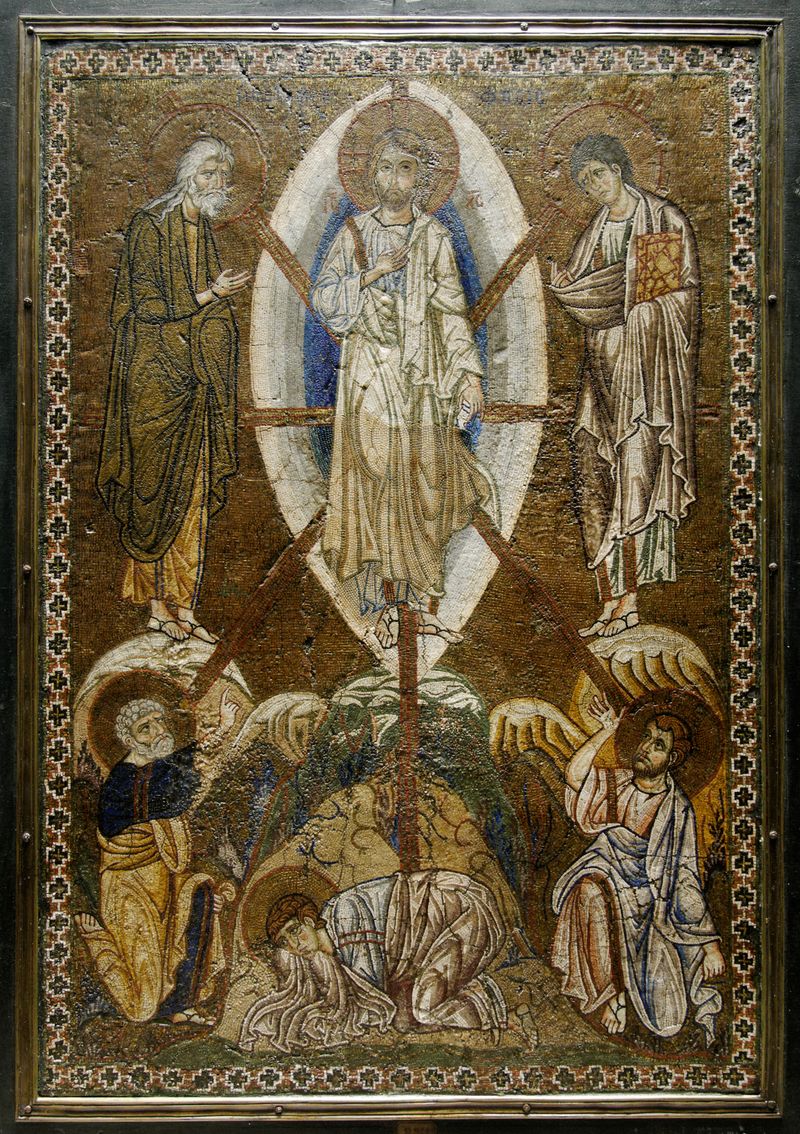
The Orthodox often point to the Transfiguration of Christ (Matthew 17:1-8) as the model and promise of theosis. When Christ was transfigured before Peter, James, and John, his humanity was glorified, shining with uncreated divine light. Yet he remained himself—recognizable, human, not absorbed into an impersonal divine reality. The Transfiguration shows what is possible for humanity when it is fully united with the divine: not the loss of humanity, but its fulfillment and glorification.
The Feast of the Transfiguration (August 6) is one of the great feasts of the Orthodox Church precisely because it embodies the promise of theosis. All the faithful are called to become “light” as Christ was light, to shine with the divine light that transformed the Savior on Mount Tabor.22
Catholic Teaching on Deification
The doctrine of theosis might seem exclusively Orthodox, yet the reality of deification—though not always called by that Greek name—has been integral to Catholic theology since the beginning. The roots run deep in Augustine, are developed by Aquinas, and find their fullest expression in the great mystical tradition of the Church.
The Catechism and Participation in Divine Nature
The Catechism of the Catholic Church explicitly teaches deification. In sections 1993 and 1996-1997, the Catechism states:
“Justification establishes cooperation between God’s grace and man’s freedom… God’s free initiative demands man’s free response, for God has created man in his image by conferring on him, along with freedom, the power to know him and love him.”23
And again: “Adopted filiation is our new dignity, granted in Baptism… The Holy Spirit, through Baptism, makes us adopted sons of God, participants in the divine nature, having received the grace of ‘filiation.’”24
The Catechism uses precisely the language of participation, of becoming sharers in the divine nature. It grounds this in baptismal regeneration. Through baptism, we die and rise with Christ, becoming genuinely transformed, not merely forgiven. The baptized person becomes a “new creation” (2 Corinthians 5:17), born anew into divine life.25
The Catechism further teaches (§460): “The Word became flesh to make us ‘partakers of the divine nature.’”26 This is precisely the language of 2 Peter 1:4. The doctrine of deification is Catechism-approved Catholic teaching.
Vatican II and Lumen Gentium
The Second Vatican Council did not use the word “theosis” or “deification,” yet the council’s vision of the Church and the Christian life is thoroughly pervaded by the reality of human participation in divine life. In Lumen Gentium (The Dogmatic Constitution on the Church), the Council teaches that all the baptized are called to holiness, to become saints. Holiness is not the privilege of the clergy or the religious. All are called to become “fully alive in Christ.”27
The Council emphasized that Vatican II was a pastoral council, yet its vision was deeply mystical. It sought to show how the ancient patristic vision of the Church could be lived and experienced in the modern world. The vision of theosis—of Christians being gradually transformed into the image of Christ—underlies the entire Council’s vision of ecclesiology and the universal call to holiness.28
Augustine and Deification
Saint Augustine (354-430) did not use the Greek word theosis, yet he wrote eloquently of humans becoming “divine” through grace. In his sermons and commentaries, Augustine speaks repeatedly of the human person becoming “god” through participation in the divine nature. He writes: “But He, though invisible, made Himself visible; though incomprehensible, He willed to be comprehended; though great, He willed to be small; though eternal, He willed to enter time; though standing in need of nothing, He willed to hunger; that He might sate that hunger by feeding on Him.”29
For Augustine, the Incarnation reveals God’s love for us, and our response to that love is to be transformed into God’s image. The whole spiritual life, in Augustine’s vision, is a movement from cupiditas (self-centered love) to caritas (divine love), from the love of self to the love of God. As we are transformed by grace, we become increasingly conformed to Christ, increasingly participate in divine love.30
Thomas Aquinas and the Beatific Vision
Thomas Aquinas (1225-1274) approached deification through the lens of metaphysical theology, particularly through his treatment of the beatific vision—the direct vision and experience of God in heaven. For Aquinas, the ultimate goal of human life is visio Dei, the vision of God. In this vision, the human intellect is elevated by grace to see God face-to-face, in his very essence (though the finite human intellect will always have a finite understanding even of the infinite God).31
For Aquinas, this elevation of human nature to see God is a participation in divine life. The human person becomes, in a real sense, divinized—elevated to participate in divine knowledge. The beatific vision is theosis in its fullest sense, the end-state of the Christian life in heaven.32
Aquinas develops this in his treatment of grace as a “created participation in the divine nature.” Grace is not mere extrinsic favor but a real share in God’s own life. Through grace, we participate in God’s own being and operations. This is particularly evident in the theological virtues of faith, hope, and charity, which are said to be “infused” by the Holy Spirit. These virtues transform us from within, making us capable of union with God.33
The Western Mystical Tradition
The flowering of Catholic deification theology appears most obviously in the great mystics of the Church—those who experienced profound union with God and sought to articulate that experience.
Saint John of the Cross (1542-1591), the Spanish Carmelite friar and Doctor of the Church, writes in The Spiritual Canticle and The Living Flame of Love of the soul’s progressive union with God. For John of the Cross, the spiritual life is a movement from the active purgation of the senses, through the dark nights of the soul, to the full transformation of the soul into the image of Christ. In this final stage, the soul is “deified”—wholly transformed by God’s love.34
The phrase “the soul becomes divine” appears throughout John’s writings. He means this literally, in the sense that theosis intends: the soul is so transformed by its union with God that it participates fully in divine operations, becomes a pure vessel of divine love, and is utterly conformed to God’s will.
Meister Eckhart (c. 1260-1328), the German Dominican mystic, used even more striking language. He spoke of the soul’s “breakthrough” to union with God, of the soul becoming “deified” and “divinized.” Though some of Eckhart’s statements were condemned by the Church as heretical (he sometimes seemed to blur the Creator-creature distinction), his essential insight—that the soul can enter into such profound union with God as to be transformed into God’s likeness—remains within the mystical tradition.35
Teresa of Ávila (1515-1582), the Spanish Carmelite nun and Doctor of the Church, describes in The Interior Castle the soul’s ascent through seven mansions toward union with the Bridegroom (Christ). In the seventh mansion, the soul achieves a “spiritual marriage” with God, a complete transformation and union. Though Teresa uses different language than the Greeks, the reality she describes is theosis.36
Theosis: Eastern Orthodox and Catholic Convergences and Divergences
The Orthodox and Catholic understandings of theosis share deep common roots yet diverge in some important ways. Understanding both the convergences and the differences is crucial for genuine ecumenical dialogue.
Points of Convergence
Both Orthodox and Catholic theology affirm:
-
The Reality of Deification: Both traditions teach that salvation involves a genuine transformation of the human person, not merely a change in legal status. Humans truly become sharers in divine life.
-
The Christological Center: Both ground theosis in the Incarnation. God became man so that man might become god. Christ is the paradigm and the means of theosis.
-
The Role of Grace: Both emphasize that theosis is God’s work, not human achievement. Grace, not human works, is the cause of our transformation.
-
Baptismal Regeneration: Both traditions see baptism as the initiation into theotic life. In baptism, we die and rise with Christ, becoming new creations.
-
The Sacramental Character of Christian Life: Both understand the sacraments as vehicles of divine grace, transformative encounters with God.
-
The Eschatological Fulfillment: Both see theosis as ultimately fulfilled in heaven, where the blessed will see God face-to-face and be fully transformed into divine likeness.
Points of Divergence
The divergences are more subtle, but significant:
1. The Essence-Energies Distinction
Orthodoxy insists on a real distinction between God’s essence and energies. This distinction allows for a genuine union with God (through participation in the energies) while maintaining absolute transcendence (God’s essence remains forever beyond creature access).
Catholicism is more cautious about this distinction. While Catholic theology affirms that God is transcendent and infinitely beyond human comprehension, it has not typically made the essence-energies distinction formally. Some Catholic theologians (including some contemporary ones influenced by Orthodox theology) have embraced the distinction; others maintain that Catholic theology can adequately protect God’s transcendence without it.37
2. Created vs. Uncreated Grace
Related to the essence-energies distinction is the question of grace’s nature. Orthodox theology speaks of God’s uncreated grace or energies—grace is not something created by God, but God’s own operation. God’s grace is God himself, operating in creation.
Catholic theology has traditionally spoken of grace as a “created accident”—a created gift that God gives, distinct from God’s own being. Through grace, we participate in divine nature, yet grace itself is a creature, a gift created by God.38
This is a subtle metaphysical difference. It does not necessarily imply different spiritual realities. Both traditions affirm genuine union with God through grace. The difference is in the metaphysical conceptualization of what grace is.
3. The Beatific Vision
Catholicism strongly emphasizes the beatific vision—the direct vision of God’s very essence—as the ultimate goal of the Christian life. This vision is understood as elevation of the human intellect to perceive God.
Orthodoxy is more reticent about claiming that creatures can see God’s essence. The Orthodox prefer to speak of union with God through God’s uncreated energies or light. The hesitation stems from the conviction that God’s essence must remain forever incomprehensible. Yet the Orthodox affirm a profound mystical knowledge of God beyond rational understanding.39
4. Emphasis and Framing
Orthodoxy places theosis at the very center of Christian theology and spirituality. It is the controlling metaphor for everything—ecclesiology, sacramentology, asceticism, all flows from the doctrine of theosis.
Catholicism, while affirming the reality of deification, has historically organized theology around other central concepts—particularly around the concepts of justification, grace, and the beatific vision. This is not to say that deification is marginal in Catholicism; rather, it is one important dimension of Catholic theology rather than the organizing principle.40
Protestant Perspectives on Theosis
While theosis is most fully developed in Orthodox and Catholic theology, Protestant Christianity has not entirely ignored the doctrine, though its treatment varies considerably.
Luther and the Theology of Participation
Martin Luther (1483-1546) was not a proponent of theosis in the Orthodox sense. He emphasized the forensic model of justification—that God “justifies” the sinner through an imputation of Christ’s righteousness. Yet Luther’s theology was not purely forensic. He wrote of the Christian’s union with Christ, of faith as a “joyful exchange” in which the believer receives Christ’s righteousness and Christ receives the believer’s sin.41
In recent decades, scholars of the Finnish school of Luther research (particularly scholars like Tuomo Mannermaa) have recovered participatory dimensions of Luther’s theology that suggest a deeper similarity with theosis than earlier scholars recognized. Luther may have been more sympathetic to a doctrine of participation than his forensic language alone suggests.42
Calvin and Reformed Theology
John Calvin (1509-1564), while emphasizing justification by faith, also taught the importance of becoming conformed to Christ’s image. Calvin speaks frequently of sanctification—the process of becoming holy—as central to the Christian life. Yet Calvin’s treatment remains less developed than the patristic or Catholic understanding of deification.43
Contemporary Protestant Engagement
In recent years, some contemporary Protestant theologians (particularly within the Reformed tradition) have begun engaging seriously with theosis. The question of whether Protestant theology can accommodate theosis while maintaining its distinctive insights about justification remains an ongoing conversation.44
Why Theosis Matters Today
In an age of spiritual fragmentation and superficial religiosity, the doctrine of theosis offers something vital: a vision of the Christian faith as genuine transformation, as becoming something radically new through union with God.
A Vision of Salvation Beyond Jurisprudence
For many modern Western Christians, “salvation” has become an abstraction. One gets “saved” through a moment of conversion, receives a ticket to heaven, and the matter is settled. The doctrine of theosis recovers an older, richer understanding: salvation is a process, a journey, a progressive transformation. It is not primarily about getting one’s legal status changed in heaven’s court; it is about becoming human in the fullest sense through union with the divine.
This vision speaks powerfully to our contemporary hunger for meaning and transformation. People want to know not merely that they are forgiven, but that they can be changed, that their lives can mean something profound. Theosis offers exactly that vision: you are called to be deified, to become a participant in divine life, to be transformed from glory to glory until you reach your ultimate goal—full union with God.
The Reintegration of Body and Soul
Theosis offers a corrective to certain strands of Western Christianity that have been overly spiritualized or disembodied. Because theosis is not merely about the soul’s escape to heaven, but the transformation of the whole person—body and soul—it grounds the Christian life in the material world. The body matters. Matter matters. The sacraments matter because through material signs, God’s transforming grace works upon our material being.
This has profound implications. It means we cannot be indifferent to the body—our own or others’. It means care for the physical world, for justice, for the stewardship of creation, are not secondary add-ons to an essentially “spiritual” faith, but central to the Christian calling. If God’s grace works through matter and through the body, then the body’s nourishment, health, and flourishing are spiritually significant.
The Mystical Hunger
There is a hunger in contemporary Christianity for mystical experience, for genuine encounter with the divine. Many people grow up in churches where faith is presented as intellectual assent to doctrine or moral rule-keeping, yet they long for something more—a real experience of God’s presence and transforming power.
Theosis speaks to this hunger. It says that the Christian life is not primarily about correct belief or correct behavior (though these matter), but about becoming progressively more aware of and participating in God’s presence. It is about being transformed through grace, about the transfiguration of the whole person into Christ’s image. This is mysticism—not the exotic mysticism of the spiritual elite, but the ordinary mysticism available to all the baptized who earnestly seek God.
The Encouragement to Holiness
Finally, theosis offers a compelling vision of holiness that is both realistic and hopeful. The doctrine does not pretend that holiness is easy or that we will be perfect in this life. Yet it affirms that transformation is real and possible, that the Holy Spirit genuinely works in and through us, and that we are moving, however slowly and stumblingly, toward union with God.
In an age of moral relativism and spiritual mediocrity, this is a radically counter-cultural message. It says: You are called to be holy. Your life can mean something. You can be transformed. The infinite God desires union with you and has made that union possible through his Son.
“Beloved, we are God’s children now; what we will be has not yet been revealed. What we know is this: when he is revealed, we will be like him, for we will see him as he is.”
— 1 John 3:2
Conclusion: Toward a Fully Catholic and Fully Human Salvation
The doctrine of theosis represents one of the greatest gifts the Orthodox Church offers to Christianity as a whole. It recovers a vision of salvation that is deeper, richer, and more transformative than the minimalist “I’m going to heaven when I die” vision that has sometimes characterized modern Western Christianity.
Yet theosis is not exclusively Orthodox. The reality of deification—of genuine human transformation through union with God—runs throughout Catholic tradition, from Augustine through Aquinas to the great mystics. It has been especially prominent in the Catholic mystical tradition, even if it has not been given the prominence as a controlling theological concept that it enjoys in Orthodoxy.
As Catholics and Orthodox continue their dialogue, as Protestant theologians recover older patristic wisdom, theosis offers a point of convergence and mutual enrichment. And as Christianity navigates the challenges of the modern age, the vision of theosis offers something indispensable: a call to genuine transformation, to radical union with God, to becoming what we were created to be—fully human, fully alive in Christ, living icons of the divine.
The Incarnation reveals God’s ultimate purpose: “He became man, that we might be made God.”
Footnotes:
1 Timothy Ware, The Orthodox Church (London: Penguin Books, 1997), 21. The doctrine is sometimes distinguished from divinization in technical discussions, but the terms are generally used interchangeably in contemporary theology.
2 Jaroslav Pelikan, The Christian Tradition: A History of the Development of Doctrine, Volume 2: The Spirit of Eastern Christendom (600-1700) (Chicago: University of Chicago Press, 1974), 26-27.
3 Donald Fairbairn, Eastern Orthodoxy through Western Eyes (Louisville: Westminster John Knox Press, 2002), 68-73. This formulation is helpful but should not be taken as an absolute contrast; Western theology also cares deeply about personal transformation and union with God.
4 2 Peter 1:4. Unless otherwise noted, quotations of Scripture are from the New Revised Standard Version Catholic Edition (NRSVCE).
5 John 10:34-36. The logic of the passage depends on an understanding of theosis or participation in divinity that seems clear on its face.
6 2 Corinthians 3:18 (NRSVCE).
7 Athanasius, On the Incarnation (De Incarnatione), §54.3, trans. John Behr (Crestwood, NY: St. Vladimir’s Seminary Press, 2011). The standard scholarly reference is §54 or §54.3; On the Incarnation is not divided into books or parts. The most authoritative translations render the Greek θεοποιηθῶμεν as “be made God” (singular) or “become divine” rather than “become gods” (plural).
8 Athanasius, On the Incarnation, passim. See particularly II.1-7, where Athanasius lays out the purpose of the Incarnation in terms of restoration and deification.
9 Irenaeus of Lyons, Against Heresies (Adversus Haereses), III.19.1; V. Preface. On recapitulation and theosis, see John Meyendorff, Byzantine Theology: Historical Trends and Doctrinal Themes (New York: Fordham University Press, 1979), 138-142.
10 Irenaeus, Against Heresies, V. Preface (Roberts-Donaldson translation). The shorter formulation “If the Word became flesh, it was so that man might become god” is a traditional patristic summary (often attributed to Vladimir Lossky’s The Mystical Theology of the Eastern Church), not a verbatim translation from Irenaeus.
11 Gregory of Nazianzus, Epistle 101 (to Cledonius). The axiom appears in this letter; it is not found in Oration 45.9, which contains rich incarnational theology but does not include this specific formulation.
12 Gregory of Nyssa, Life of Moses, II.239; Against Eunomius, Book 1. See Andrew Stephen Hofer, The Intellectual Eschatology of Gregory of Nyssa (Washington, DC: American Maritain Association, 2015), 89-120, for a detailed treatment of epektasis.
13 Basil of Caesarea, On the Holy Spirit, passim. On the role of the Holy Spirit in theosis, see Vladimir Lossky, The Mystical Theology of the Eastern Church (Crestwood, NY: St. Vladimir’s Seminary Press, 1976), 133-162.
14 Maximus the Confessor, Ambigua to Thomas, Q. 66; Disputation with Pyrrhus, Migne PG 91:313-314. See Polycarp Sherwood, An Annotated Date-List of the Works of Maximus the Confessor (Studia Anselmiana 30; Rome, 1952).
15 Maximus, Ambigua to Thomas, Q. 10. For analysis, see Lars Thunberg, Microcosm and Mediator: The Theological Anthropology of Maximus the Confessor (Chicago: Open Court, 1995), 276-295.
16 John of Damascus, On the Divine Images, I.16, II.11, III.33. The connection between theosis and icon theology is explicitly developed in John’s defense of icons.
17 Gregory Palamas, Triads for the Defense of Those Who Devoutly Practice Hesychasm, ed. John Meyendorff, trans. Nicholas Gendle (Mahwah, NJ: Paulist Press, 1983). On Palamas and the essence-energies distinction, see John Meyendorff, Byzantine Theology, 72-92.
18 Ibid. This is a foundational distinction in Orthodox theology and remains somewhat controversial in Western theology, though it has gained increased acceptance among Catholic theologians in recent decades. See David Burrell, Knowing the Unknowable God (Notre Dame, IN: University of Notre Dame Press, 1986).
19 Alexander Schmemann, For the Life of the World (Crestwood, NY: St. Vladimir’s Seminary Press, 1963), 133-160. Schmemann’s treatment of the sacraments in relation to theosis is classical.
20 Kallistos Ware, The Orthodox Way: Revised Edition (Crestwood, NY: St. Vladimir’s Seminary Press, 1995), 55-95. On the relationship between ascetical practice and grace, see Kallistos’ chapter on the way of the ascetic.
21 On the Jesus Prayer and its role in the pursuit of theosis, see Ignatius Brianchaninov, The Art of Prayer: An Orthodox Anthology (Crestwood, NY: St. Vladimir’s Seminary Press, 1997).
22 On the Transfiguration in Orthodox theology and its relationship to theosis, see Jaroslav Pelikan, Jesus Through the Centuries (New Haven: Yale University Press, 1999), 135-160.
23 Catechism of the Catholic Church, §1993. (The “cooperation” language appears in §1993; §1988 addresses the Holy Spirit’s role in making believers participants in Christ’s Passion and Resurrection.)
24 Ibid., §§1996-1997. (The “adopted sons of God, partakers of the divine nature” language appears in §1996, and “participation in the life of God” in §1997. §1999 may still be cited for its discussion of “sanctifying or deifying grace received in Baptism.”)
25 Ibid., §1227-1229.
26 Ibid., §460. The reference is explicitly to 2 Peter 1:4.
27 Second Vatican Council, Lumen Gentium (Dogmatic Constitution on the Church), §5, §39-42.
28 On the mystical foundations of Vatican II’s ecclesiology, see Bernard McGinn, The Doctors of the Church (New York: Crossroad, 1989), introduction; also Yves Congar, Tradition and Traditions (San Diego: Ignatius Press, 1966), especially Part II on the relationship between tradition and mysticism.
29 Augustine, Sermon 71.1.1. Augustine uses language of deification repeatedly in his sermons and biblical commentaries.
30 Augustine, City of God, XIV.28; On Christian Doctrine, III.10.16. On Augustine’s understanding of caritas and transformation, see Robert Dodaro, Christ and the Just Society in the Thought of Augustine (Cambridge: Cambridge University Press, 2004), 45-78.
31 Thomas Aquinas, Summa Theologiae, II-II, Q.180, A.4; also I, Q.12, A.2-4 on the beatific vision.
32 Ibid. On Aquinas’ understanding of the beatific vision as theotic participation in divine knowledge, see Romanus Cessario, The Moral Virtues and Theological Ethics, 2nd ed. (Notre Dame, IN: University of Notre Dame Press, 2002), 78-95.
33 Aquinas, Summa Theologiae, I-II, Q.110, A.1; II-II, Q.23, A.2 on the infused theological virtues as participation in divine nature. See also his Commentary on the Sentences, III, d.33, q.2, a.1.
34 John of the Cross, The Living Flame of Love (Flame, 2.34); The Spiritual Canticle, 20-25. See Kavanaugh and Rodriguez, The Collected Works of Saint John of the Cross (Washington, DC: ICS Publications, 1991).
35 Meister Eckhart, German Sermons and Treatises, trans. Bernard McGinn and Frank Tobin (New York: Paulist Press, 1986). Some of Eckhart’s formulations were indeed condemned; see Pope John XXII’s Bull In Agro Dominico (1329). However, Catholic theology has generally understood Eckhart’s essential insights—about the soul’s union with God and its divinization—as within the bounds of Catholic mystical theology, even if some specific formulations were imprecise.
36 Teresa of Ávila, The Interior Castle (The Mansions), Seventh Dwelling, Chapters 2-3. See also Carmelite Spirituality: Essential Works of Theresa of Avila, ed. Mary Ann Fatula (New York: Paulist Press, 2011).
37 On the essence-energies distinction in contemporary Catholic theology, see David Burrell, op. cit.; also Carl Mosser, “The Greatest Possible Being,” Scottish Journal of Theology, vol. 54, no. 3 (2001): 293-321.
38 On created grace in Catholic theology, see Aquinas, Summa Theologiae, I-II, Q.110, A.2 (where Aquinas establishes that grace is an “accidental form of the soul”). See also A.1 on grace as “something bestowed on man by God” and A.3 on grace as “participation of the divine nature” (with reference to 2 Peter 1:4). Some contemporary Catholic theologians influenced by Eastern theology have questioned this framework; see Basil Studer, The Grace of Christ and the Grace of God (Collegeville: Liturgical Press, 1992).
39 On the Orthodox hesitation regarding the beatific vision and the concept of unknowability, see Vladimir Lossky, The Mystical Theology of the Eastern Church (Crestwood, NY: St. Vladimir’s Seminary Press, 1976), 43-71.
40 John Meyendorff observes this difference in Byzantine Theology (p. 27): “In the West, the doctrine of the atonement became the center of theological interest; in the East, the Incarnation as such remained the primary subject of theological reflection.”
41 Martin Luther, Commentary on Galatians 2:20; also his sermon “Christian Freedom.” See Osborne Evans, Dialogue with Protestants (Westminster: Newman Press, 1966), 156-178.
42 Tuomo Mannermaa, In ipsa fide Christus adest (Helsinki: Missiologian ja Ekumeniikan Seura, 1979). English translation: Christ Present in Faith (Minneapolis: Fortress Press, 2005). The “Finnish school” has argued for a stronger doctrine of participation in Luther than traditional Lutheran scholarship recognized.
43 John Calvin, Institutes of the Christian Religion, III.1-10 on sanctification. See Sinclair Ferguson, John Calvin: A Life (Phillipsburg: P&R Publishing, 2009), 167-180.
44 See, for example, Michael Horton, Covenant and Eschatology (Louisville: Westminster John Knox Press, 2002), which engages theosis from a Reformed Protestant perspective; also works by contemporary Orthodox-Protestant dialogue such as the work of Timothy (Kallistos) Ware and Kallistos Ware’s The Orthodox Church.
Garrett Ham
Garrett Ham is an attorney, military veteran, and holds a Master of Divinity from Yale Divinity School. He writes from Northwest Arkansas on theology, law, and service.
More about Garrett →Related Posts
Eastern Orthodoxy Explained
What is Hellenistic Christianity? A complete guide to Eastern Orthodox theology, theosis, liturgy, sacraments, and the Church's ancient roots in Christian Hellenism.
Divine Condescension and Divine Love
What does divine condescension mean? Explore how God's loving condescension shapes revelation and grace. A Catholic theological reflection on God's gentle approach to humanity.
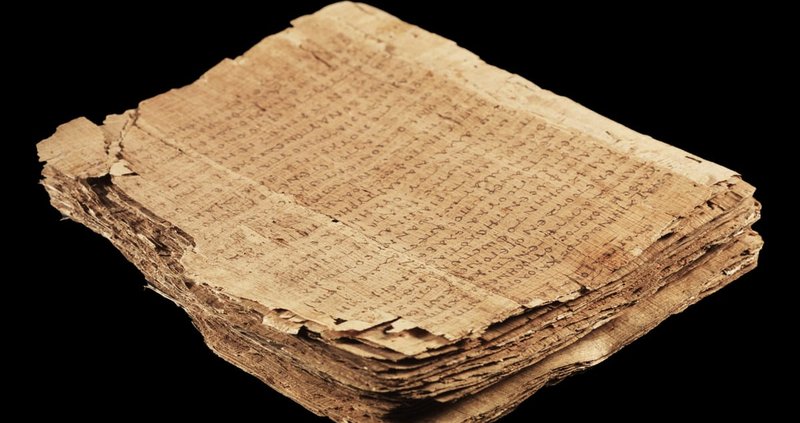
In the Beginning Was the Word: John 1:1 Explained
A deep dive into John 1:1 in the original Greek—the Logos, Colwell's rule, Nicene consubstantiality, and why this verse is the whole Gospel.
Stay Informed
Get new writing on faith, law, and service delivered to your inbox.
No spam. Unsubscribe anytime.