The Meletian Schism: The Egyptian Church Crisis That Shaped Nicaea
On This Page
“It seemed good that Meletius should remain in his own city but exercise no authority either to ordain or to administer, and that he should not appear in the country or in any other city for this purpose.” — Council of Nicaea, synodal letter to the Church of Alexandria
When the Council of Nicaea convened in 325, its primary business was the Arian controversy—the question of whether the Son was consubstantial with the Father or a created being. But the Arian question was not the only crisis the assembled bishops had to address. Among the other matters before the Council was a schism that had been tearing the Egyptian church apart for nearly two decades: the dispute between the see of Alexandria and the followers of Meletius, Bishop of Lycopolis, over the proper treatment of Christians who had denied their faith during the Great Persecution.1
The Meletian Schism is less well known than the Arian controversy, but it left a deep mark on the fourth-century Church. It shaped the canons of Nicaea, it entangled itself with the Arian crisis in ways that prolonged both disputes, and it illuminated a structural tension in early Christianity that would surface repeatedly in subsequent centuries: the question of how strictly the Church should treat those who had failed under persecution, and who had the authority to decide.
The Diocletian Persecution
The Crisis That Broke the Egyptian Church
To understand the Meletian Schism, one must first understand the Diocletian persecution—the most systematic and violent assault the Roman Empire ever launched against the Christian Church.
In February 303, Emperor Diocletian issued the first of a series of edicts aimed at the suppression of Christianity. Churches were to be destroyed, scriptures surrendered, and clergy arrested. Subsequent edicts extended the persecution to the laity, requiring all citizens to offer sacrifice to the traditional Roman gods on pain of imprisonment, torture, and death.2
The persecution was enforced with particular ferocity in Egypt, where the Christian community was both large and deeply rooted. Eusebius of Caesarea, writing in his Ecclesiastical History, describes the suffering of Egyptian Christians in vivid and often harrowing detail: mass executions, prolonged imprisonment, mutilation, and forced labor in the mines.3 The Egyptian church would later designate the beginning of Diocletian’s reign as the start of its own calendar—the Era of the Martyrs—a measure of the trauma this persecution inflicted on the collective memory of Egyptian Christianity.4
Not every Christian endured. Many, under threat of death, complied with the imperial edicts—surrendering scriptures (traditores), offering incense (thurificati), obtaining certificates of sacrifice (libellatici), or—most gravely—actually sacrificing to pagan gods (sacrificati). These were the lapsi, the lapsed, and the question of what to do with them when the persecution ended would fracture the Church in both East and West. In North Africa, the dispute over the traditores produced the Donatist schism. In Egypt, it produced the Meletian.5
Meletius of Lycopolis and Peter of Alexandria
The Origins of the Dispute
Peter, Bishop of Alexandria and metropolitan of all Egypt, was the central ecclesiastical authority in the region when the persecution struck. At some point during the persecution—the precise chronology is debated—Peter issued a series of canons establishing a graduated system of penance for the lapsed. Those who had been coerced by torture received more lenient treatment than those who had apostasized voluntarily; all, however, could be restored to communion after completing the prescribed period of penance. Peter’s approach was pastoral and moderate, in line with the tradition that had prevailed in Alexandria since the time of Dionysius during the Decian persecution half a century earlier.6
Meletius, Bishop of Lycopolis in Upper Egypt, took a harder line. The precise nature of his objections is difficult to reconstruct with certainty, as the surviving sources are overwhelmingly hostile to him—our principal accounts come from Athanasius, Epiphanius, and Sozomen, all of whom wrote from the Alexandrian perspective.7 What is clear is that Meletius regarded Peter’s penitential canons as excessively lenient and began acting on that conviction. He ordained clergy and consecrated bishops in dioceses that were not his own—including in areas where the incumbent bishop was still alive but imprisoned or in hiding—thereby violating the canonical principle that each bishop exercises authority only within his own territory.8
Peter of Alexandria convened a synod that excommunicated Meletius, but the excommunication did not end the schism—it deepened it. Meletius continued his ordinations, and by the time Peter was martyred in November 311, the last victim of the Diocletian persecution in Alexandria (so designated in Coptic tradition as the “Seal of the Martyrs”), a parallel Meletian hierarchy existed across much of Egypt.9
The Scope of the Meletian Church
A Parallel Hierarchy in Egypt
The Meletian movement was no marginal sect. By the time Nicaea convened, the Meletians possessed a fully organized episcopal structure. Athanasius, in his Apologia Contra Arianos, preserves a list that Meletius himself submitted to Bishop Alexander of Alexandria, enumerating twenty-nine bishops whom Meletius had consecrated across Egypt, the Thebaid, and Libya.10 This was a substantial rival network—nearly a parallel church—operating in direct competition with the Alexandrian hierarchy.
The movement drew its strength from several sources. Some of Meletius’s supporters were genuinely motivated by rigorist convictions—the belief that the Church’s holiness demanded stricter discipline than Peter’s canons allowed. Others resented Alexandrian centralization. Egypt’s vast geography, stretching from the Mediterranean coast to the deep Thebaid, meant that the bishop of Alexandria’s authority over distant sees was sometimes more theoretical than practical, and Meletius exploited existing tensions between Upper Egypt and the metropolitan see.11
The result was that when the persecution ended and the Church emerged into the Constantinian era, the Egyptian church was divided. The bishop of Alexandria—first Peter, then Achillas, then Alexander—faced a rival episcopate that claimed legitimacy on the grounds of stricter fidelity to the faith during the persecution.
Nicaea’s Resolution
Canon 6 and the Synodal Letter
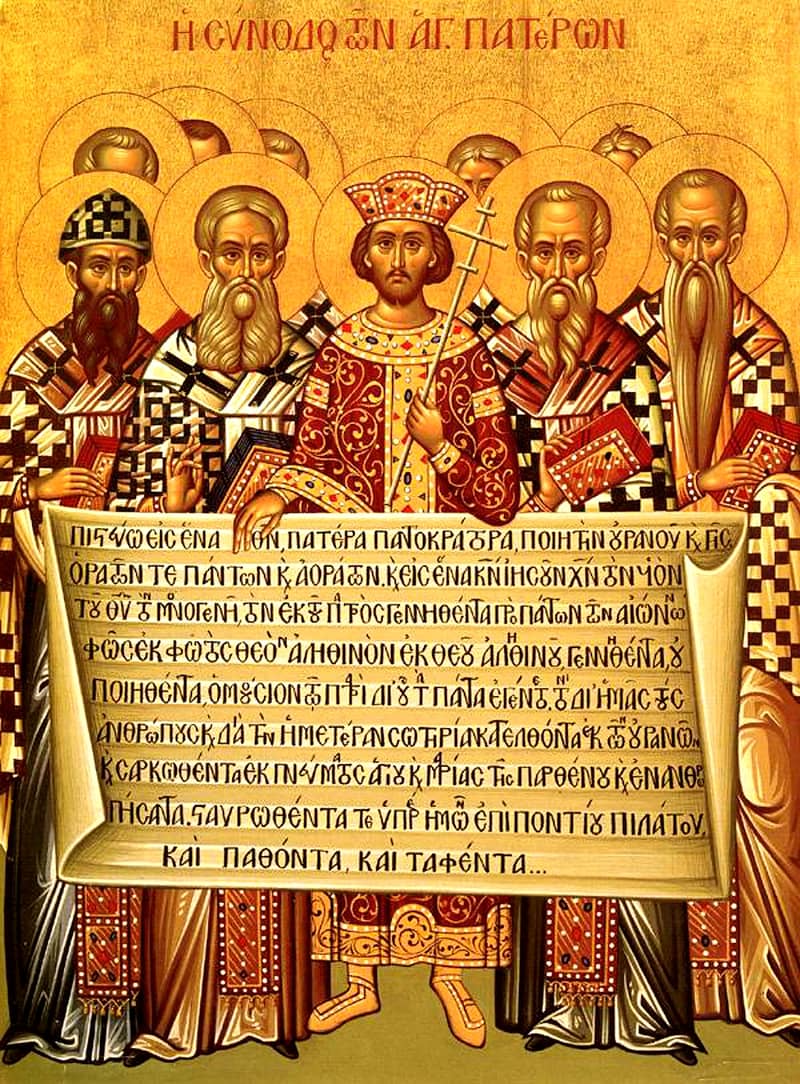
When Constantine convened the Council of Nicaea in 325, the Egyptian schism was prominent on the agenda. The Council addressed it through two instruments: Canon 6 and the synodal letter sent to the Church of Alexandria.
Canon 6 is one of the most consequential disciplinary canons of the early Church. Its immediate occasion was to reaffirm the traditional metropolitan authority of certain great sees:
“The ancient customs of Egypt, Libya, and Pentapolis shall be maintained, according to which the bishop of Alexandria has authority over all these places, since a similar custom exists with reference to the bishop of Rome. Likewise, in Antioch and the other provinces, the prerogatives of the churches are to be preserved. … If anyone is made a bishop without the consent of the metropolitan, this great synod decrees that such a one shall not be a bishop.”12
The canon’s immediate context was the Meletian crisis. By solemnly reaffirming Alexandria’s jurisdiction over all of Egypt, Libya, and Pentapolis, the Council was directly repudiating Meletius’s claim to ordain and govern outside his own diocese. The parallel with Rome’s authority was not incidental—it grounded Alexandria’s prerogatives in the same category of ancient, recognized metropolitan privilege that Rome enjoyed in the West and Antioch in Syria.13
The synodal letter to the Alexandrian church dealt with Meletius personally. The terms were a carefully negotiated compromise. Meletius was permitted to retain his episcopal title and to remain in Lycopolis, but he was stripped of the authority to ordain or to exercise any administrative power beyond his own city. Clergy whom Meletius had ordained could be received into the Catholic Church through a new imposition of hands, but they were to be subordinate to the clergy ordained by Bishop Alexander. Meletian bishops could succeed to Catholic sees only when a vacancy arose and only with the approval of the bishop of Alexandria.14
The terms were generous—more generous, certainly, than Meletius’s opponents in Alexandria would have preferred. The Council clearly hoped that a policy of measured inclusion would heal the schism more effectively than continued excommunication. It was a policy that would prove, in the event, too optimistic.
The Meletian-Arian Alliance
How Two Crises Became One
The most consequential development in the aftermath of Nicaea was the convergence of the Meletian schism with the Arian controversy. The two movements had distinct origins—the Meletian dispute was jurisdictional and disciplinary, while the Arian crisis was doctrinal, centered on the question of whether the Son was consubstantial with the Father. But they shared a common adversary: the bishop of Alexandria.
When Athanasius succeeded Alexander as bishop of Alexandria in 328, he inherited both conflicts. Athanasius was an unyielding defender of Nicene orthodoxy and an equally unyielding administrator who regarded both the Arians and the Meletians as threats to be suppressed. The Meletians, for their part, found in the Arian party a powerful set of allies at the imperial court. Beginning in the 330s, Meletian bishops filed a series of accusations against Athanasius—charges of violence, intimidation, and misconduct—that the Arian-sympathizing bishops at court were only too happy to amplify.15
The most dramatic of these accusations was the affair of Arsenius, a Meletian bishop whom Athanasius was alleged to have murdered. The charge was that Athanasius had cut off Arsenius’s hand for use in sorcery. Athanasius’s defense was characteristically direct: he produced Arsenius alive, with both hands intact, before the Council of Tyre in 335.16 The episode illustrates both the intensity of Meletian hostility toward Alexandria and the degree to which the Meletians were willing to coordinate with the Arian faction to bring Athanasius down.
This alliance between Meletians and Arians was not based on shared theology—there is no evidence that the Meletians as a body held Arian views on the nature of the Son. It was a marriage of political convenience, united by opposition to the Alexandrian episcopate. The result, however, was to prolong and intensify both crises, as accusations from Meletian sources gave Arian-sympathizing emperors and bishops the leverage they needed to exile Athanasius repeatedly—five times in total over the course of his episcopate.17
The Schism’s Aftermath
Persistence and Gradual Dissolution
The Meletian Schism did not end at Nicaea. It persisted through much of the fourth century, sustained by the same factors that had produced it: regional resentment of Alexandrian authority, rigorist conviction, and—after the Arian alliance—imperial politics.
The schism gradually weakened over the course of the late fourth and early fifth centuries. As the Arian controversy moved toward resolution—culminating in the First Council of Constantinople in 381, which adopted the Niceno-Constantinopolitan Creed, expanding and confirming the Nicene faith, and condemned Arianism definitively—the Meletians lost their most powerful allies. Without the support of Arian-sympathizing bishops and emperors, the Meletian hierarchy could not sustain itself against the institutional weight of the Alexandrian see.18
By the time the Council of Chalcedon convened in 451, the Meletian movement had largely disappeared as an organized force. But its legacy persisted in several ways.
First, Canon 6 of Nicaea—prompted directly by the Meletian crisis—became a foundational text in the development of metropolitan and patriarchal authority in the early Church. The canon’s affirmation of Alexandria’s jurisdiction would be invoked repeatedly in subsequent centuries, including at Chalcedon itself, where the question of which sees held authority over which territories was once again a central point of contention.19
Second, the Meletian Schism established a pattern that would recur throughout the fourth century and beyond: the entanglement of disciplinary disputes with doctrinal controversies, and the willingness of dissident factions to seek imperial support against their ecclesiastical opponents. The Donatists in North Africa, the Luciferians in the West, and various rigorist movements throughout the patristic era all exhibited similar dynamics.
Third, the schism’s intersection with the Arian crisis profoundly shaped the career of Athanasius, whose repeated exiles and restorations became the defining drama of fourth-century Christianity. Without the Meletian accusations that gave his enemies their procedural leverage, the history of Athanasius—and of Nicene orthodoxy itself—might have unfolded very differently.
The Question of Rigorism
A Perennial Tension in the Church
At its root, the Meletian Schism expressed a tension that has never been fully resolved in Christian history: the tension between mercy and rigor, between the Church as a hospital for sinners and the Church as a community of the faithful whose holiness must be visibly maintained.
Peter of Alexandria’s moderate penitential canons represented the pastoral tradition that would eventually prevail in Catholic practice—the conviction that the Church possesses the authority to absolve and restore even those who have gravely sinned, and that the exercise of this authority is itself an act of fidelity to Christ’s teaching. Meletius’s rigorism represented the alternative tradition, attested as early as the Novatianist schism of the third century: the conviction that certain sins are so grave that the Church cannot—or should not—extend reconciliation without compromising its own integrity.20
The Council of Nicaea, by siding with Alexandria against Meletius while offering generous terms of reconciliation, endorsed the moderate position. But the persistence of rigorist movements throughout Christian history—from the Donatists to the medieval Cathars to various post-Reformation perfectionist movements—testifies to the enduring appeal of the alternative.
Frequently Asked Questions
What was the Meletian Schism?
The Meletian Schism was a division in the Egyptian church that began during the Diocletian persecution (303–311). It originated in a dispute between Peter, Bishop of Alexandria, and Meletius, Bishop of Lycopolis, over the proper treatment of Christians who had lapsed during the persecution. Meletius, taking a stricter position than Peter, began ordaining clergy and consecrating bishops outside his own diocese, creating a parallel episcopal hierarchy that persisted for decades.
What caused the Meletian Schism?
The immediate cause was a disagreement over penitential discipline—how strictly the Church should treat Christians who had denied their faith under persecution. The deeper causes included regional tensions between Upper Egypt and the metropolitan see of Alexandria, and the question of whether any bishop other than the metropolitan had the authority to ordain clergy in dioceses not his own.
How did the Council of Nicaea resolve the Meletian Schism?
The Council of Nicaea addressed the schism through Canon 6, which reaffirmed Alexandria’s metropolitan authority over all of Egypt, Libya, and Pentapolis, and through a synodal letter that allowed Meletius to retain his episcopal title but stripped him of the authority to ordain. Clergy ordained by Meletius could be received into the Catholic Church through a new imposition of hands, but were to be subordinate to the clergy of Bishop Alexander.
How was the Meletian Schism connected to Arianism?
Although the Meletian dispute was disciplinary rather than doctrinal, the Meletians allied with the Arian party after the Council of Nicaea. Both movements opposed the bishop of Alexandria—Athanasius—and the Meletians provided accusations against Athanasius that Arian-sympathizing bishops and emperors used to justify his repeated exiles. The alliance was one of political convenience rather than theological agreement.
What is Canon 6 of the Council of Nicaea?
Canon 6 reaffirmed the ancient metropolitan prerogatives of certain great sees—specifically Alexandria, Rome, and Antioch. It declared that the bishop of Alexandria held authority over all of Egypt, Libya, and Pentapolis, paralleling the authority that the bishop of Rome held in the West. The canon was prompted directly by the Meletian crisis and became a foundational text in the development of patriarchal authority.
For Further Study
- Athanasius of Alexandria, Apologia Contra Arianos (Defense Against the Arians), especially §§59, 71
- Epiphanius of Salamis, Panarion, Heresy 68 (on the Meletians)
- Sozomen, Ecclesiastical History, Book I, Chapter 15; Book II, Chapters 18, 21–22, 25
- Eusebius of Caesarea, Ecclesiastical History, Book VIII (on the Diocletian persecution)
- Henry Chadwick, The Church in Ancient Society: From Galilee to Gregory the Great (Oxford: Oxford University Press, 2001)
- W. H. C. Frend, The Rise of Christianity (Philadelphia: Fortress Press, 1984), chapters 12–14
- Timothy D. Barnes, Athanasius and Constantius: Theology and Politics in the Constantinian Empire (Cambridge: Harvard University Press, 1993)
- Hans Hauben, Studies on the Melitian Schism in Egypt (AD 306–335), ed. Peter Van Nuffelen (Variorum/Ashgate, 2012; Routledge, 2018)
- Rowan Williams, Arius: Heresy and Tradition, rev. ed. (Grand Rapids: Eerdmans, 2001), chapter I.A.2
- H. Idris Bell, Jews and Christians in Egypt (London: British Museum, 1924)
- L. W. Barnard, “Athanasius and the Meletian Schism in Egypt,” Journal of Egyptian Archaeology 59 (1973): 181–189
Footnotes
1. The principal ancient sources for the Meletian Schism are Athanasius, Apologia Contra Arianos, §§59, 71; Epiphanius, Panarion, Heresy 68; Sozomen, Ecclesiastical History, I.15, II.18, 21–22, 25; and the canons and synodal letter of the Council of Nicaea. See also Henry Chadwick, The Church in Ancient Society: From Galilee to Gregory the Great (Oxford: Oxford University Press, 2001).
2. Eusebius of Caesarea, Ecclesiastical History, VIII.2–6. The first edict (February 24, 303) ordered the destruction of churches and scriptures; a second edict mandated the imprisonment of clergy; a third offered release to those who sacrificed; a fourth (304) extended the requirement of sacrifice to all citizens. (The fourth edict is attested primarily in Eusebius, Martyrs of Palestine, ch. 3, and Lactantius, De Mortibus Persecutorum, rather than in EH VIII.2–6 itself.) See also W. H. C. Frend, Martyrdom and Persecution in the Early Church (Oxford: Blackwell, 1965), 477–535.
3. Eusebius, Ecclesiastical History, VIII.7–10. New Advent
4. The Coptic calendar, still in use by the Coptic Orthodox Church, dates from 284 AD—the accession of Diocletian—and is known as the Era of the Martyrs (Anno Martyrum). See Aziz S. Atiya, The Coptic Encyclopedia, 8 vols. (New York: Macmillan, 1991), s.v. "Calendar, Coptic."
5. On the Donatist schism and its parallels with the Meletian crisis, see W. H. C. Frend, The Donatist Church: A Movement of Protest in Roman North Africa, repr. (Oxford: Clarendon Press, 1985). Both schisms arose from the same fundamental question—the status of lapsi and traditores—and both produced parallel hierarchies that proved remarkably durable.
6. The Canonical Epistle of Peter of Alexandria (c. 306) is preserved in fragments and establishes a graduated penitential system. Those who had been coerced under torture received lighter penances; those who had lapsed voluntarily were assigned longer periods. See M. J. Routh, Reliquiae Sacrae, 2nd ed. (Oxford, 1846), 4:23–45. For the precedent of Dionysius of Alexandria during the Decian persecution, see Eusebius, Ecclesiastical History, VI.42.
7. The historiographical challenge of the Meletian Schism is significant. Nearly all surviving accounts originate from the Alexandrian party. Athanasius had every reason to portray Meletius in the worst possible light, and Epiphanius, writing later, depended heavily on Alexandrian sources. See Annick Martin, Athanase d'Alexandrie et l'Église d'Égypte au IVe siècle (328–373) (Rome: École française de Rome, 1996), 227–260.
8. Epiphanius, Panarion, 68.1–3. Epiphanius reports that Meletius ordained clergy in dioceses whose bishops were imprisoned or in exile, thereby violating established canonical boundaries. Athanasius, Apologia Contra Arianos, §59, describes Peter deposing Meletius for "many crimes" including offering sacrifice to idols; the detail of ordaining in other dioceses derives primarily from the Verona Latin documents and from the broader context of §71.
9. Peter of Alexandria was martyred on November 25, 311, traditionally regarded as the last martyrdom of the Diocletian persecution in Alexandria. Eusebius, Ecclesiastical History, IX.6. On the synod excommunicating Meletius, see Sozomen, Ecclesiastical History, I.15.
10. Athanasius, Apologia Contra Arianos, §71. The list enumerates twenty-nine Meletian bishops, organized by region, covering much of Upper and Lower Egypt. The count of twenty-nine includes Meletius himself as the first name on the list; some scholars count only twenty-eight, excluding him as the presenter rather than a subordinate bishop. See also Sozomen, Ecclesiastical History, II.21.
11. On the regional dynamics of the Meletian movement, see Ewa Wipszycka, The Alexandrian Church: People and Institutions (Warsaw: Journal of Juristic Papyrology, 2015), 81–115. Wipszycka emphasizes the role of existing tensions between Upper Egypt and Alexandria in providing a receptive environment for Meletius's campaign.
12. Canon 6 of the First Council of Nicaea (325). Text in Decrees of the Ecumenical Councils, ed. Norman P. Tanner, 2 vols. (Washington, D.C.: Georgetown University Press, 1990), 1:8. New Advent, Canons of the First Council of Nicaea
13. The precise meaning of the Roman parallel in Canon 6 has been debated for centuries. Some scholars read it as an appeal to Roman practice to validate Alexandrian authority; others interpret it as a general reaffirmation of metropolitan prerogatives across the major sees. See Henry Chadwick, "Faith and Order at the Council of Nicaea: A Note on the Background of the Sixth Canon," Harvard Theological Review 53 (1960): 171–195.
14. The terms are preserved in the synodal letter of the Council of Nicaea to the Church of Alexandria. See Socrates Scholasticus, Ecclesiastical History, I.9; Theodoret, Ecclesiastical History, I.9. The letter specifies that Meletian clergy are to be "confirmed by a more holy ordination" and to rank below the clergy ordained by Alexander in all cases. (The I.9 chapter reference for Theodoret follows editions that count the Prologue as Chapter I; in the standard NPNF edition, the same passage appears at I.8.) Socrates, New Advent
15. On the Meletian-Arian alliance and the accusations against Athanasius, see Timothy D. Barnes, Athanasius and Constantius: Theology and Politics in the Constantinian Empire (Cambridge: Harvard University Press, 1993), 19–33. Barnes provides a careful reconstruction of the charges and their political context.
16. Sozomen, Ecclesiastical History, II.23, 25; Socrates, Ecclesiastical History, I.29. The episode of Arsenius's alleged murder and Athanasius's dramatic refutation at the Council of Tyre (335) is one of the most vivid narratives in fourth-century church history. Athanasius reportedly unveiled Arsenius, who had been hidden by the Meletians, showing each hand in turn and asking the assembly where the third had been cut off.
17. Athanasius was exiled five times: in 335/336 (to Trier), 339 (to Rome), 356 (to the Egyptian desert), 362 (briefly under Julian), and 365 (under Valens). The first and second exiles were precipitated in significant part by Meletian accusations. See Barnes, Athanasius and Constantius, 34–55.
18. The First Council of Constantinople (381) adopted the Niceno-Constantinopolitan Creed, expanding and confirming the Nicene faith, condemned Arianism along with several other heresies, and—through its third canon—elevated Constantinople to second place after Rome in ecclesiastical honor. See Decrees of the Ecumenical Councils, ed. Tanner, 1:31–35.
19. At Chalcedon, Canon 28 elevated Constantinople's status by granting it "equal privileges" with Rome, directly echoing and extending the logic of Nicaea's Canon 6 and Constantinople I's Canon 3. The disputed canon drew fierce opposition from Pope Leo. See Richard Price and Michael Gaddis, eds., The Acts of the Council of Chalcedon, 3 vols. (Liverpool: Liverpool University Press, 2005), 1:50–51.
20. On the Novatianist schism and its relationship to later rigorist movements, see J. N. D. Kelly, Early Christian Doctrines, 5th ed. (London: A&C Black, 1977), 199–205. Novatian denied that the Church could absolve those who had committed apostasy, a position the Roman synod of 251 rejected. The Meletian position, while not identical to Novatian's, operated within the same rigorist tradition.

Garrett Ham
Garrett Ham is an attorney, military veteran, and holds a Master of Divinity from Yale Divinity School. He writes from Northwest Arkansas on theology, law, and service.
More about Garrett →Related Posts
Apollinarius of Laodicea and His Christological Heresy
Apollinarius of Laodicea denied that Christ had a human rational mind, replacing it with the divine Logos. Gregory of Nazianzus's devastating reply—'what is not assumed is not healed'—sealed the condemnation at Constantinople I (381).
The First Council of Nicaea: What It Decided and Why It Matters
What happened at the First Council of Nicaea in 325 AD? A Catholic examination of the Arian crisis, the meaning of homoousios, and why the Nicene Creed still defines Christian orthodoxy.
Pelagianism and Semi-Pelagianism: Why the Church Condemned Both
Understand Pelagianism vs. semi-Pelagianism: why both heresies were condemned, their impact on theology, and what they teach about grace and salvation.
Stay Informed
Get new writing on faith, law, and service delivered to your inbox.
No spam. Unsubscribe anytime.