Uncovering His Feet: What Actually Happened on the Threshing Floor in Ruth 3:4

On This Page
וִיהִ֣י בְשׇׁכְב֗וֹ וְיָדַ֣עַתְּ אֶת־הַמָּקוֹם֮ אֲשֶׁ֣ר יִשְׁכַּב־שָׁם֒ וּבָ֗את וְגִלִּ֛ית מַרְגְּלֹתָ֖יו וְשָׁכָ֑בְתְּ וְה֖וּא יַגִּ֥יד לָ֛ךְ אֵ֥ת אֲשֶׁ֖ר תַּעַשִֽׂין׃
“And it shall be when he lies down, then you shall know the place where he lies there. Then you shall come and uncover the place of his feet. Then you shall lie down, and he will tell you what you should do.”—Ruth 3:4 (author’s translation)
An exegetical study of one of the Hebrew Bible’s most contested clauses—and why a Catholic reading has to hold its ambiguity rather than resolve it.
Why This Verse Will Not Leave You Alone
Seven Hebrew words in Ruth 3:4 have generated more scholarly ink per syllable than almost any other line in the book: וּבָאת וְגִלִּית מַרְגְּלֹתָיו וְשָׁכָבְתְּ (ûḇāʾt wəgillît margəlōtāw wəšāḵāḇt)—“and you shall come and uncover his margelotav (מַרְגְּלֹתָיו) and lie down.”1 Everything in the sentence is ordinary except for one rare noun and one loaded verb, and those two words together have produced an interpretive standoff that has lasted for more than a century.
The question is blunt, even if the answers never are: is “uncover his feet” a sexual euphemism, a legal-covenantal gesture, or a deliberately ambiguous literary device the narrator never intends to resolve? The stakes are not merely academic. Ruth stands in the genealogy of David and of Jesus Christ (Matt 1:5), and this single verse sits at the intersection of historical linguistics, ancient Near Eastern custom, narrative poetics, rabbinic tradition, and Catholic typology. What follows is a synthesis of the state of the question—with the argument, laid out plainly at the end, that the ambiguity of Ruth 3:4 is not a problem to be solved but a feature of the text to be inhabited.
I. The Hebrew Text and the Ancient Versions
The clause itself
The Masoretic Text (the authoritative Hebrew text preserved by Jewish scribes, and the basis of all modern translations of the Old Testament) of Ruth 3:4 reads וּבָאת וְגִלִּית מַרְגְּלֹתָיו וְשָׁכָבְתְּ (ûḇāʾt wəgillît margəlōtāw wəšāḵāḇt)—“and you shall come and uncover his margelotav and lie down.”2 The ancient versions diverge instructively, and their differences are themselves a commentary on how early readers heard the Hebrew.
The Septuagint (the ancient Greek translation of the Hebrew Bible, completed by Jewish scholars in Alexandria between the third and first centuries BC, and the Old Testament text used by the early Church)—in both its major manuscript witnesses, Vaticanus and Alexandrinus—does not translate margelot (מַרְגְּלֹת) with the standard Greek πόδες (“feet”).3 Instead, it offers the periphrastic τὰ πρὸς ποδῶν αὐτοῦ—“the things at/toward his feet”—and renders the verb with ἀποκαλύψεις (from ἀποκαλύπτω, “to unveil, uncover”).4 That locative phrasing suggests the LXX translator read margelot as a spatial term (“foot-area”) rather than an anatomical one—a distinction absent in the only other biblical occurrence outside Ruth 3, Daniel 10:6, where the same tradition renders margelot simply as οἱ πόδες.5 Both major LXX witnesses follow the qere (קְרֵי, “what is read”—the pronunciation tradition the Masoretes marked as authoritative, as distinct from the ketiv, “what is written,” the consonantal text actually inscribed in the scroll) readings in vv. 3–4, with the notable addition that Ruth goes “up” (ἀναβήσῃ) to the threshing floor rather than “down.”6
Jerome’s Vulgate makes a momentous interpretive decision: veniesque et discooperies pallium, quo operitur a parte pedum—“and you will come and uncover the cloak with which he is covered from the side of the feet.”7 Jerome inserts pallium (“cloak”), a word entirely absent from the Hebrew, thereby specifying that what is uncovered is a covering garment rather than any body part. This translational choice subtly domesticates the Hebrew ambiguity and, because the Vulgate had already served as the Church’s standard Latin Bible for over a millennium before the Council of Trent formally ratified its authority in 1546, Jerome’s translation directed fifteen centuries of Latin-reading theologians away from any euphemistic hearing of the verse.8
The Peshitta (the standard Syriac translation of the Bible, used by Eastern Christian communities since the early centuries) goes even further: it omits the uncovering language entirely, telling Ruth only to “lie down at his feet.”9 The Targum (an Aramaic paraphrase-translation used in synagogue worship when Hebrew was no longer widely spoken) of Ruth follows the Hebrew more closely but adds a crucial interpretive gloss: Boaz will tell Ruth what to do “through his wisdom”—reframing his response as sage prophetic counsel rather than romantic or sexual guidance.10
The versional picture is already telling. Every early tradition handling the clause leaves fingerprints: LXX spatializes, Jerome inserts a garment, the Peshitta deletes, the Targum moralizes.

Margelot (מַרְגְּלֹת): a rare noun carrying outsized weight
The noun מַרְגְּלֹת (margelot) occurs only five times in the Hebrew Bible—Ruth 3:4, 7, 8, 14, and Daniel 10:6—with four of five occurrences clustered in a single chapter of Ruth. Morphologically it is formed from the root רגל (r-g-l, “foot”) with a mem-preformative, the same pattern that produces מְרַאֲשֹׁת (məraʾăšōt, “place of the head,” 1 Sam 26:7). This mem-locale construction naturally yields a spatial meaning: “the place at the feet,” “the foot-area.”11
The standard Hebrew lexica (the reference dictionaries scholars consult for word meanings) agree on the basic sense: BDB defines מַרְגְּלֹת as “place of the feet”;12 HALOT classifies it as a nominal derivative with locative mem-prefix;13 DCH gives “(place of the) feet.”14 TDOT discusses the euphemistic uses of רֶגֶל (regel) extensively but distinguishes margelot as a distinct lexeme referring to the spatial area near the feet.15
This distinction between מַרְגְּלֹת (margelot) and plain רֶגֶל (regel) is where the trouble begins. The common word regel appears roughly 245 times in the Hebrew Bible and is demonstrably used as a euphemism for genitalia in several passages (e.g., Isa 7:20, “hair of the feet” for pubic hair; Ezek 16:25, “spreading your feet” for sexual promiscuity; Deut 28:57, afterbirth “from between her feet”).16 The narrator of Ruth had the blunt word available and chose the rare locative instead. That choice is linguistically significant—but scholars disagree radically about what it signifies:
- Intensifying coyness. Margelot heightens the euphemism precisely by circumlocution: because the narrator avoids the blunt regel, the reader’s attention is drawn to what is being skirted.17
- Neutralizing distance. Margelot deliberately steps away from regel’s sexual register, marking the scene as spatial rather than anatomical.18
- Irresolvable ambiguity as literary art. Margelot maintains deliberate double-register—neither confirming nor denying the erotic hearing.19
Three positions on a single word choice. The Hebrew will not take sides.
The narrator of Ruth had the blunt word available and chose the rare locative instead.
The verb גָּלָה (gālāh): from exile to eros
The verb גָּלָה (gālāh) occurs approximately 187 times in the Hebrew Bible across three major semantic domains, depending on its verb stem (Hebrew verbs change meaning based on the “stem” or conjugation pattern in which they appear): (a) “to uncover, expose, denude” (Piel, the intensive stem); (b) “to go into exile” (Qal, the basic stem); (c) “to reveal, disclose” (Niphal, the passive/reflexive stem).20 In Ruth 3:4, the Piel weqatal form וְגִלִּית (wəgillît) falls squarely in domain (a).
The critical question is whether gālāh + body part consistently carries erotic connotations. The construction גָּלָה עֶרְוָה (gālāh ʿerwâ, “uncover nakedness”) is the primary biblical euphemism for sexual intercourse, occurring seventeen times in Leviticus 18 alone and recurring throughout Leviticus 20 and Ezekiel 16:36–37; 23:10, 18, 29.21 Deuteronomy 23:1 and 27:20 use gālāh + כָּנָף (kānāp, “skirt/wing”) for sexual violation. But gālāh also appears in entirely non-sexual contexts: “uncover the ear” (גָּלָה אֹזֶן, gālāh ʾōzen) as an idiom for revealing information (1 Sam 9:15; Ruth 4:4), prophetic vision (Num 24:4, 16), and general removal of a covering (Isa 22:8).22
The construction in Ruth 3:4 is unique: it is gālāh + margelot—not gālāh + ʿerwâ. The standard euphemistic formula for intercourse is absent. But as Keita and Dyk observe, most of the verbs clustered around this verse—יָדַע (yādaʿ, “know”), שָׁכַב (šāḵaḇ, “lie down”), בּוֹא (bôʾ, “come/enter”), and גָּלָה (gālāh, “uncover”)—function as euphemisms for sexual intercourse elsewhere in the Hebrew Bible. Their clustering creates an atmosphere of deliberate double register.23
Naomi’s instructions as imperatives
Naomi’s instructions in Ruth 3:3–4 form a carefully structured chain of weqatal (waw-consecutive perfect—a Hebrew verb form that chains commands together in sequence) verbs: “you shall wash” (וְרָחַצְתְּ, wərāḥaṣt), “you shall anoint” (וָסַכְתְּ, wāsaḵt), “you shall put on” (וְשַׂמְתְּ, wəśamt), “you shall go down” (וְיָרַדְתְּ, wəyāradt), “you shall take note” (וְיָדַעַתְּ, wəyādaʿat), “you shall come” (וּבָאת, ûḇāʾt), “you shall uncover” (וְגִלִּית, wəgillît), and “you shall lie down” (וְשָׁכָבְתְּ, wəšāḵāḇt). Waltke and O’Connor identify this as a waw-relative + qatal sequence continuing the volitional force of a preceding imperative—these are genuine commands.24 Joüon-Muraoka concurs: weqatal after an imperative carries directive force.25 GKC terms this the “waw consecutive with the perfect” continuing imperative sense.26
Crucially, the final clause shifts to yiqtol (the imperfect tense, which expresses future or incomplete action rather than a command): וְהוּא יַגִּיד לָךְ (wəhûʾ yaggîd lāḵ, “and he will tell you”). That grammatical shift marks the boundary between what Naomi controls and what she cannot.
A scribal ghost: the ketiv/qere of vv. 3–4
In Ruth 3:3 and 3:4, the ketiv (כְּתִיב, “written form”) ends with an extra yod: וְיָרַדְתִּי (wəyāradtî) and וְשָׁכָבְתִּי (wəšāḵāḇtî), while the qere (קְרֵי, “read form”) lacks it. The ketiv forms can be parsed either as first-person singular (“I will go down,” “I will lie down”—making Naomi the subject) or as archaic second-feminine-singular perfects sporadically attested in Jeremiah, Ezekiel, and Micah. The standard view treats them as archaic 2fs forms; J. M. Myers notes the appended-yod 2fs form “occurs less than two dozen times in the entire Hebrew Bible,” and E. Y. Kutscher attributes these to Aramaic morphological influence.27
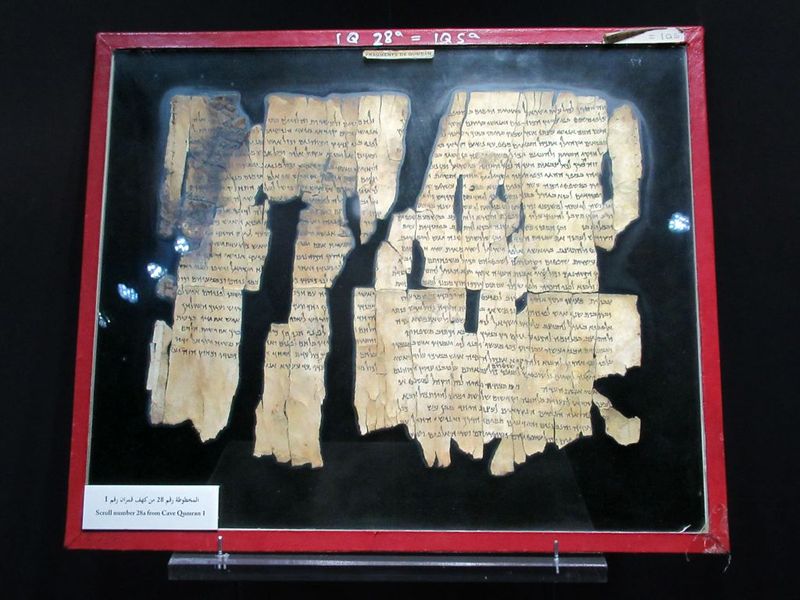
Brian P. Irwin has proposed something more provocative: the ketiv forms are the result of תִּקּוּנֵי סוֹפְרִים (tiqqûnê sōp̄ərîm, “corrections of the scribes”)—intentional scribal emendation.28 A scribe, he argues, shifted the verbs to first-person to remove Ruth from the potentially scandalous encounter and substitute Naomi. Midrash Ruth Rabbah 5.12 takes the first-person reading seriously, imagining Naomi saying that “her merits would accompany Ruth to the threshing floor.”29 The Dead Sea Scroll fragment 2QRutha preserves portions of Ruth 3:3–4, but the critical forms fall within lacunae—a tantalizing silence exactly where the evidence would matter most.30

II. The “Feet” Euphemism Question
The biblical evidence for רֶגֶל (regel) as genital euphemism
The case that “feet” can function as a euphemism for genitalia in the Hebrew Bible rests on a cluster of passages spanning multiple genres and centuries:
Isa 7:20 (“hair of the feet,” שְׂעַר הָרַגְלָיִם, śaʿar hāraglayim) is the strongest and most widely accepted instance. The tripartite sequence—head, feet, beard—makes a genital reference virtually certain, since literal foot-hair would be an absurd target of the “razor” of Assyria. Holladay lists this as “euphemism for genital area,” and the Common English Bible translates directly as “pubic hair.”31
Isa 6:2 (seraphim covering “feet”) is contested. Holladay includes it; others note that angelic modesty about genitalia is theologically awkward, and the covering may simply indicate that only the middle pair of wings (the functional pair) is visible.32
Exod 4:25 (Zipporah touching Moses’s “feet” with the foreskin) is highly contested on multiple levels: whose feet, whose foreskin, and whether the act is apotropaic or covenantal. The WEB renders it “Moses’ member.”33
Judg 3:24 and 1 Sam 24:3 (“covering his feet”) is relatively uncontested as a euphemism for defecating—the squatting posture causes robes to cover the lower body.
Deut 28:57 (afterbirth “from between her feet”) is anatomically transparent.
Ezek 16:25 (“spreading your feet”) is universally recognized as referring to sexual promiscuity.
2 Kgs 18:27 / Isa 36:12 (“water of their feet”) is a ketiv/qere pair where the ketiv has “their urine” and the qere euphemistically substitutes “water of their feet”—uncontested.34
The evidence is real. Regel can function euphemistically. But—critically—Ruth 3:4 does not use regel. It uses margelot.
Three camps on what happened at the threshing floor
Scholars sort into three camps, and the fault line is the fundamental interpretive division in Ruth 3 scholarship.
Camp A: Sexual consummation occurred. Robert Gordis argued that intercourse at the threshing floor constituted a de facto marriage.35 Gary Rendsburg builds on this, citing m. Qiddushin 1:1 (a woman is acquired “by intercourse”).36 D. R. G. Beattie likewise concluded that consummation occurred.37 Earlier, W. E. Staples read the scene as sacred prostitution—a reading now widely rejected as making the narrative incoherent.38 Ilana Pardes reads sexual consummation through the intertextual lens of the Lot/daughters parallel.39 Arguments for this camp: every major verb in Ruth 3:4 (yādaʿ, šāḵaḇ, bôʾ, gālāh) functions as a sexual euphemism elsewhere; Ruth’s bathing, anointing, and dressing read as bridal preparation; Boaz sends her away before dawn “lest it be known that the woman came to the threshing floor” (3:14); the threshing floor is associated with sexual activity in Hos 9:1; and the Lot/daughters parallel (Gen 19:30–38) involves nighttime, wine, and a Moabite ancestress.
Camp B: Sexually charged but unconsummated—the majority scholarly position. Jack Sasson argues a betrothal occurred without consummation.40 Edward Campbell notes sexual overtones but emphasizes Ruth’s integrity.41 Frederic Bush reads the scene as an erotically charged proposal.42 Robert Hubbard states that margelot is “not demonstrable as a euphemism here” but “may have been chosen to add to the scene’s sexual overtones.”43 Kirsten Nielsen emphasizes deliberate literary ambiguity.44 Arguments for this camp: Ruth 3:8 states that Boaz was startled upon awakening, suggesting Ruth was not touching him intimately; Boaz’s response in 3:10–13 (praising Ruth’s ḥesed, noting a nearer kinsman, deferring the relationship) would be awkward post-coitus; and Ruth 4:13 uses the standard biblical idiom for first intercourse—וַיָּבֹא אֵלֶיהָ (wayyāḇōʾ ʾēlêhā, “he went in to her”)—for the proper marriage, a formula that would be superfluous if consummation had already occurred at the threshing floor.45
Camp C: Entirely non-sexual, a legal-covenantal gesture. Daniel Block argues the act was about removing a blanket from Boaz’s feet so Ruth could ask him to cover her with his כָּנָף (kānāp, “wing/garment”)—a symbolic marriage petition echoing Ezek 16:8.46 Ronald Hals reads the scene within a framework of divine providence.47 P. A. Kruger argues it is fundamentally about the garment-spreading ritual of marriage.48 K. Lawson Younger gives a conservative reading emphasizing ḥesed theology.49 Arguments for this camp: Ruth’s speech “spread your wing over your servant” (3:9) echoes God’s covenantal act in Ezek 16:8; Boaz calls Ruth an אֵשֶׁת חַיִל (ʾēšet ḥayil, “woman of noble character,” 3:11), the same phrase used for the ideal woman in Prov 31:10; the narrator chose margelot rather than the euphemistic regel precisely to clarify non-sexual intent; and Ruth 4:13 reserves the sexual-union language for the proper marriage.
No textual evidence definitively resolves the dispute. The majority position is Camp B, but Camps A and C each command serious adherents.50 What every camp acknowledges—even as they interpret it differently—is that the Hebrew is doing something unusual here.
The threshing floor as liminal, sacred, and sexually charged space
Threshing floors in the ancient Near East were not merely agricultural installations. Jaime L. Waters’s monograph—the definitive study—demonstrates that threshing floors functioned as sites for mourning rites, divination rituals, cultic processions, sacrifices, and legal transactions.51 Kings consulted prophets there (1 Kgs 22:10). David’s purchase of Araunah’s threshing floor (2 Sam 24; 1 Chr 21), subsequently the site of Solomon’s Temple (2 Chr 3:1), illustrates the sacred character of these spaces.
Hosea 9:1 explicitly links threshing floors to sexual/cultic activity: “You have loved a prostitute’s fee on every threshing floor.”52 Lawrence Stager, and later Philip King and Stager, discuss the broader context of harvest celebrations.53 Waters documents relevant comparative material from Ugarit, including the Aqhatu text (KTU 1.17–19) where Dan’ilu sits at the threshing floor to administer justice.54
The Sumerian Sacred Marriage rites (Inanna/Dumuzi) offer suggestive parallels: the bride is washed, anointed, and adorned before a nighttime encounter—the same preparation sequence Naomi prescribes for Ruth. Tikva Frymer-Kensky notes this structural correspondence.55 But no direct ANE parallel exists for the specific “uncovering feet/lower body in a nighttime encounter” motif; the comparison remains suggestive rather than demonstrable. Recent scholarship—notably Stephanie Budin—has challenged older consensus about widespread ritual sexual activity at harvest sites, which undermines the older “sacred prostitution” readings.56
III. Literary and Narrative Analysis
The gap the text refuses to narrate
After v. 7 (“she came secretly, and uncovered his feet and lay down”), the text leaps to v. 8 (“at midnight the man was startled”). This temporal ellipsis is the most debated silence in the book. What happened during those intervening hours? The narrator does not say—and the silence is almost certainly deliberate.
Meir Sternberg devotes chapters 6–7 of The Poetics of Biblical Narrative to gaps and ambiguity as constitutive features of biblical narrative—the same interpretive problem that arises in passages like 1 Samuel 2:25. The biblical narrator is omniscient but deliberately reticent—tells the truth but not the whole truth. Sternberg distinguishes temporary gaps (resolved later) from permanent gaps (never resolved); the Ruth 3:7–8 gap is arguably permanent, since the text never retrospectively clarifies what occurred.57 Erich Auerbach describes this quality as the essential mark of biblical narrative: texts that are “fraught with background,” where thoughts and feelings remain unexpressed, suggested only by silence and fragmentary speech.58
Robert Alter connects the gap to his theory of type-scenes. Ruth 3 subverts the betrothal type-scene: it occurs at night rather than by day, at a threshing floor rather than a well, with the woman taking initiative rather than the man. The gap is a literary device that forces readers to weigh competing interpretations.59
Intertextual darkness: Ruth among the nighttime women
The scene’s darkness, secrecy, wine, and female initiative deliberately evoke a chain of prior biblical narratives.
Gen 19:30–38 (Lot’s daughters). The parallel is genealogically explicit—Ruth is a Moabitess, descended from the product of this incestuous encounter. Both scenes feature a man who has consumed wine, nighttime, a woman taking initiative, the male unaware. But Ruth 3 deliberately reverses the pattern—one of several hard Old Testament passages where the narrator subverts expectations: Lot’s daughters render their father unconscious and have intercourse; Ruth approaches a “merry-hearted” (not incapacitated) Boaz and eventually speaks to him directly. Ilana Pardes observes that “the spirit of Sodom lurks behind the threshing floor.”60
Gen 38 (Judah and Tamar). The most extensively studied parallel, invoked explicitly by the elders of Bethlehem in 4:12. Ellen van Wolde demonstrates extensive shared features: both women are non-Israelite widows denied levirate rights who use sexuality strategically. The key difference she identifies is that “Tamar’s straightforward approach is reflected by Judah’s straightforward reaction,” while “the subtle and creative behaviour of Ruth is reflected by Boaz’s sophisticated and creative procedure.”61
Gen 29:21–25 (Jacob and Leah). Darkness conceals identity; the man does not recognize whom he is with until morning.
1 Samuel 3 (Samuel’s nighttime call). A non-sexual paradigm of nighttime encounter, awakening, and life-changing communication.
Ruth 3 sits deliberately inside this web. The narrator is evoking all of them and domesticating none of them.
Ruth’s חֶסֶד (ḥesed) in chapter 3: transgression reframed as covenant
Boaz declares Ruth’s “latter ḥesed” greater than her former (3:10). Katharine Sakenfeld emphasizes ḥesed’s voluntary, freely-given character—action on behalf of someone in need, going beyond obligation.62 Nelson Glueck stresses the reciprocal duty within covenantal bonds.63
The “former ḥesed” is generally understood as Ruth’s loyalty to Naomi (1:16–17); the “latter” as her seeking a kinsman-redeemer (גֹּאֵל, gōʾēl) rather than a younger husband, thereby preserving Elimelech’s line.64 Boaz’s response in 3:10–13 reframes what could be read as transgressive into covenantal faithfulness: he blesses Ruth, names her act ḥesed, calls her אֵשֶׁת חַיִל (ʾēšet ḥayil, “woman of noble character”—the Prov 31 ideal), promises to act as gōʾēl, and protects her reputation. The narrator thus demonstrates that the moral meaning of an act depends on its covenantal context.
God is mentioned but never acts directly in Ruth—the ambiguity about the threshing floor parallels the ambiguity about divine providence throughout the book. And the genealogy of David, and ultimately of Christ, runs through women whose sexual agency was morally ambiguous yet providentially directed: Tamar, Rahab, Ruth, Bathsheba (Matt 1:3–6).
IV. Jewish Interpretive Tradition
The Targum of Ruth adds that Boaz will counsel Ruth “through his wisdom,” reframing his response as prophetic guidance.65 Midrash Ruth Rabbah (chs. 5–6) contains the remarkable observation that Ruth changed the order of Naomi’s instructions—a significant note about her agency. R. Hanina b. Papa contrasts Ruth’s purity of intention with the immoral origins of Moab: Lot’s daughter “cohabited with her father thinking she was saving the human race,” but Ruth acts for covenantal purposes.66 Ruth Rabbah 6:1 records David’s later prayer praising God for putting “a blessing rather than a curse” in Boaz’s heart.
The Babylonian Talmud (b. Sanh. 19b) records that when Boaz awoke, “his body became like the heads of turnips”—Rashi interprets this as a physiological response (possibly erotic arousal), adding to the sexual ambiguity rather than resolving it. The Talmud compares Boaz’s self-restraint to Joseph’s resistance of Potiphar’s wife.67
Rashi does not directly identify מַרְגְּלֹתָיו (margəlōtāw) as a sexual euphemism in his פְּשָׁט (pəšāṭ) commentary, treating it as the foot-area where Boaz lay. Ibn Ezra defines it as literal “feet”; Gersonides reads “foot of the bed.”68 Medieval Jewish commentators generally suppressed explicit erotic readings at the pəšāṭ level while preserving the erotic tension in Talmudic and midrashic layers—acknowledging erotic content while redirecting it toward moral exemplarity. R. Shmuel bar Nachman crystallized the contrast: “Of Potiphar’s wife it says ‘lie with me,’ like an animal; but of Ruth it says ‘spread your wing over your handmaid.’”69
This is a sophisticated hermeneutical strategy—one that neither denies the scene’s erotic charge nor collapses it into mere carnality. It is worth noticing that the earliest Jewish readers did not think they needed to choose between Camp A and Camp C.
The earliest Jewish readers did not think they needed to choose.
V. Catholic Theological and Spiritual Interpretation
Patristic reception: Boaz as Christ, Ruth as the Church
No complete homilies or commentary on Ruth by Origen survive; what exists is only a Fragmentum. The Ancient Christian Commentary on Scripture notes that “only two running commentaries exist [on Ruth]—one from Gregory of Nazianzus, one from Bede the Venerable.”70
Ambrose of Milan provides the richest patristic engagement. In De Viduis 4.33 he develops an elaborate typology: Christ alone is the Bridegroom to whom the Church, his bride, comes from the nations and gives herself in wedlock—“aforetime poor and starving, but now rich with Christ’s harvest.” Boaz = Christ; Ruth = the Gentile Church.71 In Expositio Evangelii secundum Lucam 3.30, Ambrose adds that Ruth was “chosen on account of the kinship of her soul, not of her body.”72 Ambrose links Ruth 4’s sandal removal to John 1:27 and 3:29—the unnamed kinsman who refuses is a type of the Law that cannot redeem.
Jerome did not write a standalone commentary on Ruth, and his Vulgate rendering (discooperies pallium…a parte pedum) shaped all subsequent Latin exegesis. Augustine references Ruth primarily in the context of Christological genealogy and applies his principle that “the New Testament is hidden in the Old, and the Old Testament is manifest in the New”—a formulation that Dei Verbum §16 will eventually quote.73
The patristic typological reading (Boaz = Christ the Redeemer; Ruth = the Church/Gentile bride; the unnamed kinsman = the Law unable to redeem) became normative in Catholic tradition—one of many examples where patristic and conciliar consensus shaped how the Church reads the Old Testament— and continues to inform liturgical and catechetical use of the book.

Medieval allegorical exegesis: the fourfold sense applied
Venerable Bede (c. 672–735) wrote Quaestiones on Ruth, employing the fourfold sense of Scripture.74 Rabanus Maurus (c. 780–856) produced the first complete Latin commentary on Ruth, Judith, and Esther—a verse-by-verse allegorical exposition drawing on Augustine, Gregory the Great, and Bede.75 The Glossa Ordinaria, the standard medieval marginal commentary, incorporates selections from Rabanus, Bede, Jerome, and Augustine.76 Lesley Smith has translated the Glossa on Ruth along with postills by Hugh of St. Cher and Nicholas of Lyra.77 Thomas Aquinas does not have a standalone commentary on Ruth; the book appears in the Summa in discussions of Christ’s genealogy (ST III, q. 31) and Old Testament legal institutions (Suppl. q. 64 on levirate marriage).78
Applied to Ruth 3:4 specifically, the fourfold sense yields:
- Literal: Naomi instructs Ruth to petition Boaz for kinsman-redeemer marriage through a customary nighttime encounter.
- Allegorical: The soul (Ruth) approaches Christ (Boaz) at the altar/threshing floor, placing herself at the feet of the Redeemer—a figure of conversion and Eucharistic encounter.
- Tropological (moral): Ruth’s humility, obedience, and self-gift teach the virtue of trust in divine Providence and the proper ordering of desire within virtue.
- Anagogical: The threshing floor where grain is separated from chaff is the Last Judgment (Matt 3:12); Ruth’s rest at Boaz’s feet is the eschatological rest of the redeemed soul with Christ.
Medieval allegorists typically sublimated the erotic dimension into spiritual categories: the uncovering of feet becomes humble supplication; the nighttime encounter becomes the soul’s encounter with Christ in prayer. Jerome’s Vulgate, by specifying pallium, greatly facilitated this spiritualizing tendency—the garment-reading made the allegorical move nearly automatic.
Typological correspondences between Boaz and Christ
Mitchell Chase identifies a series of correspondences between Boaz and Christ: both are from the tribe of Judah and from Bethlehem; both are kinsman-redeemers; Boaz gives bread and grain (Ruth 2:14; 3:15) while Christ gives the Bread of Life and the Eucharist; the unnamed kinsman who refuses parallels the role of John the Baptist (John 1:27) and, more broadly, the Law unable to redeem.79 John Bergsma and Brant Pitre develop these typologies in a Catholic framework in their Catholic Introduction to the Bible.80 Msgr. Charles Pope has developed the typology of the threshing floor as altar: beneath every Catholic altar is the Cross, and on that Cross are the uncovered feet of Jesus Christ—the most sacred place on earth is at the feet of Christ.81
Vatican II hermeneutics: integrating criticism with faith
Dei Verbum §12 (1965) instructs the interpreter to attend to both the human dimension (literary forms, cultural context, the sacred writer’s intention) and the theological dimension (the unity of Scripture, the living Tradition, the analogy of faith).82 The Pontifical Biblical Commission’s The Interpretation of the Bible in the Church (1993) affirms the historical-critical method as “indispensable” but insufficient alone, and endorses the spiritual sense alongside the literal: “the spiritual sense can never be stripped of its connection with the literal sense.”83
Benedict XVI’s Verbum Domini (2010) insists that “where exegesis is not theology, Scripture cannot be the soul of theology.” His key contribution is that the “hermeneutic of faith” and the “hermeneutic of historical criticism” must not be set against each other.84 For Ruth 3, this means the historical ambiguity of Ruth’s nighttime visit is real and must be honestly acknowledged, but the canonical and ecclesial context transforms the episode into a sign of divine-human encounter.
A Catholic exegete handling Ruth 3:4, then, is obligated by Dei Verbum §12 and the PBC’s 1993 document to do four things simultaneously: (1) investigate the Hebrew euphemism, ANE customs, and literary artistry honestly; (2) read Ruth 3 within the canonical unity of Scripture; (3) receive the patristic and medieval typological readings as part of living Tradition; (4) ensure interpretation is consistent with the analogy of faith. None of these steps is optional, and none of them cancels the others.
Theology of the Body: the nuptial meaning of Ruth’s act
John Paul II’s Theology of the Body (129 general audiences, 1979–1984) does not directly address Ruth 3, but its principles offer robust resources for the passage. The body possesses a “nuptial (spousal) meaning”—“the capacity of expressing love, that love in which the person becomes a gift.”85 Ruth’s bodily self-presentation at Boaz’s feet can be read as a sincere gift of self ordered toward marriage, fidelity, and the covenant line. The erotic dimension need not be repressed but can be integrated within the spousal meaning of the body.
John Paul II’s cycle of audiences on the Song of Songs (May–June 1984) models how erotic biblical imagery speaks “the language of the body in truth.” Christopher West applies the nuptial framework broadly: “From beginning to end, the Bible tells a nuptial or marital story… God wants to marry us.”86
TOB provides a positive theological anthropology capable of honoring the erotic dimension of Ruth 3 without reducing it to mere sexuality or dissolving it into mere allegory. Historical-critical scholars who emphasize sexual ambiguity can be met by TOB’s insistence that the body’s spousal meaning is God-given and capable of bearing theological weight. One caveat: applying TOB to Ruth 3 is theological construction, not recovery of authorial intent, and should be labeled as such.
Ruth in the Roman Rite lectionary: the telling omission
Ruth receives very limited representation in the Catholic lectionary. Only two readings appear in the Ordinary Form, both in the weekday cycle of Year I:
- #423 (Friday, Week 20 OT): Ruth 1:1, 3–6, 14b–16, 22—Ruth’s covenant of loyalty (“Wherever you go, I will go”)
- #424 (Saturday, Week 20 OT): Ruth 2:1–3, 8–11; 4:13–17—Ruth gleaning; the birth of Obed
Ruth 3:4 is not included anywhere in the lectionary. The entire threshing-floor episode (Ruth 3) is omitted. The lectionary skips directly from Ruth’s gleaning (ch. 2) to the denouement (ch. 4), bypassing the morally complex nighttime encounter entirely. Ruth 1:16–17 is frequently used in Catholic wedding liturgies.87
This omission is itself a significant hermeneutical decision and reveals Catholic interpretive priorities: covenant fidelity (1:16–17) and providential fruitfulness (4:13–17) are proclaimed; the sexually ambiguous middle is silently bypassed. One can understand the pastoral logic. But a Catholic exegete working with Dei Verbum §12 might also argue that Ruth 3 deserves liturgical proclamation precisely because it shows divine Providence working through human initiative, vulnerability, and the body—themes central to the Incarnational logic of Catholic faith. The chapter the lectionary hides is the chapter where the genealogy of Christ becomes most bodily, most costly, and most dependent on a woman’s ḥesed.
The chapter the lectionary hides is the chapter where the genealogy of Christ becomes most bodily, most costly, and most dependent on a woman’s ḥesed.
VI. Conclusion: What We Know and What the Text Will Not Tell Us
The exegetical landscape of Ruth 3:4 is defined by a paradox: the more precisely scholars analyze the Hebrew, the more deliberately ambiguous the text reveals itself to be. The mem-locale noun מַרְגְּלֹת (margelot) is not the euphemistic רֶגֶל (regel)—yet it evokes regel inescapably. The verb גָּלָה (gālāh) is the erotic verb of Leviticus 18—yet the construction gālāh + margelot is unique, refusing to replicate the standard formula for intercourse. Jerome inserts a pallium the Hebrew does not contain. The Peshitta simply deletes the uncovering. The Midrash compares Boaz to Joseph resisting Potiphar’s wife while simultaneously describing his body as “heads of turnips.” These are not accidental confusions. They are signs that the text’s ambiguity is constitutive—not a problem to be solved but a literary and theological feature to be inhabited.
For a Catholic exegete, this irreducible ambiguity is not an embarrassment but an invitation. Dei Verbum §12 demands both historical honesty and canonical faith. The Theology of the Body insists the body speaks a language capable of truth. The lectionary’s omission of Ruth 3 protects pastoral simplicity, but the text itself—placed by Providence in the genealogy of the Messiah—asks to be read in its full, unsettling complexity: a Moabite widow, at night, at the feet of a sleeping redeemer, acting in ḥesed so radical that the narrator cannot decide whether to call it scandalous or holy. The Church Fathers knew where the scene was really pointing. She was lying at the feet of Christ.
Frequently Asked Questions
What does “uncover his feet” mean in Ruth 3:4?
The Hebrew phrase וְגִלִּית מַרְגְּלֹתָיו (wəgillît margəlōtāw) literally means “uncover his foot-area.” The noun מַרְגְּלֹת (margelot) is a rare locative form meaning “the place at the feet,” not the common word רֶגֶל (regel, “foot”), which is a known biblical euphemism for genitalia. Scholars are divided on whether margelot intensifies the sexual overtone through coy circumlocution, neutralizes it by choosing a spatial rather than anatomical term, or deliberately maintains both readings as irresolvable literary ambiguity. The majority scholarly position is that the phrase is sexually suggestive but does not confirm consummation.
Did Ruth and Boaz sleep together on the threshing floor?
The text does not say. This is the most debated silence in the Book of Ruth. Scholars divide into three camps: Camp A argues sexual consummation occurred and constituted a de facto marriage; Camp B (the majority) holds the encounter was erotically charged but unconsummated, functioning as a betrothal proposal; Camp C reads the scene as an entirely non-sexual legal-covenantal gesture. The strongest argument against consummation is Ruth 4:13, which uses the standard biblical idiom for first intercourse (וַיָּבֹא אֵלֶיהָ, “he went in to her”) at the proper marriage—language that would be superfluous if they had already consummated the relationship at the threshing floor.
Why did Naomi tell Ruth to go to the threshing floor at night?
Naomi’s instructions (Ruth 3:3–4) form a carefully structured sequence of commands: wash, anoint, dress, go down, observe where Boaz lies, uncover his feet, and lie down. This preparation sequence echoes ancient Near Eastern bridal preparation customs, including elements found in Sumerian Sacred Marriage rites. Naomi is directing Ruth to initiate a petition for kinsman-redeemer (gōʾēl) marriage, leveraging the threshing floor as a liminal space associated with legal transactions, cultic activity, and harvest celebrations. The nighttime setting adds urgency and vulnerability to the encounter.
What is the Catholic interpretation of Ruth 3?
Catholic exegesis, guided by Dei Verbum §12, is obligated to read Ruth 3 on multiple levels simultaneously: the literal-historical level (investigating the Hebrew, ancient customs, and literary artistry), the canonical level (Ruth within the unity of Scripture and the genealogy of Christ), the traditional level (receiving patristic typology of Boaz as Christ and Ruth as the Church), and the analogical level (consistency with the analogy of faith). The Church Fathers consistently read Boaz as a type of Christ the Redeemer and Ruth as the Gentile Church coming to rest at the feet of her Bridegroom. John Paul II’s Theology of the Body provides a modern Catholic framework for honoring the erotic dimension without reducing it to mere carnality.
Is “feet” a euphemism in the Hebrew Bible?
Yes—but with important distinctions. The common word רֶגֶל (regel, “foot”) functions as a euphemism for genitalia in several passages, including Isaiah 7:20 (“hair of the feet” meaning pubic hair), Ezekiel 16:25 (“spreading your feet” for sexual promiscuity), and Deuteronomy 28:57 (afterbirth “from between her feet”). However, Ruth 3:4 uses the rare noun מַרְגְּלֹת (margelot), a mem-locale construction meaning “foot-area”—a different lexeme from regel. This distinction is linguistically significant, though scholars disagree radically about whether it strengthens or weakens the euphemistic reading.
Why is Ruth 3 omitted from the Catholic lectionary?
Ruth 3 does not appear anywhere in the Roman Rite lectionary. The two weekday readings from Ruth (Year I, Weeks 20 OT) include Ruth’s covenant of loyalty (1:1–22) and her gleaning plus the birth of Obed (2:1–11; 4:13–17), skipping directly from chapter 2 to chapter 4. The sexually ambiguous threshing-floor encounter is bypassed entirely. This omission reflects pastoral prudence—covenant fidelity and providential fruitfulness are proclaimed while the morally complex middle is silently set aside. Catholic exegetes following Dei Verbum §12 might argue, however, that Ruth 3 deserves liturgical proclamation precisely because it shows divine Providence working through human vulnerability, initiative, and the body.
Notes
Footnotes
-
All Hebrew citations follow Biblia Hebraica Stuttgartensia, ed. Karl Elliger and Wilhelm Rudolph, 5th ed. (Stuttgart: Deutsche Bibelgesellschaft, 1997). Transliteration follows the SBL Academic style; see The SBL Handbook of Style: For Biblical Studies and Related Disciplines, 2nd ed. (Atlanta: SBL Press, 2014), §5.1.2. ↩
-
BHS, Ruth 3:4. ↩
-
Greek text follows Alfred Rahlfs and Robert Hanhart, eds., Septuaginta: Id est Vetus Testamentum graece iuxta LXX interpretes, 2nd ed. (Stuttgart: Deutsche Bibelgesellschaft, 2006). ↩
-
Henry George Liddell and Robert Scott, A Greek-English Lexicon, 9th ed. with rev. supp., rev. Henry Stuart Jones and Roderick McKenzie (Oxford: Clarendon, 1996), s.v. “ἀποκαλύπτω.” ↩
-
Beatrice Bonanno, The Septuagint of Ruth: Translation Technique, Textual History, and Theological Issues (Leuven: Peeters, 2022). ↩
-
Brian P. Irwin, “Removing Ruth: Tiqqune Sopherim in Ruth 3.3–4?,” JSOT 32 (2008): 331–38, esp. 331 n. 8. ↩
-
Robert Weber and Roger Gryson, eds., Biblia Sacra iuxta Vulgatam Versionem, 5th ed. (Stuttgart: Deutsche Bibelgesellschaft, 2007), Ruth 3:4. ↩
-
Council of Trent, Session IV, “Decretum de editione et usu sacrorum librorum” (8 April 1546), in Decrees of the Ecumenical Councils, ed. Norman P. Tanner, 2 vols. (London: Sheed & Ward; Washington, DC: Georgetown University Press, 1990), 2:664–65. ↩
-
Eric J. Tully, “The Character of the Peshitta Version of Ruth,” JSOT 43 (2019): 3–21. ↩
-
D. R. G. Beattie and J. Stanley McIvor, The Targum of Ruth and the Targum of Chronicles, ArBib 19 (Collegeville: Liturgical Press, 1994), ad loc. ↩
-
On the mem-locale pattern and its spatial function, see Bruce K. Waltke and M. O’Connor, An Introduction to Biblical Hebrew Syntax (Winona Lake: Eisenbrauns, 1990), §5.6b (pp. 90–91). ↩
-
Francis Brown, S. R. Driver, and Charles A. Briggs, A Hebrew and English Lexicon of the Old Testament (Oxford: Clarendon, 1907), 920, s.v. “רֶגֶל.” ↩
-
Ludwig Koehler and Walter Baumgartner, The Hebrew and Aramaic Lexicon of the Old Testament, rev. Walter Baumgartner and Johann Jakob Stamm, trans. and ed. M. E. J. Richardson, 5 vols. (Leiden: Brill, 1994–2000), s.v. “מַרְגְּלוֹת.” ↩
-
David J. A. Clines, ed., The Dictionary of Classical Hebrew, vol. 5 (Sheffield: Sheffield Academic Press, 2001), s.v. “מַרְגְּלוֹת.” ↩
-
G. Johannes Botterweck, Helmer Ringgren, and Heinz-Josef Fabry, eds., Theological Dictionary of the Old Testament, trans. John T. Willis et al., 15 vols. (Grand Rapids: Eerdmans, 1974–2006), s.v. “רֶגֶל.” ↩
-
BDB, 919–21, s.v. “רֶגֶל.” For the frequency count and euphemistic uses, see also HALOT, s.v. “רֶגֶל.” ↩
-
Danna Nolan Fewell and David M. Gunn, Compromising Redemption: Relating Characters in the Book of Ruth (Louisville: Westminster/John Knox, 1990), 102; Fewell and Gunn, “Boaz, Pillar of Society: Measures of Worth in the Book of Ruth,” JSOT 45 (1989): 45–59, at 55 n. 17. ↩
-
Daniel I. Block, Judges, Ruth, NAC 6 (Nashville: Broadman & Holman, 1999), 685–86. ↩
-
Jack M. Sasson, Ruth: A New Translation with a Philological Commentary and a Formalist-Folklorist Interpretation, 2nd ed. (Sheffield: JSOT Press, 1989); Edward F. Campbell, Ruth, AB 7 (Garden City, NY: Doubleday, 1975), 131–32; Frederic W. Bush, Ruth, Esther, WBC 9 (Dallas: Word, 1996); Robert L. Hubbard Jr., The Book of Ruth, NICOT (Grand Rapids: Eerdmans, 1988), 202; Kirsten Nielsen, Ruth: A Commentary, OTL (Louisville: Westminster John Knox, 1997), 57. ↩
-
TDOT, s.v. “גָּלָה.” For semantic range and frequency, see also HALOT, s.v. “גָּלָה.” ↩
-
On the gālāh ʿerwâ formula in the Holiness Code, see Jacob Milgrom, Leviticus 17–22: A New Translation with Introduction and Commentary, AB 3A (New York: Doubleday, 2000), 1534–44. ↩
-
BDB, 162–63, s.v. “גָּלָה.” ↩
-
Schadrac Keita and Janet W. Dyk, “The Scene at the Threshing Floor: Suggestive Readings and Intercultural Considerations on Ruth 3,” BT 57 (2006): 17–32. ↩
-
Waltke and O’Connor, Introduction to Biblical Hebrew Syntax, §32.2.1–3 (pp. 525–43). ↩
-
Paul Joüon, A Grammar of Biblical Hebrew, trans. and rev. T. Muraoka, 3rd ed., SubBi 27 (Rome: Pontifical Biblical Institute, 2006), §119d–f. ↩
-
Gesenius’ Hebrew Grammar, ed. E. Kautzsch, trans. A. E. Cowley, 2nd English ed. (Oxford: Clarendon, 1910), §112aa. ↩
-
J. M. Myers, The Linguistic and Literary Form of the Book of Ruth (Leiden: Brill, 1955), 11; E. Y. Kutscher, A History of the Hebrew Language, ed. Raphael Kutscher (Jerusalem: Magnes, 1984), §53. ↩
-
Irwin, “Removing Ruth,” 331–38. ↩
-
Ruth Rabbah 5.12, in Midrash Rabbah, trans. L. Rabinowitz, ed. H. Freedman and Maurice Simon, 3rd ed. (London: Soncino, 1983), 8:67. ↩
-
For 2QRutha, see Maurice Baillet, J. T. Milik, and Roland de Vaux, Les “petites grottes” de Qumrân, DJD 3 (Oxford: Clarendon, 1962), 71–74. ↩
-
William L. Holladay, A Concise Hebrew and Aramaic Lexicon of the Old Testament (Grand Rapids: Eerdmans, 1971), 335, s.v. “רֶגֶל.” ↩
-
For the contested reading of Isa 6:2, see Hubbard, Book of Ruth, 196 n. 34. ↩
-
On the Zipporah episode, see William H. C. Propp, Exodus 1–18, AB 2 (New York: Doubleday, 1999), 233–38. ↩
-
Hubbard, Book of Ruth, 195–97, with bibliography. ↩
-
Robert Gordis, “Love, Marriage, and Business in the Book of Ruth: A Chapter in Hebrew Customary Law,” in A Light unto My Path: Old Testament Studies in Honor of Jacob M. Myers, ed. Howard N. Bream, Ralph D. Heim, and Carey A. Moore, GTS 4 (Philadelphia: Temple University Press, 1974), 241–64. ↩
-
Gary A. Rendsburg, “Boaz Married Ruth at the Threshing Floor: A Grammatical Solution to Ruth 4:5,” TheTorah.com (2020), https://www.thetorah.com/article/boaz-married-ruth-at-the-threshing-floor-a-grammatical-solution-to-ruth-4-5. ↩
-
D. R. G. Beattie, “Ruth III,” JSOT 5 (1978): 39–48. ↩
-
W. E. Staples, “The Book of Ruth,” AJSL 53 (1937): 145–57. ↩
-
Ilana Pardes, Countertraditions in the Bible: A Feminist Approach (Cambridge, MA: Harvard University Press, 1992); and Pardes, Ruth: A Migrant’s Tale (New Haven: Yale University Press, 2022). ↩
-
Sasson, Ruth, 2nd ed., 66–78. ↩
-
Campbell, Ruth, 131–32. ↩
-
Bush, Ruth, Esther, 149–65. ↩
-
Hubbard, Book of Ruth, 202. ↩
-
Nielsen, Ruth, 57. ↩
-
See Bush, Ruth, Esther, 162–63, on the use of וַיָּבֹא אֵלֶיהָ as the standard biblical idiom for first intercourse; compare Gen 16:4; 29:23, 30; 30:4; 38:2. ↩
-
Block, Judges, Ruth, 685–86. ↩
-
Ronald M. Hals, The Theology of the Book of Ruth, FBBS 23 (Philadelphia: Fortress, 1969). ↩
-
P. A. Kruger, “The Hem of the Garment in Marriage: The Meaning of the Symbolic Gesture in Ruth 3:9 and Ezek 16:8,” JNSL 12 (1984): 79–86. ↩
-
K. Lawson Younger Jr., Judges/Ruth, NIVAC (Grand Rapids: Zondervan, 2002), 475–91. ↩
-
For a survey of the three camps, see Peter H. W. Lau, The Book of Ruth, NICOT (Grand Rapids: Eerdmans, 2023), ad Ruth 3:4. ↩
-
Jaime L. Waters, Threshing Floors in Ancient Israel: Their Ritual and Symbolic Significance (Minneapolis: Fortress, 2015). ↩
-
On Hos 9:1 and threshing-floor imagery, see Waters, Threshing Floors, 89–95. ↩
-
Lawrence E. Stager, “The Archaeology of the Family in Ancient Israel,” BASOR 260 (1985): 1–35; Philip J. King and Lawrence E. Stager, Life in Biblical Israel, LAI (Louisville: Westminster John Knox, 2001), 298–300. ↩
-
Waters, Threshing Floors, discussing KTU 1.17–19 (the Aqhatu text). ↩
-
Tikva Frymer-Kensky, In the Wake of the Goddesses: Women, Culture, and the Biblical Transformation of Pagan Myth (New York: Free Press, 1992). ↩
-
Stephanie L. Budin, The Myth of Sacred Prostitution in Antiquity (Cambridge: Cambridge University Press, 2008). ↩
-
Meir Sternberg, The Poetics of Biblical Narrative: Ideological Literature and the Drama of Reading, ISBL (Bloomington: Indiana University Press, 1985), chs. 6–7. ↩
-
Erich Auerbach, Mimesis: The Representation of Reality in Western Literature, trans. Willard R. Trask (Princeton: Princeton University Press, 1953), 3–23. ↩
-
Robert Alter, The Art of Biblical Narrative, rev. ed. (New York: Basic Books, 2011), 58–87. ↩
-
Pardes, Ruth: A Migrant’s Tale. ↩
-
Ellen van Wolde, “Intertextuality: Ruth in Dialogue with Tamar,” in A Feminist Companion to Reading the Bible: Approaches, Methods and Strategies, ed. Athalya Brenner and Carole Fontaine (Sheffield: Sheffield Academic Press, 1997), 426–51, quotations at 447. ↩
-
Katharine Doob Sakenfeld, The Meaning of Ḥesed in the Hebrew Bible: A New Inquiry, HSM 17 (Missoula: Scholars Press, 1978). ↩
-
Nelson Glueck, Ḥesed in the Bible, trans. Alfred Gottschalk (Cincinnati: Hebrew Union College Press, 1967). ↩
-
On the gōʾēl institution, see Robert L. Hubbard Jr., “The Goʾel in Ancient Israel: Theological Reflections on an Israelite Institution,” BBR 1 (1991): 3–19. ↩
-
Beattie and McIvor, Targum of Ruth, ad 3:4. ↩
-
Ruth Rabbah ad 3:5 (Rabinowitz trans., 8:72). ↩
-
b. Sanh. 19b. See also Rashi ad loc., in Miqraʾot Gedolot. ↩
-
For Ibn Ezra and Gersonides on Ruth, see D. R. G. Beattie, Jewish Exegesis of the Book of Ruth, JSOTSup 2 (Sheffield: Sheffield Academic Press, 1977). ↩
-
Genesis Rabbah 87:4, in Midrash Bereshit Rabba, ed. J. Theodor and Ch. Albeck, 2nd ed., 3 vols. (Jerusalem: Wahrmann, 1965), 3:1063. ↩
-
John R. Franke, ed., Joshua, Judges, Ruth, 1–2 Samuel, ACCS OT 4 (Downers Grove, IL: InterVarsity, 2005), 181. ↩
-
Ambrose, De Viduis 4.33 (PL 16:247). ↩
-
Ambrose, Expositio Evangelii secundum Lucam 3.30 (PL 15:1598). ↩
-
Augustine, Quaestiones in Heptateuchum 2.73 (PL 34:623); quoted in Dei Verbum §16. ↩
-
Bede, In librum beatae Ruth quaestiones (PL 93:425–430). ↩
-
Rabanus Maurus, Commentarium in librum Ruth (PL 108:1199–1224). ↩
-
Biblia Latina cum Glossa Ordinaria, facsimile reprint of the editio princeps of Adolph Rusch (Strasbourg, 1480/81), 4 vols. (Turnhout: Brepols, 1992). ↩
-
Lesley Smith, Medieval Exegesis in Translation: Commentaries on the Book of Ruth, TEAMS Commentary Series (Kalamazoo, MI: Medieval Institute Publications, 1996). ↩
-
Thomas Aquinas, Summa Theologiae III, q. 31; Suppl., q. 64. ↩
-
Mitchell L. Chase, “A True and Greater Boaz: Typology and Jesus in the Book of Ruth,” SBJT 21.1 (2017): 85–96. ↩
-
John Bergsma and Brant Pitre, A Catholic Introduction to the Bible: The Old Testament (San Francisco: Ignatius, 2018), 537–48. ↩
-
Charles Pope, “Some Advice from Mother Church, as Pictured in the Book of Ruth,” Community in Mission (Archdiocese of Washington Blog), August 22, 2017, https://blog.adw.org/2017/08/advice-mother-church-pictured-book-ruth/. ↩
-
Second Vatican Council, Dei Verbum: Dogmatic Constitution on Divine Revelation (18 November 1965), §12. ↩
-
Pontifical Biblical Commission, The Interpretation of the Bible in the Church (Vatican City: Libreria Editrice Vaticana, 1993), II.B.2. ↩
-
Benedict XVI, Verbum Domini: Post-Synodal Apostolic Exhortation on the Word of God in the Life and Mission of the Church (30 September 2010), §35. ↩
-
John Paul II, Man and Woman He Created Them: A Theology of the Body, trans. Michael Waldstein (Boston: Pauline Books & Media, 2006), audience of 16 January 1980, §15.1. ↩
-
Christopher West, Theology of the Body Explained: A Commentary on John Paul II’s “Man and Woman He Created Them”, rev. ed. (Boston: Pauline Books & Media, 2007), 3. ↩
-
Ruth Fox, OSB, “Women in the Bible and the Lectionary,” FutureChurch, https://futurechurch.org/women-in-church-leadership/celebrating-women-witnesses/women-in-the-bible-and-the-lectionary-by-ruth-fox-osb/. ↩

Garrett Ham
Garrett Ham is an attorney, military veteran, and holds a Master of Divinity from Yale Divinity School. He writes from Northwest Arkansas on theology, law, and service.
More about Garrett →Related Posts
Jephthah’s Vow: A Catholic Reading of Judges 11:29–40
Did Jephthah sacrifice his daughter? A Catholic reading of Judges 11 with Augustine, Aquinas, the Fathers, the Catechism, and the full exegetical tradition.

Scriptural Inerrancy and the Hard Passages of the Old Testament
How Catholic inerrancy handles the conquest of Canaan, the Aqedah, the imprecatory psalms, and other hard Old Testament passages. Five approaches.
Women in the Gospel of John
From the mother of Jesus to Mary Magdalene, women play a more prominent role in John's Gospel than in any other. Here's a comprehensive analysis of every major female figure in the Fourth Gospel.
Stay Informed
Get new writing on faith, law, and service delivered to your inbox.
No spam. Unsubscribe anytime.