What Rich Lowry Taught Me About Conservatism at Yale—and Why It Matters Now
On This Page
This post expands on my earlier account of having dinner with Rich Lowry as a Buckley Fellow at Yale. If you haven’t read that one first, it provides the immediate backdrop for what follows here.
My great-great-grandfather was born in Arkansas in 1867. His parents named him Ulysses Grant Ham—a name that tells you everything you need to know about where this family has always stood. This was the post-bellum South, a region where Grant’s name was something closer to a curse word than a compliment in most households. His parents chose it anyway, because they admired the man and the cause he represented. That admiration was passed down. Ulysses Grant Ham’s son—my great-grandfather, Rual Custar Ham—went on to serve as the Republican minority leader in the Arkansas House of Representatives, where he led a caucus of two.
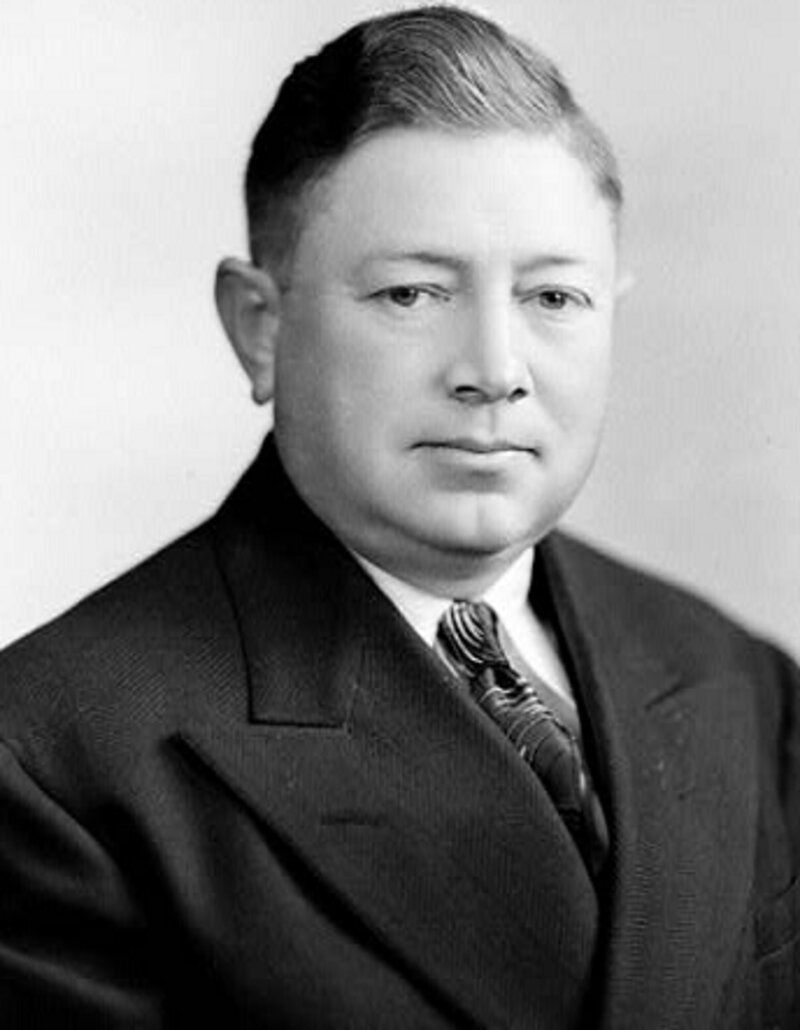
Today, Republicans hold supermajorities in both houses of the Arkansas legislature and the governor’s mansion. A century ago, being a Republican in Arkansas meant being something close to a political anachronism—a man who held his convictions in a climate actively hostile to them. My family did it anyway, generation after generation, because they believed what they believed and did not adjust their beliefs to fit the political weather.
I did not come to conservatism. I was born into it—into a family that has never lived anywhere but the South since arriving from England in the early seventeenth century, a family that kept its Republican identity through Reconstruction and through a full century of Democratic dominance in the South, when such a thing required genuine conviction rather than mere habit. My conservatism is not a conversion story. It is an inheritance—and like all worthy inheritances, it came with an obligation to understand what I had been given, to think it through carefully enough to actually deserve it.
National Review helped me fulfill that obligation.
Before Yale, Before the Military: God and Man at Yale
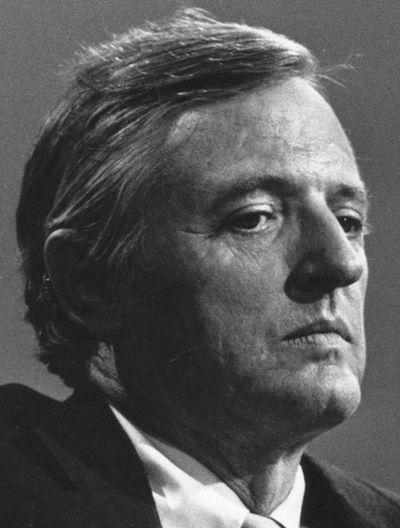
I read God and Man at Yale after law school, before my military service and long before I ever set foot on the Yale campus myself. That sequencing matters. I came to the book not as a student in search of a philosophy, but as a man who already knew what he believed—and who found in Buckley’s pages an articulation of something he had been carrying around but never quite been able to name.
The book is audacious in the best sense. A twenty-five-year-old man, barely out of college, writing a sustained intellectual indictment of his own alma mater with the confidence of someone who has done the reading and is not interested in being polite about the conclusions. Buckley criticized Yale for forcing collectivist, Keynesian, and secularist ideology on its students, arguing that the university was trying to break down students’ religious beliefs through hostility to religion and was denying them any sense of individualism.
Critics have been quick to note the book’s limitations, and some of those critiques are fair. Buckley’s economic analysis of Yale’s faculty is more polemical than precise in places, and his treatment of academic freedom—essentially arguing that it is not a real principle but a convenient rhetorical shield for progressive conformity—is more provocative than fully worked-through. But none of these limitations touch the book’s animating conviction, which remains as true now as it was in 1951: that a university has obligations to its founding principles, that ideas have consequences, and that the proper conservative response to intellectual conformity is not quiet acquiescence but pointed, reasoned argument.
I read that book and thought: this is how to be a conservative. Not as a reflex. Not as a resentment. As a considered position.
Then, years later, I was accepted to Yale Divinity School. I named my blog series there “God and Man at Yale Divinity”—as a nod to the man who had done so much to shape my thinking, and as an honest acknowledgment of what I expected to find there. As I wrote at the time, I didn’t know of any other students at Yale Divinity who would identify as conservative or evangelical, but I had to believe they were out there somewhere. As far as I could tell, they weren’t.
Yale Divinity, Then and Now
Buckley’s core complaint about Yale in 1951 was that its faculty was corrosive to faith—that religion was treated as a prescientific superstition, that even the Divinity School’s professors were often professed agnostics, and that the Christianity on offer had been hollowed out of any meaningful content.
My experience seventy years later was different in form, though not in substance. I don’t specifically recall professors at the Divinity School who were openly atheist or agnostic—though there were certainly faculty elsewhere at Yale who were. What I found at the Divinity School instead was something more insidious: Christianity had been coopted. The faith had not been rejected—it had been repurposed. Jesus had become less the incarnate Son of God and Savior of mankind than a progressive mascot—a first-century activist whose “real” teachings, properly decoded by sufficiently enlightened scholars, aligned with remarkable precision with the agenda of the contemporary Democratic Party. The Resurrection had been exchanged for a list of approved policy positions. Thomas Aquinas, Augustine, and Paul—were they alive today—would not merely be unwelcome on the faculty of Yale Divinity School. They would be regarded with the same mixture of pity and contempt that the institution reserves for anyone who takes historic Christian orthodoxy seriously as a binding intellectual commitment.
This tendency was not subtle, and it was not confined to student discussions. It flowed from institutional leadership. When the Supreme Court overturned Roe v. Wade in June 2022, Yale Divinity School Dean Gregory Sterling issued an official statement declaring there is “no biblical basis for the ban on abortion”—a claim that would have surprised virtually every Christian theologian from the first century through the mid-twentieth. The Didache, one of the earliest Christian documents outside the New Testament and dated by scholars to somewhere between 70 and 150 AD, states plainly that Christians shall not murder a child by abortion—listing it alongside murder, adultery, and fornication as a violation of the moral law. The claim that Christian tradition offers no basis for opposing abortion is not a serious exegetical position. It is the conclusion of a particular political tribe dressed in theological language, contradicted by the Church’s witness from its earliest documented decades.
More recently, when the Trump administration cut USAID funding in 2025, Dean Sterling published an op-ed for MSNBC declaring the cuts “anti-Christian at its core,” then emailed it to the entire Divinity School community with a note that he knew they shared his concern. One can hold strong views on foreign aid policy. What one cannot do, with any intellectual honesty, is present a contestable position on federal budget priorities as the self-evident teaching of Christianity—while simultaneously claiming that ancient and universal Church teaching on the sanctity of unborn life has no biblical basis whatsoever.
The problem is not that Dean Sterling holds political opinions. Everybody does. The problem is the seamless confidence with which one particular cluster of contemporary progressive policy preferences is identified as the obvious and necessary expression of Christian ethics—while traditional Christian teachings on life, sexuality, and human nature are dismissed as retrograde ideology. The word “Christian” is being emptied of any content recognizable to the Church Fathers, to the Reformers, or to the great theologians of any century before our own, and refilled with the priorities of a contemporary faculty lounge.
This is precisely what Buckley was warning about. Not atheism—something in some ways more corrosive: a religion-shaped progressive politics that uses the vocabulary of faith to sanction conclusions that have nothing to do with faith, and labels anything counter to its program as unchristian.
I want to be honest about my time at Yale Divinity School: it is a place with genuinely brilliant scholars and serious intellectual work underway. But it is also home to questions that would have struck every generation of Christians before the last two or three as not merely unanswerable but incoherent—and to answers, delivered with great confidence, that are neither serious nor humble.
I went there for precisely that reason. Not accidentally, not despite the ideological environment, but because of it. I wanted to subject my faith and my convictions to the crucible—to test them against the strongest available challenges, to see whether what I believed could survive sustained contact with the best arguments the other side could produce. This experience of being a conservative minority at Yale was clarifying—both about my own convictions and about the intellectual fragility of progressive consensus when it goes unchallenged. Ironically, I left more conservative than I arrived, having seen at close range just how intellectually vacuous and self-unaware modern academic progressivism is at its core.
What National Review Did For Me—And What It Does For Conservatism
I have been a print subscriber to National Review for years. That might seem like a quaint thing to say in the age of newsletters and podcasts and online everything. But I think the print subscription matters—it signals something about how you relate to ideas, as a sustained engagement rather than a reactive scroll.
National Review shaped my political thinking in a way I can only describe as formative. Not because it told me what to think, but because it modeled how to think—how to engage a policy question with rigor, how to hold principle and pragmatism in productive tension, how to argue from evidence rather than animus.
This is not a small thing. Before National Review’s founding in 1955, the American right was a largely unorganized collection of people who shared intertwining philosophies but had little opportunity for a united public voice. As Lionel Trilling had written in 1950, the “conservative impulse and the reactionary impulse do not, with some isolated and some ecclesiastical exceptions, express themselves in ideas but only in action or in irritable mental gestures which seek to resemble ideas.” Buckley and National Review put an end to that dismissive view.
That distinction—between ideas and “irritable mental gestures that seek to resemble ideas”—is one I return to often. It describes with surgical precision the difference between genuine conservatism and mere reaction. Reaction is emotionally available to everyone. It requires no study, no historical grounding, no philosophical framework. You feel culturally displaced, you find someone to blame, and you call it a political philosophy. That is not conservatism. That is grievance dressed in patriotic clothing.
Buckley built something different. Under his leadership, National Review articulated a conservatism that fused previously independent traditions: free-market capitalism, libertarianism, traditionalism, and anti-communism. It brought into conversation thinkers who disagreed with each other on significant points and made the disagreement generative rather than fragmenting. As longtime National Review publisher William Rusher put it, before Buckley came along, American conservatism was composed of “a congeries of ill-assorted half-enemies.” Buckley purged the conservative movement of its extremist elements and united the rest by persuading traditionalists, libertarians, and anti-communists to focus on a common enemy: liberalism.
That work—of definition, discipline, and intellectual coherence—is what made the Reagan coalition possible. And it is the work that every generation of conservatives must renew, because the forces of intellectual disintegration are always present. The temptation to trade argument for performance, principle for personality, the long game for the immediate win—these temptations do not go away. They have to be actively resisted.
National Review, at its best, has always been part of that resistance.
Rich Lowry: A Worthy Steward
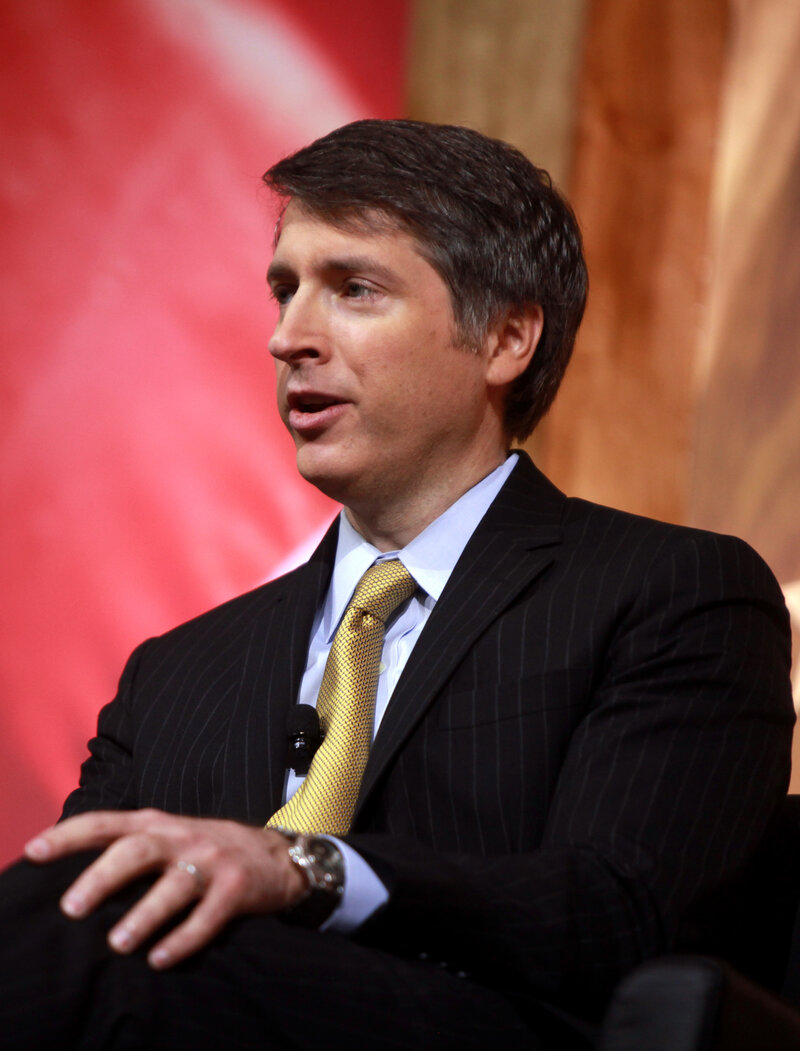
In November 1997, Rich Lowry became editor of National Review at the age of twenty-nine, taking over from John O’Sullivan, who had himself succeeded Buckley in that position roughly a decade earlier. At the time, Buckley said of Lowry, “I am very confident that I’ve got a very good person.”
That is not a particularly effusive endorsement by the standards of such things, but coming from Buckley it meant something. Buckley was not given to empty praise—as anyone who spent time with Firing Line can attest. The fact that he chose Lowry—young, not yet a household name, still developing his public profile—tells you something about the instinct Buckley had for identifying intellectual seriousness beneath the surface.
What Lowry has done with that trust over nearly three decades is genuinely impressive. Not impressive in a way that forecloses criticism—National Review has made editorial calls that have sparked honest debate within the conservative movement, and its relationship with the populist turn of the last decade has been a complicated one that reasonable conservatives have assessed differently. But honest disagreement about specific editorial judgments is exactly what a healthy intellectual movement looks like, and it does nothing to diminish the larger achievement.
Lowry himself has described his continued mission as carrying out Buckley’s work by keeping the magazine “up to his standards intellectually in terms of its integrity and courage.” That is harder to maintain than it sounds. The financial pressures on serious journalism are real. The political pressures on a conservative outlet navigating a populist era are intense. The temptation to simply become a megaphone for whoever holds power on the right at any given moment is always present and always corrosive.
Lowry has largely resisted it. He is a man of substantial intellectual gifts who has exercised genuine editorial judgment through conditions that would have flattened lesser editors. When I sat at that dinner table as a Buckley Fellow, I wasn’t simply impressed by his title. I was impressed by his quality of mind—the precision of his thinking, the depth of his reading, the easy command he brought to a room full of Yale students who were determined to demonstrate their own brilliance. He let them talk. He listened. And when he spoke, he said something worth hearing.
That is what good editors do. And it is what good conservatives should aspire to.
The Broader Argument: Why Intellectual Conservatism Matters Now
I am an attorney, a veteran of both the Army and Air Force JAG Corps, and a Republican serving in party leadership in Benton County, Arkansas. I have spent my life trying to think carefully about politics rather than simply feel strongly about it. I have sat in graduate seminars at Yale, studied the Church Fathers, and briefed commanders on military justice. I have tried, in all these contexts, to be the kind of conservative who can explain his positions rather than simply assert them.
That is harder than it sounds, and the cultural incentives run in the opposite direction. Conservatism as performance—as outrage, as trolling, as a series of rhetorical escalations designed to generate a reaction rather than persuade anyone—is everywhere. It is deeply corrosive to the movement Buckley built and to the republic he cared about.
I am not interested in a conservatism defined primarily by what it opposes. I am interested in a conservatism defined by what it believes: that ordered liberty under law is the condition of human flourishing; that the accumulated wisdom of Western civilization, including but not limited to the Christian tradition, is worth preserving and transmitting; that the individual has dignity not because the state grants it but because God endows it; that free markets produce more human good than centralized control; and that a strong America—militarily, economically, and culturally—is necessary both for our own people and for a stable world order.
These are not new ideas. They are very old ones. And they require constant intellectual renewal—writers and editors and thinkers willing to apply them rigorously to new circumstances, to distinguish the permanent from the merely conventional, and to argue for them clearly enough that ordinary people can understand why they matter.
Buckley famously declared in National Review’s founding statement that the magazine “stands athwart history, yelling Stop.” That phrase is often quoted, less often understood. He wasn’t calling for stasis. He was calling for resistance to the uncritical worship of progress—the assumption that newer is always better, that the movement of history toward more government and more dissolution of traditional institutions is inevitable and ought not be opposed.
G.K. Chesterton captured the same intuition in Orthodoxy when he wrote that tradition “means giving a vote to the most obscure of all classes, our ancestors. It is the democracy of the dead. Tradition refuses to submit to the small and arrogant oligarchy of those who merely happen to be walking about. All democrats object to men being disqualified by the accident of birth; tradition objects to their being disqualified by the accident of death.”
I think of Rual Custar Ham when I read that passage. He was a Republican in Arkansas when there was essentially no such thing—when holding that identity required real conviction rather than political convenience. He did not have the luxury of peer approval or popular fashion. He simply believed what he believed and held the position. That is Chesterton’s democracy of the dead made flesh—a vote cast across generations that still shapes the way I think about public life.
Buckley’s “Stop” was not the Stop of the fearful. It was the Stop of the principled—a man who had thought carefully about where the road led and had reasons for not wanting to go there. Rich Lowry has carried that tradition forward with the same spirit.
A Word on Faith
When Buckley titled his book God and Man at Yale, he put faith first—not as a rhetorical gesture but as a statement of priority. He understood something that is easy to lose sight of in political analysis: the war of ideas is never merely political. At its root, it is theological.
The question of whether human beings have inherent dignity, whether there is a moral order that transcends the state, whether the traditions we have inherited are worth defending—these are not, finally, political questions. They are questions about the nature of reality and the character of God. Conservatism, at its best, rests on a theological foundation even when it does not name it. The conviction that some things are permanent, that truth is not simply what the powerful assert, that the individual stands before God and not merely before the government—these convictions come from somewhere.
This does not mean that Christianity demands we be Republicans. That is too small and too tidy a view. Christianity is not the property of any political party, and God is not a partisan. Men and women of genuine Christian faith have arrived at different political conclusions, and some of those disagreements are honest ones. But it does mean that for those of us who hold these convictions, faith cannot be a weekend hobby kept at a safe distance from our public lives. It must inform our politics—not by baptizing a party platform, but by insisting, as I have tried to articulate in my statement of faith, that there is a moral order which precedes and exceeds every political arrangement, that human dignity is not a grant from the state to be revised by the next administration, and that the powerful do not get to invent their own truth. These are not small stakes, and they are not merely political ones.
For me, these convictions were formed at Ouachita Baptist University, deepened through years of reading and study, tested by military service that clarified what I was defending and why, and sharpened—ironically—by two semesters at Yale Divinity School as one of its few, perhaps only, conservative students, reading the Church Fathers in the morning and National Review in the evenings.
The dinner with Rich Lowry fits into that larger story. It was one of the most memorable and meaningful moments of my time at Yale—a reminder that the intellectual tradition I had been shaped by was still alive, still serious, and still worth the effort of defending.
I hope it continues to be.
What Comes Next: A Call to Serious Conservatism
If there is one conviction I want you to take from this piece, it is this: conservatism matters. Not as a tribal loyalty or a vehicle for personal outrage, but as a disciplined way of thinking about how to order a free society and transmit human wisdom across generations. The conservative intellectual tradition—the fusion of free markets, individual dignity, traditionalism, and anti-totalitarianism—is not self-sustaining. It requires thinkers, editors, and citizens willing to do the difficult work of understanding it, defending it, and applying it to new circumstances.
Rich Lowry and National Review represent that commitment in action. Whether or not you agree with every editorial decision they make, their existence—the existence of a serious, rigorous conservative publication willing to take intellectual risks and maintain standards even when it costs them—matters far more to the health of our republic than most of us recognize.
If you’ve found this post meaningful, I encourage you to subscribe to National Review, particularly the print edition. A print subscription is a commitment to the idea that sustained, careful thinking about politics and culture is worth your time and money. And if you haven’t yet read God and Man at Yale, pick it up. It is not a historical curiosity. It is a primer on how ideas move through institutions and what we owe one another when we undertake the work of forming the next generation.
Related posts:
Garrett Ham
Garrett Ham is an attorney, military veteran, and holds a Master of Divinity from Yale Divinity School. He writes from Northwest Arkansas on theology, law, and service.
More about Garrett →Related Posts

God and Man at Yale: Why Buckley Still Matters Today
A personal reflection on William F. Buckley Jr.'s God and Man at Yale—what it got right and why its core argument is more relevant now than in 1951.

Conservative at a Liberal Seminary: A Yale MDiv Graduate's Guide
What is it like to be a conservative at a liberal seminary? A Yale MDiv graduate shares lessons from three years as one of the few conservatives at Yale Divinity School.
What Conservatism Owes to Christianity
The theological foundations of conservative thought - from natural law to human dignity - and why conservatism without Christianity is a house built on sand.
Stay Informed
Get new writing on faith, law, and service delivered to your inbox.
No spam. Unsubscribe anytime.