Pelagianism and Semi-Pelagianism: Why the Church Condemned Both
On This Page
“Quid autem habes quod non accepisti? Si autem accepisti, quid gloriaris quasi non acceperis?”
“What do you have that you did not receive? And if you received it, why do you boast as if it were not a gift?” — 1 Corinthians 4:7
The history of Christian doctrine is not merely a history of ideas. It is a history of the Church learning, under pressure and often at great cost, to say precisely what it means about the most consequential questions a human being can ask. Among the most consequential is this: when a person turns toward God, who moves first?
The answer to that question determines everything downstream—how we understand sin, grace, free will, merit, justification, and the very nature of the salvation that Christ accomplished. It is no surprise, then, that the Church spent the better part of two centuries fighting over it. The Pelagian controversy and its sequel, the semi-Pelagian controversy, were not academic disputes confined to monastic libraries. They were battles over whether salvation is fundamentally a divine gift or a human achievement—and the Church’s answer, hammered out in councils and sealed by papal authority, became one of the most important theological boundaries in Christian history.
Pelagius and the Denial of Original Sin
Pelagius (c. 354–420) was a British-born ascetic who came to Rome in the late fourth century and quickly gained a reputation as a rigorous moral teacher. He was by all accounts a man of considerable personal discipline and theological learning. His concern was not speculative but pastoral: he was alarmed by what he perceived as moral laxity among Roman Christians, and he believed that the prevailing theological emphasis on human weakness and dependence on grace was being used as an excuse for sin.1
According to Augustine, the catalyst for Pelagius’s theological program was a passage from Augustine’s own Confessions: “Give what you command, and command what you will” (da quod iubes et iube quod vis).2 Pelagius found this prayer deeply objectionable. If God must give us the very capacity to obey his commands, then obedience is not genuinely ours, and moral exhortation becomes pointless. For Pelagius, the entire structure of divine commandment presupposes the human ability to comply.
From this pastoral instinct Pelagius developed a systematic theological position that the Church would ultimately judge heretical. His core tenets can be summarized as follows.
First, Adam’s sin was his own and affected only himself. It was not transmitted to his descendants by any mechanism—neither biologically through propagation nor spiritually through inherited corruption. Every human being is born in the same condition as Adam before the Fall: innocent, uncorrupted, and fully capable of choosing good or evil.3
Second, what is conventionally called “original sin” is merely the force of bad example. Human beings sin because they imitate the sinful patterns of the society into which they are born, not because they inherit a corrupted nature. The universality of sin is explained sociologically, not ontologically.4
Third, divine grace is helpful but not strictly necessary for salvation. Pelagius defined grace in a distinctive way: it consists primarily in the gift of free will itself, in the illumination provided by the Mosaic Law and Christ’s teaching, and in the forgiveness of sins already committed. Grace facilitates obedience by showing us what is right and forgiving us when we fail, but it does not transform the will or enable what the will could not otherwise accomplish on its own.5
Fourth, the human will — even after a lifetime of habitual sin — retains the full metaphysical capacity to choose the good. Free will is not weakened or impaired by sin. It remains — as Pelagius argued in his Letter to Demetrias — a permanent endowment of human nature that cannot be diminished. As Rees renders the key passage: “we do neither good nor evil without the exercise of our will and always have the freedom to do one of the two, being always able to do either.”6
The appeal of Pelagianism is not difficult to understand. It takes moral responsibility with absolute seriousness. It refuses to let believers hide behind theological abstractions to excuse their failures. And it preserves a version of human dignity that many have found attractive: we are not broken creatures dependent on a power outside ourselves but rational agents fully capable of choosing our own destiny.
The problem — as Augustine would spend the last three decades of his life demonstrating — is that this picture is flatly incompatible with the witness of Scripture, the experience of the saints, and the internal logic of the gospel itself.
Augustine’s Response: The Absolute Necessity of Grace
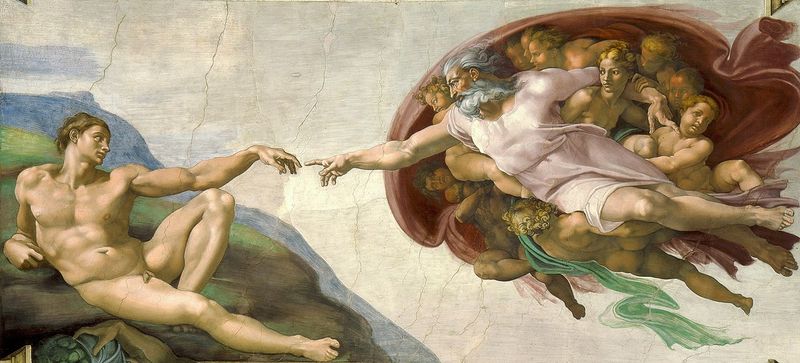
Augustine of Hippo (354–430) was the towering figure of the anti-Pelagian controversy. His writings against Pelagius and his followers constitute one of the most sustained theological arguments in the history of Christianity. The major anti-Pelagian works — De natura et gratia (On Nature and Grace, 415), De gratia et libero arbitrio (On Grace and Free Will, 426–427), and De correptione et gratia (On Rebuke and Grace, 426–427) — together form a comprehensive theology of grace that the Catholic Church has substantially received as its own, though not uncritically.7
Augustine’s argument proceeded on multiple fronts.
Against Pelagius’s denial of original sin, Augustine insisted on the plain testimony of Romans 5:12: “Sin came into the world through one man, and death through sin, and so death spread to all men because all sinned.” The universality of death—including the death of infants who have committed no personal sin—demonstrates that something more than bad example is at work. Human nature itself has been corrupted by Adam’s transgression, and this corruption is transmitted to every descendant by propagation, not merely by imitation.8
Against the Pelagian reduction of grace to instruction and example, Augustine argued that grace is an interior divine action that transforms the will itself. God does not merely show us what is right and leave us to comply; he works within us to make us willing and able to do what he commands. Grace is not information but power—the power of the Holy Spirit operating on the human heart to produce faith, love, and obedience that fallen nature cannot generate from its own resources.9 This understanding of grace as divinely operative—as God working to harden or to soften hearts according to his purpose—shapes how the Catholic tradition approaches passages like 1 Samuel 2:25, where God’s action hardens sinners and brings about their downfall.
The phrase that crystallizes Augustine’s position—and that so offended Pelagius—remains definitive: da quod iubes et iube quod vis. “Give what you command, and command what you will.” The prayer is not an abdication of responsibility but an acknowledgment of reality. The God who commands obedience is the same God who must supply the grace to obey, because the fall has left the human will incapable of sustained movement toward the good without divine assistance.10
Augustine also articulated a crucial distinction that would become central to Catholic theology: the difference between operative grace, by which God initiates conversion by acting on the will, and cooperative grace, by which God sustains and assists the will in its ongoing response. As Augustine put it in De gratia et libero arbitrio: “He operates, therefore, without us, in order that we may will; but when we will, and so will that we may act, He co-operates with us.”11 This distinction preserves both the priority of grace and the genuine activity of the human will—grace moves first, but the will truly responds.
The Condemnation of Pelagianism
The ecclesiastical response to Pelagianism was swift and decisive, though it involved several stages.
The Council of Carthage (418), attended by approximately two hundred bishops of North Africa, issued a series of canons that struck directly at the heart of Pelagian teaching. The council affirmed that Adam’s sin brought death not only to himself but to the whole human race; that infants must be baptized for the remission of sins, implying that they are born under the stain of original sin; and that grace does not merely forgive past sins but actively assists believers in avoiding future ones.12
Pope Zosimus, after initial hesitation, confirmed the African condemnation in 418 with his Epistola tractoria, which anathematized Pelagius and his associate Celestius and required the signature of all bishops.13
The Council of Ephesus (431), though principally concerned with the Nestorian controversy, also confirmed the condemnation of Pelagianism, including Pelagius and Celestius among the heretics whom the council anathematized.14
The theological substance of the condemnation is clear: the Church declared that human beings are born in a state of spiritual bondage from which they cannot free themselves by their own efforts; that grace is not merely helpful but absolutely necessary for salvation; and that this grace is an interior divine action, not merely an external instruction or example. The Pelagian picture of human autonomy before God was judged incompatible with the gospel.
As I discussed in my post on Catholic vs. Calvinist predestination, Augustine’s anti-Pelagian theology became the foundation on which both the Catholic and Reformed traditions would build—though they would draw significantly different conclusions from it.
The Subtler Error: Semi-Pelagianism
If Pelagianism was a frontal assault on the doctrine of grace, semi-Pelagianism was a flanking maneuver. It conceded nearly everything that Augustine had argued against Pelagius — and yet in the judgment of the Church it conceded not quite enough.
The term “semi-Pelagianism” is a modern scholarly label coined in the late sixteenth century, and the theologians to whom it is applied would have rejected it vigorously.15 They did not see themselves as Pelagians of any kind. They accepted original sin, the universal corruption of human nature, and the necessity of grace for salvation. On every point that the councils had condemned, they stood with Augustine against Pelagius.
Where they parted company with Augustine was on a single, precisely defined question: who moves first? When a person comes to faith, does the initial impulse toward God—the very first stirring of the desire to believe—originate in divine grace acting on the will, or does it originate in the will itself, with grace then responding to and perfecting the human initiative?
John Cassian and Conference 13
The most prominent figure associated with semi-Pelagianism is John Cassian (c. 360–435), a monk of extensive experience who had spent years among the desert fathers of Egypt before founding two monasteries in Marseilles. Cassian was a man of genuine holiness and deep practical wisdom—his Institutes and Conferences remain classics of monastic literature, and he is venerated as a saint in the Eastern Orthodox tradition.16
Cassian’s problematic teaching appears most clearly in Conference 13, “On the Protection of God,” a dialogue attributed to the desert father Chaeremon. In it, Cassian argues that while grace is necessary for salvation and normally precedes the human response, there are cases in which the first movement toward God originates in the human will, and God then responds with grace to complete what the will has begun. Cassian cites biblical examples: Zacchaeus, who climbed the sycamore tree to see Jesus before Jesus called him; the Good Thief on the cross, who turned to Christ of his own initiative.17
Cassian’s position was not that grace is unnecessary, nor that human nature is uncorrupted, nor that salvation can be achieved by human effort alone. It was rather that the relationship between grace and free will is variable: sometimes God moves first, and sometimes the human will moves first. Grace is always necessary, but it is not always precedent. The initium fidei—the beginning of faith—can, in at least some cases, originate in a natural movement of the human will toward God, after which grace takes over to bring the process to completion.18
Faustus of Riez and the Mature Position
The semi-Pelagian position received its most systematic formulation from Faustus of Riez (c. 400–490), a former abbot of the monastery of Lérins who became bishop of Riez in southeastern Gaul. In his treatise De gratia (On Grace), Faustus attempted to chart a middle course between what he saw as the twin extremes of Pelagianism and Augustinian predestinarianism. He affirmed the necessity of grace but insisted that the human will retains — even after the fall — a residual capacity—what he called the credulitatis affectus, the “disposition toward belief”—that enables it to take the first step toward God without the direct operation of grace.19
Like Cassian’s, Faustus’s concern was partly pastoral and partly philosophical. The monks of southern Gaul feared that Augustine’s doctrine of prevenient grace — taken to its logical conclusion — would destroy moral exhortation. If the first movement of faith is entirely God’s work, then the monk who has not yet received that grace can do nothing to seek it—and the abbot who exhorts him to repent is engaged in a futile exercise. Predestination would breed quietism — or so they feared.20
Prosper of Aquitaine: Defender of Augustine
The most important defender of Augustine’s position against the semi-Pelagians was Prosper of Aquitaine (c. 390–c. 455/463), a layman and theologian who corresponded directly with Augustine about the monks’ objections and spent much of his career defending Augustinian teaching on grace. Prosper’s Pro Augustino responsiones (Responses on Behalf of Augustine) and his Liber sententiarum Sancti Augustini (Book of Sentences from St. Augustine) compiled Augustine’s key teachings on grace in a form that would directly influence the canons of the Second Council of Orange a century later.21
Prosper’s argument against the semi-Pelagians was essentially Augustine’s sharpened for a new audience: if the beginning of faith originates in the human will rather than in grace, then the decisive difference between the person who believes and the person who does not is not God’s gift but the believer’s own initiative. Grace becomes a reward for good willing rather than its cause. And if grace is a reward, it is no longer grace—for, as Paul insists, “if it is by grace, it is no longer on the basis of works; otherwise grace would no longer be grace” (Rom 11:6).22
The Council of Orange (529): The Definitive Settlement
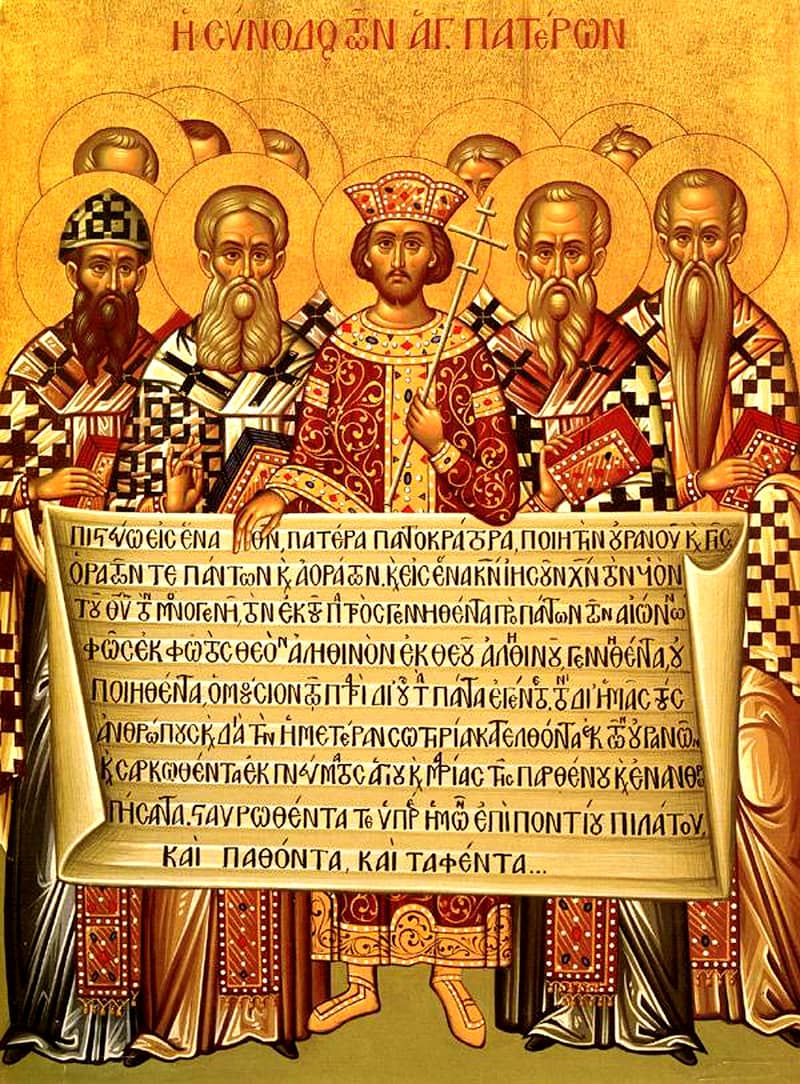
The controversy simmered for nearly a century after Cassian’s death before it received its definitive resolution. The Second Council of Orange — convened on July 3, 529 under the presidency of Caesarius of Arles — was a relatively small gathering—fourteen bishops attended—but its theological significance is enormous. Confirmed by Pope Boniface II in 531, the council’s twenty-five canons represent one of the most precise and consequential statements on grace and free will in the entire conciliar tradition.23
As I discussed in my examination of God’s universal salvific will, the Council of Orange is often underappreciated in popular theology, but its canons are indispensable for understanding the Catholic position on grace. The Council’s affirmation of prevenient grace also directly shapes how the Catholic tradition reads Scripture passages like Romans 9–11, where Paul addresses predestination and election; see the Catholic interpretation of Romans 9–11 for a fuller treatment of these themes.
The council’s teaching can be summarized under several headings.
The beginning of faith is a gift of grace. Canon 5 declares that “the beginning of faith” and “the very desire of faith”—by which we come to believe in the God who justifies the ungodly—are themselves the result of grace, not the product of any natural capacity of the human will. This is the direct and explicit rejection of the semi-Pelagian initium fidei.24
Grace precedes every good work. Canon 3 teaches that “if anyone says that the grace of God can be conferred as a result of human prayer, but that it is not grace itself which makes us pray to God, he contradicts the prophet Isaiah” (cf. Rom 10:20, quoting Isa 65:1). The council insists that even the prayer by which we ask for grace is itself enabled by grace. There is no point in the process of salvation at which the human will operates apart from or prior to divine assistance.25
Human nature is genuinely corrupted. Canon 8 affirms that “if anyone maintains that some are able to come to the grace of baptism by mercy but others through free will, which has admittedly been corrupted in all those who have been born after the transgression of the first man, it is proved that he has no place in the true faith.”26
Prevenient grace is absolutely necessary. Canon 14, drawn directly from Prosper of Aquitaine’s compilation of Augustine’s sentences, teaches: “No one who is wretched is freed from his sorrowful state except by being anticipated by the mercy of God” (cf. Ps 79:8).27
Yet the Council of Orange is equally remarkable for what it refused to affirm. Its concluding statement explicitly condemns predestination to evil: “We not only do not believe that any are foreordained to evil by the power of God, but even state with utter abhorrence that if there are those who want to believe so evil a thing, they are anathema.”28 The council fathers received Augustine’s teaching on the priority and necessity of grace while rejecting any extension of that teaching toward double predestination—a distinction that would remain central to Catholic soteriology.
The Theological Distinction: A Summary
The difference between Pelagianism, semi-Pelagianism, and Catholic orthodoxy can be stated with precision. And the precision matters.
Pelagianism holds that human nature is uncorrupted by the fall, that grace is helpful but not necessary for salvation, and that the human will, by its own natural power, can achieve moral perfection and merit eternal life.
Semi-Pelagianism holds that human nature is corrupted by the fall and that grace is necessary for salvation, but that the first movement toward God—the initium fidei—can originate in the human will without the prior operation of grace. Grace completes what the will begins.
Catholic orthodoxy, as defined at Orange, holds that human nature is genuinely corrupted by original sin, that grace is absolutely necessary for every aspect of salvation, and that grace is prevenient—it precedes and enables every movement of the will toward God, including the very first desire to believe. The human will genuinely responds, genuinely cooperates, and genuinely merits (in the secondary and dependent sense affirmed by the Council of Trent)—but it can do none of these things unless God first acts upon it by grace.29
In my earlier reflection on my own theological development, I once described the Pelagian-Augustinian debate as “a peripheral issue,” framing the question of inherited sin in terms of corporate bondage rather than individual nature. The years since—and particularly the study of what the councils actually taught—have convinced me that the question is not peripheral at all. It goes to the heart of what it means to be saved: not merely delivered from external bondage but healed from within by a grace we did not earn and could not have sought without God seeking us first.
Why Both Condemnations Matter
It would be easy to treat Pelagianism as the obviously dangerous heresy and semi-Pelagianism as a venial misunderstanding, a well-intentioned overreaction to Augustinian severity. The Church did not see it that way. Both errors were condemned because both compromised the same essential truth: the absolute gratuity of grace.
Pelagianism denied the need for grace altogether — or more precisely redefined grace so completely that it ceased to be grace in any meaningful theological sense. If grace is merely the gift of free will and the light of moral instruction, then salvation is in the final analysis a human accomplishment. God sets the stage; we perform.
Semi-Pelagianism was subtler but no less corrosive in the Church’s judgment. By locating the initium fidei in the human will, it made the decisive factor in salvation not God’s gracious initiative but the creature’s natural capacity. If two people hear the gospel and one believes while the other does not, the semi-Pelagian must say that the difference lies in the believer’s own initiative—his natural inclination toward faith, his willingness to take the first step. Grace perfects and completes, but the human will provides the raw material. And this — as Prosper saw clearly — destroys the gratuity of grace just as effectively as Pelagius’s more obvious denial. If grace is a response to human initiative rather than its cause, then salvation is ultimately a cooperative venture in which God and the creature each contribute something essential—and the creature’s contribution, however small, becomes the ground of boasting that Paul so emphatically excludes.30
The Apostle Paul’s rhetorical question remains the permanent refutation of every form of Pelagian and semi-Pelagian error: “What do you have that you did not receive? And if you received it, why do you boast as if it were not a gift?” (1 Cor 4:7). Augustine cited this verse relentlessly in his anti-Pelagian writings, and the Council of Orange placed it at the center of its theology of grace.31 The answer the Church gives is total: nothing. There is nothing in the process of salvation—not the first desire for faith, not the act of belief, not perseverance in good works—that does not originate in and depend upon the prior action of God’s grace.
”Catholics Believe in Works-Based Salvation”: The Myth and the Record
I want to address something directly, because the material above has a bearing on one of the most persistent misunderstandings in modern Christian discourse. As someone who grew up evangelical and came to the Catholic Church as an adult, I have heard the charge more times than I can count: Catholics believe in works-based salvation. They think they can earn their way to heaven. They have never understood sola gratia or sola fide.
The anti-Pelagian and anti-semi-Pelagian record of the Catholic Church is one of the most powerful rebuttals of this claim — and it predates the Reformation by a thousand years. A caveat is necessary, however: the anti-Pelagian councils address the crude version of the charge, the version that says Catholics think human effort alone achieves salvation. The more sophisticated Reformation critique concerned different questions — the nature of justification (forensic declaration versus ontological transformation), the instrument of justification (faith alone versus faith formed by charity), the role of the post-justification merit system, the sacramental mediation of grace, and the possibility of assurance — none of which the anti-Pelagian councils directly address. What follows, then, should be understood as a rebuttal of the popular misunderstanding, not as a comprehensive response to the Reformers’ actual theological objections.
What the Church Actually Condemned
Consider what the Church did in the fifth and sixth centuries. Under anathema it condemned the teaching that human beings can achieve salvation by their own moral effort without the interior transformation of divine grace. It condemned the teaching that the human will — unaided by grace — can take even the first step toward God. It condemned the teaching that the beginning of faith originates in human initiative rather than in the prior action of the Holy Spirit. It affirmed in the most explicit conciliar language available that “no one who is wretched is freed from his sorrowful state except by being anticipated by the mercy of God”—that grace must precede every human movement toward salvation, including the desire to believe.
These are not the actions of a Church that teaches works-based salvation. They are the actions of a Church that has gone to extraordinary lengths—repeatedly, over centuries, at the cost of bitter theological controversy—to safeguard the absolute gratuity of grace against every possible compromise.
The Real Disagreement: What Happens After Grace
The genuine disagreement between Catholic and Protestant soteriology is not over whether salvation is by grace. It is over what grace does once it arrives.
The Protestant Reformers, following one reading of Augustine, insisted on a sharp distinction between justification and sanctification. Justification is a forensic declaration: God declares the sinner righteous on account of Christ’s merits, imputed to the believer through faith alone. The sinner’s internal state is not changed by justification itself; sanctification—the actual transformation of the person—is a separate, subsequent process. On this account, works play no role in justification whatsoever. They are the fruit of salvation, not its cause or condition.33
The Catholic Church, at the Council of Trent (1545–1563), articulated a different understanding. Justification is not merely a forensic declaration but an actual transformation of the person by grace. When God justifies the sinner, he does not merely declare the sinner righteous while leaving him internally unchanged; he makes the sinner righteous by infusing sanctifying grace into the soul. Justification and sanctification are not two separate events but two aspects of a single reality: the sinner is simultaneously declared righteous and made righteous by the grace that God freely gives.34
This is why the Catholic Church can speak of “merit” without contradicting its teaching on grace. The merit of good works in Catholic theology is not a human achievement that earns salvation independently of grace. It is the fruit of grace operating within the believer. The Council of Trent is explicit: “If anyone says that the good works of the one justified are in such manner the gifts of God that they are not also the good merits of him justified; or that the one justified by the good works that he performs by the grace of God and the merit of Jesus Christ … does not truly merit … an increase of grace, and eternal life … let him be anathema.”35 But Trent is equally explicit about the source of that merit: “Since Christ Jesus Himself, as the head into the members and the vine into the branches, continually infuses strength into those justified … which strength always precedes, accompanies, and follows their good works, and without which they could not in any manner be pleasing and meritorious before God.”36
The Catholic position is not that works earn salvation apart from grace. It is that grace transforms the person so thoroughly that the person’s own acts—made possible by grace, sustained by grace, and directed by grace—genuinely participate in the salvific process. The works are real, but they are never autonomous. From first to last they are the works of grace operating through the human will that grace itself has made capable of cooperating.
Ephesians 2:8–10: The Text Both Sides Claim
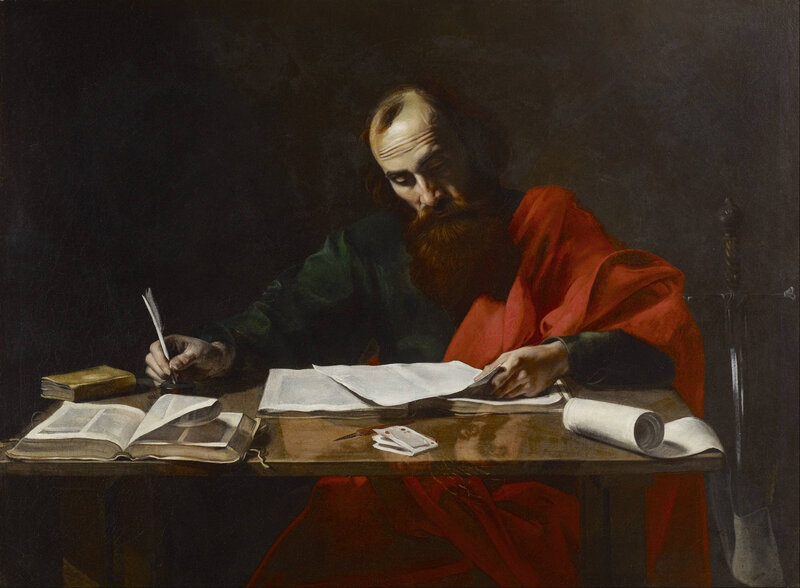
It is no accident that both Catholics and Protestants appeal to the same Pauline text. Protestants rightly emphasize Ephesians 2:8–9: “For by grace you have been saved through faith, and this is not your own doing; it is the gift of God — not the result of works, so that no one may boast” (NRSV). Catholics affirm every word of this passage and have enshrined its logic in their anti-Pelagian and anti-semi-Pelagian conciliar teaching.
But Catholics also insist on reading verse 10, which completes Paul’s thought: “For we are his workmanship, created in Christ Jesus for good works, which God prepared beforehand, that we should walk in them.” The good works are not the cause of salvation; they are its purpose. They are “prepared beforehand” by God—that is, they are themselves gifts of grace. The Catholic synthesis holds verses 8–9 and verse 10 together as a single theological statement: salvation is entirely by grace through faith, and this grace produces in the believer the good works that God has ordained as the fruit and expression of the new life.37
The irony of the “works-based salvation” charge is that the Catholic Church condemned it before the Reformers were born. The Church condemned it at Carthage in 418. It condemned it again at Orange in 529. It condemned it a third time at Trent—in the very same decree that Protestants often cite as evidence of Catholic works-righteousness. Trent’s Decree on Justification opens by affirming that “none of those things which precede justification—whether faith or works—merit the grace itself of justification” and that “the beginning of justification in adults must be understood to proceed from the prevenient grace of God through Jesus Christ.”38 The language could have been lifted directly from the canons of Orange.
The 1999 Joint Declaration
The extent to which the two traditions share common ground on justification was formally acknowledged in 1999, when the Catholic Church and the Lutheran World Federation signed the Joint Declaration on the Doctrine of Justification (JDDJ). The document employed the method of “differentiated consensus” — allowing different theological traditions to view their differences as matters of emphasis rather than substance — and affirmed a “consensus in basic truths of the doctrine of justification.”39 The World Methodist Council endorsed the Declaration in 2006, the Anglican Consultative Council affirmed it at the Lusaka Assembly in 2016, and the World Communion of Reformed Churches followed in 2017.
The JDDJ is a significant ecumenical achievement, but it should not be overstated. The Declaration itself explicitly acknowledges that it “does not cover all that either church teaches about justification.” The imputed-versus-infused distinction, the role of works in ongoing justification, the sacramental system, and the possibility of assurance remain points of genuine and unresolved disagreement. What the JDDJ does establish is what the historical record has always suggested: Catholics and Protestants share a common commitment to the priority and necessity of grace, a common rejection of Pelagianism and semi-Pelagianism, and a common dependence on Augustine’s theological legacy — even as they continue to disagree about what that legacy requires.
The charge that Catholics believe in works-based salvation is not merely inaccurate. It is refuted by the very conciliar tradition that this post has examined. A Church that condemned Pelagius for making salvation a human achievement, and condemned the semi-Pelagians for allowing even the first desire for faith to originate apart from grace, is not a Church that teaches people to earn their way to heaven. It is a Church that has fought with extraordinary tenacity to protect the truth that salvation is — from first to last — a gift.
A Contemporary Relevance
These fifth- and sixth-century controversies are not museum pieces. Pope Francis, in Gaudete et Exsultate (2018), devoted an extended section to warning against what he called “new forms of Pelagianism” and “new forms of Gnosticism” within the contemporary Church. The neo-Pelagian temptation manifests itself whenever Christians place their “trust in their own powers” and feel “superior to others because they observe certain rules or remain intransigently faithful to a particular Catholic style from the past.”32
The warning is worth heeding. The instinct that animated Pelagius—the belief that moral rigor requires metaphysical self-sufficiency, that we cannot be truly responsible unless we are truly autonomous—remains as seductive as ever. So does the semi-Pelagian instinct that would preserve just enough human initiative to give the creature a foothold of self-congratulation. The Church’s response from Carthage to Orange to Trent to the present day has been unwavering: grace alone initiates, grace alone sustains, and the glory belongs to God alone. The human will cooperates — but only because grace has first made cooperation possible.
As I have explored elsewhere in examining the relationship between effort and faith in Catholic teaching, the Catholic position is not quietism. It does not counsel passivity or suggest that human effort is meaningless. On the contrary, it insists that genuine human effort is possible precisely because of grace—and that the effort, when it comes, is itself a gift for which we must give thanks rather than take credit.
Frequently Asked Questions
What is Pelagianism?
Pelagianism is the heresy, associated with the British ascetic Pelagius (c. 354–420), that human beings are born without the corruption of original sin and can achieve salvation through the unaided exercise of free will, without the interior assistance of divine grace. Pelagius taught that Adam’s sin affected only Adam himself, that grace consists merely in free will, the Law, and Christ’s teaching, and that the human will retains full capacity to choose good or evil regardless of sin. Pelagianism was condemned at the Council of Carthage in 418 and the Council of Ephesus in 431.
What is semi-Pelagianism?
Semi-Pelagianism is a theological position, associated primarily with John Cassian and the monks of southern Gaul, that accepted original sin and the necessity of grace for salvation but taught that the beginning of faith (the initium fidei) can originate in the human will without the prior operation of divine grace. In this view, the human will takes the first step toward God, and grace then completes the process. Semi-Pelagianism was condemned at the Second Council of Orange in 529.
What is the difference between Pelagianism and semi-Pelagianism?
The key difference is that Pelagianism denied both original sin and the necessity of grace, while semi-Pelagianism accepted both but denied that grace must precede the human will’s first movement toward God. Pelagianism said human beings do not need grace; semi-Pelagianism said they need grace but can initiate the process of salvation on their own. Both were condemned because both, in different ways, compromised the absolute gratuity of divine grace.
What is the Catholic teaching on grace and free will?
The Catholic Church teaches that grace is absolutely necessary for every aspect of salvation and that it is prevenient—it precedes and enables every movement of the human will toward God, including the first desire to believe. At the same time, the Church affirms that the human will genuinely cooperates with grace and is not merely passive. This position was defined at the Second Council of Orange (529), reaffirmed at the Council of Trent (1545–1563), and remains the Church’s authoritative teaching.
What was the Council of Orange?
The Second Council of Orange, held on July 3, 529, under the presidency of Caesarius of Arles, was a regional council whose twenty-five canons on grace and free will were confirmed by Pope Boniface II in 531, giving them universal authority. The council condemned semi-Pelagianism by affirming that the beginning of faith, the desire to believe, and every good work are all gifts of grace. It also explicitly condemned predestination to evil, preserving the Catholic synthesis of divine sovereignty and human freedom.
Do Catholics believe in works-based salvation?
No. The Catholic Church has repeatedly and explicitly condemned the teaching that human beings can achieve salvation through their own efforts apart from divine grace. The condemnation of Pelagianism at Carthage (418) and Ephesus (431), the condemnation of semi-Pelagianism at Orange (529), and the Decree on Justification at the Council of Trent (1545–1563) all affirm that grace is absolutely necessary and absolutely prior to every human act that contributes to salvation. The Catholic concept of “merit” refers to good works that are themselves the fruit of grace operating within the believer—not autonomous human achievements that earn salvation independently. In 1999, the Catholic Church and the Lutheran World Federation signed the Joint Declaration on the Doctrine of Justification, affirming a consensus on the basic truths of grace and justification.
Was John Cassian a heretic?
John Cassian is not formally classified as a heretic in the Catholic tradition, and the term “semi-Pelagian” was not applied to his teaching until the late sixteenth century. Cassian is recognized as a significant figure in the development of Western monasticism, and some scholars argue that his teaching has been oversimplified by the semi-Pelagian label. However, the theological position expressed in Conference 13 of his Conferences—that the initium fidei can originate apart from grace—was effectively condemned by the canons of the Second Council of Orange.
For Further Study
- Augustine of Hippo, On Nature and Grace (415)
- Augustine of Hippo, On Grace and Free Will (426–427)
- Augustine of Hippo, On Rebuke and Grace (426–427)
- Canons of the Council of Carthage (418)
- Canons of the Second Council of Orange (529)
- John Cassian, Conference 13: On the Protection of God
- B. R. Rees, Pelagius: A Reluctant Heretic (Woodbridge: Boydell, 1988)
- Peter Brown, Augustine of Hippo: A Biography, new ed. (Berkeley: University of California Press, 2000)
- J. N. D. Kelly, Early Christian Doctrines, 5th rev. ed. (New York: Harper & Row, 1978), chs. 13–14
- Jaroslav Pelikan, The Christian Tradition, vol. 1: The Emergence of the Catholic Tradition (100–600) (Chicago: University of Chicago Press, 1971)
- Council of Trent, Session 6: Decree on Justification (1547)
- Lutheran World Federation and the Catholic Church, Joint Declaration on the Doctrine of Justification (1999)
Footnotes
1. The best modern biographical study is B. R. Rees, Pelagius: A Reluctant Heretic (Woodbridge: Boydell, 1988). For Pelagius's pastoral concerns, see also Peter Brown, Augustine of Hippo: A Biography, new ed. (Berkeley: University of California Press, 2000), 340–353.
2. Augustine, Confessiones 10.29.40 (CCSL 27:176). Augustine reports Pelagius's reaction to this passage in De dono perseverantiae 20.53 (PL 45:1026).
3. Pelagius's clearest statement on this point appears in his Letter to Demetrias (413), §§2–4. English translation in B. R. Rees, The Letters of Pelagius and His Followers (Woodbridge: Boydell, 1991), 36–38. See also J. N. D. Kelly, Early Christian Doctrines, 5th rev. ed. (New York: Harper & Row, 1978), 357–358.
4. This is the position attributed to Pelagius by Augustine in De natura et gratia 3.3 and passim. See Kelly, 358–359.
5. Pelagius distinguished three forms of grace: the posse (the capacity for good, given in nature), the velle (the willing of good, which belongs to the person), and the esse (the doing of good, also belonging to the person). Only the first is strictly a gift of God. See Pelagius, Libellus fidei (preserved in Augustine, De gratia Christi 1.4.5); Kelly, 358–359; Rees, Pelagius: A Reluctant Heretic, 50–59.
6. Pelagius, Letter to Demetrias §8.1. The rendering is a paraphrase based on Rees, Letters of Pelagius, 53–54. The corresponding passage in §3 discusses the dignity of free choice in related but distinct language. See also §8.1 for the fullest statement of the principle that the will is equally capable of good and evil at all times.
7. The qualification "not uncritically" is important. The Catholic Church has received Augustine's theology of grace as substantially correct while declining to follow him in several of his more extreme formulations. The Church rejected not only his views on the predestination of the reprobate and the damnation of unbaptized infants but also moderated his teaching on the irresistibility of grace and the total bondage of the post-lapsarian will, affirming instead a synergistic cooperation in which the will — enabled by grace — genuinely participates. The Catholic reception of Augustine is thus a selective appropriation, not an unqualified endorsement, and it is precisely this selectivity that the Reformers objected to: Luther and Calvin saw themselves as recovering the full Augustinian vision that Rome had softened. The Second Council of Orange (529) represents the Church's definitive reception of Augustinian grace theology, affirming its core claims while explicitly rejecting predestination to evil. See Jaroslav Pelikan, The Christian Tradition, vol. 1: The Emergence of the Catholic Tradition (100–600) (Chicago: University of Chicago Press, 1971), 318–331.
8. Augustine, De natura et gratia 3.3–4.4 (PL 44:249–250). See also De peccatorum meritis et remissione 1.9–15 (PL 44:114–120).
9. Augustine, De gratia et libero arbitrio 16.32–17.33 (PL 44:900–901). See also De spiritu et littera 3.5 (PL 44:203), where Augustine distinguishes the "letter" of the Law (which commands but cannot give the power to obey) from the "Spirit" (which writes the law on the heart and produces interior transformation).
10. Augustine, Confessiones 10.29.40. The centrality of this prayer to Augustine's entire theology of grace is discussed in Brown, Augustine of Hippo, 340–341, 351.
11. Augustine, De gratia et libero arbitrio 17.33 (PL 44:901): "Ut ergo velimus, sine nobis operatur; cum autem volumus, et sic volumus ut faciamus, nobiscum cooperatur." This distinction between operative and cooperative grace was adopted by Thomas Aquinas (Summa Theologiae I-II, q. 111, a. 2) and became standard in Catholic theology. See also the Council of Trent, Session 6, ch. 5 (Denz. 1525).
12. Council of Carthage (418), Canons 1–4. English text available at Early Church Texts. See also Kelly, 362–363.
13. Zosimus's initial hesitation—he briefly gave Pelagius and Celestius a favorable hearing before reversing himself under pressure from the African bishops—is an instructive episode in the history of papal authority. See Brown, Augustine of Hippo, 360–363; Kelly, 362.
14. Council of Ephesus (431), Canon 4. The council endorsed the decisions of the African synods and of Pope Zosimus against Pelagius and Celestius. See Kelly, 363; Norman P. Tanner, ed., Decrees of the Ecumenical Councils, vol. 1 (Washington, DC: Georgetown University Press, 1990), 66.
15. The term "semi-Pelagianism" appears to have been coined between 1590 and 1600 during the De auxiliis controversy — not by the Jesuits defending Luis de Molina's theology of grace but by their opponents, primarily Dominican theologians such as Domingo Báñez, who accused Molinism of resembling the Massilian heresy. The monks of southern Gaul understood themselves as faithful Augustinians who were resisting what they perceived as dangerous innovations in Augustine's later theology. See Pelikan, The Christian Tradition, 1:319.
16. On Cassian's biography and theological significance, see Columba Stewart, Cassian the Monk (Oxford: Oxford University Press, 1998). Cassian was formally recognized as a saint in the Eastern Orthodox Church and is commemorated on February 29; in the Latin West, his cult has been regional rather than universal. Pope Urban V referred to him as a saint in the fourteenth century.
17. John Cassian, Conferences 13.11–12, trans. Boniface Ramsey, ACW 57 (New York: Paulist Press, 1997), 480–484. See also Kelly, 370; Pelikan, 1:320–321.
18. Cassian, Conferences 13.8–9. Cassian's precise position is debated among scholars. Some, notably Columba Stewart, argue that Cassian has been unfairly caricatured by the semi-Pelagian label and that his teaching is more nuanced than its later reception suggests. Others, including Kelly and Pelikan, maintain that Conference 13 clearly attributes the initium fidei to the human will in at least some cases. The Council of Orange effectively settled the question by condemning the position regardless of whether Cassian held it in its strongest form.
19. Faustus of Riez, De gratia 1.16 (CSEL 21:55–56). On Faustus's theology and its relationship to the semi-Pelagian controversy, see Thomas A. Smith, De gratia: Faustus of Riez's Treatise on Grace and Its Place in the History of Theology (Notre Dame: University of Notre Dame Press, 1990).
20. The pastoral concern about quietism was genuine and recurrent. Augustine addressed it directly in De correptione et gratia, arguing that moral exhortation remains meaningful even within a theology of prevenient grace because exhortation is itself one of the means through which God's grace operates. See Augustine, De correptione et gratia 6.9 (PL 44:921–922).
21. Prosper of Aquitaine, Liber sententiarum Sancti Augustini (PL 51:427–496). Sentences 22, 225, 226, 292, 308, 374, and 392 were drawn upon directly by the Council of Orange. See also Prosper's Pro Augustino responsiones ad capitula obiectionum Gallorum calumniantium (PL 51:155–174).
22. Prosper of Aquitaine, Pro Augustino responsiones, §6 (PL 51:161–162). The argument is structurally identical to Augustine's in De praedestinatione sanctorum 2.3–4 (PL 44:960–961).
23. Second Council of Orange (529). English text available at Fordham Internet History Sourcebook. On the council's theological significance, see Pelikan, 1:325–331; Ralph W. Mathisen, "Caesarius of Arles, Prevenient Grace, and the Second Council of Orange," in Grace for Grace: The Debates after Augustine and Pelagius, ed. Alexander Y. Hwang, Brian J. Matz, and Augustine Casiday (Washington, DC: Catholic University of America Press, 2014), 225–258.
24. Second Council of Orange, Canon 5. The canon cites Philippians 1:6 ("He who has begun a good work in you will bring it to completion") and Philippians 1:29 ("It has been granted to you not only to believe in Christ but also to suffer for his sake").
25. Second Council of Orange, Canon 3. The canon cites Romans 10:20 (Paul's quotation of Isaiah 65:1: "I was found by those who did not seek me; I revealed myself to those who did not ask for me"). The quoted wording follows Paul's rendering of Isaiah rather than the Hebrew text of Isaiah 65:1 directly.
26. Second Council of Orange, Canon 8.
27. Second Council of Orange, Canon 14. This canon is drawn from Prosper of Aquitaine, Liber sententiarum Sancti Augustini, sentence 292.
28. Second Council of Orange, Conclusion. This language was also cited in my post on God's universal salvific will as evidence that the Catholic tradition has consistently refused to extend the doctrine of grace into a doctrine of double predestination.
29. Council of Trent, Session 6, chs. 5–6, Canons 1–4 (Denz. 1525–1528, 1551–1554). Trent reaffirmed Orange's teaching on prevenient grace while explicitly affirming the freedom of the will to cooperate with grace: "The free will of man, moved and excited by God, can by its consent co-operate with God" (Session 6, ch. 5). See my discussion of this balance in Catholic vs. Calvinist predestination.
30. Cf. Romans 3:27, Ephesians 2:8–9. Augustine's argument on this point is most concentrated in De praedestinatione sanctorum 2.3–5 (PL 44:960–962).
31. Augustine cites 1 Corinthians 4:7 in virtually every anti-Pelagian treatise. Its centrality to his theology of grace is discussed in Pelikan, 1:316–317. The verse effectively became the shibboleth of the anti-Pelagian and anti-semi-Pelagian position.
32. Pope Francis, Gaudete et Exsultate (2018), §§49, 57–58. Vatican.va.
33. The classic Reformed formulation is found in the Westminster Confession of Faith (1646), ch. 11 (Of Justification) and ch. 13 (Of Sanctification). Luther's own treatment of forensic justification is most concentrated in his Lectures on Galatians (1535), especially on Gal 2:16. For a careful comparison of the Lutheran and Catholic positions, see Anthony N. S. Lane, Justification by Faith in Catholic-Protestant Dialogue: An Evangelical Assessment (London: T&T Clark, 2002).
34. Council of Trent, Session 6, Decree on Justification, ch. 7 (Denz. 1528–1531). Trent defines justification as "not merely the remission of sins, but also the sanctification and renewal of the inner man through the voluntary reception of the grace and gifts whereby an unjust man becomes just." The critical distinction from the Protestant position is that justification involves an ontological change in the person, not merely a forensic declaration. See also CCC §1989–1995.
35. Council of Trent, Session 6, Canon 32 (Denz. 1582).
36. Council of Trent, Session 6, ch. 16 (Denz. 1546). The full text makes clear that the "merit" in question is never independent of grace: Christ is the "vine" whose "strength always precedes, accompanies, and follows" the works of the justified. Catholic merit is, in a precise theological sense, the merit of grace working through the believer. See also Thomas Aquinas, Summa Theologiae I-II, q. 114, a. 1, where Aquinas distinguishes between meritum de condigno (merit in strict justice, which belongs to Christ alone) and meritum de congruo (merit by fittingness, which belongs to the justified through grace).
37. The Catholic reading of Ephesians 2:8–10 as a unified theological statement—grace produces the works that God has prepared—is developed in Joseph A. Fitzmyer, The Letter to the Ephesians, AB 34a (New Haven: Yale University Press, 2022), 215–222. For the patristic reception of this text in the anti-Pelagian context, see Augustine, De gratia et libero arbitrio 8.20 (PL 44:893), where Augustine cites Ephesians 2:8–10 to demonstrate that even the faith through which we are saved is God's gift, not our own achievement.
38. Council of Trent, Session 6, ch. 8 (Denz. 1532): "None of those things which precede justification—whether faith or works—merit the grace itself of justification." Session 6, ch. 5 (Denz. 1525): the beginning of justification "must be understood to proceed from the prevenient grace of God through Jesus Christ." This language is a direct echo of Orange, Canon 5.
39. Lutheran World Federation and the Catholic Church, Joint Declaration on the Doctrine of Justification (Grand Rapids: Eerdmans, 2000), §§15, 40–44. The Declaration states: "Together we confess: By grace alone, in faith in Christ's saving work and not because of any merit on our part, we are accepted by God and receive the Holy Spirit, who renews our hearts while equipping and calling us to good works" (§15). The Declaration also explicitly notes that it "does not cover all that either church teaches about justification" (§43). The World Methodist Council endorsed the Declaration in 2006; the Anglican Consultative Council affirmed it at the Lusaka Assembly in April 2016 (ACC Resolution 16.17); the World Communion of Reformed Churches followed in 2017. Vatican.va.

Garrett Ham
Garrett Ham is an attorney, military veteran, and holds a Master of Divinity from Yale Divinity School. He writes from Northwest Arkansas on theology, law, and service.
More about Garrett →Related Posts
Catholic vs. Calvinist Predestination: What Divides Us and What We Share
How do Catholic and Calvinist views of predestination differ? A comparison of Thomism, Molinism, and Reformed theology on election, grace, and free will.
God Desires All Men To Be Saved
What does 1 Timothy 2:4 mean for Catholic theology? A reflection on Catechism §74, predestination, free will, and God's universal desire for salvation.
Apollinarius of Laodicea and His Christological Heresy
Apollinarius of Laodicea denied that Christ had a human rational mind, replacing it with the divine Logos. Gregory of Nazianzus's devastating reply—'what is not assumed is not healed'—sealed the condemnation at Constantinople I (381).
Stay Informed
Get new writing on faith, law, and service delivered to your inbox.
No spam. Unsubscribe anytime.