Orthodox Fasting
On This Page
Introduction
Orthodox fasting stands apart among Christian traditions as perhaps the most demanding and comprehensive discipline still widely practiced in a mainstream Christian communion. While most Western Christians encounter fasting only in abbreviated form — if at all — the Eastern Orthodox Church has preserved and continues to observe a fasting discipline of striking rigor and complexity. For the Orthodox, fasting is not peripheral piety or optional asceticism; it is woven into the very fabric of the liturgical year and the spiritual life of the Church. Fasting rhythms are intimately connected to the Orthodox ecclesiastical calendar and major feasts.
To understand Orthodox fasting is to grasp something essential about how the Orthodox understand the body, desire, time, and salvation itself. It is also to recognize a profound challenge to contemporary religious practice — particularly for those of us in the Western Catholic tradition, where the fasting discipline has been dramatically simplified since the Second Vatican Council.
This essay explores the Orthodox fasting tradition: its theological underpinnings, its concrete rules and practices, its remarkable calendar, and the lessons it offers to Christians seeking a more embodied, demanding form of discipleship. I write as a Catholic who approaches this tradition with genuine respect and intellectual curiosity, not as a critic but as a student.
The Theology of Fasting
To grasp why the Orthodox fast as they do, one must first understand what fasting means in Orthodox theology. Fasting is not punishment, nor is it primarily about health or self-improvement. Rather, it is understood as a medicine — a pharmakon or remedy, as the Fathers sometimes described it — and as a form of participation in Christ’s redemptive work.1
Fasting as Imitation of Christ
The Orthodox frequently point to Christ’s forty-day fast in the wilderness as the foundational Christian act of fasting.2 By fasting, the Christian does not merely obey a rule; he enters into the mystery of Christ’s own self-discipline and preparation for his redemptive mission. Fasting, in this sense, is not escape from the material world but rather its proper ordering. The faster abstains from certain goods — meat, dairy, oil — not because these things are evil, but because restraint itself becomes a form of prayer, an embodied “yes” to God’s grace.
The Connection to Theosis
For the Orthodox, all Christian practice ultimately aims at theosis — deification, or becoming what Christ is (though remaining what we are).3 Fasting is understood as a means to this end. By disciplining the appetites and the passions, the faster creates space in himself for God’s transformative grace. Fasting, then, is not about conquering the body as if the body were the enemy, but rather about harmonizing body and spirit so that both might be transfigured by the indwelling of the Holy Spirit.
Alexander Schmemann, one of the twentieth century’s preeminent Orthodox liturgical theologians, articulated this vision beautifully: fasting, he taught, is a return to Paradise, to the joy of a simple and sober life — for Adam and Eve in Paradise did not eat meat.4 Fasting is eschatological — it anticipates the transformation of all things in Christ, the reconciliation of matter and spirit.
Body-Soul Unity in Orthodox Anthropology
The Orthodox understanding of fasting flows directly from its anthropology — its view of what human beings are. Orthodox theology does not regard body and soul as locked in perpetual conflict. This is not Platonism baptized; it is not a flight from matter into pure spirit. Rather, the Orthodox see the human person as a unified whole: body-soul, matter-spirit, earthly-heavenly.5
This matters profoundly. Fasting is not essentially negative or dualistic. The faster does not fast in order to kill the body or condemn it as evil. Rather, fasting is a form of therapy for a disordered will. It trains the passions — not by destroying them, but by reordering them toward their proper end: union with God.6 A person may abstain from meat and dairy while eating abundantly of bread, vegetables, and olive oil. The point is not starvation but conscious, disciplined choice.
Fasting as Medicine, Not Punishment
The patristic tradition frequently employs medicinal imagery for fasting. (The term pharmakon — “medicine” or “remedy” — is most famously associated with the Eucharist in Ignatius of Antioch’s phrase “medicine of immortality,” but Basil the Great also applies pharmaceutical imagery to fasting in his First Homily on Fasting, calling it a medicine that “destroys sin.”) Basil, in his homilies on fasting, speaks of fasting as a cure for the passions: lust, anger, pride, sloth.7 John Chrysostom likewise writes that fasting is a medicine — “but a medicine, though it be never so profitable, becomes frequently useless owing to the unskilfulness of him who employs it.”8
This medicinal understanding has crucial implications. It means that fasting is not a punishment imposed by God for sin (that would be the divine wrath, which Christ has already borne). Rather, it is a remedy that the sinner willingly undertakes, with the Holy Spirit’s aid, to heal himself of his spiritual sickness. As with any medicine, the dosage, duration, and type must be adapted to the patient’s condition. This principle — oikonomia, or pastoral economy — allows for tremendous flexibility within the Orthodox tradition, as we shall see.
The Communal and Liturgical Dimension
Finally, it is crucial to understand that Orthodox fasting is not an individualistic pursuit. Fasting is always practiced with the Church, in the rhythm of the Church’s liturgical calendar. The entire Orthodox communion fasts together during Great Lent, during the Apostles’ Fast, and on Wednesday and Friday of each week.9 This communal dimension shapes the practice profoundly. One fasts not merely for one’s own spiritual benefit, but as a member of the Body of Christ, in solidarity with the whole Church and with the saints.
The liturgy itself guides and frames the fast. During fasting periods, the Divine Liturgy takes on a penitential character; the priest wears dark vestments; the hymns shift in tone. The fasting person worships in an atmosphere of repentance and expectation. In this way, the entire Church’s rhythm becomes a pattern of asceticism and celebration, death and resurrection.
The Four Major Fasting Periods
The Orthodox liturgical year is structured around four major fasts, each with its own character, duration, and rules. These are not arbitrary observances but are rooted in the Church’s ancient tradition and serve to sanctify time itself.
| Fasting Period | Dates | Duration | Strictness | What Is Forbidden |
|---|---|---|---|---|
| Great Lent | Clean Monday – Holy Saturday | ~7 weeks | Very strict | Meat, dairy, eggs, fish, oil, wine (weekdays) |
| Apostles’ Fast | Monday after All Saints – June 28 | 1–6 weeks (varies) | Moderate | Meat, dairy; fish often permitted |
| Dormition Fast | August 1–14 | 2 weeks | Strict | Meat, dairy, eggs, fish, oil, wine |
| Nativity Fast | November 15 – December 24 | 40 days | Graduated | Meat, dairy; fish permitted early, restricted later |
| Wednesday & Friday | Weekly, year-round | — | Moderate | Meat, dairy, eggs; some keep oil/wine |
Note: Rules vary by jurisdiction, local custom, and the guidance of one’s spiritual father. The above represents the general Typikon standard.
Great Lent (Clean Monday through Holy Saturday)
Great Lent is the king of fasts — the longest, strictest, and most spiritually significant of the four major fasting periods. It extends for roughly seven weeks, from Clean Monday (Καθαρά Δευτέρα) — the first day of Great Lent itself — through Holy Saturday (the day before Pascha).10 During this period, the Orthodox Church calls all her members to the most rigorous observance possible.
The structure of Great Lent is itself theologically significant. Each Sunday of Lent has a particular thematic focus. The First Sunday is the Sunday of Orthodoxy (Triumph of Orthodoxy), commemorating the restoration of icons after the Iconoclast controversy in 843. The Second Sunday honors St. Gregory Palamas, the great defender of hesychasm and the theology of divine energies. The Third Sunday celebrates the Veneration of the Holy Cross, placed at the midpoint of the fast to strengthen the faithful. The Fourth Sunday remembers St. John Climacus and the mystical ascent described in his Ladder of Divine Ascent. The Fifth Sunday focuses on St. Mary of Egypt, the penitent sinner whose dramatic conversion embodies the Lenten call to repentance. The Sixth Sunday (Palm Sunday) celebrates Christ’s entry into Jerusalem. And the following week culminates in Holy Week — the commemoration of Christ’s Passion and Resurrection.11
The weeks preceding Great Lent itself have a preparatory character. The three Sundays before Lent progress from the Feast of the Prodigal Son, to the Sunday of Meat Abstinence (when meat-eating ceases but dairy is still permitted), to the Sunday of Cheesefare (the last day dairy is permitted). This graduated approach allows the community to ease gradually into the full fast rather than beginning abruptly.
During Great Lent proper, the fast is at its most strict. On weekdays, many Orthodox Christians abstain from all animal products: no meat, no fish, no dairy, no eggs, no oil, and often no wine. The permissible food is “dry food” — xerophagy — bread, vegetables, fruits, nuts, and legumes prepared without oil.12 On Saturdays and Sundays (except during Holy Week), the rules relax somewhat: oil and wine become permitted, and sometimes fish as well (though this varies by jurisdiction and tradition).
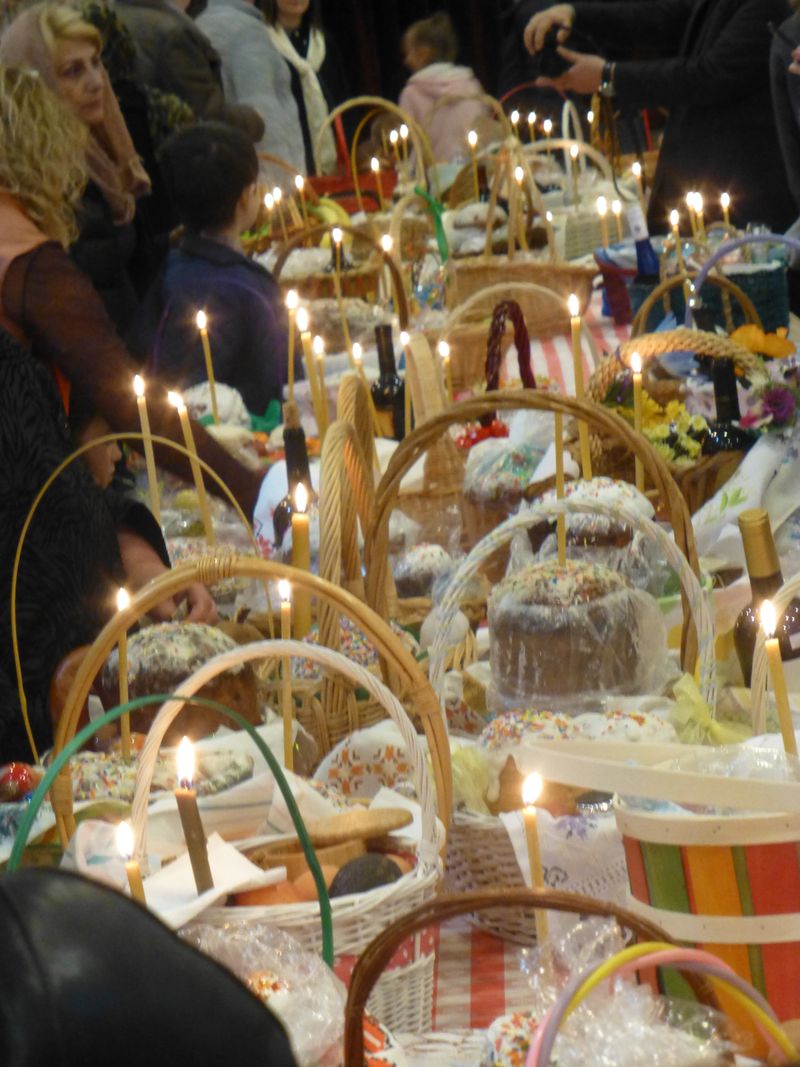
Holy Week itself represents an intensification of the fast. In many Orthodox traditions, Wednesday and Friday of Holy Week are kept with special strictness, and a total fast (eating nothing at all) is observed from Good Friday evening through Pascha.13 The Paschal Vigil liturgy, celebrated late Saturday night, concludes with the proclamation “Christ is risen!” — and immediately the faithful break the fast with blessed foods: red eggs, bread, pascha (a sweet cheese-based dessert), ham, and wine. This breaking of the fast is not mere dietary indulgence; it is liturgical celebration, a foretaste of the eschatological banquet.
Apostles’ Fast
The Apostles’ Fast, also called the Fast of the Holy Apostles, begins on the Monday following All Saints Sunday (the Sunday after Pentecost) and concludes on June 28, the eve of the feast of Sts. Peter and Paul (June 29).14 Because its start date depends on the moveable date of Pascha, its length varies considerably from year to year — ranging from as short as about one week to as long as six weeks.
This fast commemorates the fasting practiced by the Apostles themselves in preparation for mission work.15 It is considerably less strict than Great Lent. Fish and seafood are generally permitted on most days, and oil and wine are permissible. Many Orthodox Christians eat normally during this fast, abstaining only from meat and dairy. It is a fast of moderation rather than severity, preparing the Church for the summer season and allowing time for spiritual renewal before the heat of summer and the demands of secular life.
Dormition Fast (August 1-14)
The Dormition Fast, the shortest of the major fasts, lasts fourteen days and prepares the Church for the commemoration of the Dormition (falling asleep) of the Theotokos (the Mother of God) on August 15.16 Although brief, it is kept with considerable rigor — comparable to Great Lent in its dietary restrictions, though somewhat less demanding in its overall spiritual intensity. Fish and seafood are forbidden; oil and wine are restricted; the faithful are called to rigorous prayer and repentance.
The theological purpose of this fast is to honor the memory of the Mother of God and to participate in her example of prayer, humility, and intercession. The Dormition Fast traditionally emphasizes the reality of death and the hope of resurrection — themes central to the feast itself, which celebrates not the death of Mary but her falling asleep and her assumption into heaven.
Nativity Fast (November 15 - December 24)
The Nativity Fast (also called the Advent Fast, or St. Philip’s Fast in Slavic and Eastern Catholic traditions) lasts forty days, mirroring the length of Great Lent.17 On the New Calendar (Revised Julian), used by churches such as the Greek, Romanian, and Antiochian, it runs November 15 through December 24. Churches following the Old Calendar (Julian) — including the Russian, Serbian, Georgian, and Jerusalem Patriarchate — observe the same Julian dates, which currently correspond to November 28 through January 6 on the civil/Gregorian calendar. Like Great Lent, its structure is graduated: the first part (through November 28, the feast of St. Philip) is less strict, permitting fish on Saturdays and Sundays; the second part (December 1-24) is stricter, generally forbidding fish and restricting oil and wine.18
The Nativity Fast parallels the Western Advent season in its preparatory function, though it is far more demanding. Where Advent in the West has become largely a season of commercial anticipation, the Orthodox Nativity Fast calls the faithful to repentance and prayer. The fast concludes on Christmas Eve with a final strict day, after which the twelve-day Christmas cycle begins with the Feast of the Nativity and the joy of feasting.
Weekly and Daily Fasting
Beyond the four major fasts, the Orthodox Church observes weekly fasting on Wednesday and Friday throughout the year — with certain exceptions during the major feast cycles.19
Wednesday and Friday Fasts
Wednesday commemorates Judas’s betrayal of Christ — his agreement to hand Jesus over for money — and the conspiracy and plotting against the Lord.20 Friday, the day of Crucifixion, is the supreme fast day in Christian tradition. On Wednesdays and Fridays, all animal flesh and fish are forbidden; oil and wine are usually restricted as well, though these rules vary somewhat by tradition and jurisdiction.21
This weekly rhythm is remarkable. Over the course of a year, the Orthodox faithful typically observe more than one hundred days of fasting — nearly one-third of the year. For serious Orthodox practitioners, fasting is not an exceptional practice but the norm, with feasting (full dietary liberty) reserved for particular seasons and celebrations.
Fast-Free Weeks
There are several periods during the year when even Wednesday and Friday fasts are lifted:
- Bright Week (the week following Pascha) is a week of complete rejoicing; no fasting at all, even on Wednesday and Friday.22
- The week following Pentecost likewise permits normal eating.
- The period between the Nativity and Epiphany (usually December 25 - January 5) involves reduced fasting, though not complete freedom.
- Certain other major feast cycles, like the week of Theophany, also permit relief from the Wednesday and Friday fasts.23
These exceptions are theologically significant: they demonstrate that fasting, while integral to Orthodox life, is not ultimate. The ultimate value is communion, celebration, and the resurrection life of Christ. Fasting prepares the way for feasting; it is the ascent that enables the descent of grace.
Eucharistic Fasting
Finally, the Orthodox maintain strict Eucharistic fasting: from midnight the night before receiving Holy Communion, communicants abstain completely from food and drink (though water is sometimes permitted, and strict rules govern medication).24 This practice underscores the supreme importance of the Eucharist and maintains the ancient Christian tradition of receiving the sacraments in a fasted state. The night before Liturgy, the Orthodox typically attend Vespers and engage in extended prayer, creating an atmosphere of spiritual preparation quite distinct from modern secular life.
The Rules: What Is and Isn’t Permitted
To understand how Orthodox fasting actually works, one must grasp the different levels or categories of fasting observance. These are not arbitrary rules imposed by ecclesiastical bureaucrats, but are based on ancient tradition and adapt fasting to different levels of observance.
The Levels of Fasting
The strictest form of fasting is called xerophagy or “dry eating” — the consumption of raw and cooked foods that contain no animal products and are prepared without oil.25 Bread, vegetables, fruits, nuts, legumes, and water constitute the entire diet. This is the standard during the weekdays of Great Lent and the Nativity Fast.
The next level permits cooked food without oil — vegetables and legumes may be cooked in water, but olive oil is still forbidden. Wine is not permitted.
A more relaxed observance permits oil and wine — the faster may prepare vegetables with olive oil, drink wine, and eat cooked foods, but still abstains from meat, fish, dairy, and eggs.
Another category permits fish (and sometimes shellfish, though this is debated) — fish and seafood are allowed, along with oil, wine, and other vegetarian foods, but meat and dairy are still prohibited. This is typical for Saturdays and Sundays during fasting periods and for the entire Apostles’ Fast.
There are also exceptions for caviar and shellfish, which some Orthodox traditions classify differently from fish and permit in certain circumstances — a matter of some debate among theologians and confessors.26
The Practical Reality vs. the Typikon Ideal
In theory, the Orthodox fasting rules are clearly delineated in the Typikon — the monastic rule that governs Orthodox liturgical practice.27 In practice, however, there is considerable variation, flexibility, and adaptation based on regional tradition, jurisdictional practice, and individual pastoral circumstances.
A monastery in Mount Athos will observe the fast with maximal strictness. A parish in North America may practice with considerably more latitude. Some parishes distinguish sharply between rigorous and relaxed observances; others take a middle path. Greek Orthodox and Russian Orthodox traditions sometimes differ in their approach. And a wise spiritual father — a confessor or elder — has the authority and responsibility to adapt the rules for individual penitents based on their health, age, occupation, family responsibilities, and spiritual maturity.
This flexibility is not laxity; it is the principle of oikonomia (pastoral economy) in action. The rule serves the person; the person does not exist to serve the rule. As one modern Orthodox priest has written, “The typikon is not a legal code but a guide for the ascetic life.”28
Fasting in Practice
Understanding the theory and rules of Orthodox fasting is one thing; understanding how it actually shapes the lives of Orthodox Christians today is another.
Regional and Jurisdictional Variations
The reality of Orthodox practice varies considerably by region and jurisdiction. In Greece and other Mediterranean Orthodox lands, Orthodox Christian fasting remains a broadly shared cultural practice. Grocery stores stock fasting foods; restaurants offer fasting options; the community understands and respects the discipline.29 In Russia and Eastern Europe, fasting remains culturally embedded, though post-Soviet revival has meant a recovery of practices that had been suppressed for decades.
In Western contexts — North America, Western Europe, Australia — Orthodox fasting practice is countercultural and often practiced in relative isolation. An Orthodox Christian in a secular workplace cannot expect social accommodation for fasting disciplines. Potlucks and social gatherings require negotiation or abstention. Many Orthodox parishes in the West have adapted their practice to account for these realities, offering guidance that is faithful to the tradition but realistic about Western circumstances.
The Role of the Spiritual Father and Oikonomia vs. Akribeia
The proper practice of fasting in the Orthodox Church is not determined by the individual alone, but in consultation with one’s spiritual father — typically one’s confessor or parish priest.30 This is not mere ecclesiastical oversight; it reflects the Orthodox understanding that the spiritual life is not pursued in isolation but in community, under guidance.
In this context, two principles become crucial: akribeia (strictness or precision) and oikonomia (economy or accommodation).31 Akribeia refers to the strict observance of the rules as they stand in the Typikon and the canons. Oikonomia refers to the pastoral allowance and adaptation of these rules in light of individual circumstances. A wise confessor knows when to call for the full rigor of the fast and when to relax the rules in mercy and wisdom.
A pregnant or nursing mother, for instance, may be given latitude to eat more substantial foods. An elderly person or someone with a chronic illness may be released from strict fasting or permitted to eat fish during seasons when it is normally forbidden. A laborer doing heavy physical work may be allowed to eat more generously. A person struggling with scrupulosity or perfectionism may be advised to fast less strictly in order to preserve mental and spiritual health. A new convert to Orthodoxy may be gradually introduced to the full discipline rather than beginning with maximal rigor.
This approach reflects the patristic understanding of fasting as medicine: the dosage must be adjusted to the patient’s condition.
Fasting for Children, the Elderly, the Pregnant, and the Sick
Orthodox tradition has long recognized that not everyone can or should fast with equal rigor. Church canons and patristic writings offer guidance for these special cases.
Children are generally not held to the full fasting discipline, though they may be gradually introduced to modified fasting as they mature. A child of ten or twelve might refrain from meat on Wednesdays and Fridays, but eat dairy and oil. A teenager might progress toward the fuller observance.32
The elderly and infirm are explicitly exempted or given great latitude. A person with diabetes, gastrointestinal disease, or other chronic conditions should not fast in ways that threaten their health. The canons are clear: “The monk who is weak in body is not to be forced to fast.”33
Pregnant and nursing women are traditionally given relief from strict fasting, though they are not entirely free from the discipline. Many Orthodox traditions recommend some form of modified fasting that respects both the woman’s increased nutritional needs and her participation in the Church’s fasting life.34
The sick are expressly permitted — often even encouraged — to eat normally if recovery requires it. As Basil the Great taught, preserving one’s life and health is itself a form of obedience to God’s will.35
This flexibility, enshrined in Church tradition, reveals that Orthodox fasting is fundamentally different from legalism. The rules exist to serve life, health, spiritual growth, and communion with God — not as ends in themselves.
Comparison with Catholic Fasting
For a Catholic reader, the contrast between Orthodox and Catholic fasting practice is startling. The development of these traditions — once unified in the ancient Christian Church — reveals much about the different theological trajectories of East and West.
The Current Catholic Discipline
In the Roman Catholic Church today, the binding precepts of fasting and abstinence are remarkably modest by historical standards.36 The Code of Canon Law (Canons 1249-1253) requires:
- Abstinence (not eating meat) on Ash Wednesday, all Fridays of Lent, and — though often overlooked — all Fridays throughout the year (unless a solemnity falls on a Friday, or the local bishops’ conference has permitted a substitute penance)
- Fasting (eating only one full meal and two smaller meals, with no eating between meals) on Ash Wednesday and Good Friday
- Fasting binds adults from age 18 until the beginning of their sixtieth year (Canon 1252); abstinence binds from the younger age of 14 — a different and lower threshold37
- Bishops’ conferences may substitute other forms of penance for fasting and abstinence (prayer, almsgiving, service)38
In practice, many Catholics observe little fasting beyond these minimal requirements. Friday abstinence from meat during Lent is broadly practiced, though many Catholics also observe Friday abstinence year-round by personal choice. But the structured, comprehensive calendar of fasting that defines Orthodox practice is entirely absent from modern Catholic life.
The Historical Development of Catholic Fasting and Its Simplification
This was not always the case. In the medieval and early modern Catholic Church, fasting disciplines rivaled those of the Orthodox. Advent fasting was rigorous. Lenten fasting extended over seven weeks. Ember Days (four seasonal periods of prayer and fasting) punctuated the year. Friday abstinence was universal and binding. And the list of fast days was extensive.39
However, beginning with the Protestant Reformation and accelerating through the modern period, the Catholic fasting discipline gradually eroded. As the Church sought to respond to Reformation critiques of works-righteousness and external observance, fasting was progressively de-emphasized. Papal indults (exemptions) multiplied. Regional variations increased. By the time of Vatican II (1962-1965), the Catholic bishops were prepared to simplify the discipline dramatically.40
The Council’s Constitution on the Sacred Liturgy, Sacrosanctum Concilium (1963), called for penance to be “suited to the present day, to different regions, and to individual circumstances” (SC 109-110), laying the groundwork for reform. Pope Paul VI’s apostolic constitution Paenitemini (1966) then implemented the actual changes: reducing obligatory fasting days, changing age thresholds, and empowering Episcopal Conferences to substitute other forms of penance.41 The result was that the binding precepts were reduced to what we see today: essentially, a few days in Lent plus Friday abstinence, with bishops’ conferences given broad authority to substitute other penances.
The result has been profound. Catholics today grow up with virtually no experience of structured fasting. Unlike Orthodox children, who fast alongside their families and parish communities, Catholic children typically encounter fasting only as an occasional, individual practice. The liturgical rhythm that once governed Catholic life — with Advent and Lent as clearly demarcated seasons of asceticism — has largely disappeared.
What Catholics Can Learn from the Orthodox Approach
For Catholics willing to reflect honestly, the Orthodox fasting tradition offers several profound lessons.
First, it reminds us that the body matters. A Christianity that has become too spiritualized, too purely intellectual or emotional, loses something essential. The Orthodox refusal to separate the spiritual from the bodily, the immaterial from the material, is biblically and theologically sound. Our redemption, in Christian belief, is not the salvation of souls from bodies, but the resurrection of the body. Fasting — practiced with wisdom and compassion — is one way of saying that the body is good and worthy of discipline in service of the spirit.
Second, the Orthodox tradition teaches the importance of communal rhythm. Individual asceticism has its place, but there is something powerful about a whole community fasting together, governed by a shared calendar and shared expectations. This builds solidarity, shapes culture, and creates a countercultural witness to the consumerist assumption that every appetite should be immediately satisfied.
Third, Orthodox fasting demonstrates that demanding spiritual disciplines can flourish without becoming legalistic or pharisaic. The Orthodox have not solved the problem of how to maintain rigor without rigidity, but their solution — the principle of oikonomia, the role of the spiritual father, the emphasis on intention over mere external compliance — is sophisticated and humane.
Finally, the Orthodox tradition insists that fasting gives meaning to feasting. In contemporary Catholic and secular culture, feasting has become normative; celebration is constant; the exceptional has become routine. The Orthodox refusal to celebrate Easter’s resurrection with equivalent enthusiasm during ordinary time, their insistence that great feasts be preceded by significant fasting, their understanding that joy requires contrast — this is spiritually profound and countercultural in an age of perpetual self-gratification.
Eastern Catholic Fasting as a Bridge
Finally, it is worth noting that the Eastern Catholic Churches — those Catholic communities in communion with Rome but following Eastern liturgical traditions — maintain fasting disciplines that stand between Orthodox and Latin Catholic practice.42 The Maronite Catholic Church, the Ukrainian Greek Catholic Church, the Melkite Catholic Church, and others observe fasting periods that approximate, though they do not fully equal, those of their Orthodox counterparts.
For a Catholic interested in deepening fasting practice, exploring the Eastern Catholic tradition — or even selectively adopting practices inspired by Orthodox fasting — may offer a middle path: genuine intensification of the fasting discipline within a Catholic framework.
Fasting and Feasting: The Liturgical Rhythm
To truly grasp Orthodox fasting, one must understand it not in isolation but as one pole of a rhythm: the paschal cycle of fasting and feasting that structures the entire Orthodox liturgical year.
The Paschal Fast-Feast Cycle
The centerpiece of the Orthodox year is Pascha — Easter, the Feast of the Resurrection.43 But Pascha does not stand alone; it is reached through forty days of Great Lent, a period of intensifying asceticism and penitence. The fast prepares the way for the feast. The suffering and death of Lent find their meaning in the resurrection of Pascha.
Following Pascha comes Bright Week — a full week of feasting, with no fasting even on Wednesday and Friday. The tone of the liturgy shifts entirely: bright vestments replace dark ones; the alleluia replaces the somber refrains of Lent; the readings celebrate resurrection.44 This is not mere dietary indulgence; it is theological proclamation. The Church announces through its festive character that death has been defeated, that resurrection life has begun.
The same pattern, though less intensely, repeats throughout the year:
- The Nativity Fast (forty days) culminates in the Feast of the Nativity (December 25-January 5).
- The Apostles’ Fast precedes the Feast of Sts. Peter and Paul (June 29).
- The Dormition Fast leads to the Dormition of the Theotokos (August 15).
- Wednesdays and Fridays of fasting are balanced by the full freedom of Saturday and Sunday (outside of certain fasting seasons).
How Fasting Gives Meaning to Feasting
The Orthodox understanding is that fasting and feasting are not opposites but complements. Without fasting, feasting loses its meaning and becomes mere indulgence. With fasting, feasting becomes what it should be: a genuine celebration, a joyful response to grace, a foretaste of the heavenly banquet.
Alexander Schmemann articulated this with characteristic eloquence: “Feasting is the affirmation of the world as God made it, and fasting is the preparation for this affirmation. Together they form the rhythm of Christian life.”45 The faster learns to taste food as a gift; the feaster, having fasted, experiences food not as a mere commodity but as a sacrament of God’s generosity.
This has profound implications for how the Orthodox perceive time itself. Time is not neutral; it is sacred. Each season carries its own character and spiritual significance. The year is not merely quantitative duration but qualitative rhythm — a movement from repentance to celebration, from death to life, from asceticism to communion.
Common Misconceptions
Given the unfamiliarity of fasting in Western culture, several misconceptions about Orthodox fasting are common. It is worth addressing a few of them.
”Orthodox Fasting Is Just a Diet”
A secular observer might regard Orthodox fasting simply as a diet or nutritional practice. This misses the point entirely. Fasting may have secondary health benefits, but these are incidental to its spiritual purpose.46 The point is not weight loss or nutritional optimization; it is transformation of the will, healing of the passions, participation in Christ’s redemptive work, and anticipation of the kingdom of God. A person could theoretically follow all the dietary rules of fasting while remaining greedy, angry, and lustful in heart. Such a person would not truly be fasting in the Christian sense.
”Orthodox Fasting Is Legalistic”
Another common objection is that fasting seems legalistic — an excessive focus on external works and rules at the expense of grace and interior transformation. This criticism, while superficially plausible, does not withstand examination.47 The entire Orthodox theological framework militates against legalism. The principle of oikonomia explicitly allows for flexibility and adaptation. The emphasis throughout patristic literature is on the interior disposition — on intention, repentance, and humility — rather than on mere external compliance. A person can fast meticulously while remaining proud; such a person has gained nothing. The rule serves the spirit; the spirit does not serve the rule.
”Fasting Is About Earning Salvation”
Some Western critics suggest that Orthodox fasting represents a “works-based” soteriology — the idea that one earns salvation through effort and self-denial.48 This fundamentally misunderstands Orthodox teaching. Salvation is understood as a gift of God’s grace; no work earns it. But the Orthodox also teach that grace must be cooperated with (synergy), not passively received. Fasting is not a work that earns grace; it is a cooperative response to grace already given, a removal of obstacles to grace, a yielding of the will to God’s transformative power.49 The Orthodox would say: we do not fast to earn salvation, but we fast because we have been saved and desire to be transformed by the salvation already granted.
The Orthodox Response: Fasting as Freedom, Not Bondage
The Orthodox consistently emphasize that fasting, properly understood, is liberating, not enslaving.50 It is freedom from the tyranny of appetite, freedom from the compulsion to immediately gratify every desire, freedom from the spiritual sloth that comes with unchecked indulgence. And it is freedom for — freedom to pray, to love, to grow in virtue, to commune with God and with one’s neighbor.
St. Paul’s principle applies here: “All things are lawful, but not all things are helpful; all things are lawful, but not all things build up.”51 The Orthodox faster says: yes, I may eat meat, but I choose not to, because restraint itself is a spiritual good. This is not bondage; it is the paradoxical freedom of disciplined choice.
Conclusion
To study Orthodox fasting is to encounter a tradition that has preserved, remarkably intact, a vision of Christian discipleship markedly more demanding and more embodied than what has survived in the modern West. It is a challenge and a witness.
The Orthodox fasting tradition teaches several essential truths that contemporary Christianity — Catholic and Protestant alike — desperately needs to recover:
First, the spiritual life is not disembodied. The body is not a prison or an embarrassment; it is essential to human personhood and to spiritual transformation. Ascetical practice, including fasting, is not escape from the body but a training of the body in virtue, a harmonization of body and soul, a participation in Christ’s transfiguration of all creation.
Second, discipleship is demanding. Contemporary Christianity, particularly in the West, has often adopted a therapeutic, consumer-oriented approach: spirituality serves psychological well-being; religion offers comfort and affirmation. The Orthodox remind us that following Christ involves renunciation, struggle, and the willing embrace of difficulty. “If anyone would come after me,” Jesus said, “let him deny himself and take up his cross and follow me.”52 Fasting is one concrete way of taking up that cross.
Third, time is sacred and structured. The Orthodox liturgical calendar — with its fasts and feasts, its ascetical seasons and celebratory cycles — reclaims human time from secular routinization and orders it toward God. This is a profound countercultural witness in an age when time is commodity, when every moment is exploited for productivity or consumption, when the sacred and the secular occupy entirely separate compartments.
Fourth, community matters. The Orthodox faster does not fast alone but with the whole Church. The practice is not individualistic spirituality or personal preference, but participation in a communal rhythm governed by tradition and guided by pastoral wisdom. This creates bonds of solidarity and restrains both excessive rigor and spiritual laxity.
Finally, grace and effort cooperate. The Orthodox understanding of fasting rejects both the notion that we can earn salvation through works and the notion that grace makes effort unnecessary. Rather, we fast as a response to the grace already granted, as a cooperative opening of ourselves to God’s transformative power. Fasting does not earn salvation; it prepares us to receive it.
As Catholics and Western Christians, we need not (and perhaps should not) simply adopt the full Orthodox fasting discipline. Our own tradition has its own integrity. But we can learn from the Orthodox witness. We can recover a sense of fasting as integral to discipleship, not optional piety. We can resist the consumerist assumption that every appetite should be immediately gratified. We can structure our time according to sacred rhythms rather than secular productivity. We can cultivate communities that practice asceticism together, that honor the body as the instrument of spiritual transformation, that understand freedom as involving discipline and restraint.
In the end, Orthodox fasting is about this: becoming fully human by participating in Christ’s redemptive work, allowing our whole selves — body and soul, will and emotion, individual and communal — to be transformed by grace. It is a long and difficult path, but the Orthodox have walked it for nearly two thousand years, and its fruits — holiness, humility, joy, and deepening communion with God — testify to its truth.
Footnotes:
1 Alexander Schmemann, Great Lent: Journey to Pascha, rev. ed. (Crestwood, NY: St. Vladimir’s Seminary Press, 1974; first ed. 1969), 31-35. The metaphor of fasting as medicine (pharmakon) appears throughout patristic literature and is central to Orthodox understanding of ascetical practice.
2 Matthew 4:1-4; Mark 1:12-13; Luke 4:1-4. The forty-day fast also echoes Moses and Elijah’s fasting in the Old Testament, linking Jesus to the prophetic tradition.
3 On theosis, see John Meyendorff, Christ in Eastern Christian Thought (originally in French, 1969; English: Crestwood, NY: St. Vladimir’s Seminary Press, 1975); and Timothy (Kallistos) Ware, The Orthodox Way (Crestwood, NY: St. Vladimir’s Seminary Press, 1979), ch. 2-3.
4 Schmemann, Great Lent, 31-35. The theme of fasting as a return to Edenic simplicity — including Adam and Eve’s non-meat-eating in Paradise — pervades Schmemann’s treatment, though the specific phrasing here is a paraphrase rather than a direct quotation.
5 See John Meyendorff, Byzantine Theology: Historical Trends and Doctrinal Themes, 2nd ed. (New York: Fordham University Press, 1979), ch. 3; and Timothy (Kallistos) Ware, The Orthodox Church, 2nd ed. (London: Penguin Books, 1993), ch. 15, “Orthodox Worship III: Feasts and Fasts.”
6 See John of Damascus, The Exact Exposition of the Orthodox Faith, trans. Frederic H. Chase Jr. (Fathers of the Church 37; Washington, DC: Catholic University of America Press, 1958). On the reordering of the passions, see also Maximus the Confessor, “On Various Texts” (Various Texts on Theology, the Divine Economy, and Virtue and Vice), in The Philokalia, vol. 2 (London: Faber & Faber, 1981).
7 Basil the Great, Homily on Fasting 1-2 (De jejunio, PG 31:163-198). Available in the Nicene and Post-Nicene Fathers, Second Series, vol. 8; and in the SVS Popular Patristics Series, vol. 50, On Fasting and Feasts, trans. Susan R. Holman and Mark DelCogliano (Crestwood, NY: St. Vladimir’s Seminary Press).
8 John Chrysostom, Homily 3 on the Statues (NPNF, First Series, vol. 9). Chrysostom writes: “Fasting is a medicine; but a medicine, though it be never so profitable, becomes frequently useless owing to the unskilfulness of him who employs it.” The common paraphrase “fasting is the medicine of the soul” conflates this passage with the broader patristic tradition of fasting as “food for the soul.” See also On Repentance and Almsgiving, trans. Gus George Christo (Fathers of the Church 96; Washington, DC: Catholic University of America Press, 1998).
9 Apostolic Canon 69 (of the 85 Apostolic Canons appended to Book VIII of the Apostolic Constitutions); Council in Trullo (Quinisext Council, 692), Canon 2, which ratifies the 85 Apostolic Canons including Canon 69 on Wednesday/Friday fasting. These canons are among the foundational sources for Orthodox fasting practice.
10 The Orthodox Church recognizes Pascha (Easter) according to its own paschal calculation, which differs from the Western Easter in most years. Great Lent begins on Clean Monday, which is the first day of the fast itself. The first Sunday of Great Lent (the Sunday of Orthodoxy) falls six days later.
11 The thematic structure of the Orthodox Lenten Sundays reflects the Church’s understanding of repentance and spiritual ascent. See the Lenten Triodion, trans. Mother Mary and Kallistos Ware (London: Faber and Faber, 1978), Introduction.
12 Xerophagy (from Greek xeros = dry) refers to eating only foods that require no cooking or oil. This is the baseline during Great Lent weekdays for those attempting strict observance. See Lenten Triodion, Introduction.
13 The severity of Holy Week fasting varies by Orthodox tradition and pastoral circumstances, but a complete fast on Good Friday (until the Paschal Vigil) is widely recommended for the faithful.
14 The Apostles’ Fast begins the Monday after All Saints Sunday (which falls on the Sunday following Pentecost in the Orthodox calendar). The last fasting day is June 28; the fast ends before the feast of Sts. Peter and Paul begins (liturgically, at Vespers on the evening of June 28). June 29 is the feast day itself.
15 The historical basis for the Apostles’ Fast is found in Acts 13:2-3 and 14:23, where the apostles fast before missionary journeys. See Timothy (Kallistos) Ware, “The Liturgical Year,” in The Orthodox Church, 371-372.
16 The feast of the Dormition of the Theotokos is celebrated on August 15 in both Eastern Orthodox and Eastern Catholic traditions. The fast preceding it is observed from August 1-14.
17 Like Great Lent, the Nativity Fast is a forty-day fast, connecting it to Christ’s temptations and to the Old Testament periods of fasting preceding divine encounters. See The Festal Menaion, trans. Mother Mary and Kallistos Ware (London: Faber and Faber, 1969).
18 The graduated structure of the Nativity Fast (more lenient in early November, stricter in December) is a practical accommodation and also a spiritual pedagogy, gradually intensifying the community’s preparation.
19 Apostolic Canon 69 and the Council in Trullo (Quinisext Council, 692), Canon 2 (which ratifies the Apostolic Canons), establish the Wednesday and Friday fasts. These are considered binding in Orthodox practice, though pastoral exceptions exist.
20 The commemoration of Wednesday as a fast day specifically recalls Judas’s betrayal — his agreement to hand Jesus over for money — and the conspiracy against Christ. The Sanhedrin’s formal condemnation and trial of Jesus occurred on Thursday night into Friday. This is explained in the propers of the Orthodox liturgical texts.
21 The specific rules for Wednesday and Friday fasts vary slightly by Orthodox jurisdiction. In some traditions, fish is permitted on these days outside of fasting periods; in others, it is not. See The Liturgikon (or Liturgicon), the Orthodox liturgical text governing these practices.
22 Bright Week (Greek: Hagia tou Pascha) is a week of unrestricted celebration, with no fasting or abstinence. It represents the full joy of the Resurrection and demonstrates that feasting is not sinful but a proper response to Christ’s victory.
23 The relief from Wednesday and Friday fasts during certain major feast periods reflects the principle that feasting the saints takes precedence over regular fasting. This is a matter of Orthodox canonical tradition.
24 Orthodox Eucharistic fasting is a venerable practice dating to antiquity. The specific rules (midnight fast, exceptions for water and medication) are established in Orthodox canonical tradition and pastoral practice.
25 Xerophagy and the various levels of fasting are discussed in the Typikon (the monastic rule governing Orthodox liturgical practice) and in catechetical works explaining Orthodox fasting. See also the introduction to the Lenten Triodion.
26 The question of whether shellfish and caviar are permitted during fish fasts is a matter of some debate and variation among Orthodox traditions. Some jurisdictions permit them; others restrict them. The theological reasoning concerns whether shellfish should be classified as “fish” in the canonical sense.
27 The Typikon (or Typicon) is the monastic rule that governs the rhythm of Orthodox worship and practice. The version most widely used is the Studite Typikon, dating to the Byzantine period. It is available in modern translations and commentaries.
28 The principle that the Typikon functions as a pastoral guide rather than a rigid legal code is a recurring theme in Schmemann’s Great Lent and in Orthodox pastoral theology more broadly. See Schmemann, Great Lent, especially the discussion of pastoral economy and the adaptation of fasting rules.
29 Ethnographic and sociological studies of Orthodox fasting in contemporary Greece document the continued cultural embedding of fasting practices. See, for instance, accounts of Orthodox fasting in Mediterranean contexts in The Oxford Handbook of the Eastern Orthodox Church (Oxford: Oxford University Press, 2014).
30 The role of the spiritual father (the confessor or elder) in guiding Orthodox Christian life, including fasting practice, is foundational to Orthodox spirituality. See Timothy (Kallistos) Ware, “Prayer and Sacrament,” in The Orthodox Way, ch. 4.
31 Oikonomia and akribeia are paired principles in Orthodox pastoral theology. Akribeia means strict adherence to the letter of the law; oikonomia means merciful adaptation of the law to circumstances. A good pastor knows when each is appropriate.
32 Orthodox guidance for children’s fasting is found in pastoral directives and in the writings of contemporary Orthodox bishops. The general principle is that children are gradually introduced to fasting as they mature, rather than being held to the full discipline from a young age.
33 Apostolic Canon 69 itself allows an exception for “bodily infirmity,” and Canon 8 of St. Timothy of Alexandria addresses pastoral accommodation for those unable to fast due to illness. The principle of exempting the infirm is well-established across Orthodox canonical tradition.
34 Orthodox pastoral tradition, as reflected in the writings of contemporary confessors and in liturgical guidelines, generally permits pregnant and nursing women to eat more substantially while still participating in the fasting rhythm through other means (prayer, almsgiving, restraint from indulgence).
35 Basil the Great, Homily on Fasting, emphasizes that one’s body is a temple of the Holy Spirit and that preserving it is part of obedience to God’s law.
36 Code of Canon Law, Canons 1249-1253. These canons represent the post-Vatican II simplification of Catholic fasting discipline and are binding on the Latin Catholic Church.
37 CIC Canon 1252 specifies that fasting binds “all adults” (those who have attained majority, age 18 per Canon 97 §1) “until the beginning of their sixtieth year.” Abstinence from meat binds from the lower age of 14. Canon 1251 specifies that abstinence from meat is required on all Fridays throughout the year (not only during Lent), unless a solemnity falls on a Friday. Canon 1253 allows Episcopal Conferences to substitute other forms of penance on non-Lenten Fridays, which is why U.S. practice differs from the universal norm.
38 CIC Canon 1253 gives bishops’ conferences authority to determine or modify penitential practices, including fasting and abstinence.
39 The history of Catholic fasting discipline is documented in historical studies such as Patrick Scaramella, The Spanish Inquisition and the Politics of Dissent (Oxford: Oxford University Press, 2003), and in general histories of the Catholic Church. The erosion of Catholic fasting practice accelerated in the modern period.
40 Vatican II’s Constitution on the Sacred Liturgy (Sacrosanctum Concilium, 1963), especially paragraphs 109-110, called for the reform of Lenten penance. The post-conciliar implementation came through Pope Paul VI’s Paenitemini (1966), which reformulated Catholic penitential discipline with an emphasis on the inwardness of conversion while reducing the number of obligatory fasting days.
41 Sacrosanctum Concilium 109-110 describes Lent’s “twofold character” (baptismal preparation and penance) and states that penance should be “not only internal and individual but also external and social” and adapted to “the present day, to different regions, and to individual circumstances.” Pope Paul VI’s apostolic constitution Paenitemini (February 17, 1966), citing SC 110, implemented the actual reforms of Catholic penitential discipline.
42 Eastern Catholic Churches, such as the Ukrainian Greek Catholic Church, the Melkite Greek Catholic Church, and the Maronite Church, maintain fasting disciplines that resemble those of their Orthodox counterparts but are adapted to Catholic communion and practice. See the Code of Canons of the Eastern Churches (1990), Canons 882-895, which govern Eastern Catholic fasting.
43 The Paschal cycle is the theological and liturgical center of the Orthodox year. Everything else in the calendar is ordered either as preparation for or as a response to Pascha. See The Orthodox Church, ch. 8, and The Festal Menaion, Introduction.
44 Bright Week, celebrated immediately following Pascha, is characterized by bright vestments, the repeated singing of the Paschal troparion, and the complete absence of fasting or abstinence. It represents the Church’s joyful proclamation of the Resurrection.
45 Schmemann, Great Lent, 32-33.
46 While Orthodox fasting may have secondary health benefits, it is explicitly not undertaken for health purposes. The fast is spiritual; physical health benefits are incidental if they occur.
47 The charge of legalism against Orthodox fasting is addressed directly in contemporary Orthodox catechetical literature. See, for instance, Timothy (Kallistos) Ware, “Fasting and the Spiritual Life,” in essays collections on Orthodox asceticism.
48 The Orthodox understanding of grace and cooperation (synergy) is set forth in John Meyendorff, Byzantine Theology, ch. 6, and in various patristic sources, particularly Maximus the Confessor.
49 The Orthodox doctrine of synergy — the cooperation of divine grace with human will — is central to understanding how fasting relates to salvation. See Meyendorff, Byzantine Theology, and Timothy (Kallistos) Ware, The Orthodox Way, ch. 3.
50 St. Paul’s teaching in Romans 6:12-23 on the paradox of Christian freedom and discipline underlies the Orthodox understanding that fasting is liberating rather than enslaving.
51 1 Corinthians 10:23.
52 Matthew 16:24.
Garrett Ham
Garrett Ham is an attorney, military veteran, and holds a Master of Divinity from Yale Divinity School. He writes from Northwest Arkansas on theology, law, and service.
More about Garrett →Related Posts
Eastern Orthodoxy Explained
What is Hellenistic Christianity? A complete guide to Eastern Orthodox theology, theosis, liturgy, sacraments, and the Church's ancient roots in Christian Hellenism.
Orthodox vs. Catholic
What are the real differences between Orthodox and Catholic theology? A point-by-point comparison of papal authority, the Filioque, original sin, and sacraments.
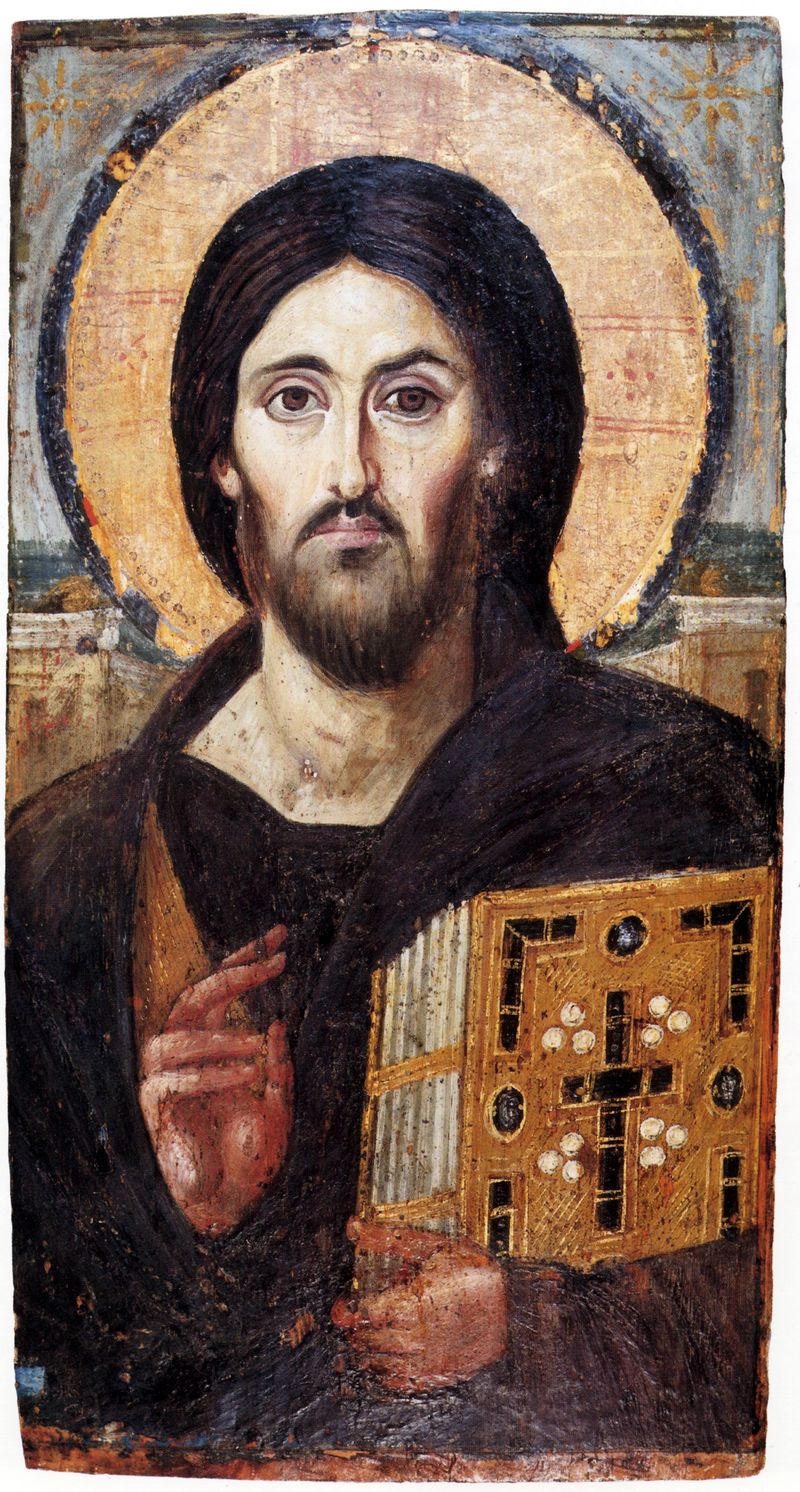
Orthodox Icons Explained
What are Orthodox icons and why do Eastern Christians venerate them? Explore the theology of icons, the iconoclasm crisis, and how icon veneration differs from idolatry.
Stay Informed
Get new writing on faith, law, and service delivered to your inbox.
No spam. Unsubscribe anytime.