The Orthodox Christian Calendar and Feasts
On This Page
The Orthodox Christian calendar is not merely a schedule of dates and observances—it is a living theology of time itself. Every day, every week, and every season of the liturgical year proclaims the central truths of the faith: the incarnation, redemption, and theosis of humanity. For nearly two thousand years, the Eastern Orthodox Church has sanctified time through an intricate cycle of Great Feasts, fasting periods, and commemorations of saints, creating a continuous remembrance of Christ’s life, the mysteries of salvation, and the communion of saints. Understanding the Orthodox calendar requires us to think not merely chronologically but liturgically, seeing how the Church weaves together past, present, and eschatological hope into a unified whole.
The Liturgical Year as Theology of Time
In the Orthodox Christian tradition, the calendar is far more than a practical tool for organizing days and weeks. It is, as the theologian Alexander Schmemann wrote, “the Church’s reading of sacred history.”1 The Orthodox understanding of time differs fundamentally from secular time measurement. Secular time is linear, mechanical, and neutral—it simply passes. But liturgical time is sacred, cyclical, and redemptive. It is time sanctified and transformed through the presence of Christ.2
The Orthodox calendar demonstrates a theology of recapitulation—the idea that the Church ritually re-presents and participates in the saving events of Christ’s incarnation and redemption. When Orthodox Christians observe the feast of the Nativity of Christ on December 25 (or January 7 on the Old Calendar), they are not merely commemorating a historical event that occurred two thousand years ago. Rather, through the liturgical celebration, they enter mystically into the eternal mystery of Christ’s becoming flesh and unite themselves to that transformative reality.3
This sacramental understanding of time distinguishes the Orthodox approach from typical Western Christian practice. While Catholic and Protestant churches also observe liturgical seasons, the Orthodox theology of the calendar emphasizes an iconic, participatory relationship to the sacred events being commemorated. The calendar is itself an icon—a window into the Kingdom of God.4
The Julian and Gregorian Calendar Question: Old vs. New Calendar
One of the most immediately noticeable features of the Orthodox calendar is the “calendar question”—the historical and theological use of different calendar systems by various Orthodox churches. This is not merely a mathematical dispute but involves theological, canonical, and ecclesiastical dimensions.5
The Historical Background
In 1582, Pope Gregory XIII reformed the Julian calendar to correct the slight inaccuracy that had accumulated over centuries. The Julian calendar, used since Caesar’s time, adds a leap day every four years, but this creates a small overcount (approximately 11 minutes per year). By the 16th century, this had shifted the date of the vernal equinox by about ten days.6 The Gregorian reform was motivated primarily by a desire to calculate Easter correctly, ensuring it fell on the Sunday following the first full moon after the vernal equinox.
Most of the Orthodox Church, however, continued using the Julian calendar—partly for theological reasons (resistance to papal authority), partly for practical reasons (the Gregorian calendar was not universally adopted outside Catholic regions for centuries), and partly because of the deep entrenchment of Julian calendar calculations in Orthodox liturgical tradition.7 Today, the calendar difference means that Orthodox Christians celebrating the “Old Calendar” are roughly 13 days behind Western churches.
The Calendar Schism
In the 20th century, many Orthodox churches adopted the “Revised Julian” calendar (created in 1923 by an Orthodox synod in Constantinople) to align fixed feasts with the secular calendar while maintaining the traditional paschal (Easter) calculations.8 This created the paradoxical situation where some Orthodox churches—including the Church of Constantinople, and the Churches of Greece, Romania, Bulgaria, and Serbia—celebrate fixed feasts like Christmas on December 25 in the secular calendar, while other churches—notably the Russian Orthodox Church, the Serbian Church’s autonomous parts, and other traditionalist communities—observe them on January 7 (which is December 25 in the Julian calendar).9
This is not a dogmatic schism but an ecclesiastical one, and the theological significance of each calendar choice differs by church and jurisdiction. Some “Old Calendar” Orthodox communities see the Gregorian calendar as a papal imposition, while reformers argue that the Revised Julian calendar better serves pastoral concerns in modern society while maintaining apostolic tradition.10
For the purposes of this article, we will reference both calendar traditions, but it is important for readers to understand that this diversity exists within Orthodoxy and is not a sign of theological division so much as a legitimate expression of canonical freedom.
Pascha: The Center of the Entire Liturgical Year
The entire Orthodox liturgical calendar revolves around a single, unmovable center: the Feast of Feasts, the Resurrection of Christ—known in Greek as Pascha (Πάσχα), derived from the Hebrew Pesach (Passover).11 Unlike Christmas, which falls on a fixed secular date, Pascha is a moveable feast, calculated according to ancient ecclesiastical rules.12 The date of Pascha determines the dates of all the moveable feasts and fasting periods that depend upon it.
The Paschal Calculation
The Orthodox calculation of Pascha preserves the ancient rule established at the Council of Nicaea (325 AD): Pascha must fall on the first Sunday following the first full moon that occurs on or after the spring equinox.13 However, the Orthodox use the vernal equinox date of March 21 (in the Julian calendar tradition) rather than the astronomically calculated equinox, and they use the ecclesiastical full moon rather than the astronomical one. The result is that the date of Pascha varies between March 22 and April 25 (Julian calendar dates) or between April 4 and May 8 (Gregorian dates).14
This calculation method, while complex, has deep theological significance. It ties the Christian Pascha to the Jewish Passover, preserving the historical and theological connection between Christ’s resurrection and the liberation of Israel from Egypt—a typological relationship emphasized throughout the New Testament.15
The Triodion and Pentecostarion
The liturgical year is divided into two major cycles, both organized around Pascha:
The Triodion (named for the three-part canticle structure used during this period) encompasses the period before Pascha. It begins on the Sunday of the Pharisee and the Publican (roughly 70 days before Pascha) and continues through Holy Week. The Triodion emphasizes repentance, fasting, and preparation for the Resurrection, culminating in the paschal cycle and Holy Week (also called Great Week or Passion Week).16
The Pentecostarion (named for the fifty-day period after Pascha—pentecosta meaning “fiftieth” in Greek) begins on Pascha and extends fifty days until the Feast of Pentecost. This season is entirely festal, characterized by celebration and joy. Services include the repeated singing of “Christ is risen from the dead” and there are no strict fasts, not even on Wednesdays or Fridays.17 The Pentecostarion concludes with the Feast of Pentecost (also called Whitsunday), which commemorates the descent of the Holy Spirit upon the Apostles.
The Twelve Great Feasts: The Dodekaorton
Beyond the moveable cycle of the Triodion and Pentecostarion, the Orthodox calendar includes twelve major fixed feasts, known as the Dodekaorton (“Twelve Great Feasts”). These commemorate the central mysteries of Christ’s life and the veneration of the Theotokos (Mother of God).18 These feasts are ranked among the highest holy days in the Orthodox Church.
The Twelve Great Feasts Reference Table
| Feast Name | Fixed Date (Julian/Old Calendar) | Date (New Calendar) | Significance |
|---|---|---|---|
| Nativity of the Theotokos | September 8 | September 21 | Birth of Mary |
| Exaltation of the Holy Cross | September 14 | September 27 | Discovery and exaltation of the Cross |
| Presentation of the Theotokos | November 21 | December 4 | Mary presented in the Temple |
| Nativity of Christ | December 25 | January 7 | Birth of Jesus |
| Theophany/Epiphany | January 6 | January 19 | Christ’s baptism; manifestation of Trinity |
| Presentation of Christ | February 2 | February 15 | Jesus presented in the Temple; Candlemas |
| Annunciation | March 25 | April 7 | Angel announces Mary’s role as Theotokos |
| Palm Sunday | Moveable (Sunday before Pascha) | Moveable | Entry into Jerusalem; beginning of Holy Week |
| Ascension of Christ | Moveable (40 days after Pascha) | Moveable | Christ’s ascension to heaven |
| Pentecost | Moveable (50 days after Pascha) | Moveable | Descent of the Holy Spirit |
| Transfiguration | August 6 | August 19 | Christ’s glory revealed on Mount Tabor |
| Dormition of the Theotokos | August 15 | August 28 | Death and assumption of Mary |
The Feast Descriptions
Nativity of the Theotokos (September 8/21) marks the birth of Mary, the Mother of God. In Orthodox theology, Mary is venerated not as a divine figure (which would be Marian idolatry, a heresy the Orthodox reject alongside Catholics), but as the “Theotokos,” the God-bearer—the holy vessel chosen to become the mother of the incarnate Christ. Her nativity is celebrated as a great feast because it marks the beginning of the fulfillment of the ancient prophecies and the preparation for Christ’s incarnation.19
Exaltation of the Holy Cross (September 14/27) commemorates the discovery of the true Cross by St. Helena (mother of Constantine) and its “exaltation”—its elevation as an object of veneration. In Orthodox theology, the Cross is not merely an instrument of torture but a sign of salvation and the means of our redemption. The feast includes the ritual elevation of a cross during the Divine Liturgy, reflecting the 4th-century historical practice.20 Interestingly, the Orthodox also fast in preparation for this feast, one of the few fixed feasts for which a pre-feast fast is observed.
Presentation of the Theotokos (November 21/December 4) commemorates Mary’s presentation in the Jerusalem Temple as a child, according to tradition. The feast emphasizes Mary’s role as the virginal mother and the beginning of God’s plan for the Incarnation. It is celebrated with particular solemnity and marks the beginning of the liturgical year in some Orthodox reckkonings.21
Nativity of Christ (December 25/January 7) is the celebration of Christ’s birth in Bethlehem. The Orthodox liturgical tradition emphasizes the divine birth—that God became human, that the Eternal entered time—rather than focusing primarily on the historical circumstances of the nativity narrative (though these are not ignored). The fasting period before Christmas, lasting 40 days, emphasizes the anticipation and preparation for this central mystery.22
Theophany/Epiphany (January 6/19), also called the Feast of the Baptism of the Lord, commemorates Christ’s baptism by John the Baptist in the Jordan River. The term “Theophany” (manifestation of God) reflects the Orthodox emphasis on this event as a revelation of the Trinity—God the Father speaking, the Son being baptized, and the Holy Spirit appearing as a dove.23 Theophany is traditionally connected with the blessing of water, and in some Orthodox communities, the faithful gather for the blessing of waters on this day or the previous day (Epiphany Eve), reflecting ancient practices.
Presentation of Christ (February 2/15), also known as Candlemas in Western tradition, commemorates Jesus being brought to the Temple in Jerusalem according to the law of Moses. The aged Simeon recognizes Jesus as “the light to lighten the Gentiles,” and the feast features the blessing of candles, reflecting the theme of light. In Orthodox tradition, this feast emphasizes Christ as the fulfillment of the Old Testament law and the revelation of salvation to the nations.24
Annunciation (March 25/April 7) celebrates the Angel Gabriel’s announcement to Mary that she would become the Mother of God. This feast is theologically central to Orthodox Christianity because it marks the beginning of God’s becoming incarnate—the moment when humanity’s acceptance (“Be it done unto me according to thy word”) cooperated with divine initiative.25 The Annunciation is celebrated even during Great Lent, indicating its supreme importance.
Palm Sunday (the Sunday before Pascha, moveable) marks Christ’s triumphal entry into Jerusalem and the beginning of Holy Week. The blessing and procession of palm branches (or willow branches in some Orthodox contexts) commemorate the crowds who welcomed Jesus with branches and praises. This feast transitions the liturgical focus from joyful celebration to the Passion and Resurrection.26
Ascension of Christ (40 days after Pascha, moveable) celebrates the Risen Christ’s ascension to heaven and his glorified humanity at the right hand of the Father. The Orthodox liturgical tradition emphasizes that the Ascension is not a departure but an elevation—the assumption of human nature itself into the heavenly realm, making salvation eschatologically available.27 It marks the close of the visible post-resurrection appearances of Christ.
Pentecost (Whitsunday) (50 days after Pascha, moveable) commemorates the descent of the Holy Spirit upon the Apostles in Jerusalem. Also called Knestos (the gathering) in some Orthodox traditions, Pentecost represents the empowerment of the Church for her mission and the beginning of the apostolic age.28 In Orthodox theology, Pentecost completes the Paschal mystery—the Resurrection (Christ’s victory) and the gift of the Spirit (the empowerment of the redeemed community) are inseparable.
Transfiguration (August 6/19) commemorates Christ’s transfiguration on Mount Tabor, where his divine glory was made visible to the three Apostles Peter, James, and John. The feast celebrates the reality of theosis—the deification of human nature in Christ—showing that salvation is not merely forgiveness but the transfiguration of our very being.29 The blessing of grapes and apples is traditional on this feast.
Dormition of the Theotokos (August 15/28), also called the Assumption of Mary in Western tradition, commemorates Mary’s “falling asleep” and her assumption into heaven. In Orthodox theology, the Dormition expresses the belief that the Theotokos was taken up body and soul into heavenly glory—not by biological necessity but by grace and the privilege of being God-bearer.30 This feast precedes a significant fasting period and is celebrated as one of the most important Marian feasts.
The Four Major Fasting Periods
The Orthodox calendar structures spiritual life around four extended fasting periods, each with distinct theological meaning and spiritual focus. A comprehensive exploration of Orthodox fasting practices appears in our separate article on Orthodox fasting, but it is important to understand how these periods organize the liturgical year.31
Great Lent (40-50 days before Pascha, depending on how one counts) is the longest and most rigorous fasting period, corresponding to the Christian West’s Lenten season. It emphasizes repentance and preparation for Pascha.32
The Apostolic Fast (Lenten period after Pentecost, length varies annually) commemorates the Apostles’ fasting before Pentecost and before their missionary journeys.
The Dormition Fast (begins August 1 on the Old Calendar, lasts 15 days) prepares for the commemoration of the Theotokos’s falling asleep.
The Nativity Fast (40 days before Christmas on the Old Calendar, November 15-December 24) prepares for the celebration of Christ’s incarnation.33
For details on the discipline, theology, and practice of Orthodox fasting, readers should consult the dedicated resource on Orthodox fasting.
The Weekly Cycle: Sacred Rhythms
Beyond the annual cycle, the Orthodox calendar structures each week around liturgical commemoration. Each day of the week has theological significance:34
Sunday is the day of Pascha—of resurrection and new creation. Every Sunday in the Orthodox tradition is a “little Pascha,” a weekly feast celebrating Christ’s resurrection. Fasting is not permitted on Sunday, even during fasting periods.
Monday traditionally commemorates the bodiless powers—the angels—and emphasizes repentance and the call to spiritual struggle.
Tuesday also emphasizes ascetical struggle and often commemorates the lives of martyrs and ascetics.
Wednesday is dedicated to the remembrance of Christ’s passion, particularly his betrayal. Many churches have a tradition of making this a strict fast day.
Thursday honors the Apostles, the holy hierarchs (bishops), and St. Nicholas, one of the most beloved Orthodox saints. Fasting is often relaxed somewhat on Thursday in honor of the Apostles.
Friday commemorates the passion and death of Christ on the Cross. It is the most strictly observed fast day, when the Church remembers Christ’s suffering. Many Orthodox abstain from meat, dairy, oil, and fish on Fridays.35
Saturday is dedicated to the Theotokos, to the saints (the departed faithful), and to the Sabbath rest. The Saturday Liturgy often includes commemoration of the departed.36
This weekly rhythm, repeated fifty-two times a year, creates a constant liturgical remembrance of the central mysteries of salvation and sustains the spiritual focus of the community.
The Daily Cycle: The Hours and Divine Offices
The Orthodox calendar is further sanctified through the daily cycle of services known as the Canonical Hours or Daily Offices.37 While many parish churches today serve only the Divine Liturgy on weekdays (though often with additional services on feast days), monastic communities and cathedral churches observe the full daily office cycle:
Vespers (evening prayer) is the primary evening service, commemorating the events of the previous day and preparing spiritually for the coming night.
Compline (night prayer) is said before sleep and emphasizes human dependence upon God and trust in his care.
Matins (midnight office) is traditionally the longest and most elaborate service, containing the substantial scriptural readings and hymns that form the theological focus of each day’s commemoration.
The First through Ninth Hours divide the day into three-hour intervals, each with brief offices, prayers, and commemorations.
The Divine Liturgy (also called the Eucharist or Holy Communion) is the climax of the daily office cycle, containing the central mysteries of the faith.38
This daily rhythm of prayer sanctifies time at the micro level, allowing the faithful to participate in an ongoing liturgical remembrance that undergirds the weekly and annual cycles.
The Menologion: Commemorations of Saints
Beyond the Twelve Great Feasts, the Orthodox calendar encompasses an extensive cycle of commemorations of saints—bishops, martyrs, ascetics, confessors, and other holy men and women whose lives exemplify Christian virtue and salvation.39 The liturgical calendar containing these commemorations is called the Menologion (from Greek meno—month, and logia—collection or account).40
Each day of the calendar year has commemorations of saints, sometimes numerous. For example, January 30 commemorates the “Three Hierarchs”—Sts. Basil the Great, Gregory the Theologian, and John Chrysostom—three giants of Orthodox theology and liturgical tradition.41 These commemorations are not mere remembrances; they are understood as real fellowship with the saints. When we venerate an icon of a saint or commemorate his feast, we are joining in worship with “the cloud of witnesses” mentioned in Hebrews 12:1.42
The icons of the saints, displayed in Orthodox churches throughout the year and venerated especially on their feast days, are understood as windows into the communion of saints. This practice, formalized at the Seventh Ecumenical Council, distinguishes Orthodoxy from Protestant Christianity while maintaining a different understanding of Marian and saintly veneration than the medieval Western Catholic tradition.43 For more on the theology of icons in Orthodoxy, see our article on Orthodox icons.
How the Orthodox Calendar Differs from the Catholic Liturgical Calendar
While both Eastern Orthodox and Roman Catholic traditions maintain liturgical calendars organized around Pascha/Easter and the Incarnation, there are several significant theological and practical differences:44
Paschal Centrality: Both calendars are organized around the Paschal mystery, though they express this differently. The Orthodox calendar structures the entire year around Pascha, with fixed feasts integrated into this paschal framework. The post-Vatican II Catholic calendar also centers on the Paschal mystery: Sacrosanctum Concilium 106 declares Sunday “the original feast day” celebrating the Paschal Mystery, and Paul VI’s 1969 Mysterii Paschalis explicitly sought to place the Paschal Mystery “in clearer light” by removing accumulated saints’ feasts that had obscured it. “Ordinary Time” in Catholic usage does not mean “non-Paschal”—every Sunday celebrates the Resurrection. The reformed Catholic calendar thus increased rather than diminished Paschal emphasis.45
Calendar Systems: As discussed above, Orthodox churches employ either the Julian or Revised Julian calendar, while the Catholic Church and Western churches universally use the Gregorian calendar. This results in different dates for fixed feasts and, occasionally, different dates for Pascha/Easter.46
Theotokos Veneration: The Orthodox calendar contains a significantly higher number of Marian feasts and commemorations than the Catholic calendar—not out of excessive Marian devotion (which the Orthodox reject), but out of a different theological emphasis on Mary’s role as the Theotokos, which is seen as central to incarnational theology.47 For comparative theology, see our article on Orthodoxy vs. Catholicism.
Fasting Disciplines: The four Orthodox fasting periods are more extensive and, at least in principle, more strictly observed than modern Latin-rite Catholic fasting. Catholic obligatory fast days were substantially reduced after Paul VI’s 1966 Paenitemini, though important disciplines remain: all Fridays are penitential days year-round (Canon 1250), abstinence from meat is required on Fridays of Lent, and fasting is obligatory on Ash Wednesday and Good Friday. The Church also strongly recommends additional Lenten fasting, and many devout Latin-rite Catholics voluntarily observe rigorous fasts. Eastern Catholic Churches maintain their own historic fasting disciplines, which closely parallel Orthodox practice.48
Daily Office Structure: The Orthodox Daily Office is more extensively preserved in monastic and cathedral practice than the Liturgy of the Hours in Catholic parishes, though both traditions maintain this spiritual discipline.49
Scriptural Readings: The lectionary cycles differ between Orthodoxy and Catholicism. The Orthodox follow a complex system of Gospel and Epistle readings that are selected based on the feast being commemorated, while the Catholic three-year lectionary cycle (implemented after Vatican II) provides a more systematic coverage of Scripture across the liturgical year.50
Name Days: A Living Connection to Saints
One of the most distinctive and pastoral dimensions of the Orthodox calendar is the observance of “name days” or “feast days” in honor of the saint for whom a person is named.51 Rather than celebrating a birthday (though birthdays are also acknowledged), many Orthodox Christians mark the feast day of their patron saint as their spiritual birthday—the day they entered into fellowship with that saint through baptism and chrismation.52
This practice, rooted in ancient Christian tradition and especially prevalent in Orthodox cultures, creates a vibrant connection between individual believers and the communion of saints. A child named John celebrates the feast of St. John the Baptist on January 7 (New Calendar); a child named Basil celebrates the feast of St. Basil the Great on January 1 (in some traditions, January 14 on the Old Calendar). Families gather, the Church celebrates the Liturgy in honor of that saint, and the individual is renewed in their commitment to live according to the example and intercession of their patron saint.53
In many Orthodox countries and diaspora communities, name days are celebrated with more significance than secular birthdays, reflecting the theological conviction that our identity in Christ is deeper and more real than our natural identity.
Theosis and the Sanctification of Time
Ultimately, the Orthodox liturgical calendar is an instrument of theosis—the deification or “divinization” of human nature through salvation in Christ.54 By organizing time around the incarnational mysteries, the resurrection, and the communion of saints, the calendar invites believers to participate in a reality that transcends mere historical commemoration.
When we observe the Nativity, we do not simply remember that Christ was born two thousand years ago. Rather, through the Church’s liturgical action, we participate mystically in the transformation of human nature that occurred in the Incarnation. When we fast and repent during Great Lent, we unite our self-denial with Christ’s obedience unto death. When we celebrate Pascha, we enter into the very life of the Resurrection.55
This is why Schmemann, one of the most important modern Orthodox theologians, could argue that the purpose of food is not merely to sustain biological life but to become a vehicle of communion—that in receiving food as a gift of God, we participate in a reality that transforms and sanctifies.56 The same principle applies to time itself. Time is not merely a container within which events occur; it is an instrument of grace, a means through which God communicates his saving power and invites human participation in the life of the Kingdom.
Conclusion
The Orthodox Christian liturgical calendar represents a comprehensive and integrated theology of time. From the annual cycle of the Twelve Great Feasts and the four fasting periods, through the weekly rhythm of the days, to the daily cycle of the Canonical Hours, the calendar sanctifies every moment and invites believers to participate in the mysteries of salvation.
The apparent complexity of the Orthodox calendar—the calculation of Pascha, the distinction between fixed and moveable feasts, the calendar question, the menologion of saint commemorations—serves a single, beautiful purpose: to sanctify human time and to unite each generation of believers to the living tradition of the Church. In Orthodoxy, we do not simply read about redemption in history books; we enter into it annually, weekly, and daily through the structured remembrance of the Church’s liturgical life.
For those seeking to understand Orthodox spirituality more deeply, the calendar is an essential entry point. It embodies, in concrete forms of observance and celebration, the central theological convictions of the Eastern Christian tradition. Whether you are Orthodox, Catholic, Protestant, or simply curious about Christian tradition, exploring the Orthodox calendar offers profound insights into how one ancient Christian tradition understands time, salvation, community, and the transformation of human nature in Christ.
For deeper exploration of related topics, we invite you to read our articles on the Eastern Orthodox faith explained, Orthodox fasting practices, the theology of icons, theosis in Orthodox theology, the Divine Liturgy explained, and how Orthodoxy differs from Catholicism.
Footnotes:
1 Alexander Schmemann, Introduction to Liturgical Theology (London: The Faith Press, 1966), 17. Schmemann’s work is the essential theological foundation for understanding the Orthodox concept of liturgical time.
2 Timothy Ware, The Orthodox Church (London: Penguin Books, 1997), 308-310. Ware explains the theological underpinnings of the Orthodox calendar as distinct from secular time-reckoning.
3 Schmemann, Great Lent, 15-18. The concept of recapitulation (Greek: anakephalaiosis) appears throughout patristic thought, particularly in the writings of St. Irenaeus.
4 John of Damascus, An Exact Exposition of the Orthodox Faith, Book 4. While predating the formalization of icon theology, John’s work establishes the patristic foundation for understanding material things as capable of participating in sacred reality.
5 Ware, The Orthodox Church, 374-376. The calendar question remains one of the most practically visible divisions within modern Orthodoxy.
6 The Julian calendar’s leap-year system adds 365.25 days annually, but the true year is approximately 365.2425 days. The Gregorian reform adjusted this to more closely match astronomical reality.
7 Ware, The Orthodox Church, 375. The resistance to calendar reform among many Orthodox was not merely theological obstinacy but reflected legitimate concerns about preserving apostolic tradition.
8 The Revised Julian Calendar (or “New Calendar”) was adopted at a pan-Orthodox synod in Constantinople in 1923. It adjusts the leap-year calculation to align with the Gregorian system while theoretically preserving the paschal calculation method.
9 Ibid., 376. The result is that the Orthodox world currently celebrates Christmas on either December 25 (Gregorian calendar, New Calendar churches) or January 7 (Julian calendar, Old Calendar churches), which falls on the same astronomical date (December 25 Julian = January 7 Gregorian, with 13-day difference).
10 Metropolitan Kallistos (Ware), The Orthodox Church, 373-377. Kallistos presents both perspectives fairly while noting that the calendar question has never been defined as a matter of dogma.
11 The Greek term Pascha derives from the Hebrew Pesach (Passover), linking the Christian Pascha typologically to the Jewish Passover, the original liberation of Israel from Egypt.
12 Hugh Wybrew, The Orthodox Liturgy: The Development of the Eucharistic Liturgy in the Byzantine Rite (London: SPCK, 1989), 145-150. Wybrew provides detailed technical explanation of the paschal calculation while maintaining its theological significance.
13 Canon 1 of the Council of Nicaea specifies that Pascha should be calculated independently of Jewish reckoning, ensuring that the Christian Pascha falls after the Jewish Passover. The ecclesiastical full moon is calculated astronomically as of the vernal equinox, not observed astronomically.
14 The range of dates reflects the complexity of calculating the ecclesiastical full moon and the requirement that Pascha fall on a Sunday. This ensures that Pascha never coincides with Passover, as decided at Nicaea.
15 St. Paul refers to Christ as “our Pascha” in 1 Corinthians 5:7, explicitly making this typological connection. See also Hebrews 9-10 on Christ as the fulfillment of Jewish sacrificial worship.
16 Schmemann, Great Lent, 19-23. The Triodion’s name comes from its characteristic musical structure, which emphasizes three-part canticles and poetic elaboration of the repentance theme.
17 The Pentecostarion (also spelled Pentecostaarion) is the liturgical book containing the services from Pascha to Pentecost. The fifty-day period reflects ancient Jewish practice (counting the omer from Passover to Shavuot).
18 The Dodekaorton is distinctly organized around these twelve feasts in Orthodox liturgical tradition. While the Catholic calendar includes comparable feasts, their organization and theological weight differ slightly.
19 Thomas Hopko, The Orthodox Faith: An Elementary Handbook on the Orthodox Church, Vol. 1 (Yonkers: St. Vladimir’s Seminary Press, 1981), 87-90. Hopko provides an accessible theological explanation of Marian feasts in Orthodoxy.
20 The practice of elevating the cross during the feast recalls the historical account in Cyril of Jerusalem’s Catechetical Lectures of the elevation of the true Cross following its discovery by Helena, mother of Constantine, in the 4th century.
21 The Presentation of the Theotokos is also known as the Entry of the Theotokos into the Temple (Eisodia tis Theotokou). In the Orthodox calendar, this feast marks the beginning of the ecclesiastical year for many purposes.
22 The 40-day Nativity Fast parallels the 40-day Great Lent, both drawing spiritual significance from the biblical symbolism of the number forty (wilderness temptation, resurrection in three days with the “third day,” etc.).
23 The theological emphasis on the Trinity appearing at Christ’s baptism (God the Father’s voice, the Spirit as a dove, the Son in the water) is distinctly Orthodox and appears throughout patristic commentary on this Gospel passage.
24 The theme of light (Christ as “the light to lighten the Gentiles” from Simeon’s prayer, the Nunc Dimittis) connects this feast to the Theophany and establishes the Christological principle of light and revelation in Orthodox theology.
25 The Orthodox understand the Annunciation as a crucial moment of synergy—cooperative action between divine initiative and human free will. Mary’s “Fiat” (“Be it done unto me according to thy word”) is theologically inseparable from the Angel’s annunciation.
26 Palm Sunday in the Orthodox tradition is sometimes called the “Feast of the Entrance of the Lord into Jerusalem” (Eisodos tou Kyriou eis Ierosoluma). The procession of palms recalls the historical account but emphasizes its prophetic significance of Christ’s kingship.
27 The Ascension is understood eschatologically—not merely as a removal of Christ from the disciples but as the glorification of human nature itself in the Person of Christ. This theological vision becomes central to understanding theosis.
28 Pentecost is also called “Knestos” or “the Gathering” (of the Apostles). The descent of the Holy Spirit at Pentecost is understood as completing the work of the Paschal mystery and establishing the Church as the continuation of Christ’s earthly ministry.
29 The Transfiguration is uniquely emphasized in Orthodox theology as a revelation of the glory achievable through theosis. The glorified humanity of Christ on Mount Tabor is understood as a preview of the transfigured humanity promised to the saints.
30 The Orthodox use the term “Dormition” (from Latin dormire, to sleep) rather than “Assumption” (which suggests an act of being taken up) to emphasize that Mary fell asleep in death but was lifted up by divine grace. This distinction reflects a different theological anthropology than medieval Western Marian theology.
31 Schmemann’s Great Lent (Crestwood: St. Vladimir’s Seminary Press, 1977) is the definitive theological treatment of Orthodox fasting discipline from a contemporary liturgical-theological perspective.
32 Great Lent encompasses the six Sundays preceding Pascha (the six weeks of Lent proper) plus additional weekdays, totaling approximately 40 days of fasting (hence the name “40 days,” though the count varies slightly depending on how weekends are computed, since Sunday is never strictly a fasting day).
33 The Nativity Fast was traditionally the most strictly observed of the four fasts in many Orthodox communities, particularly in monastic settings. It emphasizes preparation for the feast of Christ’s incarnation.
34 The assignment of saints and spiritual themes to each day of the week is found in the Octoechos (the liturgical book containing the changeable parts of the Sundays and weekdays of the eight-week liturgical cycle).
35 In strict Orthodox fasting (as still observed in many monastic communities), Fridays during non-fasting periods involve abstention from meat, while Fridays during fasting periods (such as Great Lent or the Nativity Fast) involve abstention from meat, dairy, oil, and sometimes fish, depending on the specific date.
36 Saturday Liturgy often includes the “Liturgy for the Departed,” with specific commemorations of the faithful departed. This practice reflects the Orthodox understanding of the communion of saints as extending to those who have reposed in the faith.
37 The full cycle of daily offices is preserved in complete form in monastic settings and cathedral churches, though parish churches typically serve the Liturgy and often add the Hours or other services only on major feasts.
38 Wybrew, The Orthodox Liturgy, 20-35. Wybrew explains how the Divine Liturgy functions as the culmination and center of the entire daily office structure, giving meaning to the other services as preparation for or extension of the central eucharistic mystery.
39 Ware, The Orthodox Church, 279-283. The development of the menologion and the role of saint commemorations in Orthodox liturgical practice reflect the early Christian theology of the communion of saints.
40 The Menologion (also spelled Menologium) is distinct from the Menaion, which is the liturgical book used in parish churches containing the services for each calendar day.
41 The Three Hierarchs (Basil the Great, Gregory the Theologian, and John Chrysostom) are the most honored ecclesiastical teachers in Orthodoxy. Their feast is celebrated with great solemnity as it honors the three greatest systematizers of Orthodox theology and liturgy.
42 Hebrews 12:1 speaks of being “surrounded by a cloud of witnesses,” a scriptural foundation for the Orthodox theology of the communion of saints. The veneration of icons and commemoration of saints are understood as participation in this cloud of witnesses.
43 The Seventh Ecumenical Council (Second Council of Nicaea, 787 AD) formally defined icon veneration as doctrinally sound, distinguishing veneration (dulia, the honor given to saints and icons) from worship (latria, which belongs to God alone).
44 For a more comprehensive comparison, see our article on Orthodoxy vs. Catholicism.
45 The Second Vatican Council (1962-1965) reorganized the Catholic liturgical calendar, reducing the emphasis on fixed saints’ feasts and restructuring the year around the Christological arc of redemption history. This is articulated in the Sacrosanctum Concilium (Constitution on the Sacred Liturgy).
46 Currently, Eastern Orthodox churches that use the Old Calendar celebrate Christmas on January 7 (Gregorian calendar) and Pascha according to the Julian calendar calculation, while New Calendar churches celebrate Christmas on December 25 and Pascha according to… the same Julian calculation (a peculiarity that means New Calendar churches still calculate Pascha by Julian methodology despite using Gregorian dates for fixed feasts).
47 Marian theology in Orthodoxy emphasizes Mary’s role as Theotokos (God-bearer) as inseparable from incarnational theology. The veneration of Mary does not imply her deity but rather honors her unique role. See Hopko, The Orthodox Faith, Vol. 2, for fuller treatment.
48 The modern Catholic discipline of fasting (typically abstention from meat on Ash Wednesday and Good Friday, with fasting on Ash Wednesday for those between 18-59) represents a significant reduction from medieval Catholic fasting practices and appears minimal compared to Orthodox practice.
49 The Liturgy of the Hours (formerly called the Breviary in Latin Catholic tradition) is the Catholic equivalent of the Orthodox Daily Office, but its observance in parishes (as opposed to monastic or cathedral settings) is significantly less common than Orthodox Daily Office observance.
50 The Catholic three-year lectionary (Year A, B, C) provides systematic coverage of the Gospels and Epistles in an ordered fashion, while the Orthodox lectionary assigns specific readings based on the feast being celebrated, resulting in a less systematic but more feast-centered approach.
51 The observance of name days is particularly strong in Orthodox countries like Greece, Russia, Serbia, Bulgaria, and Romania, and continues in diaspora communities. It reflects the deep pastoral integration of liturgical theology into daily Christian life.
52 In Orthodox theology, baptism is understood not merely as forgiveness of sins but as mystical union with Christ and initiation into the communion of saints. The name given at baptism (typically the name of a saint) establishes a spiritual connection with that saint’s intercession.
53 Many Orthodox families maintain the beautiful tradition of celebrating name days with special meals, family gatherings, and specific veneration of the saint. Some Orthodox Christians receive their saint’s name only at baptism, having a different secular name, which reflects the Christian conviction that our identity in Christ transcends our natural identity.
54 Theosis (also spelled deification or divinization) is the central goal of Orthodox spiritual life—the transformation of human nature through grace and union with God in Christ. See our article on theosis for detailed exploration.
55 Schmemann, Great Lent, 30-35. Schmemann emphasizes repeatedly that the Orthodox understanding of liturgical participation is mystical and real—not metaphorical or merely commemorative in a psychological sense.
56 Alexander Schmemann, For the Life of the World: Sacraments and Orthodoxy (Crestwood, NY: St. Vladimir’s Seminary Press, 1973), ch. 1 (pp. 11-18). Schmemann develops this sacramental vision of food and creation in his opening chapter, “The Life of the World.” The argument above is a paraphrase of his broader thesis rather than a verbatim citation.
Garrett Ham
Garrett Ham is an attorney, military veteran, and holds a Master of Divinity from Yale Divinity School. He writes from Northwest Arkansas on theology, law, and service.
More about Garrett →Related Posts
Eastern Orthodoxy Explained
What is Hellenistic Christianity? A complete guide to Eastern Orthodox theology, theosis, liturgy, sacraments, and the Church's ancient roots in Christian Hellenism.
Orthodox Fasting
A comprehensive guide to fasting in the Eastern Orthodox Church — the four major fasting periods, weekly fasts, dietary rules, and the spiritual theology behind Orthodox asceticism.
Orthodox Icons Explained
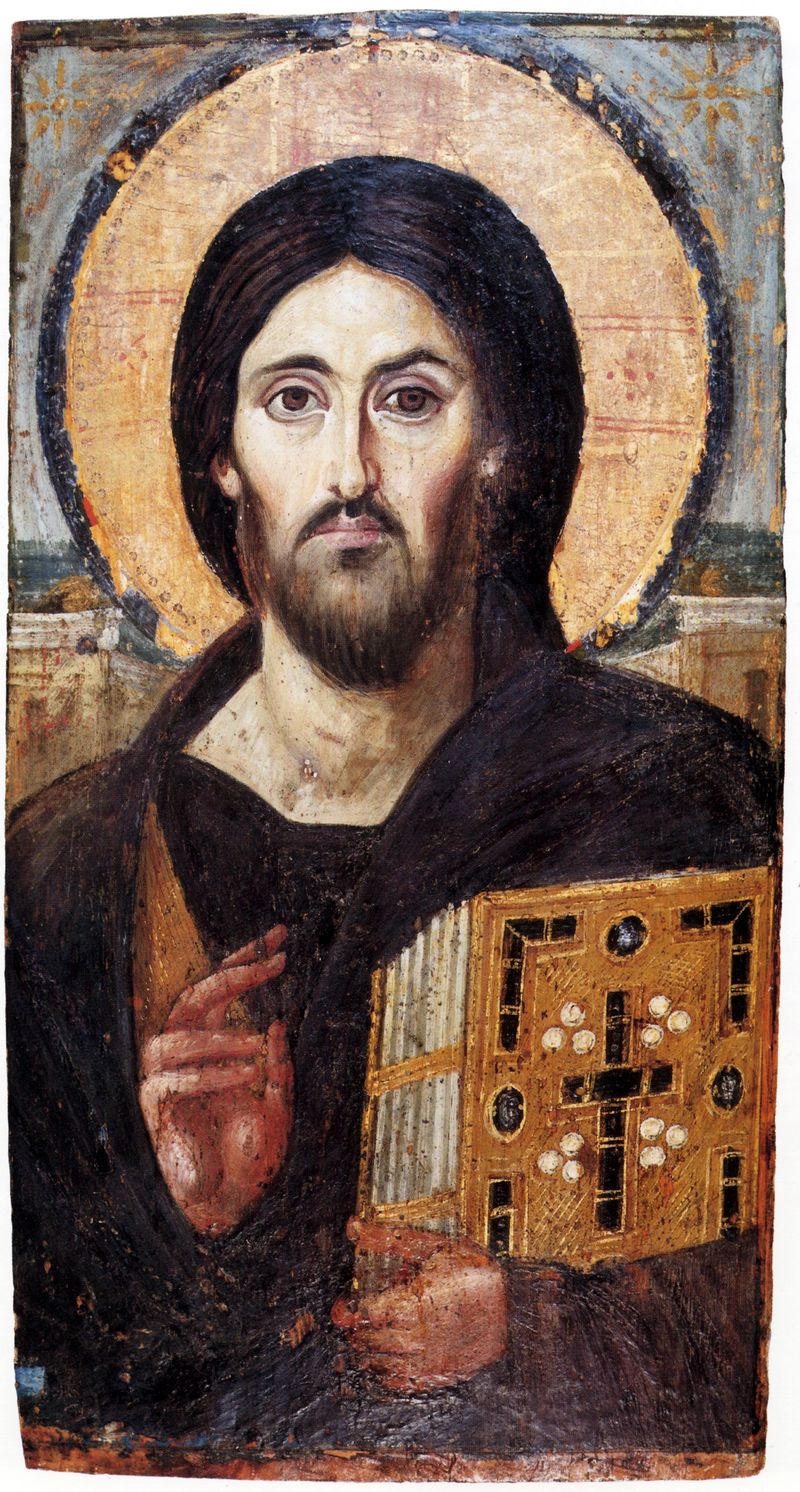
What are Orthodox icons and why do Eastern Christians venerate them? Explore the theology of icons, the iconoclasm crisis, and how icon veneration differs from idolatry.
Stay Informed
Get new writing on faith, law, and service delivered to your inbox.
No spam. Unsubscribe anytime.