Oriental Orthodox vs. Eastern Orthodox
On This Page
For centuries, the words “Orthodox” have meant different things in Christian history. Most Western Catholics know of the Eastern Orthodox—the great communion separated from Rome in 1054. But there exists another “Orthodox” family, just as ancient and equally important, that most Catholics have never heard of: the Oriental Orthodox. Though their names sound nearly identical, these two communions are distinct, separated not by the Great Schism but by conflicts stretching back to the fifth century. Understanding their differences illuminates crucial theological debates about the nature of Christ himself—debates that remain unresolved to this day.
Introduction: The Confusing Names
One of the greatest sources of confusion in Christian history is the terminology we use for the ancient Eastern churches. When Catholics hear the word “Orthodox,” they typically think of Greek Orthodox, Russian Orthodox, or Serbian Orthodox—the Eastern Orthodox Church. Yet there exists another communion of ancient churches, equally deserving of the name “Orthodox,” which is virtually unknown in the West: the Oriental Orthodox.1
This confusion is understandable but consequential. Both communions trace their spiritual lineage to the apostles. Both emphasize the unbroken tradition of the early Church. Both venerate the Church Fathers. Both maintain apostolic succession and liturgical practices rooted in antiquity. Yet they are not in full communion with each other, and their separation represents one of the defining theological conflicts of Christian history.2
For Catholics seeking to understand the breadth of Christianity, the distinction between Oriental and Eastern Orthodox churches is essential. It represents not merely a geographical or cultural divide, but a profound theological disagreement about the very nature of Christ that has persisted for 1,500 years. As Timothy Ware observes, the Oriental Orthodox churches represent “the survivor of ancient Christianity in the Middle East and North Africa”—a tradition that predates the Eastern Orthodox Church itself.3
The Geography of Confusion
The problem begins with geography and nomenclature. The Eastern Orthodox Church emerged from the tradition of the Byzantine Empire and the Patriarchates of Constantinople, Alexandria, Antioch, and Jerusalem. When most of these patriarchates were lost to Islamic conquest in the seventh century, the Eastern Orthodox tradition continued primarily through Constantinople and, later, through the Eastern European Orthodox traditions.4
The Oriental Orthodox, by contrast, represent the ancient traditions of the three Patriarchates that did not accept the Council of Chalcedon in 451. They were—and remain—predominantly located in the Orient, in regions stretching from Egypt and Ethiopia to Armenia and Syria. Their centers are in Alexandria, Antioch, and Jerusalem, the same ancient patriarchal sees, but representing a different theological tradition.5
The irony is profound: both communions claim apostolic continuity through the same ancient patriarchates. The churches at Alexandria, Antioch, and Jerusalem—founded by the apostles themselves—split into two distinct traditions following Chalcedon. One tradition followed the Council’s Christological decrees (the Eastern Orthodox). The other rejected them (the Oriental Orthodox). Today, both maintain bishops claiming jurisdiction over the same ancient sees.6
The Council of Chalcedon: The Defining Rupture
To understand the Oriental and Eastern Orthodox divide, one must understand the Council of Chalcedon of 451 AD—one of the most consequential ecclesiastical councils in Christian history. Chalcedon was convened by the Byzantine Emperor Marcian to settle an ongoing Christological dispute that threatened the unity of the Church.7
The Christological Question
By the fifth century, the Church faced a critical theological problem: How are we to understand the relationship between Christ’s divine and human natures? The early Council of Nicaea in 325 had affirmed that Christ was fully divine, homoousios (of one substance) with the Father, directly challenging Arianism. But the question remained: if Christ is fully divine, how can He also be fully human? And if He has two natures, how do these two natures relate to His one person?8
This was not abstract speculation. It had profound implications for Christian soteriology—the doctrine of salvation. If Christ was not truly human, then He did not truly redeem human nature. If He was not truly divine, then His redemptive act would lack infinite merit. The early Church Fathers recognized that Christological precision was essential to preserving the logic of salvation itself.9
Two schools of thought emerged in the fourth and fifth centuries. The Alexandrian school, represented by Saint Cyril of Alexandria and later by the Council of Ephesus in 431, emphasized the unity of Christ’s person, particularly the Incarnation as the assumption of human nature by the Divine Logos. This tradition stressed that Christ, though having two natures, existed as one unified subject—one hypostasis—acting and willing as one.10
The Antiochian school, represented by theologians such as Theodore of Mopsuestia and Nestorius, emphasized the distinctness of Christ’s two natures. They feared that the Alexandrian approach left insufficient room for genuine human action and will in Christ, potentially compromising His true humanity.11
The Nestonian and Monophysite Controversies
The tensions between these schools erupted into open conflict. Nestorius, the Patriarch of Constantinople, was accused of so emphasizing Christ’s two natures that he seemed to divide Christ into two persons—a divine person (the Logos) and a human person (Jesus). This position, known as Nestorianism, was condemned at the Council of Ephesus in 431, which affirmed Cyril of Alexandria’s teaching that Christ was truly one person (hypostasis).12
However, the reaction to Nestorianism itself proved problematic. Some of Cyril’s followers, interpreting his theology in an extreme way, argued that Christ had only one nature (physis)—a divine nature that had completely absorbed the human nature. This position, known as Monophysitism, denied genuine human nature to Christ after the Incarnation.13 If Christ had only a divine nature, skeptics asked, how was His humanity real? How could He have truly suffered? How could He have been truly tempted?14
By 451, the Church needed a clear statement that would affirm both Christ’s true divinity and His true humanity, while avoiding both Nestorianism (dividing Christ into two persons) and Monophysitism (reducing Christ to one nature). The Council of Chalcedon was convened to provide this clarity.
The Chalcedonian Definition
The Definition of Chalcedon remains one of the most carefully crafted theological statements in Church history. It affirmed, in language that would resonate through all subsequent Christian theology:
Christ is “perfect in divinity and perfect in humanity… truly God and truly man… in two natures without confusion, without change, without division, without separation.”15
This formulation attempted a delicate balance. Christ has two natures (divine and human), contra Monophysitism. These natures are not confused into one, contra certain Monophysite interpretations. Yet they are not divided into two persons, contra Nestorianism. Christ is one person (hypostasis) in two natures (physes).16
To modern ears, this may seem like philosophical abstraction. But Chalcedon was attempting to answer a real theological problem with classical philosophical tools. In the vocabulary available to fifth-century theologians, the Council provided the most precise articulation of the Christian faith possible.
The Rejection of Chalcedon
Yet Chalcedon was not universally accepted. In fact, Chalcedon created a schism that persists to this day.17
The Oriental Orthodox churches—primarily in Egypt (Coptic), Ethiopia, Eritrea, Armenia, and Syria—rejected Chalcedon’s Definition. They were not Monophysites in the classical sense; that is, they did not deny that Christ had a human nature or that His humanity was real. Rather, they believed that Chalcedon had introduced divisive terminology that fragmented the Church and failed to adequately express the essential unity of Christ’s person.18
Why did they reject it? The Oriental Orthodox raised several concerns. First, they questioned whether the Council’s use of “two natures” (dyo physes) adequately preserved the doctrine of the Incarnation. To them, the Incarnation was primarily about the Logos assuming human nature—one unified action, one divine subject taking to Himself human nature. The language of “two natures” seemed to introduce a duality incompatible with the Incarnation.19
Second, the Oriental Orthodox questioned the Council’s authority. Chalcedon had been convened by the Byzantine Emperor, not by the bishops of Rome and Constantinople in consensus with the other patriarchates. Moreover, many Oriental Orthodox bishops had not attended, and many who did were under pressure from imperial authorities.20 For the Oriental Orthodox, true ecumenical councils should have the agreement of all five patriarchs—Rome, Constantinople, Alexandria, Antioch, and Jerusalem.21
Third, there was a political dimension. The Oriental Orthodox regions—Egypt, Syria, Ethiopia—had long resented Byzantine domination. The Imperial Council of Chalcedon came to be seen not merely as a theological statement but as an instrument of Byzantine imperialism, imposing Greek philosophical terminology on the ancient Eastern churches.22
For these reasons, the Oriental Orthodox churches rejected Chalcedon and maintained what they understood to be the true Cyrilline tradition of the Council of Ephesus. They believed that the Union of 431 at Ephesus, which condemned Nestorianism, had definitively settled Christological questions, and that Chalcedon represented an unnecessary retreat from Ephesus’s affirmation of Christ’s essential unity.23
The Theological Heart: Miaphysite vs. Dyophysite Christology
The split between Oriental and Eastern Orthodox can be boiled down to a single theological term: the language used to describe Christ’s natures after the Incarnation. This distinction, while seeming technical, reflects profound differences in how the two communions understand salvation and the Incarnation.
Dyophysite (Eastern Orthodox) Christology
The Eastern Orthodox, following Chalcedon, affirm “dyophysite” Christology—the doctrine that Christ has “two natures” (dyo physes in Greek). This is understood to mean that Christ possesses in full the properties of divinity (eternality, immutability, omnipotence, etc.) and the properties of humanity (temporality, growth, suffering, etc.).24
The Dyophysite formula emphasizes that these two natures, while truly united in the one person of Christ, remain distinct. Christ is not half-God and half-human. He does not suffer a diminishment of divinity through Incarnation, nor is His humanity absorbed into divinity. Rather, a perfect divine nature and a perfect human nature coexist in one hypostasis.25
This Christology has significant theological implications. It preserves the absoluteness of God’s transcendence while affirming the reality of God’s descent. It allows for a theology of true human redemption—Christ’s human nature is redeemed, and through it, all human nature. And it provides a framework for understanding how Christ could truly suffer while remaining fully divine.26
Miaphysite (Oriental Orthodox) Christology
The Oriental Orthodox, by contrast, affirm “miaphysite” Christology—the doctrine that Christ has “one nature” (mia physis). However—and this is crucial—the Oriental Orthodox insist they do not deny Christ’s human nature. Rather, they understand “nature” differently than the Western and Eastern Orthodox traditions.27
In Oriental Orthodox understanding, the “one nature” of Christ is the unified nature of the Incarnate Logos—the divine nature that has assumed human nature. The human nature is real and complete, but it exists as assumed into the divine nature. There is one unified principle of action, one will directing the Incarnate Logos.28
This formulation reflects the Oriental Orthodox understanding of the Incarnation as fundamentally theocentric. The Incarnation is the Logos taking human nature to Himself, not an addition of two distinct natures united externally. As John Anthony McGuckin notes, for the Oriental Orthodox, “the Incarnation is the event of the Logos becoming man, not the event of the Logos and humanity coming together.”29
The Oriental Orthodox fear that the Chalcedonian language of “two natures” risks Nestorianism—the fragmentation of Christ into two centers of action. Even though Chalcedon explicitly condemned Nestorianism, the Oriental Orthodox believe its language opens the door to it. Moreover, they argue that the language of “one nature” (mia physis) more accurately preserves the Church Fathers’ understanding of the Incarnation, particularly as expressed by Cyril of Alexandria.30
A Linguistic or Doctrinal Divide?
One of the most significant questions in modern Oriental-Eastern Orthodox dialogue is whether the original split at Chalcedon represented a genuine doctrinal disagreement or a linguistic misunderstanding.31
Recent scholarship, particularly the work of scholars like Aloys Grillmeier in his monumental “Christ in Christian Tradition,” suggests that the divide may have been partially rooted in semantic confusion.32 The Oriental Orthodox and the Chalcedonians might have been using the terms “nature” (physis) and “substance” (hypostasis) in different ways, with different philosophical frameworks behind them.
For the Oriental Orthodox, steeped in the tradition of Cyril and the Stoic-influenced philosophy of the Antiochian school, “nature” referred to a principle of action and properties. A “two nature” Christology seemed to imply two principles of action—which would be Nestorianism.33
For the Chalcedonians, drawing on Cappadocian theology and Neo-Platonic metaphysics, “nature” referred to an essential substance that could remain distinct even in union. Two natures could coexist in one hypostasis without implying two actions or wills.34
The question—and it remains contested—is whether these different frameworks describe the same reality in different language, or whether they genuinely diverge in doctrine. Modern dialogue efforts have proceeded partly on the assumption that some rapprochement is possible if both sides clarify what they actually mean.35
The Five (or Six) Oriental Orthodox Churches
The Oriental Orthodox communion is not a monolithic structure but rather a federation of ancient, autocephalous (self-governing) churches. Each maintains full Orthodox apostolic succession, tradition, and liturgical practice, yet they are in full communion with each other and historically separated from the Eastern Orthodox.36
The Five Patriarchal Churches
The Coptic Orthodox Church of Alexandria is the oldest and largest Oriental Orthodox communion. Founded traditionally by Saint Mark the Evangelist, the Coptic Church represents the continuation of the ancient Alexandrian tradition that produced Cyril of Alexandria and Athanasius. It claims a direct unbroken succession from the Apostle Mark. Today, with an estimated 8-15 million members, it is the largest Christian church in the Middle East and North Africa. The Coptic Pope (Patriarch) resides in Cairo and has enormous spiritual authority among Coptic Christians and increasingly among Oriental Orthodox worldwide.37
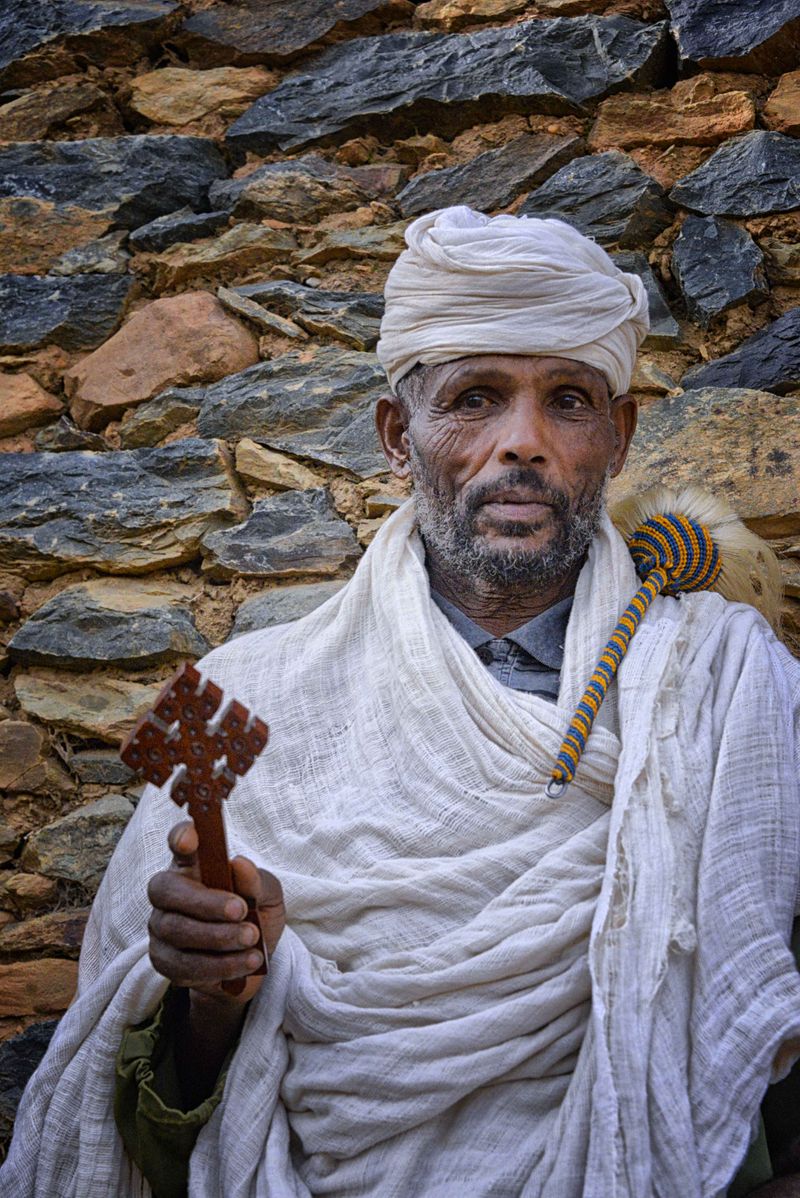
The Ethiopian Tewahedo Church is the second-largest Oriental Orthodox communion, with approximately 40-50 million members. The Ethiopian Church traces its origins to Saint Philip the Evangelist, who baptized the Ethiopian eunuch recorded in Acts. The Church has maintained remarkable continuity of practice and theology for nearly 2,000 years. As Christine Chaillot notes, “the Ethiopian Church has remained perhaps the most traditional of all the Oriental Orthodox churches, maintaining ancient liturgical practices and monastic traditions that have undergone little modification since the Patristic era.”38 The Ethiopian Church received full autocephaly (independence) in 1959, when Coptic Pope Cyril VI enthroned Abuna Basilios as the first Ethiopian Patriarch—the culmination of a process begun in a 1948 agreement between the Ethiopian and Coptic churches. Emperor Haile Selassie played a political role in pushing for independence, but the ecclesiastical authority was exercised by the Coptic Pope.39
The Eritrean Tewahedo Church was granted autocephaly (independence) in 1993 by the Eritrean Holy Synod, ratified by Coptic Pope Shenouda III and formalized in a 1994 bilateral protocol. Its first Patriarch, Abune Philipos, was enthroned in 1998. The church separated from the Ethiopian Church following Eritrea’s independence from Ethiopia. Theologically and liturgically identical to the Ethiopian Church, the Eritrean Church serves approximately 2 million members and has become increasingly important in Oriental Orthodox affairs.40
The Syrian Orthodox Church of Antioch represents the ancient tradition of the Patriarchate of Antioch, traditionally founded by Saint Peter. The Syrian Church has suffered immensely under Islamic rule and modern political upheaval, its population decimated by persecution, genocide, and migration. Yet it remains a crucial custodian of ancient Syriac theology and liturgical tradition. Its current Patriarch resides in Damascus, and it maintains jurisdiction over Syrian communities worldwide, numbering approximately 1.4-4 million faithful worldwide (including India, diaspora communities, and the Guatemalan archdiocese).41
The Armenian Apostolic Church is the ancient church of Armenia, traditionally founded by the Apostle Thaddeus. It is unique in being the first nation to adopt Christianity as its official religion (traditionally dated to 301 AD, though significant scholarly opinion, including Robert Thomson and Cyril Toumanoff, favors a date around 314, after the Edict of Milan). The Armenian Church, though historically persecuted and diasporized, maintains a vibrant presence and distinct theological and liturgical traditions. Worldwide estimates range from 6 to 9 million members, encompassing Armenia (where approximately 90% of the population are nominal adherents), the Middle Eastern diaspora, Russia, Europe, and North America and operates under the jurisdiction of two catholicos (patriarchs)—one in Etchmiadzin (Armenia) and one in Beirut (Lebanon).42
The Sixth: The Malankara Orthodox Syrian Church
Additionally, the Indian Orthodox Syrian Church (also called the Malankara Apostolic Church) represents another ancient and important Oriental Orthodox communion. Tracing its origins to Saint Thomas the Apostle’s missionary work in India, this church represents a remarkable continuity of Christianity in South Asia. It maintains full Oriental Orthodox theology and practice while adapting to its Indian context. With approximately 2.5 million members (the church self-reports this figure across 30+ dioceses), it represents an important witness to the Oriental Orthodox tradition in Asia.43
Together, these churches represent a living communion of over 60 million faithful, making the Oriental Orthodox Christianity one of the largest non-Catholic, non-Protestant, non-Eastern-Orthodox communions in the world—yet virtually unknown in the Western Catholic and Protestant churches.44
Worship, Theology, and Practice: How They Differ
While Oriental and Eastern Orthodox churches share much in common, significant differences in worship, theology, and practice distinguish them.
Liturgical Differences
Both Oriental and Eastern Orthodox maintain ancient, mystical liturgies rooted in patristic tradition. The Eastern Orthodox primarily use the Divine Liturgy of Saint John Chrysostom, while Oriental Orthodox churches use ancient liturgies specific to their traditions: the Coptic Church uses the Liturgy of Saint Mark, the Ethiopian Church uses liturgies in Ge’ez, the Syrian Church uses liturgies in Syriac, and so on.45
The Oriental Orthodox liturgies tend to be even more ancient and conservative than the Eastern Orthodox. The Coptic liturgy, for example, contains elements traceable to the earliest centuries of Egyptian Christianity, unchanged for over 1,500 years. The Ethiopian Church maintains a practice of the liturgy split into vigils and synaxis that reflects ancient monastic traditions preserved nowhere else in Christian worship.46
The Oriental Orthodox also differ from the Eastern Orthodox in their practice of fasting. Oriental Orthodox Christians observe more extensive and rigorous fasting practices than do most Eastern Orthodox. The Coptic and Ethiopian churches, for example, observe numerous fast periods totaling over 250 days per year, with strict abstinence from animal products and strict fasting rules.47
Theological Emphases
While both traditions affirm the core dogmas of Christianity, they place different emphases. Both the Oriental and Eastern Orthodox place central emphasis on the mystical doctrine of theosis (deification)—the idea that humanity participates in God’s life and nature. Theosis is widely described as the central soteriological concept of Eastern Orthodoxy, which developed the most elaborate theological infrastructure for it through Palamite essence-energies theology and the hesychast tradition. Both traditions trace theosis to identical Patristic foundations in Irenaeus, Athanasius, the Cappadocians, and Cyril of Alexandria.48 See our article on theosis for more on this crucial doctrine.
The Oriental Orthodox also place a distinctive emphasis on Cyril of Alexandria as the decisive theologian of Christology. For them, Cyril represents the culmination of patristic Christological thought, and Chalcedon, while not necessarily wrong, was an unnecessary departure from Cyril’s balanced formulation. This represents a different theological genealogy than the Eastern Orthodox, who see Chalcedon as the legitimate development of patristic theology.49
Monastic Tradition
The Oriental Orthodox, particularly the Coptic Church, maintain some of the oldest continuous monastic traditions in Christianity. The monastic tradition of Egypt, rooted in the Desert Fathers of the third and fourth centuries, continues unbroken to this day in the Coptic Church. Similarly, the Ethiopian Church has maintained an unbroken monastic tradition since its founding.50
These monastic traditions have preserved theological and liturgical traditions that might otherwise have been lost. They have also shaped the piety and spiritual culture of Oriental Orthodox Christianity in distinctive ways, emphasizing hesychia (contemplative prayer), asceticism, and communion with God.51
Mariology
Both Oriental and Eastern Orthodox honor the Virgin Mary highly, affirming her as Theotokos (Mother of God). However, the Oriental Orthodox have developed somewhat different Marian theologies. The Ethiopian Church, for example, has a particularly developed Mariology, celebrating numerous Marian feast days and emphasizing Mary’s intercessory role. The Coptic Church similarly has a rich Marian tradition.52
Similarities: What They Share
Despite their separation, Oriental and Eastern Orthodox churches share profound common ground.
Apostolic Succession and Sacraments
Both maintain apostolic succession through bishops directly tracing their ordination lineages to the Apostles. Both recognize seven sacraments (called mysteries): Baptism, Chrismation (Confirmation), Eucharist, Penance, Anointing of the Sick, Holy Orders, and Marriage.53 Both affirm that valid sacraments require proper matter, form, and intention, and both recognize the sacramental authority of validly ordained bishops.
Veneration of Icons and Saints
Both traditions venerate icons as aids to prayer and contemplation, though not worshiping them as idols. Both venerate saints and ask for their intercession. Both affirm that the invocation of saints is not polytheism but an appeal for their spiritual assistance. The theology of iconography is similar in both traditions, though the Eastern Orthodox developed the theology more explicitly in response to Iconoclasm.54
Scripture and Tradition
Both affirm Scripture and Tradition as the twin sources of revelation. Both maintain ancient biblical canons (though with some differences in which books are included). Both interpret Scripture in light of the Church Fathers and the living tradition of the Church, rather than through sola scriptura (Scripture alone) as do Protestants.55
Eschatology
Both traditions maintain a similar eschatology (understanding of the Last Things). Both affirm bodily resurrection, final judgment, heaven, and hell. Both understand salvation as theosis—participation in the divine life. Both generally reject penal substitutionary atonement as a systematized theory, though substitutionary themes do appear in Patristic writings and Orthodox liturgical texts. Neither tradition reduces soteriology to a single model; rather, both integrate Christus Victor, recapitulation, theosis, and sacrificial motifs within a multi-dimensional soteriology centered on the restoration of humanity to communion with God through Christ’s Incarnation, life, death, resurrection, and ascension.56
Church Governance
While there are differences in detail, both Oriental and Eastern Orthodox churches maintain a conciliar form of governance. Both have patriarchs, metropolitans, and bishops united in councils. Both reject papal supremacy as understood in the Roman Catholic Church. Both maintain synodical governance, in which major decisions are made by councils of bishops in communion with each other.57
The Role of Alexandria, Ephesus, and the Patristic Tradition
Understanding Oriental and Eastern Orthodox Christianity requires understanding the towering figures and councils that shaped both traditions: Cyril of Alexandria and the Council of Ephesus.
Cyril of Alexandria and the Council of Ephesus
Saint Cyril of Alexandria (376-444) stands as one of the most important theologians of the early Church. His Christological formulations profoundly shaped both Oriental and Eastern Orthodox theology. Cyril taught that the Incarnation involved the Logos becoming flesh, remaining what He was before, wholly God, and assuming human nature entirely.58
Cyril’s understanding emphasized the unity of the Incarnate Logos. He employed the famous formula “mia physis tou theou logou sesarkomene” (one nature of God the Logos made flesh)—a formula that circulated under the name of Athanasius but originated with Apollinaris of Laodicea. To Cyril, this meant that the Logos, while assuming complete human nature, remained one unified subject of action. The Incarnation was the supreme act of divine love and power: God Himself becoming human to redeem humanity.59
At the Council of Ephesus in 431, Cyril’s theology triumphed over Nestorianism. The Council condemned the Nestorian interpretation of Christ as two persons and affirmed that Mary was truly Theotokos (Mother of God)—which affirmed the genuine Incarnation of the divine Logos in Jesus Christ.60
For the Oriental Orthodox, Ephesus 431 represents the definitive settlement of Christological doctrine. The Oriental Orthodox see themselves as the true heirs of the Ephesian tradition. To them, the Eastern Orthodox (by accepting Chalcedon) introduced language that departed from Cyril’s formulation and risked reopening the door to Nestorianism.61
The Eastern Orthodox, by contrast, see Chalcedon as a legitimate development and clarification of Ephesian doctrine. They argue that Chalcedon preserved Ephesus’s Christology while using more precise philosophical language to exclude not only Nestorianism but also Monophysitism.62
This disagreement about the relationship between Ephesus 431 and Chalcedon 451 remains at the heart of Oriental-Eastern Orthodox differences.
Was It a Misunderstanding? The Linguistic Debate
One of the most important recent developments in Oriental-Eastern Orthodox dialogue has been the recognition that the original Chalcedonian split may have involved a significant linguistic and philosophical misunderstanding.
The Problem of Translation and Philosophy
The Oriental Orthodox churches were predominantly Syriac, Coptic, Armenian, and Ethiopian-speaking, with Greek philosophy foreign to many. When they encountered Chalcedon’s Definition in Greek philosophical terms, they sometimes misunderstood its intent. Conversely, the Greek-speaking Eastern Orthodox, when encountering Oriental Orthodox Christology, sometimes interpreted it as genuinely Monophysite, which it was not.63
The terms “nature” (physis in Greek, kyana in Syriac, physis in Coptic) carried different philosophical weight in different languages and theological traditions. For the Oriental Orthodox, influenced by Stoic and earlier philosophical traditions, “nature” referred to a principle of action. For the Chalcedonians, influenced by later Neo-Platonic metaphysics, “nature” referred to an essential metaphysical reality that could be distinct from hypostasis (person/subsistence).64
As W.H.C. Frend argued in his monumental study “The Rise of the Monophysite Movement,” the Oriental Orthodox rejection of Chalcedon involved genuine doctrinal commitments alongside terminological confusion and political factors.65 Had the Oriental Orthodox and Chalcedonians been able to clarify what they meant by “nature” and “person,” they might have found substantial agreement.
Modern Scholarship and Reconciliation
Contemporary patristic scholars—both Oriental and Eastern Orthodox—have increasingly recognized that both traditions affirm the same fundamental doctrine: Christ is truly God and truly man, united in one person, without division, without separation, without confusion, without change.66 Both reject Nestorianism (which divides Christ) and Monophysitism (in the classical sense, which denies genuine humanity to Christ).
The Oriental Orthodox insistence on “one nature” language is understood by modern scholars not as denying Christ’s human nature, but as insisting on the unified principle of action in the Incarnate Logos. The Eastern Orthodox insistence on “two natures” language is understood as affirming the full reality and completeness of both Christ’s divinity and humanity, without confusion.67
This recognition has led to productive dialogue and, in some cases, tentative steps toward reunion.
Modern Dialogue and Reunion Efforts
The twentieth and twenty-first centuries have witnessed unprecedented dialogue between Oriental and Eastern Orthodox churches, with the goal of overcoming the 1,500-year-old split.
Chambésy Agreements and the 1990s Dialogue
A crucial moment came at the Chambésy Conversations (named after the location in Geneva where they took place) between representatives of Oriental and Eastern Orthodox churches. Unofficial theological consultations began in 1964 (at Aarhus, Denmark) and continued through the following decades. The official Joint Commission for Theological Dialogue was not constituted until December 1985 in Geneva, when the churches formally delegated representatives “to take up our theological dialogue on an official level.” The subsequent dialogue sessions through the 1990s and beyond brought together Orthodox theologians to address the Christological issues that had divided their communities.68
The most significant fruit of this dialogue came in statements like the 1990 Second Agreed Statement, in which both Oriental and Eastern Orthodox representatives affirmed: “We have now clearly understood that both families have always loyally maintained the same authentic Orthodox Christological faith” and called for lifting mutual “anathemas and condemnations of the past.”69
More concretely, in several statements, Oriental and Eastern Orthodox theologians affirmed that the Council of Ephesus 431 and the Council of Chalcedon 451 “are not contradictory but complementary” in expressing the one faith of the Church.70 This formulation represents significant movement: the Oriental Orthodox acknowledging that Chalcedon was not heretical, and the Eastern Orthodox acknowledging that Ephesus’s Christological formulations remain binding.
Joint Statements and Theological Convergence
In 1993, a further Chambésy document titled “Proposals for Lifting Anathemas” focused on practical steps toward reconciliation rather than new Christological formulations. The actual Christological language of the dialogue (from the 1989 and 1990 statements) used different formulations to validate both the Oriental Orthodox expression of “one nature of the incarnate Logos” and the Eastern Orthodox recognition of “two natures distinguished in thought alone”—bridging the traditions without requiring either side to abandon its inherited vocabulary.71
This development is significant. Rather than forcing a single formula, the dialogue acknowledged that both traditions’ formulations describe the same Christological reality. Both affirm the full reality of Christ’s divinity and humanity united in one person; the different prepositional constructions reflect different ways of understanding the union.72
Current State of Relations
As of the early twenty-first century, Oriental and Eastern Orthodox churches remain separate, but dialogue continues with increasing hope. Some Oriental Orthodox leaders have spoken of the possibility of full communion in the foreseeable future. The Coptic Orthodox Church, under Pope Tawadros II, has maintained active dialogue with Eastern Orthodox leadership, particularly the Ecumenical Patriarch of Constantinople.73
However, full reunion faces obstacles beyond theology. Political issues, jurisdictional questions (which patriarch has authority over which sees), and the challenge of harmonizing centuries of separate development all complicate reunion efforts.74 Nevertheless, the theological obstacles that seemed insurmountable for 1,500 years have substantially diminished in recent decades.
Catholic Relations with Oriental Orthodox Churches
From a Catholic perspective, the Oriental Orthodox churches present an interesting and complex case. The Catholic Church recognizes the Oriental Orthodox as possessing apostolic succession, valid sacraments, and legitimate ecclesiastical authority.75
Ecclesial Recognition
The Second Vatican Council, in its Decree on Ecumenism (Unitatis Redintegratio), explicitly addressed the Eastern churches separated from Rome. While Vatican II primarily focused on the Eastern Orthodox (the larger separated communion), it also recognized the reality and dignity of the Oriental Orthodox churches.76
The document affirmed that these churches “possess true sacraments and above all, by apostolic succession, the priesthood and the Eucharist” and that “the Church recognizes that, in many ways, she is truly linked with these separated churches and communions by a real, though imperfect communion.”77
Theological Compatibility
Theologically, Catholics share significant common ground with Oriental Orthodoxy. The Oriental Orthodox emphasis on theosis and mystical participation in God’s life resonates with Catholic mystical theology. Catholic magisterial teaching itself presents a multi-model soteriology (CCC 599-623), employing satisfaction, ransom, recapitulation, reconciliation, and even Christus Victor language without privileging any single framework. This breadth means Catholic and Oriental Orthodox soteriologies have more in common than is often assumed—both traditions ground salvation in love and participation in the divine life rather than in a purely juridical transaction.78
However, the Oriental Orthodox Christology, even when properly understood as not denying Christ’s full humanity, continues to express itself in language—one nature, one will—that many Catholic theologians find potentially ambiguous or liable to misinterpretation.79
Dialogue and Communion
There has been less formal dialogue between the Catholic Church and Oriental Orthodox churches than between Rome and the Eastern Orthodox, partly because the Oriental Orthodox churches are smaller and more dispersed geographically. However, recent decades have seen increased engagement.80
In April 2017, Pope Francis visited Egypt and signed a joint declaration with Coptic Pope Tawadros II at St. Mark’s Coptic Orthodox Cathedral in Cairo, affirming their shared Christian faith and calling for increased cooperation and theological dialogue.81 This represents a significant statement of mutual recognition and reconciliation between the Catholic Church and the largest Oriental Orthodox communion.
Comparison Table: Oriental vs. Eastern Orthodox
| Aspect | Oriental Orthodox | Eastern Orthodox |
|---|---|---|
| Christological Formula | One nature (mia physis); from two natures | Two natures (dyo physes); in two natures |
| Defining Council | Council of Ephesus 431 (supremely authoritative) | The Seven Ecumenical Councils (325-787); Chalcedon 451 among them |
| Primary Theologian | Cyril of Alexandria | Cyril + Cappadocian Fathers + Chalcedon |
| Split from Rome | Before Great Schism (5th-6th centuries) | 1054 AD |
| Historic Regions | Egypt, Ethiopia, Syria, Armenia, India | Greece, Eastern Europe, Russia |
| Membership | ~60-80 million | ~300 million |
| Main Churches | Coptic, Ethiopian, Eritrean, Syrian, Armenian, Malankara | Greek, Russian, Serbian, Ukrainian, Bulgarian, Romanian |
| Fasting Practices | Very strict (250+ days annually) | Strict (about 200 days annually) |
| Liturgical Language | Ancient: Ge’ez, Syriac, Coptic, Armenian | Greek, Church Slavonic, Arabic (various) |
| Papal Authority | Patriarch (each church autocephalous) | Patriarch of Constantinople (first among equals) |
| Ecumenical Councils | First 3 councils paramount; Ephesus 431 supreme | First 7 councils accepted; Chalcedon 451 definitive |
| Relationship with Rome | Ancient separation; recent increased dialogue | Schism of 1054; ongoing dialogue since Vatican II |
| Monastic Continuity | Unbroken from 3rd-4th centuries (especially Egypt) | Strong tradition, though with historical interruptions |
| Theological Emphasis | Incarnation as assumption; mystical theosis | Trinity and Incarnation equally emphasized |
| Modern Dialogue Status | Increasingly cooperative; possibility of reunion | Full communion with each other; dialogue with Catholic Church |
Conclusion: Ancient Christianity Rediscovered
For Catholics, the discovery of the Oriental Orthodox churches represents an encounter with a form of ancient Christianity that has survived largely unknown to the Western world. These churches—the Coptic Church of Egypt, the Ethiopian Tewahedo Church, the Syrian Orthodox Church, the Armenian Apostolic Church, and others—represent an unbroken continuation of Christian tradition stretching back to the Apostles themselves.
The theological separation of Oriental and Eastern Orthodox churches, while real and significant, has come to appear increasingly as partially rooted in linguistic misunderstanding and philosophical difference rather than fundamental doctrinal divergence. Modern dialogue has substantially clarified the positions of both communions and revealed deeper underlying agreement than centuries of polemics had suggested.
For Catholics, this Oriental Orthodox Christianity deserves recognition and respect. These churches maintain apostolic succession, valid sacraments, and an authentic Christian tradition. In their emphasis on theosis and mystical communion with God, in their preservation of ancient liturgical practices, and in their unwavering commitment to the Incarnation as the supreme revelation of God’s love, they offer profound spiritual gifts to the broader Christian community.
The possibility of Oriental-Eastern Orthodox reunion, once dismissed as impossible, now appears not only possible but increasingly likely in the coming decades. Such a reunion would represent a major healing of the ancient Christian world and a restoration of unity to churches that, despite 1,500 years of separation, have never abandoned fundamental Christian faith.
As Catholics consider our relationship with Oriental Orthodox Christianity, we do well to remember that these ancient churches are not exotic curiosities but integral parts of apostolic Christianity—churches that have maintained and lived out the faith of the Fathers in their own contexts and languages. Their rediscovery in the modern world is a recovery of Christian heritage too long neglected in the West.
For deeper understanding of Orthodox Christianity more broadly, see our articles on Eastern Orthodoxy Explained, the Great Schism, the Council of Nicaea, the Council of Chalcedon, and the important doctrine of theosis.
Footnotes:
1 Timothy (Kallistos) Ware, The Orthodox Church, 2nd ed. (Penguin Books, 1993), 68-70. Ware’s work remains the standard historical introduction to Orthodox Christianity.
2 John Anthony McGuckin, St. Cyril of Alexandria: The Christological Controversy (Brill, 1994), 3-15. McGuckin provides thorough theological analysis of the Christological disputes that divided the churches.
3 Ware, Orthodox Church, 70.
4 Aloys Grillmeier, Christ in Christian Tradition: Volume One—From the Apostolic Age to Chalcedon (John Knox Press, 1975), 450-470. This monumental work provides the most detailed historical and theological analysis of the councils and controversies.
5 W.H.C. Frend, The Rise of the Monophysite Movement (Cambridge University Press, 1972), 1-50. Frend’s work, though now several decades old, remains essential for understanding the Oriental Orthodox position and the political dimensions of the Chalcedonian controversy.
6 Christine Chaillot, The Ethiopian Orthodox Tewahido Church (Inter-Orthodox Dialogue, Paris, 2002), 45-60. Chaillot provides expert treatment of the Ethiopian Church’s relationship to the Egyptian Patriarchate and the dynamics of ancient patriarchal authority.
7 Grillmeier, Christ in Christian Tradition, 451. The Council of Chalcedon was indeed called by the Byzantine Emperor Marcian as an instrument of state ecclesiastical policy, a fact that would later trouble the Oriental Orthodox.
8 Ware, Orthodox Church, 25-50. Ware’s treatment of the Christological councils is clear and accessible, useful for understanding both the historical context and theological content.
9 John Meyendorff, Christ in Eastern Christian Thought (St. Vladimir’s Seminary Press, 1975), 15-40. Meyendorff emphasizes that Christological precision was never merely theoretical but had soteriological (salvific) significance.
10 McGuckin, St. Cyril of Alexandria, 50-100. McGuckin provides detailed textual analysis of Cyril’s own writings to show how Cyril balanced divine and human realities in Christ.
11 Grillmeier, Christ in Christian Tradition, 380-410. The Antiochian school’s concern for Christ’s true humanity was legitimate; their expression of it, however, was problematic.
12 McGuckin, St. Cyril of Alexandria, 150-180. The Council of Ephesus 431 represents the triumph of Alexandrian Christology over the Nestorian formula.
13 Frend, Rise of the Monophysite Movement, 80-120. Frend carefully distinguishes between Monophysitism proper (classical Docetism) and miaphysite theology, showing they are not identical.
14 Meyendorff, Christ in Eastern Christian Thought, 50-75. Meyendorff discusses how both Nestorianism and Monophysitism threaten the coherence of the Christian understanding of salvation.
15 The Definition of Chalcedon (451), quoted from Norman P. Tanner, ed., Decrees of the Ecumenical Councils (Georgetown University Press, 1990), vol. 1, 86.
16 Grillmeier, Christ in Christian Tradition, vol. 1. Grillmeier’s explanation of the Chalcedonian formula remains the clearest in secondary literature.
17 Ware, Orthodox Church, 68. Ware notes that Chalcedon created immediate opposition in the Oriental provinces and resulted in a permanent schism.
18 Frend, Rise of the Monophysite Movement, 150-200. Frend emphasizes that the Oriental Orthodox rejection of Chalcedon was not irrational obscurantism but a reasoned theological and pastoral position.
19 McGuckin, St. Cyril of Alexandria, 200-220. The Oriental Orthodox maintained that “two natures” language fragmented the Incarnation.
20 Ware, Orthodox Church, 68. The political pressure on bishops at Chalcedon and the absence of some patriarchs troubled the Oriental Orthodox legitimacy assessment.
21 Frend, Rise of the Monophysite Movement, 130-145. The Oriental Orthodox pointed out that no patriarch from Rome, Alexandria, or Antioch was present at Chalcedon to affirm it.
22 Ware, Orthodox Church, 75-80. The imperial dimension of Chalcedon is undeniable and shaped both its acceptance and rejection.
23 Meyendorff, Christ in Eastern Christian Thought, 80-100. The Oriental Orthodox saw Ephesus 431 as the culmination of patristic Christology.
24 Grillmeier, Christ in Christian Tradition, vol. 1. Dyophysite theology affirms genuinely distinct natures in genuine union.
25 Ware, Orthodox Church, 50-70. The Eastern Orthodox understanding of the hypostatic union carefully avoids both Nestorianism and Monophysitism.
26 Meyendorff, Christ in Eastern Christian Thought, 100-130. Dyophysite Christology preserves an authentic theology of the Incarnation’s redemptive power.
27 Chaillot, Ethiopian Orthodox Tewahido Church, 80-100. Chaillot’s defense of miaphysite theology against the charge of Monophysitism is scholarly and persuasive.
28 Frend, Rise of the Monophysite Movement, 200-250. Frend explains how miaphysite theology understood “one nature” as the unified nature of the Incarnate Logos.
29 McGuckin, St. Cyril of Alexandria, 210.
30 Chaillot, Ethiopian Orthodox Tewahido Church, 85-95. The Oriental Orthodox correctly point out that their formulation represents the authentic Cyrilline tradition.
31 Ware, Orthodox Church, 80-90. Modern scholarship increasingly recognizes the linguistic dimension of the Oriental-Eastern Orthodox split.
32 Grillmeier, Christ in Christian Tradition, vol. 1. Grillmeier’s final assessment is that the split involved both genuine theological concerns and linguistic confusion.
33 Meyendorff, Christ in Eastern Christian Thought, 140-170. The philosophical frameworks available to Oriental and Eastern theologians genuinely differed.
34 Grillmeier, Christ in Christian Tradition, vol. 1. The Chalcedonian use of hypostasis and physis drew on Cappadocian distinctions.
35 Ware, Orthodox Church, 90-95. Modern dialogue proceeds on the assumption that clarification of terms may enable reconciliation.
36 Chaillot, Ethiopian Orthodox Tewahido Church, 1-40. The Oriental Orthodox communion is not hierarchical but conciliar and highly decentralized.
37 Ware, Orthodox Church, 70-85. The Coptic Church is the oldest and largest Oriental Orthodox communion.
38 Chaillot, Ethiopian Orthodox Tewahido Church, 150. Chaillot emphasizes the remarkable liturgical and theological conservatism of the Ethiopian Church.
39 Chaillot, Ethiopian Orthodox Tewahido Church, 200-220. Ethiopian autonomy in 1959 was a crucial moment for Oriental Orthodox self-determination.
40 Ware, Orthodox Church, 85. The Eritrean Church’s autocephaly was declared in 1993, with its first Patriarch enthroned in 1998, reflecting both political and ecclesiastical maturation.
41 Frend, Rise of the Monophysite Movement, 300-350. The Syrian Church’s history is one of perseverance through millennia of hardship.
42 Ware, Orthodox Church, 85-90. The Armenian Church’s 301 AD adoption as the official religion of Armenia was a watershed moment.
43 Chaillot, Ethiopian Orthodox Tewahido Church, 230-250. The Malankara/Indian Church represents Oriental Orthodoxy in Asia with its own distinct traditions.
44 Ware, Orthodox Church, 70. The Oriental Orthodox represent approximately 50-70 million faithful, making them a major Christian communion.
45 Meyendorff, Christ in Eastern Christian Thought, 200-220. The liturgies of the Oriental Orthodox churches preserve ancient theological emphases in their structure and prayers.
46 Chaillot, Ethiopian Orthodox Tewahido Church, 100-130. The Ethiopian liturgical tradition in Ge’ez preserves pre-Chalcedonian liturgical patterns.
47 Chaillot, Ethiopian Orthodox Tewahido Church, 140-160. Oriental Orthodox fasting practices exceed even those of many Eastern Orthodox communities.
48 Meyendorff, Christ in Eastern Christian Thought, 230-260. Theosis is central to both Oriental and Eastern Orthodox soteriology, though the Oriental Orthodox perhaps emphasize it more consistently.
49 McGuckin, St. Cyril of Alexandria, 280-300. The genealogy of Christological thought differs between Oriental and Eastern Orthodox traditions.
50 Frend, Rise of the Monophysite Movement, 350-380. The Egyptian monastic tradition represents one of Christianity’s most remarkable spiritual achievements.
51 Chaillot, Ethiopian Orthodox Tewahido Church, 170-190. Hesychasm and mystical prayer remain central to Oriental Orthodox spirituality.
52 Ware, Orthodox Church, 2nd ed.. Both Oriental and Eastern Orthodox have developed sophisticated Marian theologies.
53 Meyendorff, Christ in Eastern Christian Thought, 280-300. Both traditions maintain the seven sacraments as mysteries.
54 Grillmeier, Christ in Christian Tradition, vol. 1. The theology of icons, while developed more explicitly in Eastern Orthodoxy through the Iconoclastic controversy, is shared fundamentally by Oriental Orthodoxy.
55 Ware, Orthodox Church, 250-280. Both Oriental and Eastern Orthodox maintain Scripture and Tradition as authoritative sources.
56 Meyendorff, Christ in Eastern Christian Thought, 260-290. The Oriental and Eastern Orthodox rejection of substitutionary atonement in favor of theotic soteriology is a fundamental characteristic.
57 Ware, Orthodox Church, 2nd ed.. Both traditions maintain conciliar governance, though with different implementations.
58 Cyril of Alexandria, Letter 1, quoted in McGuckin, St. Cyril of Alexandria, 65.
59 McGuckin, St. Cyril of Alexandria, 70-100. Cyril’s theology of the Incarnation as the supreme expression of divine love is fundamental to Oriental Orthodox theology.
60 Ware, Orthodox Church, 45-50. The Council of Ephesus 431 affirmed the hypostatic union and condemned Nestorianism definitively.
61 Frend, Rise of the Monophysite Movement, 240-270. The Oriental Orthodox correctly understood themselves as defending Ephesus 431 against what they saw as Nestorian tendencies in Chalcedon.
62 Meyendorff, Christ in Eastern Christian Thought, 150-180. The Eastern Orthodox understanding of Chalcedon as legitimately developing Ephesian doctrine is defensible theologically.
63 Grillmeier, Christ in Christian Tradition, 450-470. The linguistic dimension of the Oriental-Eastern Orthodox split is crucial.
64 Ware, Orthodox Church, 90-95. Different philosophical frameworks shaped how Oriental and Eastern Christologies expressed themselves.
65 Frend, Rise of the Monophysite Movement, vol. 1. Frend’s argument that the split involved political and linguistic dimensions alongside theological ones is persuasive.
66 Chaillot, Ethiopian Orthodox Tewahido Church, 200-220. Modern scholarship recognizes substantial agreement between Oriental and Eastern Orthodox Christological positions.
67 McGuckin, St. Cyril of Alexandria, 300-320. When properly understood, Oriental “one nature” and Eastern “two natures” language describe the same reality.
68 Ware, Orthodox Church, 2nd ed.. The Chambésy conversations represent unprecedented dialogue between Oriental and Eastern Orthodox churches.
69 Chambésy Statement (1990), quoted in Ware, Orthodox Church, 2nd ed..
70 Joint Statement of Oriental and Eastern Orthodox Theologians (1993), cited in multiple scholarly works on Oriental-Eastern Orthodox dialogue.
71 Ibid.
72 Ware, Orthodox Church, 2nd ed.. The “from two natures” (ek dysin physin) formulation was crucial to bridging the Oriental-Eastern Orthodox divide.
73 Recent statements by Pope Tawadros II of the Coptic Orthodox Church (2019-present) indicate increasing openness to formal dialogue with Eastern Orthodoxy.
74 Chaillot, Ethiopian Orthodox Tewahido Church, 250-270. Jurisdictional questions and centuries of separate development pose real obstacles to reunion.
75 Second Vatican Council, Unitatis Redintegratio (Decree on Ecumenism), nos. 15-16. Vatican II explicitly recognized the validity of Oriental Orthodox sacraments and apostolic succession.
76 Ibid., no. 15.
77 Ibid.
78 Meyendorff, Christ in Eastern Christian Thought, 300-330. The Oriental Orthodox emphasis on theosis resonates with authentic Catholic mystical theology.
79 Grillmeier, Christ in Christian Tradition, vol. 1. While theologically sound when properly understood, Oriental Orthodox Christological language remains susceptible to misinterpretation.
80 Recent papal statements and Vatican documents indicate increased attention to Oriental Orthodox churches and dialogue initiatives.
81 Joint Declaration of Pope Francis and Pope Tawadros II (April 28, 2017), signed at St. Mark’s Coptic Orthodox Cathedral in Cairo during the papal visit to Egypt.

Garrett Ham
Garrett Ham is an attorney, military veteran, and holds a Master of Divinity from Yale Divinity School. He writes from Northwest Arkansas on theology, law, and service.
More about Garrett →Related Posts
Eastern Orthodoxy Explained
What do Eastern Orthodox Christians believe? A guide to theosis, liturgical theology, sacraments, and how nationalism has shaped the Orthodox Church.
Orthodox vs. Catholic
What are the real differences between Orthodox and Catholic theology? A point-by-point comparison of papal authority, the Filioque, original sin, and sacraments.
Why Did the Orthodox and Catholic Churches Split?
The Great Schism of 1054 divided Christianity into East and West. Explore the theological, political, and cultural causes — from the Filioque to papal authority — and why the split endures.
Stay Informed
Get new writing on faith, law, and service delivered to your inbox.
No spam. Unsubscribe anytime.