The Office of Special Trial Counsel
On This Page
The Office of Special Trial Counsel (OSTC) is the most consequential change to court-martial disposition authority in a generation. This post explains Article 24a, UCMJ, the covered offenses, each service’s OSTC structure, and how the OSTC interacts with the Article 32 preliminary hearing and traditional convening-authority powers.
A Decade-Long Push for Change
For nearly a decade before Article 24a became law, Senator Kirsten Gillibrand and Senator Chuck Grassley pushed the Military Justice Improvement Act, a bill aimed at one structural change: removing the most serious criminal cases from the commander’s chain of command and placing them with independent military prosecutors. Gillibrand first introduced the bill in 2013 and reintroduced it every Congress that followed, working with veterans’ groups, survivors, and bipartisan co-sponsors.
The argument was that commanders — line officers without legal training, sometimes with conflicts of interest, and answerable to readiness pressures rather than prosecutorial standards — should not decide whether to refer rape, murder, or domestic-violence charges to a court-martial. After years of DoD reports documenting persistent military sexual assault and uneven prosecution outcomes, Congress folded a modified version of the MJIA framework into the FY 2022 National Defense Authorization Act, creating Article 24a, UCMJ, and the OSTC.
Covered Offenses and Effective Dates
Article 24a applies to “covered offenses.” For offenses committed on or after 27 December 2023, the STC has exclusive authority over:
- Article 117a (wrongful broadcast or distribution of intimate visual images)
- Article 118 (murder)
- Article 119 (manslaughter)
- Article 119a (death or injury of an unborn child)
- Article 120 (rape and sexual assault)
- Articles 120a, 120b, and 120c (mails: depositing obscene matter; rape and sexual assault of a child; other sexual misconduct)
- Article 125 (kidnapping)
- Article 128b (domestic violence)
- Article 130 (stalking)
- Article 132 (retaliation)
- Article 134 specifications for child pornography
Effective 1 January 2025, Article 134 sexual-harassment specifications were added to the covered-offense list. Implementing rules are codified in the 2023 amendments to the Manual for Courts-Martial issued via Executive Order 14103.
Service-by-Service OSTC Structure
Four Offices of Special Trial Counsel reached full operational capability on 28 December 2023: the Army OSTC, the Department of the Air Force OSTC (covering both the Air Force and Space Force), the Navy OSTC, and the Marine Corps OSTC.
Each office is led by a Lead Special Trial Counsel (LSTC) — a judge advocate of the relevant service at the rank of O-7 (brigadier general or rear admiral lower half) or higher, with significant military-justice experience. Critically, the LSTC reports directly to the Service Secretary, not to the Judge Advocate General and not through any commander. That reporting line is what makes the office “independent” in the structural sense Gillibrand spent a decade fighting for. Policies governing the LSTC and STC chain of command are codified at 10 U.S.C. § 1044f.
What “Exclusive Authority” Actually Means
For covered offenses, the STC’s authority is binding. The convening authority must refer the charges if the STC directs it. The STC controls whether to send the case to a general court-martial, a special court-martial, or to dispose of it through some non-judicial means. The STC also has dismissal authority. None of this requires the commander’s signature.
The authority does not extend to non-covered offenses. A commander still convenes the court-martial, still acts as convening authority for purposes of detailing court members and ruling on certain post-trial matters, and still handles all conduct that falls outside the covered-offense list — most disciplinary matters in any given unit. When charges include both covered and non-covered offenses arising from the same incident, the STC’s authority controls the covered offenses; the commander’s authority controls the rest, with coordination required between the two.
Interaction with the Article 32 Hearing
When the STC exercises authority over covered offenses, the STC — not the commander — controls the Article 32 preliminary hearing process. Under 10 U.S.C. § 832, the STC may request a hearing officer, and the convening authority must provide one. The accused’s waiver of the Article 32 hearing must be approved by the STC, not the commander. The hearing officer’s report is transmitted to the STC. The STC then makes the referral decision, which the convening authority must follow.
Open Questions in the OSTC Era
Several questions remain unsettled. First, how STCs and commanders will divide responsibility for cases mixing covered and non-covered offenses — particularly when the non-covered offenses arise from the same factual incident — has been worked out only partially. Second, courts have not yet meaningfully tested how the doctrine of unlawful command influence applies when prosecution authority sits outside the chain of command. Third, the STCs’ charging discretion in close cases is broad, and how that discretion is exercised will shape the military-justice system’s response to allegations that fall short of clear-cut covered-offense facts. The first years of OSTC practice will produce appellate decisions that begin to answer these questions; until then, practitioners should expect significant variation in how the new framework is applied across services.
Disclaimer: This post is general legal information about the military justice system and is not legal advice. If you are facing or considering charges, retain a qualified military defense attorney to advise you on your specific situation.
The views and opinions expressed in this post are the author’s own and do not reflect the official policy or position of the United States Army, the Arkansas National Guard, the Department of Defense, or the United States Government.
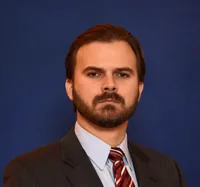
Garrett Ham
Garrett Ham is an attorney, military veteran, and holds a Master of Divinity from Yale Divinity School. He writes from Northwest Arkansas on theology, law, and service.
Related Posts
The Court-Martial Process
How the court-martial process works—from preferral and Article 32 hearings to trial, sentencing, and post-trial review—updated for post-2023 UCMJ reform.
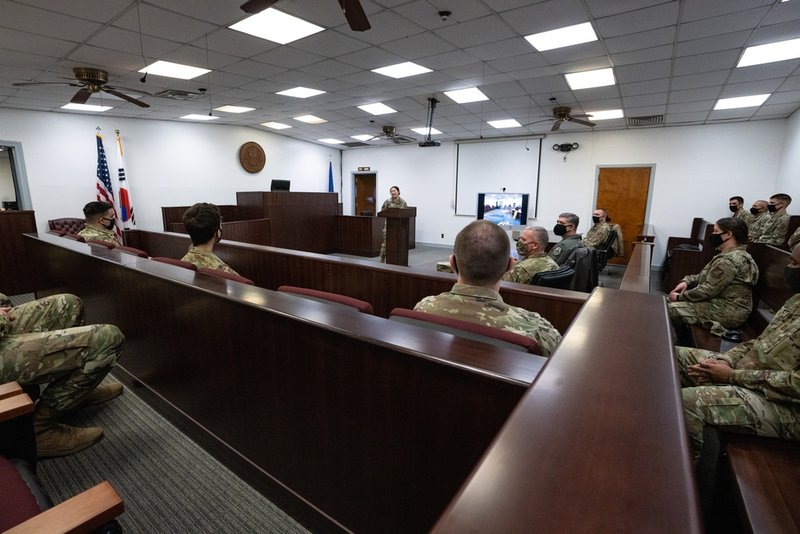
The Strange Call for Military Justice Reform
Botched investigations, missing constitutional safeguards, and a sexual assault crisis — a JAG veteran explains why military justice reform must go further than removing commanders from prosecution decisions.
The Article 32 Preliminary Hearing
How the Article 32 preliminary hearing works after the FY 2014 and FY 2015 NDAA reforms — narrower scope, paper-based practice, waiver, and the OSTC interaction.
Stay Informed
Get new writing on faith, law, and service delivered to your inbox.
No spam. Unsubscribe anytime.