Nestorianism Explained: The Heresy That Made the Church Define Mary as Mother of God

On This Page
Most heresies about Christ go wrong by collapsing him into one thing. Nestorianism went wrong by leaving him two. Its critics charged that it split the one Lord Jesus Christ into a pair of subjects loosely joined—the divine Word on one side, the man Jesus on the other—so that Mary could be called the mother of the man but never the Mother of God. The test word was Theotokos, “God-bearer.” A bishop of Constantinople refused it, and within three years the Church had convened an ecumenical council, deposed him, and made Theotokos a touchstone of orthodoxy that Catholics still confess every time they pray the Hail Mary.
I came to these debates as an adult convert, and I will admit that the fight over a single Marian title looked, at first, like the kind of thing only theologians could care about. It is not. The quarrel over whether Mary is Theotokos is really a quarrel over who Jesus is—whether the baby in the manger and the man on the cross is God himself doing these things, or merely a human being very closely associated with God. Nestorianism is the name the Church gave to the second answer. But—and this is the part most short explanations miss—the man it is named after may not have actually held it, and the ancient church most often called “Nestorian” explicitly rejects the doctrine to this day.
Two schools, one Christ
Nestorianism did not appear from nowhere. It was the sharp edge of a tension that had been building in Christian thought for a century: how to hold together the full divinity and the full humanity of one Lord without either swallowing the other.
By the early fifth century two great theological traditions had developed distinct instincts about how to do this. The school of Antioch—whose founders were Diodore of Tarsus and his pupil Theodore of Mopsuestia—began from the integrity of the two natures. Its driving concern was to protect the unchangeable transcendence of God and the complete reality of Christ’s humanity, and so it spoke of the divine and human in Christ as distinct realities joined in a close union, what its theologians called a conjunction. The school of Alexandria—the tradition of Athanasius and now of Cyril—began from the other end: from the one divine subject who, as John’s Gospel says, “became flesh.” Its instinct was to stress unity to the point of speaking of “one incarnate nature of God the Word.”1
The trouble was that the two schools were using the same technical vocabulary in incompatible senses. Four Greek words did the heavy lifting, and the whole controversy turns on them:
- ousia (essence): what a thing fundamentally is; in Trinitarian usage, the one divine essence shared by the three Persons.
- physis (nature): the concrete reality of a kind of being. This is the unstable term. When Cyril spoke of “one physis” of the incarnate Word, he meant roughly what later orthodoxy would call one hypostasis—one concrete subject. Antiochenes heard “one physis” as a confusion of the two natures into a single blended thing.
- hypostasis (subsistence): a concrete individual existent. Before the Council of Chalcedon this term had not yet been cleanly distinguished from physis, which is precisely why the disputants kept talking past each other.
- prosopon (person): the “presented form” or individual person. For Cyril, the one prosopon of Christ simply is the one divine hypostasis. For Nestorius, as we will see, prosopon could name the observable form of each nature, with the two combining into “one prosopon of union.”
Read that list again and the entire crisis comes into focus. When an Alexandrian said “one nature” and an Antiochene said “two natures,” they were not necessarily contradicting each other—they were using physis to mean different things. Ephesus, the Twelve Anathemas, the Formula of Reunion, and finally Chalcedon are best understood as the Church slowly hammering out a shared grammar: that Christ is one hypostasis (one prosopon) in two natures (physeis). Nestorius had the misfortune of forcing the question before that grammar existed.
The sermon that started a war
The spark came in late 428. Nestorius, freshly installed as archbishop of Constantinople, had brought with him a chaplain named Anastasius. Preaching in the capital, Anastasius declared, in the words of the church historian Socrates, “Let no one call Mary Theotocos: for Mary was but a woman; and it is impossible that God should be born of a woman.”2
The city erupted. Theotokos—“God-bearer,” Mother of God—was a treasured title of Marian devotion in Constantinople, and the people were not about to surrender it on a chaplain’s say-so. Nestorius, instead of calming the waters, backed Anastasius. The title was theologically sloppy, he argued: Mary did not give birth to the divine nature, which is eternal and cannot be born. Better to call her Christotokos, “Christ-bearer,” or at most to use Theotokos only with careful qualification.
It is worth pausing on what Nestorius thought he was protecting, because it was not absurd. He was guarding the immutability of God. God the Word does not begin to exist; he is not three months old; he does not, strictly, die. To say baldly that “God was born of Mary” or “God was crucified” sounded, to Antiochene ears, like the old heresies that made the divine nature itself mutable and passible. Nestorius wanted to honor the divinity precisely by refusing to attribute creaturely beginnings to it.
The problem was that his solution threatened something equally vital. If Mary bears only “the man,” and the man is a distinct subject merely conjoined to the Word, then it is not God who is born, suffers, and dies for us—it is a human being to whom God is very near. And a savior who is not God incarnate cannot save. The whole logic of redemption depends on its being God himself who enters human life and death. Cyril of Alexandria saw this at once, and he did not let it go.
The quarrel over whether Mary is the Mother of God is really a quarrel over who Jesus is.
What Nestorianism actually teaches
Before turning to Cyril’s response, it helps to state cleanly what “Nestorianism” means as a theological label—because, as we will see, the label and the man are not the same thing.
Nestorianism, the condemned doctrine, is the teaching that there are two persons in Christ: the divine Word and the human Jesus, united not in a single subsisting subject but by a moral, voluntary, or indwelling association—a union of cooperation and dignity rather than of being. On this view there is no single “who” who is at once God and man; there is God the Word, and there is the man he indwells, working in perfect harmony. The Catechism of the Catholic Church puts it precisely: “The Nestorian heresy regarded Christ as a human person joined to the divine person of God’s Son.”3
This is why Theotokos is the perfect diagnostic. If the one born of Mary is the divine person of the Son—who possesses both an eternal divine nature and a human nature taken from her—then Mary truly is the Mother of God, not because she is the source of his divinity but because the one she bore is God. But if the one born of Mary is a separate human person merely linked to God, then she is the mother only of that man, and Theotokos is a category error. Deny Theotokos and you have, by implication, denied that the subject of the Incarnation is a single divine person. The Marian title is a thermometer for the Christology.
That is the doctrine the Church condemned, and it remains incompatible with the Catholic faith whether or not Nestorius personally held it in that crude form. Keep that distinction in mind; we will need it.
Cyril’s answer: the hypostatic union
Cyril of Alexandria was, by every account, a formidable and not always gracious adversary. But on the central point he was right, and his formulation became the permanent property of the Church.
Against Nestorius’s “conjunction” of two subjects, Cyril insisted on a hypostatic union—a union kath’ hypostasin, at the level of the one concrete subject. The Word did not associate himself with a pre-existing man; the Word himself, the eternal Son, made a human nature his own, so that one and the same person is eternally God and, from the moment of conception, also man. In his Second Letter to Nestorius—the letter the Council of Ephesus would read aloud and ratify as the standard of orthodoxy—Cyril wrote that the Word “in an unspeakable, inconceivable manner united to himself hypostatically flesh enlivened by a rational soul, and so became man,” so that “two different natures came together to form a unity, and from both arose one Christ, one Son,” without the distinctness of the natures being destroyed by the union.4
From that single principle the defense of Theotokos follows immediately. The Word was not born of Mary “as if the nature of the Word or his divinity had its beginning from the holy Virgin,” Cyril explained, “but because of her was born that holy body with a rational soul, to which the Word being personally united is said to be born according to the flesh.”5 Mary is Theotokos not because she generates deity but because the one she bears, in his human flesh, is the divine Son.
The same logic produced what the Antiochenes found hardest to swallow: the communicatio idiomatum, the “exchange of properties.” Because there is one subject, what is said of the man may be said of God and vice versa—the Son of God was born, the Lord of glory was crucified, God tasted death in the flesh. Cyril pressed this in the Twelve Anathemas he appended to his Third Letter to Nestorius, twelve hammer-blows each ending “let him be anathema.” The first goes straight to the heart of it:
If anyone will not confess that the Emmanuel is very God, and that therefore the Holy Virgin is the Mother of God (Theotokos), inasmuch as in the flesh she bore the Word of God made flesh…let him be anathema.6
The twelfth, the one the Antiochenes feared made God passible, insisted that the suffering and death belong to the divine subject precisely “in the flesh”:
Whosoever shall not recognize that the Word of God suffered in the flesh, that he was crucified in the flesh, and that likewise in that same flesh he tasted death…let him be anathema.7
Nestorius answered with counter-anathemas of his own, and they are revealing. His first runs: “If anyone says that the Emmanuel is true God, and not rather God with us, that is, that he has united himself to a like nature with ours, which he assumed from the Virgin Mary, and dwelt in it; and if anyone calls Mary the mother of God the Word, and not rather mother of him who is Emmanuel…let him be anathema.”8 Notice the language: God “dwelt in” the nature assumed from Mary. That is exactly the indwelling, conjunctive model Cyril was attacking—which is why the controversy could not be resolved by goodwill alone. The two men had genuinely different pictures of how God and man are one in Christ.
The Council of Ephesus (431)
When the dispute could not be contained, the emperor Theodosius II summoned a general council to meet at Ephesus at Pentecost in 431. What followed was as much a procedural brawl as a theological one—a fact that matters enormously for the later history.
Cyril arrived with the Egyptian bishops; Nestorius was present in the city under imperial protection; but John of Antioch and the bishops of the East, Nestorius’s natural allies, were delayed. Rather than wait, Cyril opened the council on 22 June 431.9 The assembled bishops had Cyril’s Second Letter to Nestorius read out and judged it in agreement with the Nicene faith; Nestorius’s reply was read and judged contrary to it. Nestorius, who refused to appear, was condemned and deposed. The sentence is blunt:
…our Lord Jesus Christ, whom he has blasphemed, decrees by the holy Synod that Nestorius be excluded from the episcopal dignity, and from all priestly communion.10
When John of Antioch and the Easterns finally arrived and found the business concluded without them, they held a rival session and deposed Cyril in turn. For a time there were two “councils” excommunicating each other, and only imperial intervention and months of negotiation sorted out which one history would recognize. The Church of the East has never forgotten this: as the Syriac scholar Sebastian Brock observes, its objection to Ephesus “was not to any doctrinal decision (the Council issued no definition of faith) but to its irregular procedure.”11 Ephesus condemned Nestorius and affirmed that Theotokos is orthodox, but it did so by ratifying Cyril’s letters rather than by issuing a fresh creed. Indeed, its seventh canon forbade composing any creed other than the one from Nicaea.12
That procedural messiness is the seed of a thousand-year misunderstanding. A church that rejected the council on grounds of irregular process could later be tarred as rejecting the doctrine—and so it was.
The Formula of Reunion and Chalcedon
Ephesus did not end the fight; it nearly fractured the Church between Alexandria and Antioch. What ended it—at least between Cyril and the moderate Antiochenes—was a compromise document, the Formula of Reunion of 433, in which each side gave ground. Cyril accepted the Antiochene insistence on “two natures” and on Christ’s being “consubstantial with us”; the Antiochenes accepted Theotokos. The formula confesses:
…our Lord Jesus Christ, the Only Begotten Son of God, perfect God, and perfect Man…for there became a union of two natures. Wherefore we confess one Christ, one Son, one Lord. According to this understanding of this unmixed union, we confess the holy Virgin to be Mother of God.13
That sentence is the bridge from Ephesus (431) to Chalcedon (451). When the Council of Chalcedon met twenty years later—this time to condemn the opposite error, the Monophysitism of Eutyches, which fused the two natures into one—it gave the Church the balanced grammar it had lacked. Chalcedon confessed Christ “in two natures without confusion, change, division or separation,” the distinction of the natures “never abolished by their union, but rather the character proper to each of the two natures was preserved as they came together in one person (prosopon) and one hypostasis.”14
There is the settled vocabulary at last: one person and one hypostasis, in two natures. Against Nestorius, one person—not two subjects in conjunction. Against Eutyches, two natures—the humanity not absorbed into the divinity. The Catholic faith walks the ridge between the two cliffs, and it learned to do so by falling off each in turn.
Was Nestorius actually a Nestorian?
Here the story takes a genuinely surprising turn, and it is the part the textbook summaries almost always skip.
For most of Christian history Nestorius was known only through the writings of his enemies and a handful of his condemned sermons. Then, around the turn of the twentieth century, a Syriac manuscript surfaced: Nestorius’s own apologia, written near the end of his life in exile under the pseudonym “Heracleides of Damascus” to evade the heresy-hunters. Translated into English in 1925 as The Bazaar of Heracleides, it let Nestorius speak for himself for the first time in fifteen centuries.15
What it shows is more subtle than the caricature. In it Nestorius explicitly confesses one Christ and locates the union not in a mere moral association but in what he calls the prosopon:
Christ therefore is the prosôpon of the union…the two natures complete one Christ and not one God.
He affirms “one Lord Jesus Christ…of the union of the two natures one prosôpon,” and insists we should not divide that one prosopon. To some readers this looked strikingly like what Chalcedon would say—one person in two natures—and a school of scholars argued that Nestorius had been unjustly condemned. J. F. Bethune-Baker’s Nestorius and His Teaching (1908) and Friedrich Loofs’s Cambridge lectures (1914) made the case that the Bazaar reveals a man who confessed one Christ, repudiated “two Sons,” and in fact anticipated the orthodox settlement.16
Even his contemporaries sensed the gap between the man and the legend. Socrates Scholasticus, no friend of Nestorius, wrote that he could not regard him as a follower of the old heretics who denied Christ’s divinity: “he seemed scared at the term Theotocos, as though it were some terrible phantom…In these discourses he nowhere destroys the proper personality [hypostasin] of the Word of God.”17 The verdict of an eyewitness was that Nestorius was clumsy and frightened of a word, not a man who denied the deity of Christ.
The case is not all one way, and honesty requires the other side. More critical scholars—Aloys Grillmeier and John McGuckin among them—grant that Nestorius confessed “one prosopon” but argue that his system still begins from two complete, concrete subjects and unites them at the level of prosopon (appearance, presented form) rather than in a single divine hypostasis as the ontological subject. On this reading his “prosopic union” remains a union of two whos rather than a true personal union of one who in two natures—which is exactly the deficiency Cyril smelled. McGuckin presses the point that Nestorius fatally used the one word prosopon to do two opposite jobs at once, leaving the system incoherent.18
Where does that leave us? A fair verdict, I think, is this: the doctrine called Nestorianism is heretical and rightly condemned, and Nestorius himself was probably not the crude two-persons heretic of legend—but neither was he simply orthodox. He was an Antiochene who pressed the duality in Christ further than the faith can bear, expressed himself in terminology that could not deliver a single subject, and paid for it with his see and his name. That Nestorius was not, in the full sense, a Nestorian is closer to the truth than either the legend or the rehabilitation.
“The Nestorian Church”: a lamentable misnomer
The most consequential confusion of all concerns not the man but a whole church. For centuries Western and Greek writers called the ancient Church of the East—today the Assyrian Church of the East—the “Nestorian Church.” The label is, in Sebastian Brock’s words, “a lamentable misnomer.”
Brock, the great Oxford scholar of Syriac Christianity, dismantled the conventional picture in a now-classic 1996 essay. The textbook map—heretical Nestorians on one side, orthodox Chalcedonians in the middle, heretical Monophysites on the other—he calls “an utterly pernicious caricature, whose roots lie in a hostile historiographical tradition.”19 Several facts demolish it.
First, the terminology problem. The Church of the East confesses “two natures and two qnome, but one prosopon” in Christ. The Syriac word qnoma is the standard rendering of Greek hypostasis—but it does not mean the same thing. As Brock explains, qnoma means “something like ‘individual manifestation’: a qnoma is an individual instance or example of a kyana [nature]…but this individual manifestation is not necessarily a self-existent instance.” When European translators rendered qnoma as “person,” they made the Church of the East appear to teach “two persons in Christ”—the textbook definition of Nestorianism—when it teaches nothing of the kind.20
Second, the church’s real authority is not Nestorius. Across the eight synods the Church of the East held between 486 and 612, Brock notes, “the name of Nestorius never once occurs,” while Theodore of Mopsuestia is repeatedly upheld as the norm of orthodoxy. “It would be much more appropriate,” Brock concludes, “to call it ‘Theodoran,’ rather than ‘Nestorian.’” Nestorius is honored only as one of three “Greek Doctors” and, in the East Syriac imagination, as a martyr hounded into exile by the “Egyptian Pharaoh”—Cyril. The single work of Nestorius that survives in Syriac, the Bazaar, was not even translated until 539–540, long after the church had supposedly “adopted Nestorianism.”21
The Church of the East itself has said as much for a very long time. The medieval canonist ‘Abdisho of Nisibis wrote that the Easterns “were called ‘Nestorians’ quite unjustly, for Nestorius was not their patriarch, nor did they know his language.” And at his consecration in 1976, the late Catholicos-Patriarch Mar Dinkha IV put it bluntly: Nestorius, he said, “has nothing to do with us; he was a Greek.” To go on calling that church “Nestorian,” Brock writes, is “totally misleading and incorrect—quite apart from being highly offensive and a breach of ecumenical good manners.”22
This is no small or marginal community. For most of the first millennium the Church of the East was the most geographically extensive Christian body on earth, spreading from its heartland in the Persian Empire along the Silk Road into Central Asia, India, and China. Its most famous monument is the Xi’an Stele of 781, a bilingual Chinese-and-Syriac record of the “Luminous Religion” that had reached the Tang capital with the missionary Alopen in 635.23 The church most often slandered as a nest of heretics had carried the Gospel to the ends of the known world while Western Christendom was still finding its feet.
The 1994 reconciliation
The story has a remarkable modern coda. On 11 November 1994, Pope John Paul II and Mar Dinkha IV, Catholicos-Patriarch of the Assyrian Church of the East, signed a Common Christological Declaration—a joint confession of the very faith the “Nestorian” label had always denied they shared.
The declaration confesses “one Lord Jesus Christ…true God and true man,” whose “divinity and his humanity are united in one person, without confusion or change, without division or separation.” It explicitly rejects the heresy the Church of the East was always accused of: “Christ therefore is not an ‘ordinary man’ whom God adopted in order to reside in him and inspire him, as in the righteous ones and the prophets. But the same God the Word…was born of a mother without a father in the last times according to his humanity.” And it resolves the old quarrel over Theotokos not by forcing one term on both but by recognizing each tradition’s legitimate usage: the Assyrian Church prays to Mary as “the Mother of Christ our God and Saviour,” the Catholic Church as “the Mother of God” and also “the Mother of Christ,” and “we both recognize the legitimacy and rightness of these expressions of the same faith.”24
Most striking of all is the declaration’s diagnosis of the fifth-century split: “The controversies of the past led to anathemas, bearing on persons and on formulas. The Lord’s Spirit permits us to understand better today that the divisions brought about in this way were due in large part to misunderstandings.”25 That is a careful sentence. It does not say the Council of Ephesus was wrong, or that the doctrine of two persons was ever acceptable. It says that the churches were divided in large part by terminology—by qnoma heard as “person,” by Theotokos heard as a claim that Mary generated deity—rather than by a real difference about who Jesus is.
The rapprochement bore further fruit. In 2001 the Holy See took the notable step of recognizing the validity of the Assyrian Church’s ancient Eucharistic Prayer, the Anaphora of Addai and Mari, even though it lacks an explicit institution narrative, and approved guidelines permitting eucharistic sharing in pastoral need between the Assyrian Church and its Eastern-Catholic counterpart, the Chaldean Catholic Church.26 The fence built in 431 is, in places, coming quietly down.
Why it still matters
It is tempting to file all this under church history—old quarrels among bishops with hard-to-pronounce names. But the Nestorian controversy settled something the Christian faith cannot do without, and it left three lessons worth carrying home.
The first is who it is that saves us. The entire point of the Incarnation is that God himself entered our condition—was born, hungered, wept, suffered, and died—not at a distance through a human deputy but in person, in the flesh. Nestorianism, pressed to its end, gives us a man very close to God instead of God-made-man, and a savior who is merely God-adjacent cannot bridge the gap between God and us. The hypostatic union is not a technicality; it is the hinge of the Gospel.
The second is that Theotokos is a Christological confession before it is a Marian one. When Catholics call Mary the Mother of God—“Hence the Church confesses that Mary is truly ‘Mother of God’ (Theotokos),” says the Catechism—they are not exaggerating her dignity or making her divine.27 They are confessing that the child she bore is one divine person. To defend Theotokos is to defend the unity of Christ. This is why the title sits at the center of the Hail Mary and the Marian feasts, and why its denial was never a small thing. (For more on this, see my essay on whether Marian devotion is idolatry.)
The third lesson is about charity and precision together. The Nestorian story is, in part, a tragedy of mistranslation—of two churches that confessed the same Lord but heard each other’s words as heresy for fifteen hundred years. The 1994 declaration did not soften a single doctrine; it simply listened carefully enough to discover that the wall had been built partly out of misunderstanding. There is a discipline in that worth imitating: hold the truth without compromise, and at the same time refuse to assume that everyone who uses different words is your enemy. The Church learned, in the hardest possible way, that you can be entirely right about the doctrine and still misjudge the brother across the border.
Frequently Asked Questions
What is Nestorianism in simple terms?
Nestorianism is the heresy that treats Jesus Christ as two persons—the divine Word and the human Jesus—joined in a close moral union rather than united as a single subject. Because it implies that Mary bore only “the man” and not God, it rejected the title Theotokos (“Mother of God”). It was named for Nestorius, archbishop of Constantinople, and condemned at the Council of Ephesus in 431.
Why did Nestorius object to calling Mary the “Mother of God”?
Nestorius wanted to protect the unchangeable transcendence of God. He worried that calling Mary Theotokos implied that the divine nature itself had a beginning, suffered, and died. He preferred Christotokos, “Christ-bearer.” The Church answered that Mary is the Mother of God not because she is the source of Christ’s divinity, but because the one person she bore in the flesh is the divine Son.
What is the hypostatic union?
The hypostatic union is the Catholic teaching, defended by Cyril of Alexandria and defined through Ephesus and Chalcedon, that in Christ there is one person (hypostasis) who possesses two complete natures, divine and human, “without confusion, change, division or separation.” It is the answer both to Nestorianism (which split Christ into two persons) and to Monophysitism (which fused the two natures into one).
Was Nestorius really a heretic?
The doctrine called Nestorianism—two persons in Christ—is genuinely heretical. Whether Nestorius personally held it is debated. His own apologia, The Bazaar of Heracleides (rediscovered around 1900), shows him confessing “one Christ” and “one prosopon,” leading some scholars to argue he was unjustly condemned. Others judge that his terminology still failed to secure a single divine subject. A fair summary: he was probably not the crude two-persons heretic of legend, but neither was he simply orthodox.
Is the Assyrian Church of the East “Nestorian”?
No. Although it has long been called the “Nestorian Church” and venerates Nestorius as a martyr, the Assyrian Church of the East does not hold the two-persons doctrine; its real theological master is Theodore of Mopsuestia, and its formula (“two natures, two qnome, one prosopon”) does not mean “two persons” once qnoma is translated correctly. In 1994 the Catholic Church and the Assyrian Church signed a Common Christological Declaration confessing the same faith in Christ.
How is Nestorianism different from Monophysitism?
They are opposite Christological errors. Nestorianism divides Christ into two persons (over-stressing the distinction of the natures); Monophysitism merges the two natures into one (over-stressing the unity). The Council of Ephesus (431) condemned the first and the Council of Chalcedon (451) condemned the second, defining the Catholic middle: one person in two natures.
Footnotes
1. On the Antiochene and Alexandrian schools and the “Word-man” versus “Word-flesh” instincts, see J. N. D. Kelly, Early Christian Doctrines, 5th ed. (London: A&C Black, 1977), chaps. 11–12, and Aloys Grillmeier, Christ in Christian Tradition, vol. 1, From the Apostolic Age to Chalcedon (451), 2nd rev. ed., trans. John Bowden (Atlanta: John Knox Press, 1975).
2. Socrates Scholasticus, Ecclesiastical History VII.32, trans. A. C. Zenos, NPNF Second Series, Vol. 2, ccel.org.
3. Catechism of the Catholic Church 466, vatican.va.
4. Cyril of Alexandria, Second Letter to Nestorius (Ep. 4), trans. in Norman P. Tanner, ed., Decrees of the Ecumenical Councils, vol. 1 (Washington, DC: Georgetown University Press, 1990); the letter was read and ratified at Ephesus and is also preserved, in the older translation of Henry R. Percival, in The Seven Ecumenical Councils, NPNF Second Series, Vol. 14, ccel.org (whose wording differs from Tanner’s).
5. Cyril of Alexandria, Second Letter to Nestorius, as read at the Council of Ephesus, Percival, NPNF II.14, ccel.org.
6. Cyril of Alexandria, Third Letter to Nestorius, Anathematism I, Percival, NPNF II.14, ccel.org.
7. Cyril of Alexandria, Third Letter to Nestorius, Anathematism XII, Percival, NPNF II.14, ccel.org.
8. The Counter-Anathemas of Nestorius, Anathematism I (found in Migne’s edition of Marius Mercator), Percival, NPNF II.14, ccel.org.
9. The 22 June 431 opening date is standard scholarship; the NPNF acts record only that the first session was held “before the arrival” of the papal legates and the Eastern bishops. See Percival, NPNF II.14, ccel.org, and A. de Halleux, “La première session du Concile d’Éphèse (22 juin 431),” Ephemerides Theologicae Lovanienses 59 (1993): 48–87.
10. The Sentence of Deposition against Nestorius, Percival, NPNF II.14, ccel.org.
11. Sebastian P. Brock, “The ‘Nestorian’ Church: A Lamentable Misnomer,” Bulletin of the John Rylands Library 78, no. 3 (1996): 23–35, at 23–24, syriacstudies.com.
12. Canon VII of the Council of Ephesus, Percival, NPNF II.14, ccel.org: the synod decreed it “unlawful for any man to bring forward, or to write, or to compose a different Faith” than that of Nicaea.
13. The Formula of Reunion (433), preserved in Cyril’s Letter 39 to John of Antioch (“Laetentur caeli”), NPNF translation, earlychurchtexts.com.
14. Catechism of the Catholic Church 467, quoting the Definition of the Council of Chalcedon (451), vatican.va.
15. Nestorius, The Bazaar of Heracleides, trans. G. R. Driver and Leonard Hodgson (Oxford: Clarendon Press, 1925); full scan at archive.org. The quotations are from Book 2, Part 1.
16. J. F. Bethune-Baker, Nestorius and His Teaching: A Fresh Examination of the Evidence (Cambridge: Cambridge University Press, 1908); Friedrich Loofs, Nestorius and His Place in the History of Christian Doctrine (Cambridge: Cambridge University Press, 1914). On the manuscript’s complex composition, see Luise Abramowski, Untersuchungen zum Liber Heraclidis des Nestorius (CSCO 242, 1963).
17. Socrates Scholasticus, Ecclesiastical History VII.32, trans. Zenos, NPNF Second Series, Vol. 2, ccel.org.
18. Aloys Grillmeier, Christ in Christian Tradition, vol. 1 (1975); John Anthony McGuckin, St. Cyril of Alexandria: The Christological Controversy; Its History, Theology, and Texts (Leiden: Brill, 1994; repr. Crestwood, NY: St Vladimir’s Seminary Press, 2004). See also Susan Wessel, Cyril of Alexandria and the Nestorian Controversy: The Making of a Saint and of a Heretic (Oxford: Oxford University Press, 2004).
19. Brock, “A Lamentable Misnomer,” 23.
20. Brock, “A Lamentable Misnomer,” 27–28 (on qnoma and the mistranslation as “person”).
21. Brock, “A Lamentable Misnomer,” 28–30. The eight synods between 486 and 612 are edited in J. B. Chabot, Synodicon Orientale (Paris, 1902).
22. ‘Abdisho of Nisibis, The Pearl III.4, and the 1976 consecration address of Mar Dinkha IV, both quoted in Brock, “A Lamentable Misnomer,” 34–35.
23. On the Church of the East’s missionary reach and the Xi’an Stele of 781, see Samuel Hugh Moffett, A History of Christianity in Asia, vol. 1, Beginnings to 1500 (San Francisco: HarperCollins, 1992).
24. Common Christological Declaration between the Catholic Church and the Assyrian Church of the East, signed by Pope John Paul II and Mar Dinkha IV, 11 November 1994, vatican.va.
25. Common Christological Declaration (1994), vatican.va.
26. Pontifical Council for Promoting Christian Unity, Guidelines for Admission to the Eucharist between the Chaldean Church and the Assyrian Church of the East (2001), with the Congregation for the Doctrine of the Faith’s judgment on the validity of the Anaphora of Addai and Mari, christianunity.va.
27. Catechism of the Catholic Church 495, vatican.va.
Garrett Ham
Garrett Ham is an attorney, military veteran, and holds a Master of Divinity from Yale Divinity School. He writes from Northwest Arkansas on theology, law, and service.
Related Posts
The Council of Ephesus (431): Theotokos, Nestorius, and the Fight Over Christ's Identity
Ephesus (431) condemned Nestorius, defined Mary as Theotokos, and fixed the single-subject Christology every later ecumenical council inherited.
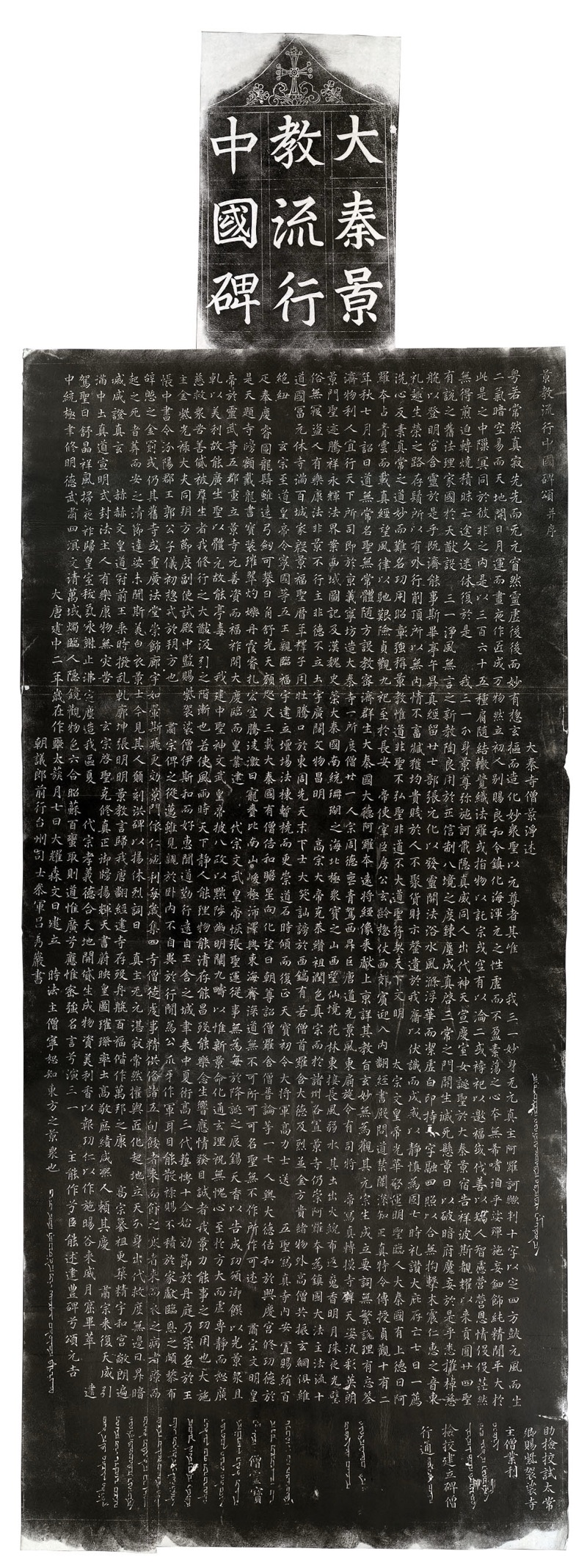
The Church of the East: Christianity’s Forgotten Fourth Branch
Christianity’s fourth apostolic branch—Mesopotamia to China. Apostolic origins, the 431 Christological controversy, missionary expansion, and witness today.
The Council of Chalcedon (451): How Political Rivalry Reshaped Christendom
The Council of Chalcedon (451 AD) resolved a Christological crisis but reshaped the political map of Christendom. How it destroyed Alexandria, elevated the papacy, and set the stage for the Great Schism.
Stay Informed
Get new writing on faith, law, and service delivered to your inbox.
No spam. Unsubscribe anytime.