The Jesus Prayer and Hesychasm
On This Page
For a thousand years, monks in the deserts of Egypt and the monasteries of Mount Athos have whispered the same eight words—“Lord Jesus Christ, Son of God, have mercy on me, a sinner”—in the quiet chambers of their hearts. This is the Jesus Prayer, perhaps Orthodoxy’s most distinctive spiritual practice and a window into a mystical tradition that challenges how Western Christianity understands prayer, theosis, and the human encounter with God.
What Is the Jesus Prayer?
The Jesus Prayer is deceptively simple. In its most common form, it reads: “Lord Jesus Christ, Son of God, have mercy on me, a sinner.”1 Some versions add “mercy upon me” at the end for a total of nine syllables—a detail that matters deeply to practitioners—while others include “a sinner” only at certain intervals.2
But simplicity masks profound theological depth. This is not a petition for specific needs, nor a recitation of doctrine, though doctrine saturates it. The prayer contains a Christological affirmation (Christ is Lord, Son of God), an ethical acknowledgment (I am a sinner), and an appeal to God’s fundamental nature (mercy). Every element has been carefully preserved over fifteen centuries.3 Unlike the Rosary or the Liturgy of the Hours—both Catholic practices with their own ancient dignity—the Jesus Prayer does not petition God for external blessings. Instead, it draws the pray-er’s consciousness inward, toward transformation of the heart itself. This inward turn is hesychasm.
Hesychasm: The Prayer of the Heart
The word “hesychasm” derives from the Greek hesychia, meaning “stillness” or “inner quiet.”4 But hesychasm is not mere passivity or emptiness. It is active, vigilant silence—what the Philokalia calls “guarding the heart” (phylaxis tes kardias).5
Hesychasm represents the Orthodox vision of prayer as not primarily words spoken or thoughts formulated, but as a transformation of consciousness in which the entire person—body, intellect, imagination, will, and spirit—becomes a single invocation of Christ’s name.6 The prayer moves from the lips to the mind, then from the mind to the heart, where it is said to synchronize with the very rhythm of the human body and, ultimately, with God’s eternal energies.7
This progression—from vocal prayer to mental prayer to prayer of the heart—represents one of Orthodoxy’s most important contributions to Christian mysticism. It did not emerge as novel innovation but rather as systematic articulation of practices stretching back to the Desert Fathers of Egypt, some of whom inhabited caves in the third and fourth centuries.8
The Desert Fathers and the Origins of the Jesus Prayer
The theological DNA of the Jesus Prayer traces to the spiritual athletes of early Christian monasticism. Though they did not use the phrase “Jesus Prayer” in its later systematized form, the Desert Fathers practiced ceaseless invocation of Christ’s name as their primary spiritual tool.9
Evagrius of Pontus (345–399), one of the most influential spiritual theologians of the early Church, taught that prayer should ultimately transcend all images and concepts, ascending to pure “prayer beyond prayer.”10 Yet even Evagrius, the great advocate of apophatic mysticism, recommended the Psalms for beginners and understood that ascent to God required practical, embodied discipline—not mere intellectual abstraction.11
John Cassian (360–435), a bridge figure between Eastern monasticism and the Western Church, brought these practices to the Latin world through his Conferences and Institutes, which profoundly shaped both Benedictine and later Catholic spirituality.12 Cassian taught that prayer should flow “with such abundance and power” that the praying person becomes indistinguishable from their prayer—an echo of what Orthodox hesychasts would later pursue through the Jesus Prayer.13
In the writings attributed to John of the Ladder (7th century), the formula of the Jesus Prayer appears with greater clarity. John of the Ladder describes brief, ardent invocations as the way to guard the mind and kindle the heart’s awareness of God.14 By the early medieval period, the Jesus Prayer had crystallized into the form we know today, though it would take the Palamite theology of the 14th century to provide the philosophical framework explaining how and why such repetitive prayer could transform the soul.
The Philokalia: Systematizing the Prayer Tradition
The Philokalia—literally “love of beauty”—is perhaps the most important text in Orthodox spirituality after Scripture itself.15 Compiled by Saints Nicodemus of the Holy Mountain and Makarios of Corinth in 1782, this five-volume collection gathered spiritual writings spanning thirteen centuries, from the fourth-century ascetics to the eighteenth-century hesychasts.16
The Philokalia does not present the Jesus Prayer as abstract doctrine but as lived practice. Its contributors are not systematic theologians but seasoned guides—monastics who had spent decades in prayer and could speak from experience about the precise mechanisms of the prayer’s transformation. The collection addresses questions that modern practitioners might regard as pedestrian but which prove essential: How many times should one pray the Jesus Prayer per day? Should it be synchronized with breathing? What happens when the mind wanders? How does one distinguish between genuine spiritual movement and demonic deception?17
These questions may seem crude to an intellectual approach to prayer, but they reflect something vital: the hesychast understanding that body, mind, and spirit form an integrated whole, and that prayer involves the entire person. A Catholic reading the Philokalia for the first time often experiences a jolt of recognition mixed with unfamiliarity. The contemplative practices described—mental prayer, guarding the heart, the importance of a spiritual father, the dangers of spiritual pride—have resonances in figures like Teresa of Ávila and John of the Cross. Yet the systematic integration of breathing, the psychosomatic techniques, and the explicit linking of prayer to the transformation of human matter itself (theosis) represent a distinctly Eastern trajectory.18
“The Way of a Pilgrim”: The Prayer Becomes Popular
For most Western Christians, the Jesus Prayer enters their awareness through a single text: The Way of a Pilgrim, a nineteenth-century Russian narrative of anonymous authorship that remains one of the most widely read accounts of Orthodox spirituality.19
The text recounts the journey of a peasant—poorly educated, physically disabled, homeless—who encounters the instruction to “pray without ceasing” (1 Thessalonians 5:17) in a church and becomes obsessed with understanding how this is possible.20 A spiritual elder teaches him the Jesus Prayer and its rhythmic coordination with breathing. The pilgrim then wanders across Russia, praying continuously, encountering both grace and temptation, spiritual fruits and demonic deceptions. Along the way, he discovers that the prayer has moved from his lips to his mind to his very heart, becoming a constant, spontaneous murmur in the depths of his being.21
The Way of a Pilgrim democratizes hesychasm. It is not the property of monks in monasteries but can be practiced by anyone, anywhere—a wanderer on a country road, a servant in a household, a solitary in the woods. This universalism does not simplify the practice; if anything, the text reveals greater complexity. The pilgrim encounters states of consciousness that baffle him, sensations of warmth in the heart, visions and consolations, dryness and desolation, and constant need to discern what comes from God and what arises from his own imagination or from spiritual enemies.22
For over a century, educated Europeans and Americans encountered Orthodox mysticism almost exclusively through The Way of a Pilgrim, often in forms heavily edited and spiritualized. This created both a gift and a liability: the gift of widespread inspiration, the liability of often-distorted understanding. Many Western readers took the text as naive folk spirituality rather than what it in fact represents—a profound expression of Orthodox theology embedded in narrative form.23
The Theological Crisis: Barlaam and the Hesychast Controversy
If the Jesus Prayer and hesychasm had remained purely devotional, their history would be straightforward. Instead, they provoked one of the most consequential theological disputes in medieval Christianity. This conflict, between the monk Gregory of Thessalonica (later known as Gregory Palamas) and the Calabrese scholar Barlaam, reshaped Orthodox theology and offers crucial insight into why the Jesus Prayer matters philosophically and not merely practically.24
Barlaam, a Calabrian Greek theologian influenced by Western Scholasticism and working in Constantinople in the 1330s, was scandalized by hesychast practice. How could monks claim to see divine light through prayer? How could they assert that God could be perceived through bodily sensation? This seemed to violate the fundamental principle that God is utterly transcendent, beyond all human perception, utterly unknowable.25 Barlaam argued that hesychasts were either deluded or engaged in a subtle form of pantheism, imagining they could touch God’s very essence.26
Gregory Palamas (1296–1359), himself a hesychast trained in Mount Athos monasticism, responded with a theological innovation that would define Orthodox mysticism for the rest of Christian history: the distinction between God’s essence and God’s energies.27
According to Palamite theology, God’s essence—His inner nature, His “whatness”—remains forever unknowable, utterly transcendent, beyond all being and conception. This preserves apophatic theology absolutely: God is not accessible through reason, imagination, or human faculties.28 But God’s energies are His dynamic activities, His grace, His deifying power that flows eternally from His essence.29 These energies are not created (for they are divine), yet they are distinct from the essence (for they can be participated in and experienced by creatures).30
Therefore, when hesychasts claim to see divine light, they do not see God’s essence—which remains forever unknowable—but rather God’s uncreated energies. This light is not a natural phenomenon, not an emotional state, not an illusion, but truly divine. It is the very light that appeared at Christ’s Transfiguration on Mount Tabor, the same light that the apostles Peter, James, and John beheld when Christ appeared in His divine glory.31
This distinction allows Palamas to affirm both apophatic theology (the unknowability of God’s essence) and cataphatic theology (the real knowledge of God through His energies). It permits both mystical experience and doctrinal precision. It explains how humans can genuinely participate in divine life without claiming to possess divinity or collapsing the creature-Creator distinction.32
The Palamite Councils and Orthodox Orthodoxy
Palamas’ teaching did not win universal acceptance immediately. He faced significant opposition from theologians trained in Scholastic logic and from those sympathetic to Barlaam’s concerns.33 But the hesychast movement had powerful supporters among the Byzantine monastic communities, and eventually, the Patriarchate of Constantinople authorized two councils to examine the dispute.
The Council of 1341 examined Palamas’ teaching and found it orthodox, though it did not yet make final pronouncements on the essence-energies distinction itself.34 A second council, in 1351, solemnly affirmed the Palamite doctrine as binding Orthodox teaching.35 By the time of a third affirmation in 1368, Palamas himself had been canonized (an unusual honor for a theologian still living), and his teaching became normative for all Orthodox theology.36
This doctrinal victory matters profoundly. It means that Orthodox theology—unlike much Western Christian theology since Thomas Aquinas—did not bifurcate faith and mystical experience into separate categories. Palamite theology insists that authentic theology is mystical theology, that doctrine must be grounded in prayer and prayer must be doctrinally sound, and that the goal of Christian life is not primarily moral virtue or intellectual knowledge but theosis—participation in divine life.37
For a Catholic reader, the essence-energies distinction can seem strange at first, sometimes even incoherent. How can something be both divine and not identical with God’s essence? Is this not contradiction?38 Yet this framework solves genuine theological problems that Scholasticism struggled with: How can God be absolutely simple (as Aquinas insists) yet also infinite in dynamic attributes? How can God be utterly transcendent yet truly knowable? How can humans be deified without losing their humanity?39 Orthodox theology does not claim that its answers are self-evident to reason; rather, it insists that reality exceeds rational comprehension and that mystical experience, carefully examined and tested by the Church, provides legitimate theological knowledge.40
How the Jesus Prayer Is Prayed: Practice and Progression
Understanding hesychasm theologically means little without grasping how it actually works in practice. The hesychast masters describe a disciplined progression that begins with physical discipline and eventually transforms the depths of consciousness.
Stage One: Vocal Prayer
The beginner typically prays the Jesus Prayer aloud or in a whisper, often using a prayer rope (Greek: komboskini) to count repetitions.41 A monk might aim for three hundred prayers per day, or more, depending on his capacity and his spiritual father’s guidance.42 The rhythm of the words, the sound of the Name, the physical repetition—all are important at this stage. A spiritual elder might recommend synchronizing the prayer with breathing: “Lord Jesus Christ, Son of God” on the inhale, “have mercy on me, a sinner” on the exhale.43 This is not magical or mechanical but rather uses the body’s own rhythm to anchor attention.
Stage Two: Mental Prayer
As the pray-er continues, the prayer gradually moves from the lips into the mind. One no longer speaks the words aloud but recites them internally. The mind becomes a kind of bell, ringing with the prayer continuously. At this stage, wandering thoughts become obvious and troublesome—the pray-er notices how scattered attention is, how the mind leaps from one object to another.44 The prayer becomes a tool for “guarding the heart,” capturing and returning the mind to a single focus whenever it wanders.
Stage Three: Prayer of the Heart
Here the prayer descends deeper. It is no longer something one “does” but something that “happens,” a spontaneous movement welling up from the depths. Some practitioners describe this as the prayer becoming audible in the heart itself, a continuous murmur that continues even during sleep or work. Heat or warmth in the chest region is sometimes reported. Visions of light may occur.45 At this point, the pray-er may be said to have achieved “prayer of the heart,” kardiake proseuxe, and genuine transformation begins. The saints describe a state of constant prayer that is also constant joy, a simplification of consciousness in which the fundamental stance toward God has been reorganized.
The Philokalia is clear that this progression is neither automatic nor guaranteed.46 Many people pray for years without advancing beyond mental prayer. Some who attain deeper states fall away through pride or are deceived by spiritual delusion. The entire process requires obedience to a spiritual father—a living guide experienced in these matters—and the grace of God. Attempting the prayer without proper direction is regarded as spiritually dangerous.47
The Hesychast Vision of Prayer and Theosis
What makes all of this effort worthwhile? The ultimate goal is not psychological peace or emotional comfort, though these may accompany genuine progress. The goal is theosis—becoming god, in the patristic sense that humans become divine by grace as Christ became human by nature.48
The Orthodox teach that the Incarnation was not merely redemptive—though it is that—but fundamentally transformative for human nature itself. When Christ became human, He made it possible for humans to become divine. The Jesus Prayer is not a technique for acquiring a spiritual skill but a means of conforming one’s entire being to Christ, of dying to the false self and rising into participation in divine life.49
This differs subtly but significantly from Catholic approaches to spiritual transformation. Catholic spirituality, particularly in its Scholastic expression, has tended to view sanctification as primarily a matter of virtue—developing habits of charity, prudence, and courage. The goal is moral perfection, becoming a saint in the sense of a person of extraordinary virtue.50 Orthodox spirituality includes virtue, certainly, but sees it as preparatory to something deeper: the radical transformation of one’s participation in being itself. The person becomes not just morally perfect but ontologically changed, sharing in divine life while remaining fully human.51
This explains why hesychasts can speak of seeing divine light—not metaphorically but literally, as a genuine perception of God’s uncreated energies. It explains why the prayer is not primarily about petitioning God but about union with Him. It explains the eschatological dimension: the prayer of the heart is here and now what the resurrection will be eternally, a state in which the human person participates fully in divine life.52
Catholic Parallels: Other Christian Traditions of Heart Prayer
While hesychasm is distinctly Orthodox, Catholicism has its own mystical traditions that, while employing different language and frameworks, pursue similar goals: the transformation of consciousness toward union with God.
The Rosary
The Rosary is often dismissed as “Catholic repetition,” mere mechanical recitation. But in skilled hands, it functions very similarly to the Jesus Prayer. The Rosary’s structure—the repetitive Hail Marys and Our Fathers—serves to quiet the discursive intellect while the mysteries of Christ’s life occupy the contemplative mind.53 Like the Jesus Prayer, the Rosary works through rhythmic verbal repetition to draw the person into deeper prayer, moving from vocal prayer through meditation on the mysteries into what Catholic theology calls “infused contemplation.”54 The Rosary and the Jesus Prayer employ different mysteries and different intercessors (Mary versus the direct invocation of Christ), but the mechanism is remarkably parallel.
Centering Prayer and Contemplative Prayer
Modern Catholic contemplative teachers like Thomas Keating have developed “centering prayer,” based on the medieval Cloud of Unknowing, which bears striking resemblance to hesychasm.55 Centering prayer involves the silent repetition of a “sacred word,” a brief formula that anchors attention and returns the mind to God whenever it wanders. The goal, like hesychasm, is movement beyond discursive prayer into the realm of God’s direct action within the soul, where the human will becomes aligned with divine will.56
John of the Cross and the Prayer of Loving Attention
Saint John of the Cross, the greatest Catholic mystical theologian, describes a prayer of loving attention that moves beyond conceptual understanding into an embrace of incomprehensible mystery.57 His Dark Night of the Soul describes the stripping away of consolations and sense experiences—a process quite parallel to the hesychast emphasis on moving beyond emotional satisfaction into genuine transformation. Both traditions insist that the deepest prayer feels like darkness and emptiness to the subject, and both regard this apparent emptiness as actually the fullness of God.58
The Cloud of Unknowing
The medieval Catholic text The Cloud of Unknowing teaches that authentic prayer to God involves a deliberate forgetting of all creatures and all thoughts, a naked reaching toward God in darkness. The author recommends a brief prayer or aspiration—a simple cry like “God” or “Help”—as a means of piercing the “cloud” that separates human knowledge from God’s incomprehensibility.59 This strongly parallels the hesychast use of brief, repeated invocation to move beyond discursive thought into naked encounter with God.
These Catholic parallels suggest something important: the deepest layers of Christian spirituality, across all traditions, move in similar directions. They teach that authentic prayer transcends mere words, that transformation requires discipline and practice, that the goal is union with God rather than acquisition of spiritual experiences, and that the deepest prayer involves a surrender of human understanding to divine mystery.60
Yet hesychasm remains distinctive in its systematic elaboration of practice, its explicit linking of physical discipline to spiritual transformation, and its theological grounding in the essence-energies distinction. Where Catholic theology since the High Middle Ages has tended to prioritize the transcendence of God and the necessity of faith despite rational unknowing, Orthodox theology insists on both the absolute transcendence of God’s essence and the genuine knowledge and experience of God through His energies.61 This allows hesychasm to move toward a mysticism of real encounter, not merely one of faith’s surrender.
Common Misconceptions About Hesychasm
Before concluding, it is worth addressing several persistent misunderstandings that prevent fuller appreciation of the Jesus Prayer and hesychasm.
Not Quietism
Hesychasm is sometimes conflated with quietism, the spiritual error condemned by the Catholic Church whereby the soul becomes entirely passive, ceasing all effort and awaiting God’s action alone.62 In fact, hesychasm demands intense effort. The repeated prayer, the guarding of the heart, the constant vigilance against distraction and demonic deception—all require active, disciplined engagement.63 The passivity comes only at the deepest levels, when grace takes over the prayer itself; until then, the human will must work strenuously. The Orthodox would agree with the Catholic principle that the spiritual life requires both human cooperation and divine grace.
Not Pantheism
The Palamite distinction between essence and energies explicitly guards against pantheism, the confusion of God with creation.64 God’s essence remains forever unknowable and transcendent; creatures genuinely participate in divine energies without ever merging into divinity itself. The deification promised is real but analogical: the human becomes godlike but not divine, just as iron in fire becomes “fiery” without becoming fire.65
Not a Technique for Spiritual Consumerism
One modern temptation is to treat the Jesus Prayer as a technique for acquiring spiritual experiences, emotional states, or mystical thrills. The Philokalia repeatedly warns against this. A person might pray the Jesus Prayer for years and never experience sensible consolation; the prayer may feel dry, boring, or empty. This is not failure but maturation—moving beyond the need for emotional gratification toward authentic love of God for God’s sake rather than for His gifts.66 The hesychasts are clear that attachment to spiritual experiences is itself a subtle form of spiritual pride and must be transcended.
Not Incompatible with Active Life
The growth of hesychasm was intertwined with monasticism, leading some to think it requires withdrawal from the world. While monasticism provides an ideal environment for uninterrupted prayer, hesychasm is not intrinsically contemplative in the sense of requiring withdrawal from action.67 The prayer can be practiced amid activity; indeed, the goal is for the prayer to continue “without ceasing” in all circumstances. A lay person in the world, a priest in ministry, a mother raising children—all can practice the Jesus Prayer. The intensity might differ, but the fundamental practice is accessible to all.
Conclusion: A Prayer for Our Time
The Jesus Prayer is not merely a historical artifact of medieval monasticism. In an age of relentless distraction, spiritual fragmentation, and the illusion that more information and stimulation will satisfy the human heart, hesychasm offers a counter-prophetic witness: that the deepest human need is union with God, that this union requires radical simplification of consciousness, and that this simplification is not a luxury for monastics but a calling available to every person.
For Catholics, engagement with hesychasm need not mean abandoning our own rich mystical traditions. Rather, it represents an encounter with a living, sophisticated spirituality that has preserved and developed the patristic vision in ways that Western Christianity often lost.68 Reading the Philokalia, learning about Gregory Palamas, practicing the Jesus Prayer—these bring fresh perspective to our own prayer traditions, challenges our assumptions, and can deepen our understanding of what theosis truly means.
The Jesus Prayer invites us to simplicity: “Lord Jesus Christ, Son of God, have mercy on me, a sinner.” But this simplicity contains infinite depth. In those eight words lies an entire mystical theology, a vision of the human person transformed into a temple of divine presence, a claim that God has not left us to ourselves but has made His life available to us through Christ. When a monk in a cell on Mount Athos whispers this prayer, or a pilgrim wanders a Russian road murmuring it, or a lay person in the modern world invokes it in stolen moments—all participate in an ancient, continuous prayer of the Church that stretches from the Desert Fathers to today.
This is the heartbeat of Orthodox spirituality: the simple name of Jesus, invoked again and again until it becomes not a formula we speak but a reality we live, a transformation so complete that we can say with Paul, “It is no longer I who live, but Christ who lives in me.”
Footnotes:
1 Kallistos (Timothy) Ware, The Power of the Name: The Jesus Prayer in Orthodox Spirituality (Oxford: SLG Press, 1989), 1-3. The formula appears in Greek as “Kyrie Iesou Christe, Uios Theou, eleison me ton hamartolon.”
2 Philokalia: The Eastern Christian Spiritual Texts, trans. G.E.H. Palmer, Philip Sherrard, and Kallistos Ware, Vol. 1 (London: Faber & Faber, 1979), 44-47.
3 John Meyendorff, Byzantine Theology: Historical Trends and Doctrinal Themes, 2nd ed. (New York: Fordham University Press, 1979), 65-68.
4 Kallistos Ware, The Orthodox Way, rev. ed. (Crestwood, NY: St. Vladimir’s Seminary Press, 1995), 109-112.
5 Philokalia, Vol. 1, ed. Palmer, Sherrard, and Ware, 64. The concept of phylaxis appears throughout the writings of Evagrius Ponticus and later hesychast theologians.
6 Ware, The Power of the Name, 14-18.
7 Metropolitan Hierotheos Vlachos, A Night in the Desert of the Holy Mountain: Stories and Teachings from the Monastic Tradition of Mount Athos (Levadia, Greece: Birth of the Theotokos Monastery, 1994), 89-93.
8 Meyendorff, Byzantine Theology, 47-52.
9 The Desert Father Abba Moses taught the importance of continuous invocation of the Divine Name. See The Sayings of the Desert Fathers, trans. Benedicta Ward (Kalamazoo: Cistercian Publications, 1975).
10 Evagrius Ponticus, The Praktikos & Chapters on Prayer, trans. John Eudes Bamberger (Kalamazoo: Cistercian Publications, 1981), 53-62.
11 Ibid., 101-108.
12 John Cassian, Conferences, trans. Boniface Ramsey (New York: Newman Press, 1997), 481-492. The influence of Cassian on Western monasticism was profound; his Institutes became normative for many monastic traditions.
13 Ibid., 488: “Prayer should be without interruption and should flow with such power and abundance that it takes hold of the prayer-maker…”
14 John of the Ladder (John Climacus), The Ladder of Divine Ascent, trans. Colm Luibheid and Norman Russell (New York: Paulist Press, 1982), 174-178.
15 Ware, The Power of the Name, 41-48.
16 Kallistos Ware, Introduction to the Philokalia, in Philokalia, Vol. 1, ed. Palmer, Sherrard, and Ware, 11-29.
17 Philokalia, Vol. 1, ed. Palmer, Sherrard, and Ware, 43-96, contains numerous practical teachings on the prayer’s daily practice and the spiritual obstacles encountered.
18 Vlachos, A Night in the Desert, 127-135. Vlachos notes the systematic integration of body and spirit in hesychasm, which differs from some Western suspicion of the body’s role in prayer.
19 The Way of a Pilgrim, trans. R.M. French (New York: HarperCollins, 1991), introduction. The text is anonymous but likely 19th-century Russian in origin.
20 Ibid., 1-15.
21 Ibid., 98-112.
22 Ibid., 78-84. The pilgrim’s spiritual father teaches him careful discernment between consolations from God, natural psychological states, and demonic deceptions.
23 Ware, The Power of the Name, 55-62.
24 John Meyendorff, A Study of Gregory Palamas (Crestwood, NY: St. Vladimir’s Seminary Press, 1974), 1-45.
25 Ibid., 23-28.
26 Ibid., 31-40.
27 Ibid., 47-92. The essence-energies distinction is sometimes traced to the Cappadocian Fathers, but Palamas developed it systematically in response to hesychasm.
28 Ibid., 82-89. Palamas explicitly affirms apophatic theology and the absolute unknowability of God’s essence.
29 Ibid., 119-126.
30 Vladimir Lossky, The Mystical Theology of the Eastern Church (Crestwood, NY: St. Vladimir’s Seminary Press, 1976), 70-81.
31 Meyendorff, A Study of Gregory Palamas, 126-135. The theology of divine light visible at the Transfiguration becomes central to Palamite understanding of the light seen by hesychasts.
32 Lossky, Mystical Theology, 82-96.
33 Meyendorff, A Study of Gregory Palamas, 45-57.
34 Ibid., 134-150.
35 Ibid., 150-165.
36 Ibid., 165-170.
37 Lossky, Mystical Theology, 107-119.
38 This is a common Western objection; see the discussion in Meyendorff, Byzantine Theology, 175-182.
39 Lossky, Mystical Theology, 95-106.
40 Ware, The Orthodox Way, 98-104.
41 Vlachos, A Night in the Desert, 91-98. The komboskini typically has 100 knots, allowing the pray-er to complete three rosaries of this length in 300 prayers.
42 Philokalia, Vol. 1, ed. Palmer, Sherrard, and Ware, 65-70.
43 The Way of a Pilgrim, 21-25.
44 Philokalia, Vol. 1, ed. Palmer, Sherrard, and Ware, 70-85.
45 Vlachos, A Night in the Desert, 102-115. Vlachos warns against attachment to sensible experiences while not denying their reality.
46 Philokalia, Vol. 1, ed. Palmer, Sherrard, and Ware, 85-96.
47 The Way of a Pilgrim, 78-84. Spiritual direction is presented as essential, not optional.
48 See note 37 above; Lossky, Mystical Theology, 119-130.
49 Ware, The Orthodox Way, 45-67.
50 This is a generalization; Catholic theology also pursues union with God, but the language and emphasis differ. See Lossky, Mystical Theology, 140-155, for a comparison of Eastern and Western approaches.
51 Ibid., 155-170.
52 Vlachos, A Night in the Desert, 195-210.
53 Thomas Merton, Seeds of Contemplation (New York: New Directions, 1949), 187-195. Merton, himself a Catholic monk, recognized the parallels between Catholic contemplative prayer and Orthodox hesychasm.
54 John of the Cross, The Collected Works of St. John of the Cross, trans. Kieran Kavanaugh and Otilio Rodriguez, rev. ed. (Washington, DC: ICS Publications, 1991), “The Living Flame of Love,” 14-28.
55 Thomas Keating, Open Mind, Open Heart: The Contemplative Dimension of the Gospel (New York: Continuum, 2002), 45-68. Keating explicitly acknowledges the influence of Eastern Christian prayer practices on his development of centering prayer.
56 Ibid., 68-85.
57 John of the Cross, The Collected Works of St. John of the Cross, trans. Kieran Kavanaugh and Otilio Rodriguez, rev. ed. (Washington, DC: ICS Publications, 1991), “The Dark Night,” 1-45.
58 Ibid., 46-78.
59 The Cloud of Unknowing, ed. William Johnston (Garden City, NY: Doubleday, 1973), 48-62.
60 Lossky, Mystical Theology, 140-170.
61 Ibid., 171-188.
62 Ware, The Power of the Name, 22-28.
63 Philokalia, Vol. 1, ed. Palmer, Sherrard, and Ware, 64-70.
64 Meyendorff, A Study of Gregory Palamas, 82-89.
65 Lossky, Mystical Theology, 97-106. The analogy of iron in fire appears throughout patristic mystical theology as a way of describing deification.
66 Philokalia, Vol. 1, ed. Palmer, Sherrard, and Ware, 85-96.
67 Ware, The Orthodox Way, 138-152.
68 Lossky, Mystical Theology, 200-210.
Garrett Ham
Garrett Ham is an attorney, military veteran, and holds a Master of Divinity from Yale Divinity School. He writes from Northwest Arkansas on theology, law, and service.
More about Garrett →Related Posts
Eastern Orthodoxy Explained
What is Hellenistic Christianity? A complete guide to Eastern Orthodox theology, theosis, liturgy, sacraments, and the Church's ancient roots in Christian Hellenism.
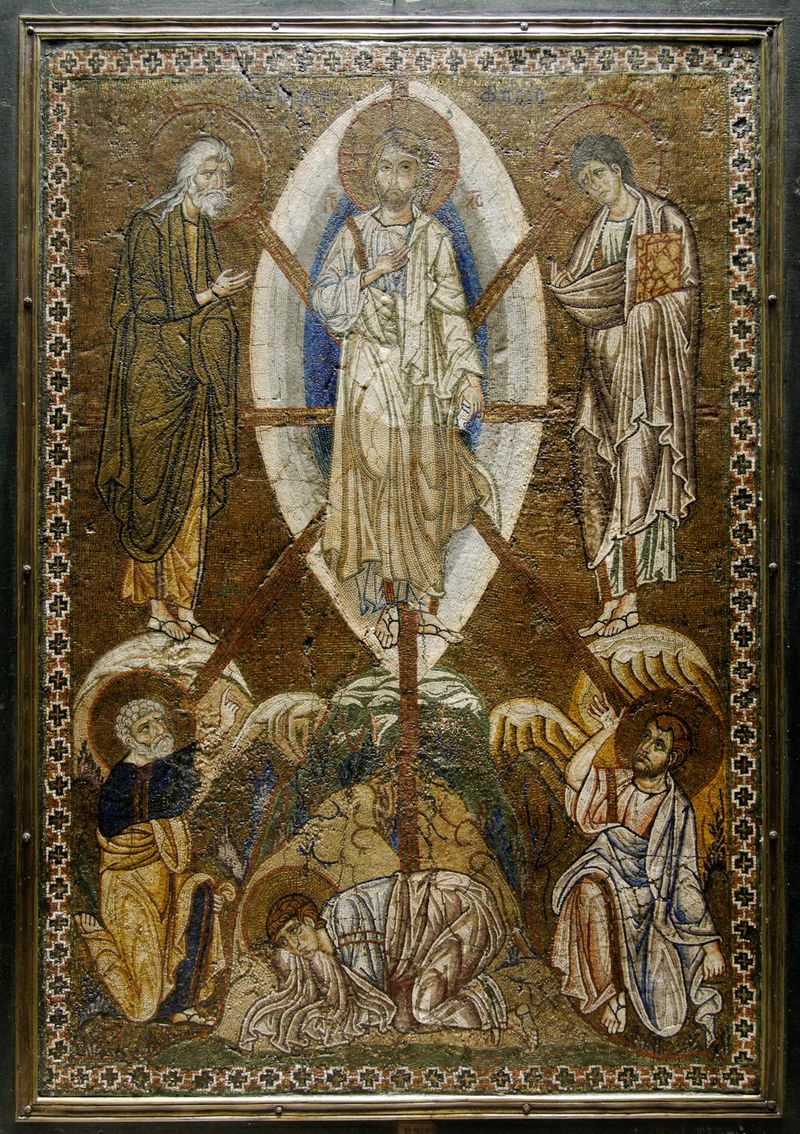
Theosis
What is theosis? A comprehensive guide to the Christian doctrine of deification — from its biblical roots through the Church Fathers to its place in Orthodox and Catholic theology today.
Orthodox Icons Explained
What are Orthodox icons and why do Eastern Christians venerate them? Explore the theology of icons, the iconoclasm crisis, and how icon veneration differs from idolatry.
Stay Informed
Get new writing on faith, law, and service delivered to your inbox.
No spam. Unsubscribe anytime.