Made in the Image of God: Catholic Theological Anthropology and the Meaning of Human Dignity
On This Page
“Et ait: Faciamus hominem ad imaginem et similitudinem nostram.”
Genesis 1:26 (Vulgate)
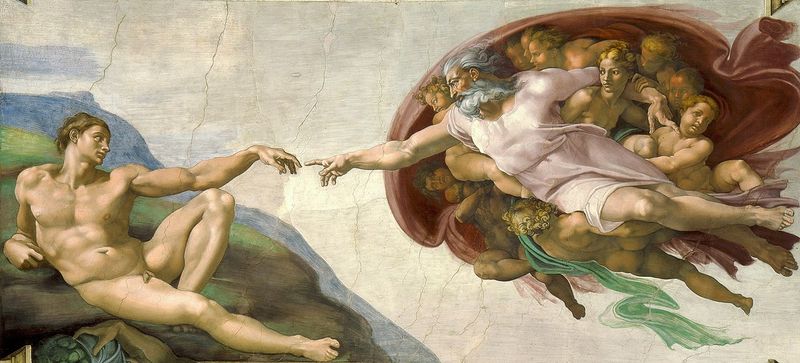
When Michelangelo painted the Sistine Chapel ceiling at the height of the High Renaissance, he captured something profound in his Creation of Adam: the moment when God’s outstretched finger reaches toward Adam’s, the two nearly touching but separated by a deliberate gap—a threshold between the divine and the human, charged with the imminence of creation. In that single gesture, the artist rendered visible what theologians have spent centuries trying to articulate: what does it mean that we are made in the image of God?
This question sits at the heart of Catholic theology. It animates our understanding of human worth, our obligations to one another, and our ultimate destiny. It explains why the Church insists that every human being, from conception to natural death, possesses an inherent dignity that cannot be stripped away. And it reveals something essential about who God himself is and how he relates to his creation.
This post explores the doctrine of imago Dei from a Catholic perspective, drawing on Scripture, the Fathers of the Church, papal teaching, and contemporary theology to understand what it means to be made in God’s image.
The Biblical Foundation: Genesis and the Meaning of “Image”
The doctrine of the imago Dei begins where all Christian theology must begin: with the Word of God. In the opening chapter of Genesis, the sacred author writes:
These lines appear twice in quick succession, which should alert us that we’re encountering something of profound importance. The parallelism is intentional: image (tselem in Hebrew) and likeness (demut) are virtually synonymous in the Hebraic thought-world, both pointing to the same reality (see Claus Westermann, Genesis 1–11: A Commentary, Fortress Press, 1984). The reversal of these terms in Genesis 5:3 further supports their interchangeability. Yet some Church Fathers would distinguish them as representing different dimensions of our relationship to God. Most influentially, Saint Irenaeus (Adversus Haereses V.6.1) treated “image” as the natural endowment of reason and freedom, and “likeness” as the supernatural gift of the Holy Spirit, lost through sin and restored through Christ. Saint John of Damascus later articulated: “The expression ‘according to the image’ indicates rationality and freedom, while the expression ‘according to the likeness’ indicates assimilation to God through virtue” (On the Orthodox Faith 2.12).
The Greek Septuagint translated these terms as eikōn (image) and homoiōsis (likeness), language that would shape patristic theology for centuries. But what exactly do these words convey?
In the ancient Near Eastern context, an image was not merely a representation but a bearer of the authority of the thing represented. When a pharaoh erected a statue of himself, that image carried his presence and authority in distant territories (see J. Richard Middleton, The Liberating Image: The Imago Dei in Genesis 1, Brazos Press, 2005). What was revolutionary about Genesis was the democratization of this concept: the “image of God” status, formerly reserved for kings alone, was extended to all humanity. Similarly, when Genesis declares that humans are made in God’s image, it means that humanity bears God’s imprint, his likeness, his presence in a uniquely intimate way. We are, in a real sense, a living icon of the divine.
Importantly, this image is not something we possess by a work of our own. It is given to us in the very act of creation. We do not earn it or achieve it; we receive it. And this receivedness, this radical dependence on the divine gift, is essential to understanding both the privilege and the responsibility of being human.
What Does “Image of God” Mean in Catholic Teaching?
The Catholic Church has accumulated a rich interpretive tradition around the imago Dei. Rather than treating it as a single attribute, Catholic theology understands the image of God as multidimensional, encompassing several interrelated dimensions of human nature.
Reason and the Spiritual Soul
The Catechism of the Catholic Church, in its rich section on human dignity, teaches that “the dignity of the human person is rooted in his creation in the image and likeness of God.”1 Among the constitutive features of this image is our rational nature. Genesis 1:26–27 is immediately followed by the divine mandate to “have dominion” over creation (Genesis 1:28), a command that presupposes the capacity for understanding, judgment, and moral deliberation.
The Catechism emphasizes that “God created man a rational being, conferring on him the dignity of a person who can initiate and control his own actions.”2 But reason here means more than mere intellectual capacity. It encompasses our capacity to apprehend truth, to recognize the good, and to orient ourselves toward God. This is why the Church teaches that we possess a rational soul (anima rationalis)—a spiritual principle that is the seat of our intellectual and volitional faculties.
The Second Vatican Council, in the pastoral constitution Gaudium et Spes, elaborates:
Notice the theological movement: human dignity is not grounded in our cognitive capacity alone, but in God’s call to us and his preserving love. We are beings in relation, invited to a conversation with the Infinite.
Freedom and Moral Responsibility
Closely allied with reason is the gift of freedom. The image of God in us is manifested in our capacity to choose, to deliberate, and to direct ourselves toward true goods. Unlike the animals, which act from instinct, we possess liberum arbitrium—free will—which allows us to be the authors of our actions.
This freedom, however, is not absolute or arbitrary. True freedom, as the Catholic tradition has long maintained, consists in the ability to choose the good. When we use our freedom to choose evil, we diminish ourselves and turn away from the fullness of our nature. As the Catechism teaches, “The more one does what is good, the freer one becomes.”3 Paradoxically, genuine freedom culminates not in unlimited choice but in the binding of ourselves to God through love and obedience. This free will is fundamental to understanding why God permits evil and whether everything happens for a reason.
The moral dimension of the imago Dei is thus crucial. We are not merely intelligent beings; we are moral beings, accountable for our choices, capable of virtue and sin, destined either for communion with God or for separation from him.
The Communal Dimension: Made for Relationship
Yet if we stopped here, we would have missed something essential. The imago Dei is not merely an individual attribute but a fundamentally communal reality.
Notice that Genesis 1:27 reads: “So God created man in his own image, in the image of God he created him; male and female he created them.” The specification of sexual difference and the immediate association of the image of God with human community is no accident. The Catechism emphasizes this in remarkable language:
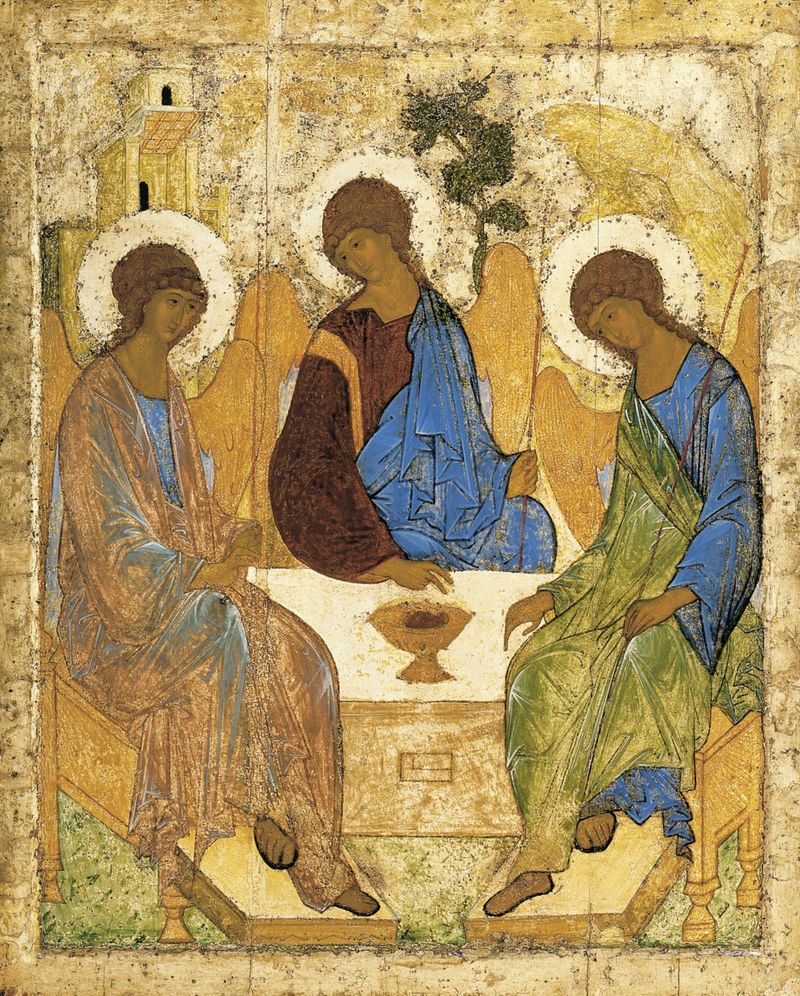
Here we encounter something profound: our communion with one another reflects and participates in the doctrine of the Trinity. God exists eternally as a communion of three persons in one substance. And we, created in his image, are called to exist in relationship—most fundamentally in the spousal communion of man and woman, but also in the broader communion of the whole human family.
This is why the Second Vatican Council teaches that “God, Who has fatherly concern for everyone, has willed that all men should constitute one family and treat one another in a spirit of brotherhood.”4
John Paul II and the Theology of the Body
No modern pope has explored the implications of the imago Dei more thoroughly than John Paul II. Early in his pontificate (September 1979 through November 1984), he delivered a remarkable series of Wednesday audience catecheses on what has come to be called the theology of the body (see John Paul II, Man and Woman He Created Them: A Theology of the Body, trans. Michael Waldstein, Pauline Books, 2006). In these teachings, John Paul II argued that the human body itself—and especially the reality of sexual difference and spousal communion—is a profound revelation of the imago Dei.
The Pope begins from the observation that Genesis 1:27 immediately precedes the command to procreate. Human sexuality is not an afterthought or a deviation from the divine image; it is integral to it. The body, far from being a prison for the soul or a source of shame, is the language through which the person communicates and gives himself or herself to another.
In spousal union, according to John Paul II’s vision, we enact a profound mystery: we become a sign of God’s creative and redemptive love. When a man and woman give themselves to each other in the marital act, they participate in God’s power to create new life. The body speaks a language of total self-gift, a language that God himself has spoken in becoming incarnate.
This is the meaning of what John Paul II calls the “communion of persons.” The human person is not a solitary rational intellect encased in a body; the person is body and soul in unity. We come to understand and experience our humanity through embodied relationship with others. And in this embodied communion, we find an echo of the very life of the Trinity. As John Paul II himself stated: “Man becomes the image of God not so much in the moment of solitude as in the moment of communion” (General Audience, November 14, 1979).
This theological vision has profound implications. It means that every violation of the body—every act of violence, abuse, or exploitation—is simultaneously a violation of the imago Dei. It means that our sexual ethics cannot be reduced to mere prohibition but must be understood as an invitation to participate in divine love. And it means that the complementarity of man and woman is not incidental but theologically significant.
Christ: The Perfect Image of God
Yet the imago Dei theology finds its deepest meaning not in Genesis but in the New Testament, in the person of Jesus Christ. Saint Paul writes to the Colossians:
And in his Second Letter to the Corinthians, Paul declares: “And we all, with unveiled face, beholding the glory of the Lord, are being changed into his likeness from one degree of glory to another; for this comes from the Lord who is the Spirit.” (2 Corinthians 3:18, RSV-CE)
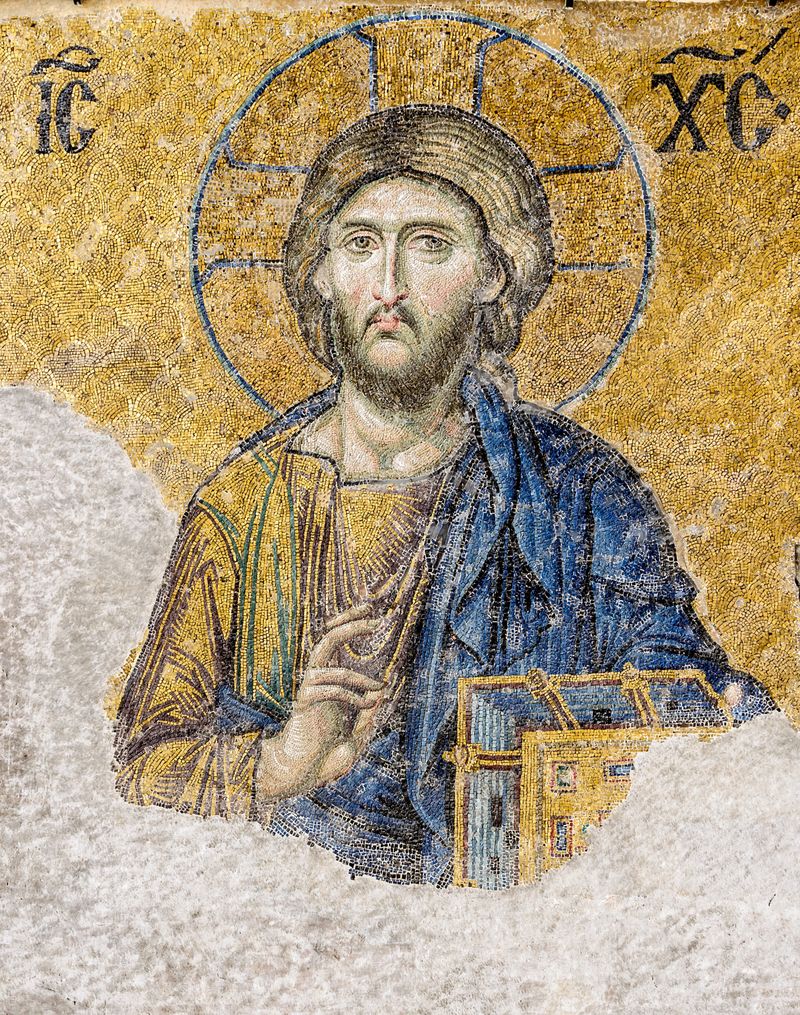
This is the Christological dimension of imago Dei theology. Christ is not simply one who bears the image of God; he is the image of God in the fullest and most perfect sense. As the Catechism teaches, Christ is “the image of the invisible God” (Colossians 1:15), “the Word and substantial Image of the Father.”5 Every other image—including our own—is derived from and oriented toward this supreme image.
What is remarkable is that our salvation consists precisely in being conformed to this perfect image. In the Incarnation, God himself entered into human nature, taking on a body and becoming a member of the human family. In doing so, Christ, “by the revelation of the mystery of the Father and His love, fully reveals man to man himself,”6 showing us what it truly means to be human—to be in perfect obedience to the Father, to give oneself completely in love, to live in total communion with God.
And through his Paschal mystery—his death and resurrection—Christ opens a path for us to be restored to that original communion with God that sin had damaged. We become “partakers of the divine nature” (2 Peter 1:4), divinized through grace, as the Eastern Fathers would say. Our conformity to Christ’s image becomes our salvation and our sanctification.
This is intimately connected to John 1:1–2 and the relational life of the Trinity. As the prologue to John’s Gospel reveals, the Word who became flesh in Jesus “was in the beginning with God” (John 1:2) and “was God” (John 1:1). To be made in the image of God is to be called into participation in the eternal communion of the Trinity itself.
The Implications: Human Dignity and Our Moral Obligations
Understanding the imago Dei has profound practical implications for how we regard human beings and how we order society.
First, it means that human dignity is intrinsic and inviolable. Every human being, simply by virtue of being human, possesses a dignity that no state or individual can strip away. The homeless person, the migrant, the prisoner, the unborn child, the elderly person with dementia—all bear the image of God equally. The Catechism is uncompromising on this point: “Every human life, from the moment of conception until death, is sacred because the human person has been willed for its own sake in the image and likeness of the living and holy God.”7
This has radical implications for our ethical positions. It forbids slavery, torture, and exploitation. It demands that we respect the conscience of others and recognize their freedom. It calls us to work for justice systems that protect the vulnerable and promote the common good. And it means that our most fundamental obligations are not those we create by contract but those inscribed in the very nature of the human person.
Second, imago Dei theology grounds the universal moral law. Because we are made in God’s image, we possess a conscience—an inner witness to the moral order written into creation itself. The natural law, which Saint Thomas Aquinas classically defined as “a participation of the eternal law in the rational creature” (Summa Theologiae I-II, q. 91, a. 2) and which the Catechism describes as “a participation in God’s wisdom and goodness by man,”8 reflects God’s own reason and will. To act against the natural law is to violate the image of God that we bear.
Third, the imago Dei calls us to solidarity. If we are all made in God’s image, then we are all bound together as members of one human family. The Second Vatican Council taught that “God, Who has fatherly concern for everyone, has willed that all men should constitute one family and treat one another in a spirit of brotherhood.”9 This means that grave inequalities in wealth, education, healthcare, and opportunity are not merely unfortunate; they are offenses against human dignity.
Finally, the imago Dei doctrine points toward our ultimate fulfillment. We are not merely beings who exist; we are beings called to become. Through the sacraments, moral effort, and contemplation, we are meant to grow in virtue, to be progressively transformed into the image of Christ, and ultimately to achieve the beatific vision—the direct knowledge and love of God that is our true end.
The Restoration and Elevation of Human Nature
Sin damages but does not destroy the image of God in us. The Catechism teaches that although man is “wounded in the natural powers proper to him” and “inclined to evil,” he nevertheless retains the image of his Creator.10 And the Second Vatican Council teaches that sin “has diminished man, blocking his path to fulfillment” (Gaudium et Spes, § 13), yet God’s redemptive love continues to pursue us.
The doctrine of imago Dei, then, must always be held in tension with the reality of sin. Fallen human beings are still made in God’s image, but we are wounded, prone to pride and self-centeredness, prone to reducing others to objects for our use rather than recognizing them as subjects worthy of reverence.
This is where grace enters the picture. God does not abandon us to our sin but rather sends his own Son to repair what we have broken and to elevate us to a participation in divine life beyond what we could have deserved. In the Incarnation and Redemption, the Son of God assumed human nature into the unity of his divine Person—“without confusion, without change,” as the Council of Chalcedon defined—and through grace elevates human nature to participation in the divine life. And through the Church and the sacraments, this saving grace continues to flow to us, restoring and transforming us into the likeness of Christ.
This is why Catholic theology speaks of the restoration of the image of God through redemption and the elevation of human nature through grace. We are not returned merely to Adam’s state of innocence; we are elevated to a higher state still, becoming adopted children of God and heirs to eternal life.
Theological Anthropology and Philosophical Anthropology
It’s worth noting that Catholic understanding of the imago Dei stands in some contrast to certain modern philosophical anthropologies. Enlightenment thinkers often grounded human dignity in autonomous reason or in contractual relationships. Some contemporary thinkers locate it in consciousness or self-awareness.
But Catholic theology insists that human dignity is not something we must earn or achieve through rational demonstration. It is given, a gift. Aquinas helps us navigate this apparent tension: he taught that the image of God exists in all human beings by nature as a fundamental orientation—a natural aptitude—for knowing and loving God, even when that capacity is not yet or no longer actualized (Summa Theologiae I, q. 93, a. 4). And it is not merely individual; it is fundamentally relational. We are made in the image of God not as isolated rational intellects but as embodied, sexual, social beings called to love and be loved.
This has profound implications for how we think about vulnerable human beings. The newborn infant has not yet developed rational consciousness, yet possesses full human dignity. The person in a coma or with advanced dementia has lost many cognitive capacities, yet remains fully human and fully worthy of respect. A philosophical anthropology that grounds human worth in demonstrated rationality or autonomy cannot account for these convictions, but a theology rooted in imago Dei can.
The Eastern Fathers and Theosis
The Eastern Christian tradition offers particularly rich resources for understanding the imago Dei in its eschatological dimension. The Fathers spoke of theosis—deification or divinization—the process by which we are transformed into the image of God through grace and prayer.
Saint Athanasius famously wrote: “For the Son of God became man so that we might become God” (De Incarnatione, § 54.3; cf. CCC § 460). This is not pantheism or the confusion of creator and creature—the Greek theopoiēthōmen means “to be made divine,” not to become separate gods. Rather, it is the claim that in and through Christ, we are invited to participate in the divine nature itself, to become what we were always made to be: images of God destined to share in God’s own life and love.
The Western tradition, as developed by figures like Saint Thomas Aquinas—who described grace as “a participation of the divine nature” and taught that “God alone should deify, by communicating a sharing of the divine nature through a participation of likeness” (Summa Theologiae I-II, q. 112, a. 1)—and more recently by Joseph Ratzinger (Benedict XVI), who explicitly used the language of “theosis (divinization)” in Ecclesia in Medio Oriente (2012) and in multiple audiences on the Greek Fathers, has articulated this in somewhat different language, but the conviction remains: human beings are not self-enclosed monads but are open to the infinite, called to transcendence, destined for communion with God.
Conclusion: The Splendor of the Imago Dei
To be human is to bear an image. This image is not ours by right or by achievement; it is God’s gift, inscribed in us at our very creation. It manifests itself in our rational nature, our freedom, our moral capacity, and our fundamental orientation toward relationship and love.
But the image we bear is not a finished thing. It is dynamic, a reality we grow into through a lifetime of moral striving, prayer, sacramental participation, and love. And it reaches its fulfillment only in Christ, the perfect image of the invisible God, in whom all images find their meaning and their truth.
In a world that constantly tempts us to reduce human beings to their utility, their productivity, their market value, the doctrine of the imago Dei stands as a prophetic witness. It declares that every human being is sacred. It insists that dignity is not earned or deserved but inherent. And it calls us to recognize in every other person a living icon of God himself, worthy of reverence, respect, and love.
This is the splendor of the imago Dei: that in being made in God’s image, we are not merely recipients of a gift, but participants in a divine mystery. We are called to become who we truly are—children of God, brothers and sisters in Christ, members of a communion of persons that anticipates and prefigures the eternal communion of the Trinity itself.
Further Reading
- The Trinity: A Catholic Explanation — How the Trinitarian nature of God as communion grounds our understanding of human nature as relational and communal.
- Effort and Faith in the Catholic Church — How growth in virtue and cooperation with grace transforms us into the image of Christ.
- Evangelical Catholic Thought — How the Gospel of Christ and the grace of salvation restores and elevates human dignity through the Church’s mission.
Frequently Asked Questions
Q: If humans are made in God’s image, does that mean God has a body?
A: No. God is spirit and does not have a physical body. But as Christians, we believe that God became incarnate in Jesus Christ, who did have a human body. When Genesis speaks of the “image” of God, it does not mean a physical likeness but rather a likeness in those capacities that are most properly divine: reason, will, and the capacity for relationship. Some theologians—notably Karl Rahner on the “eternal significance of the humanity of Jesus” and the Scotist tradition, which holds that the Incarnation was willed independently of sin—argue that God’s assumption of a human body in Christ fulfills and reveals what was always implicit in creation: that embodiment itself, properly understood, reflects divine reality. This remains a legitimate theological opinion rather than an established doctrinal position.
Q: Does the imago Dei apply equally to all humans, including those with intellectual disabilities?
A: Yes, absolutely. The image of God is not based on the degree of rational functioning but is inherent in human nature itself. The Church teaches that every human being, regardless of cognitive capacity, possesses full human dignity and worth. People with intellectual disabilities reflect the image of God no less than those with PhDs. In fact, their vulnerability and dependence on others can reveal something profound about the nature of the human person as fundamentally relational and interdependent.
Q: How does the imago Dei relate to the doctrine of original sin?
A: Original sin damages the image of God in humanity but does not destroy it. The Catechism teaches that the image of God in man is “disfigured” by sin (§ 1701) and that man is “wounded in the natural powers proper to him” and “inclined to evil and subject to error” (§§ 1707, 1714). Our reason is now prone to error, our will is weakened, and our capacity for love is distorted by self-centeredness. But we remain capable of recognizing God and responding to his grace. Redemption in Christ is precisely the restoration and elevation of the damaged image.
Q: What is the difference between imago Dei and likeness to God (similitudo Dei)?
A: This distinction varies among theologians. Some see them as essentially synonymous, both referring to the fundamental reality of being made in God’s image. Others argue that image refers to our basic human capacities (reason, freedom, moral agency), while likeness refers to the moral and spiritual perfection we are meant to grow into through grace and virtue. On this reading, we are born with the image but must grow into the likeness of God through sanctification.
Q: How should the doctrine of the imago Dei affect how we treat prisoners, the poor, and marginalized people?
A: The doctrine of imago Dei demands that we recognize the fundamental dignity of every person, regardless of their social status, economic productivity, or past sins. A person who has committed a terrible crime remains made in God’s image and retains basic human rights. Similarly, poverty does not diminish dignity. This doctrine undergirds Catholic social teaching’s insistence on the rights of workers, the responsibility of the state to ensure the basic needs of all people are met, and the obligation of the wealthy to work for justice and the common good.
For Further Study
Primary Sources:
- Catechism of the Catholic Church, §§ 355–361 (Human dignity), 1700–1709 (Man: Image of God)
- Second Vatican Council, Gaudium et Spes (Pastoral Constitution on the Church in the Modern World), §§ 12, 19, 22, 24
- John Paul II, Man and Woman He Created Them: A Theology of the Body, trans. Michael Waldstein (Pauline Books, 2006). The scholarly critical edition with introduction and commentary.
- Saint Thomas Aquinas, Summa Theologiae I, q. 93 (the nine articles on the image of God in man)
- Genesis 1:26–27; Colossians 1:15; 2 Corinthians 3:18; 2 Peter 1:4
Secondary Sources:
- Middleton, J. Richard. The Liberating Image: The Imago Dei in Genesis 1 (Brazos Press, 2005). The most comprehensive scholarly treatment of the ancient Near Eastern royal image background and its democratization in Genesis.
- McDowell, Catherine L. The Image of God in the Garden of Eden (Eisenbrauns, 2015). A strong complement to Middleton focusing on the Mesopotamian evidence.
- Russell, Norman. The Doctrine of Deification in the Greek Patristic Tradition (Oxford UP, 2004). The standard scholarly reference for the Eastern theology of theosis.
- Spezzano, Daria. The Glory of God’s Grace: Deification According to St. Thomas Aquinas (Sapientia Press, 2015). Demonstrates the connection between Aquinas’s image theology and his theology of deification.
- Cooper, Adam G. Naturally Human, Supernaturally God: Deification in Pre-Conciliar Catholicism (Fortress Press, 2014). Provides the needed bridge between Eastern and Western deification traditions.
- Ratzinger, Joseph (Benedict XVI). In the Beginning: A Catholic Understanding of the Story of Creation and the Fall (Eerdmans, 1995). A masterful theological reflection on the imago Dei and original sin.
- von Balthasar, Hans Urs. A Theological Anthropology (Sheed and Ward, 1967). A comprehensive exploration of Christian anthropology with deep engagement with the Fathers and medieval theology.
- McFarland, Ian A. The Divine Image: Envisioning the Invisible God (Fortress Press, 2005). A scholarly but accessible treatment of imago Dei doctrine across the Christian tradition.
- Catechism of the Catholic Church, § 1700.
- Catechism of the Catholic Church, § 1730.
- Catechism of the Catholic Church, § 1733.
- Second Vatican Council, *Gaudium et Spes*, § 24.
- Catechism of the Catholic Church, § 479; cf. Colossians 1:15 and CCC §§ 1701, 381.
- Second Vatican Council, *Gaudium et Spes*, § 22.
- Catechism of the Catholic Church, § 2319.
- Catechism of the Catholic Church, § 1978; cf. Saint Thomas Aquinas, *Summa Theologiae* I-II, q. 91, a. 2.
- Second Vatican Council, *Gaudium et Spes*, § 24.
- Catechism of the Catholic Church, §§ 1707, 1714; cf. § 1701.

Garrett Ham
Garrett Ham is an attorney, military veteran, and holds a Master of Divinity from Yale Divinity School. He writes from Northwest Arkansas on theology, law, and service.
More about Garrett →Related Posts
The Holy Trinity Explained: A Catholic Guide to the Central Mystery of Faith
What is the Holy Trinity? A Catholic explanation of one God in three persons — the scriptural foundations, Nicene doctrine, and why it matters for the Christian life.

Effort and Faith in the Catholic Church
Our salvation requires effort, our effort. This does not mean that our efforts save us, but rather is simply an admission that becoming who God would...
Evangelical Catholic Thought
In this post, I continue my reflections upon the Catechism of the Catholic Church with particular reflection upon the existence of evangelical Catholic...
Stay Informed
Get new writing on faith, law, and service delivered to your inbox.
No spam. Unsubscribe anytime.