God and Man at Yale: Why Buckley Still Matters Today

On This Page
I first read God and Man at Yale as a young attorney in Arkansas, years before I joined the Air Force. I had come to conservatism, or rather—I had come to articulate conservatism. I did not come to it as an abstraction. I was born into it, inherited it from my great-grandfather Rual Custar Ham, who had led Republicans in the Arkansas House, inherited it from my family in the South since the 1600s. I had been defending it for years, but defending and understanding are different things. Buckley’s book gave me a framework—a vocabulary for the convictions I already held but had never seen so precisely named.
What struck me most—and what strikes me still—was not the specific controversies about Yale’s faculty or its economics curriculum. It was Buckley’s conviction, articulated at age twenty-five, barely a year and a half removed from his graduation, that ideas matter. That they have consequences. That a university cannot hide behind the neutral banner of “academic freedom” when it systematically excludes certain forms of thought from serious consideration. He had written a sustained indictment of his own institution, and he had done it with the moral seriousness of a man who believed institutions should live up to their professed principles.
What Buckley Actually Argued
God and Man at Yale, published in 1951, arrived as something close to a scandal. Here was a young Catholic conservative, son of a prominent industrialist, accusing Yale of systematic hostility to religion and capitalism—the very foundation stones that had underwritten the university’s charter. But Buckley’s argument was not that Yale had abandoned its principles. His argument was more precise, and therefore more damning: Yale had renounced them consciously, deliberately, while wrapping itself in the language of academic freedom.
The Three Charges
The specific charges were three:
- Faculty hostility to faith: Yale’s faculty—particularly in the humanities and social sciences—were hostile to traditional Christianity and actively worked to undermine religious faith among its students.
- Fashionable ideology over argument: The university had adopted Keynesian economics and collectivist social theory not because of superior argument but because such theories had become fashionable in the academy.
- “Academic freedom” as conformity disguise: Yale had created a system in which “academic freedom”—the principle that scholars must be free from external constraint—had become a shield for ideological conformity rather than intellectual independence.
Buckley did not claim that every Yale professor was a socialist or an atheist. His complaint was more subtle. It was that Yale had allowed one intellectual current to dominate, that dissenters were marginalized, and that the university maintained this monopoly while claiming to value free inquiry. He argued that if Yale truly valued its founding principles—if it saw itself as a Christian institution educating young men in the Protestant tradition of learning—then it had an obligation to ensure that this tradition received serious consideration, not dismissal. And he argued that alumni, as stakeholders in the institution, had a right to hold Yale accountable to that obligation.
Its central claim was unarguable: institutions have obligations to their principles, and freedom without form becomes chaos.
What Buckley Got Right
I can speak to this with some intimacy. I attended Yale Divinity School. The core tenets of the Christian faith were not explicitly put down—no one told you that you could not believe in the Incarnation or the Resurrection. But those tenets were warped, subjected to every fashionable progressive ideology until they were made to serve ends their authors would not have recognized. The faith was not denied so much as conscripted—bent into the shape of whatever cause the faculty found most urgent that semester. The Dean offered statements that would have confirmed every concern Buckley raised in 1951, yet seventy years later, the institutional method had been perfected: claim diversity while enforcing conformity. Claim to value “student voices” while drowning out any voice that departed from the permitted register. This was the environment in which I had to navigate my faith as one of the few conservatives at Yale Divinity.
This is what Buckley got right: the diagnosis. Universities had become closed systems, protecting themselves with the rhetoric of openness. They had created mechanisms—not explicit prohibitions, but subtle social costs—that made certain thoughts dangerous to express. A student questioning progressive orthodoxy would not be expelled. He would simply be made to understand, through a thousand small signals, that his thinking was provincial, fearful, unprepared. The mechanism worked precisely because it relied on social pressure rather than formal sanction.
Buckley’s second insight was also prescient: that ideas have consequences. The economics taught at Yale would shape how its graduates understood property, capital, and the obligations of the state. The theology taught at Yale would shape how its future leaders thought about moral truth. This is not a scandal; it is unavoidable. But the scandal arises when an institution denies that this is happening, when it claims to be “value-neutral” while transmitting values with institutional force.
And Buckley understood something else—something that feels more urgent now than in 1951. He understood that the proper conservative response to intellectual conformity is not quiet withdrawal, not the construction of parallel institutions, but reasoned argument. He did not say: “Yale has fallen; let us build our own university.” He said: “Yale has obligations to its own principles; let us hold it to them.” The Buckley Program at Yale exists because of this insight. The entire tradition of intellectual conservatism in America—the founding of National Review, the sustained platform he gave Russell Kirk and Friedrich Hayek, fusing their divergent traditions into a coherent movement—emerged from Buckley’s conviction that conservatives had an obligation to think, to argue, to refuse acquiescence.
Why It Matters Now
The animating conviction behind the book—the conviction that shaped everything Buckley did after 1951—remains the most essential insight. Ideas are not mere matters of taste. They shape how people understand themselves, their obligations, and their possibilities. And institutions that shape the formation of ideas carry a responsibility that extends beyond the individual whim of individual scholars. This is not an argument for censorship or ideological control. It is an argument for intellectual honesty—for acknowledging the values you transmit, for defending them with argument rather than social coercion, and for remaining open to the serious challenges those values face.
The irony—and it is a profound irony—is that Buckley’s book was written in an era of genuine academic consensus against conservatism. In 1951, conservative intellectual life was marginal in American universities. Yet Buckley did not respond to that marginalization by retreating. He fought. He founded National Review. He created institutions and publications where serious conservative thinking could flourish. He demonstrated that the response to progressive dominance in universities was not to abandon the intellectual arena but to compete more forcefully within it.
The book endures because it teaches a method. You encounter an institution that claims certain principles. You observe that it is violating those principles. You do not retreat into resentment. You do not merely complain. You mount an argument. You articulate an alternative vision. You insist—reasonably, without ad hominem—that the institution live up to its own standards. This is what Buckley taught, and this is what has survived him.
I think of this often when I work in my small capacity in Benton County Republican politics, in Arkansas, in the South. The temptation is always toward simplicity—toward anger at the institutions that oppose you, toward the construction of parallel worlds, toward the dismissal of those who disagree as simply corrupt or stupid. Buckley refused that. He believed that reason could work, that argument could change minds, that institutions could be called back to their principles if one called loudly enough and clearly enough. He may have been too optimistic. But his optimism was earned through the discipline of thought.
The book is still in print, still worth reading. If you have not encountered it, start there—not as a polemic against Yale University in particular, but as a meditation on how ideas move through institutions, how they shape the young, and what we owe to one another when we undertake the work of transmission. Buckley was twenty-five when he wrote it. He was still learning. But he knew enough to know that learning mattered, and that saying so was an act of courage.
I’d recommend reading God and Man at Yale—not as a historical curiosity, but as a primer on how to think about institutions and intellectual responsibility. And if you’re interested in how this sensibility evolved, the archives of National Review remain essential.
Related posts:
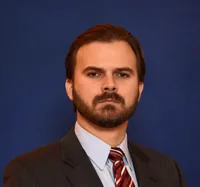
Garrett Ham
Garrett Ham is an attorney, military veteran, and holds a Master of Divinity from Yale Divinity School. He writes from Northwest Arkansas on theology, law, and service.
More about Garrett →Related Posts
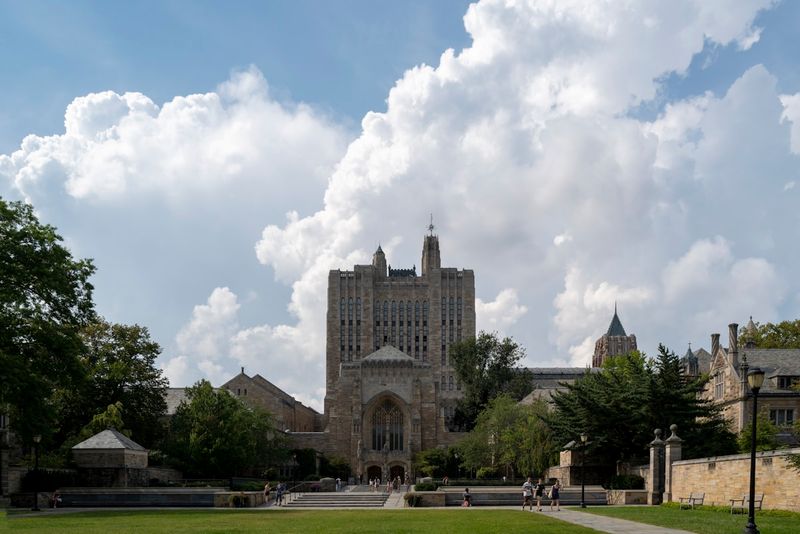
God and Man at Yale Divinity
Complete Yale Divinity School guide: how to apply, personal statement, GI Bill benefits, financial aid, acceptance, and thriving in the M.Div. program.

Week 5: Conservatives at Yale Divinity
Is Yale Divinity liberal? Yes. But conservative students thrive. A candid account of being a conservative at Yale Divinity School and finding your place there.

Viewpoint Diversity at Yale Divinity School: A Conservative Student's Perspective
How does a theologically conservative student navigate a progressive divinity school? A candid exploration of viewpoint diversity, intellectual challenge, and finding your place at Yale Divinity.
Stay Informed
Get new writing on faith, law, and service delivered to your inbox.
No spam. Unsubscribe anytime.