Donatism: The Ancient Heresy That Still Haunts the Church
On This Page
“The sacraments are neither made holy nor made unholy by the righteousness or wickedness of men who administer them; for they are sanctified through the name of the Lord Jesus Christ and the power of the Holy Spirit, independently of the character of the priest.” — Augustine, De baptismo contra Donatistas
The Origins of Donatism: Persecution and Purity
Donatism arose in the crucible of persecution. The Roman emperor Diocletian (284–305) issued a series of edicts against Christians, culminating in the Great Persecution (303–305). Christians were forced to choose: deny their faith, hand over sacred texts to pagan magistrates, or face torture and death.
Some clergy capitulated. They are known as traditores—“those who handed over” the Scriptures or other sacred objects. The word itself carries judgment; in Latin, traditor means “traitor.” Many Christians, especially in North Africa, could not fathom that a priest who had handed over the Word of God could still validly administer the sacraments. If he was a traitor to his God, how could he mediate God’s grace?
This was the seedbed of Donatism. In 311 AD, the Donatists convened a synod at Carthage and elevated Majorinus (later replaced by Donatus) as a rival bishop of Carthage in opposition to the “compromiser” Caecilian. The Donatist schism claimed to be a purification of the Church; in fact, it was a rupture.
The Donatists did not invent rigorism. The Church had long honored martyrs and confessors. Cyprian of Carthage (third century), an earlier African bishop, had debated the question: should bishops who apostatized during persecution be reinstated? But even Cyprian, severe as he was, did not deny the validity of sacraments administered by the lapsed. Donatism went further.
The Council of Arles and Its Aftermath
The first response came not from Augustine (who would rise to prominence later) but from the Church at large. The Council of Arles (314 AD) was convened under Constantine, the newly Christian emperor. The council explicitly rejected the Donatist position: sacraments remain valid even when administered by a minister in mortal sin.
The reasoning was this: the sacrament is not the personal possession of the priest. A sacrament is Christ’s action through the Church. When a baptism is performed in Christ’s name and according to the Church’s form, Christ is acting, not the priest. The priest is merely the instrument.
This doctrine, refined by Augustine and later formalized as ex opere operato (“by the work done”), was not novel. It was implicit in the Church’s ancient practice. A priest who had apostatized but repented and was reconciled could resume his ministry. This would be inconceivable if the sacraments depended on the minister’s current state of grace.
Yet the Council of Arles was not the final word. The Donatist movement persisted and even grew in North Africa. For nearly a century, the Donatist church—claiming to be the true Church of the pure—competed with the “Catholic” (Donatist term: “worldly”) Church for the allegiance of North African Christians. At its height, Donatism may have commanded the loyalty of half the African faithful.
Augustine’s Refutation: The Sacrament and the Minister
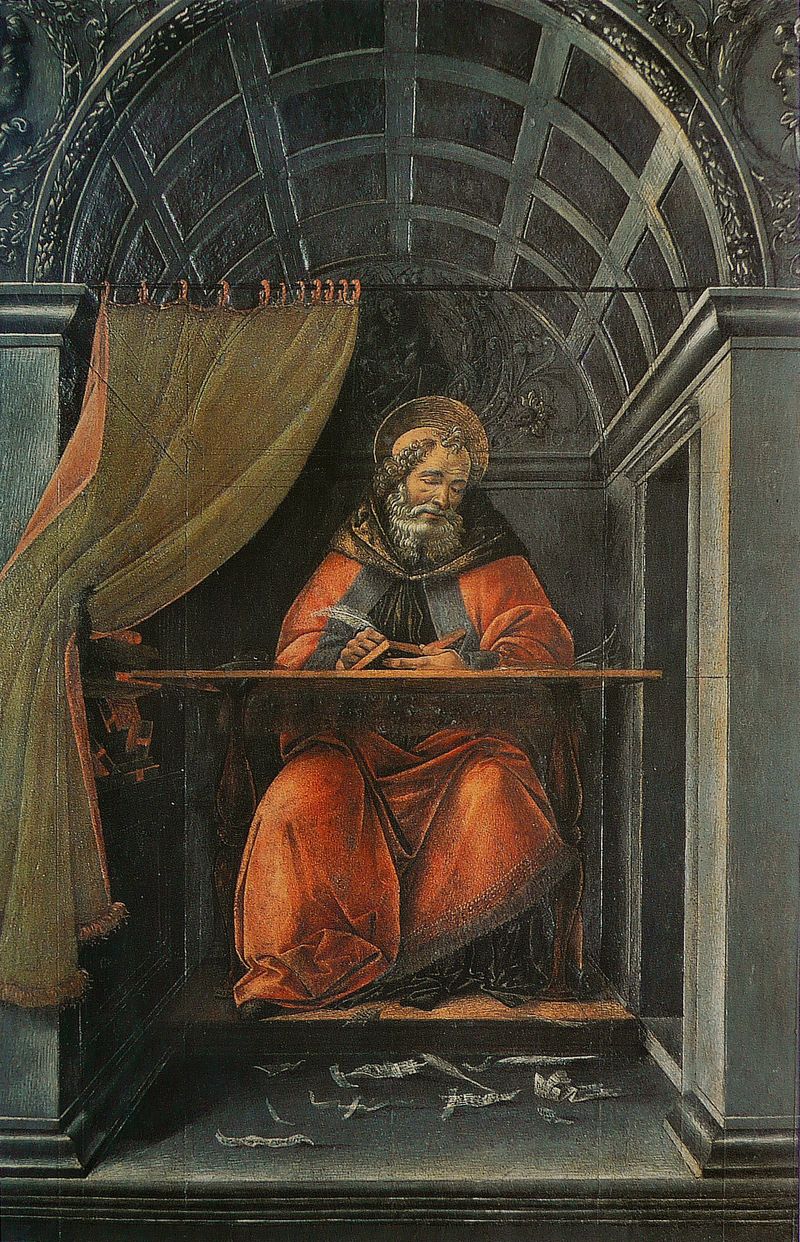
Augustine of Hippo (354–430) devoted enormous intellectual energy to refuting Donatism. His works—especially Contra epistulam Parmeniani (Against the Letter of Parmenian), the De baptismo contra Donatistas (On Baptism Against the Donatists), and scattered passages in other treatises—constitute the definitive Catholic response.
Augustine’s argument proceeds from Scripture. He notes that Christ teaches in the parable of the sower that the Church contains both good soil and rocky ground, seeds that grow and weeds that spring up alongside (Matthew 13). The Church in this age is a corpus permixtum—a mixed body—of the righteous and the sinners. Only at the final judgment will God separate the wheat from the chaff.
Therefore, Augustine reasons, we cannot know with certainty who has true faith and who does not. A bishop or priest may appear righteous but be secretly prideful or lustful. Conversely, one who seems weak may possess deep faith. Judgment of hearts belongs to God alone.
Moreover, Christ’s promise to His Church does not depend on the holiness of its members. Christ said to Peter: “Thou art Peter, and upon this rock I will build my church, and the gates of hell shall not prevail against it.” He did not say: “If your clergy are all perfectly virtuous, then I will protect you.” He said it unconditionally.
Ex Opere Operato
Augustine articulates what becomes the doctrine of ex opere operato: the efficacy of the sacrament comes from the work performed, not from the worthiness of the minister.
When a priest baptizes in the name of the Trinity, Christ himself is acting. When a priest consecrates the Eucharist, the power belongs to Christ’s words and the Holy Spirit, not to the priest’s personal holiness. A wicked priest does not prevent baptism; a sacrilegious priest does not render the Mass null.
Augustine points to Scripture. In John 1:26–27, John the Baptist testifies to Christ. But John the Baptist was not perfect; he was a sinful man. Yet his testimony was true because it was borne witness to the Truth. Similarly, the priest is a vessel, an instrument. The instrument’s dignity does not depend on the one using it.
To deny the validity of a sacrament administered by a sinful priest is to place trust in the priest’s holiness rather than in Christ’s power. It is, in a subtle way, a form of idolatry—making human virtue the condition of God’s grace.
The Sacrament, Not the Sect
Augustine also emphasizes that what matters is the sacrament, not the community administering it. A Donatist baptism, if performed with the proper formula (in the name of the Trinity, with water), is a real baptism. If a Donatist is later reconciled to the Catholic Church, the Church does not re-baptize him. To do so would imply the first baptism was not real.
This is not because the Donatist church is recognized as having apostolic succession—Augustine disputes that. Rather, it is because Christ’s action transcends human sin and schism. The sacrament, once validly performed, remains valid. What changes when someone leaves a schismatic community is not the sacrament’s reality, but the person’s relationship to the Church’s communion.
Augustine does not deny that sacraments in the Church proper are more fruitful. A sacrament received in communion with the whole Church, in union with the apostolic succession and the magisterium, bears more abundant fruit than a sacrament in a schismatic context. But the sacrament itself—its reality and validity—is not nullified by schism or the minister’s sin.
The Corpus Permixtum: The Church as Mixed Body
One of Augustine’s most influential contributions is the concept of the Church as a corpus permixtum—a mixed body containing both the truly faithful and those who are unfaithful in their hearts.
This was not merely a prudential accommodation. Augustine derived it from Jesus’s own teaching: in the wheat and tares parable (Matthew 13:24–30), Jesus explicitly says that the wheat and tares grow together until the harvest. The servants ask whether they should pull up the tares; the Master forbids it, lest they uproot the wheat as well. At the final judgment, the Son of Man will separate them.
The implication is radical: the Church in this age cannot be a purely holy community. It will contain hypocrites, the uncommitted, those whose faith is shallow. That is not a tragedy to be remedied by schism; it is the nature of the Church militant.
The Donatists claimed to be the Church of the pure. But Augustine shows this is impossible. Even the Donatist church contains sin—pride, schism, the sin of breaking communion. By their own logic, the Donatists would need to separate from their own church!
Augustine notes that Christ himself chose Judas, knowing Judas would betray him. If Christ was willing to include a traitor in his inner circle, the Church must be willing to tolerate sinners in her midst. The presence of corruption is not evidence that the Church is false; it is evidence that the Church is real—composed of humans, not angels.
The Unity of the Church
A corollary of Augustine’s teaching is the necessity of preserving the Church’s unity. For Augustine, the Donatist schism was more grave than individual sin. A bishop might be wicked, but if he is in communion with the apostolic succession and the worldwide Church, he does not imperil the Church’s substance. But schism—a rupture in communion—is a fundamental violation of Christ’s will.
Jesus prayed for His disciples: “That they may all be one; as thou, Father, in me, and I in thee, that they also may be one in us” (John 17:20–21). Unity is essential to the Church’s mission. A divided Church cannot credibly preach the gospel of reconciliation.
Therefore, from Augustine’s perspective, the Donatists’ attempt to create a “pure church” by breaking communion was far worse than the moral failings of individual bishops. They had chosen schism over scandal, division over patience. This was to betray Christ’s explicit prayer for unity.
Augustine’s Later Turn: Power and Coercion
Yet Augustine’s legacy is complicated by his later writings on how to deal with Donatist schismatics. Early on, Augustine favored persuasion and argument. He engaged Donatist bishops in theological debate. He wrote extensively to demonstrate the irrationality of their position.
But as the Donatist problem persisted and as Augustine gained political influence, he came to advocate for coercive measures. He supported imperial legislation against Donatists. He approved of military force to suppress them. In a striking passage, he even cited Luke 14:23—“Compel them to come in”—as a justification for using state power to force heretics into the Church.
This was Augustine’s darkest hour. The theologian who had articulated the Church’s spiritual nature became an apologist for temporal force. He rationalized persecution as a form of love—“salutary coercion.” The Donatist schismatics, he argued, needed to be beaten into submission for their own good.
History has vindicated Augustine’s theology but condemned his tactics. The use of force to impose religious uniformity is indefensible. Augustine’s willingness to employ state coercion represents a tragic alliance between Church and state that would haunt Christendom for centuries.
Yet his core insight remains sound: the Church’s unity and sacramental validity do not depend on the moral perfection of her ministers. This is a truth the Church needed to learn, and Augustine articulated it powerfully. It was only in his application of that truth—his resort to coercion—that he erred.
Donatism Today: The Heresy That Recurs
Though Donatism was formally condemned in the fifth century and ceased to exist as an organized movement, its logic resurfaces repeatedly in Christian history. Three modern forms deserve attention.
1. Evangelical Rejection of Institutional Christianity
Many evangelical Protestants function as practical Donatists. They reject the institutional Church (Catholic, Orthodox, mainline Protestant) because of clerical corruption, moral compromise, or doctrinal drift. Instead, they emphasize a “pure” gospel, a return to biblical Christianity stripped of ecclesiastical encrustation.
The appeal is obvious: Why belong to a Church whose leadership is corrupt, whose doctrine is muddled, whose worship is empty? Why not gather with others in a small fellowship committed to authentic faith?
But this is Donatism dressed in modern garb. It assumes that the Church’s validity depends on the holiness of its members and leaders. It privileges the believer’s personal judgment about purity over the Church’s apostolic continuity. It tends toward an invisible or purely spiritual ecclesiology, denying that the Church must be visible and institutional.
Augustine’s response applies directly: The Church is a corpus permixtum. Yes, the institutional Church is full of sinners. Yes, some clergy are unfaithful. But this does not negate the sacraments’ validity or the Church’s apostolic authority. To abandon the Church over such things is to commit the Donatist error.
The evangelical alternative—autonomous congregations, Bible-only authority, the priesthood of all believers (understood as the erasure of ordained ministry)—inevitably leads to endless fragmentation. There is no magisterium to settle disputes. Each congregation becomes its own authority. The result is not purity but chaos.
2. Traditionalist Rigorism Toward the Post-Vatican II Church
Some traditionalist Catholics exhibit Donatist logic in their rejection of the post-Vatican II Church. They argue that Vatican II was erroneous, that the “Novus Ordo” Mass is invalid or at least illicit, and that the bishops who promulgated Vatican II were in error—perhaps even enemies of the faith.
From this perspective, the “true Church” is the pre-Vatican II Church, preserved in Latin Mass communities and traditionalist seminaries. The mainstream Catholic Church is seen as corrupted, unfaithful to tradition, compromised with the modern world.
The Society of St. Pius X (SSPX) represents this position, claiming an authority independent of Rome on the grounds that Rome itself has fallen into error.
But this is a form of Donatism. It makes fidelity to tradition (a legitimate concern) into a test of the Church’s validity. It assumes that when bishops err—or seem to err—the Church’s sacramental authority is suspended. It privileges the individual or sect’s interpretation of tradition over the living magisterium.
Augustine’s response is applicable: Even if Vatican II was imprudent or contained errors, the Church remains the Church. The Pope remains Peter’s successor. The sacraments remain valid. To break communion over perceived errors is to repeat the Donatist schism, substituting one’s own judgment for the Church’s living authority.
(Note: There are legitimate debates about Vatican II’s interpretation and implementation. But these debates must occur within the Church, in communion with Rome, not through schism.)
3. Fundamentalist “True Church” Claims
Finally, certain fundamentalist groups—whether Christian Identity movements, some charismatic sects, or ultra-traditional breakaways—claim to be the “true Church” separated from the apostate mainstream.
Their logic is invariably Donatist: The mainstream Church has fallen into error (whether moral, doctrinal, or spiritual). We, the faithful remnant, have preserved the truth. We are the true Church; they are the false church.
Augustine would recognize this immediately as the serpent’s whisper repackaged for each age: “You be the judges of holiness. You discern who is truly faithful. Separate yourselves from the corrupt majority. You are the elect.”
Augustine’s Doctrine: Why It Remains Essential
Augustine’s refutation of Donatism established several truths that remain central to Catholic (and indeed, all orthodox Christian) theology.
First, the sacraments’ validity depends on Christ, not on the minister’s holiness. This liberates believers from anxious scrupulosity. You need not investigate your priest’s moral character to determine whether your baptism was real. The sacrament is Christ’s work, objectively accomplished through the Church’s ministry, regardless of the minister’s personal state.
Second, the Church is not a pure communion of saints in this age. It is a pilgrimage of sinners, sustained by grace and the Holy Spirit’s protection. Perfection is the Church’s telos (goal), not her present reality. To demand that the Church be purely holy now is to reject the incarnational and historical nature of God’s work in the world.
Third, the unity of the Church takes precedence over sectarian claims to purity. It is better to be in communion with a flawed Church than to separate oneself in pursuit of holiness. Schism is a graver sin than the individual failures that provoke schism.
Fourth, the Church’s apostolic succession and sacramental reality cannot be nullified by human sin. The Church is not a human club that succeeds or fails based on its members’ virtue. It is a divine institution, chartered by Christ, sustained by the Holy Spirit, and guaranteed protection from definitive error in faith and morals.
These truths are not merely Augustine’s private opinions. They are affirmed in the Catholic Catechism:
“The fruits of the sacraments also depend on the disposition of the one who receives them. The same sacramental action [of the priest] produces its full effect if it is received with proper disposition. For example, Reconciliation forgives sins only to those who genuinely repent.” (CCC 1128, emphasis added—the sacrament’s effect depends on the recipient’s disposition, not the minister’s.)
Conclusion: The Perennial Temptation
Donatism is not a heresy of the fourth century alone. It is a perennial temptation: the desire to escape the messiness of the real, institutional Church by creating a pure alternative. It appeals to the highest motives—the love of holiness, the hunger for authenticity, the refusal to tolerate corruption.
Yet it is fundamentally a failure of faith. It doubts that God can work through sinners. It assumes that human judgment can separate the wheat from the tares. It privileges the sect’s purity over the Church’s apostolic unity and sacramental reality.
Augustine’s answer—that the Church is Christ’s body, that her sacraments are valid through His power, that her unity is more precious than any imagined purity—remains the Church’s answer. It is a humbler answer than the Donatist alternative. It requires that we tolerate corruption and compromise, that we trust not in the hierarchy’s holiness but in Christ’s promise.
Yet precisely in this humility lies the Church’s strength. By renouncing the claim to be a community of the pure, she becomes truly a hospital for sinners. By trusting in Christ rather than in her members’ virtue, she is liberated from the endless cycle of disillusionment and schism.
The question Donatism poses to each generation is this: Will you trust in the Church’s apostolic authority and sacramental reality, despite her manifest failings? Or will you seize for yourself the authority to judge her and, if found wanting, to separate?
Augustine knew the answer. It is the answer of faith: Trust Christ, who established His Church on rock. Trust the Spirit, who guides her. Trust the apostolic succession and the magisterium, not because they are perfect, but because they are Christ’s instruments. And bear with the Church’s sins as she bears with yours, until the final judgment comes.
Footnotes
1. Augustine, De baptismo contra Donatistas (On Baptism Against the Donatists), Book III, chapter 17, in The Works of Saint Augustine: A Translation for the 21st Century, vol. 22, trans. Boniface Ramsey (New City Press, 2006). The doctrine of ex opere operato is developed throughout this work.
2. The Donatist controversy is detailed in W.H.C. Frend, The Donatist Church: A Movement of Protest in Roman North Africa, 2nd ed. (Oxford University Press, 2000), which remains the standard historical account.
3. Cyprian of Carthage (d. 258) had debated the treatment of the lapsed (those who apostatized during persecution), but he did not deny the validity of their sacraments. See Cyprian, Letters and On the Unity of the Church, in Ante-Nicene Christian Library, ed. Alexander Roberts and James Donaldson, vol. 8 (T&T Clark, 1867).
4. The Council of Arles (314 AD) explicitly condemned Donatism. See Tanner, ed., Decrees of the Ecumenical Councils, 1:8–12, which provides the council's canons against rebaptism.
5. Augustine, Contra epistulam Parmeniani (Against the Letter of Parmenian), in The Works of Saint Augustine, vol. 24, trans. Boniface Ramsey (New City Press, 2006). This work systematically refutes Donatist arguments.
6. Augustine, De baptismo contra Donatistas, Book I, chapters 1–10, establishes the principle that sacraments depend on Christ, not the minister.
7. Matthew 13:24–30 (DRV): The parable of the wheat and tares. Jesus explains that the tares and wheat grow together until the harvest, when the Son of Man will separate them. Augustine uses this extensively to show that the Church in this age is a mixed body.
8. Peter Brown, Augustine of Hippo: A Biography, rev. ed. (University of California Press, 2000), 334–364, provides an excellent account of Augustine's evolving stance on Donatism and his later advocacy of coercion.
9. Augustine's recommendation of force is found in his letters and later anti-Donatist works. See Letter 185 (to Boniface) and The Correction of the Donatists (written late in Augustine's life). Augustine cites Luke 14:23 ("Compel them to come in") in defense of coercion. The passage is much disputed by modern readers.
10. Maureen Tilley, The Bible in Christian North Africa: The Donatist World (University of Notre Dame Press, 1997), provides insight into how the Donatist and Catholic communities understood Scripture differently, showing that the dispute was also about biblical interpretation and the nature of the Church.
11. The Society of St. Pius X (SSPX) and traditionalist Catholic groups often employ Donatist-like reasoning: they judge the post-Vatican II Church as unfaithful and therefore claim autonomy from papal jurisdiction. See Michael Davies, Liturgical Revolution, 4 vols. (Tan Books, 2002), for the traditionalist perspective on Vatican II and SSPX's view of Church authority.
12. Catechism of the Catholic Church, 2nd ed. (United States Catholic Conference, 2000), no. 1128, on the sacraments: “The fruits of the sacraments also depend on the disposition of the one who receives them.” This affirms the objective validity of the sacrament while acknowledging the recipient's subjective openness to grace.
13. The doctrine of the Church as corpus permixtum is not unique to Augustine but is most powerfully articulated by him. Later medieval theology, especially in Thomas Aquinas, incorporated this insight. See Aquinas, Summa Theologiae III, questions 64–65, on the sacraments and their validity.
14. For a modern analysis of Donatism's recurrence in contemporary Christianity, see Christopher Hall, Learning Theology with the Church Fathers (Inter-Varsity Press, 2002), 178–195, which discusses how the Church's unity is challenged by recurrent Donatist impulses in both Catholic and Protestant contexts.
Garrett Ham
Garrett Ham is an attorney, military veteran, and holds a Master of Divinity from Yale Divinity School. He writes from Northwest Arkansas on theology, law, and service.
More about Garrett →Related Posts
Martin Luther: A Fair Catholic Assessment
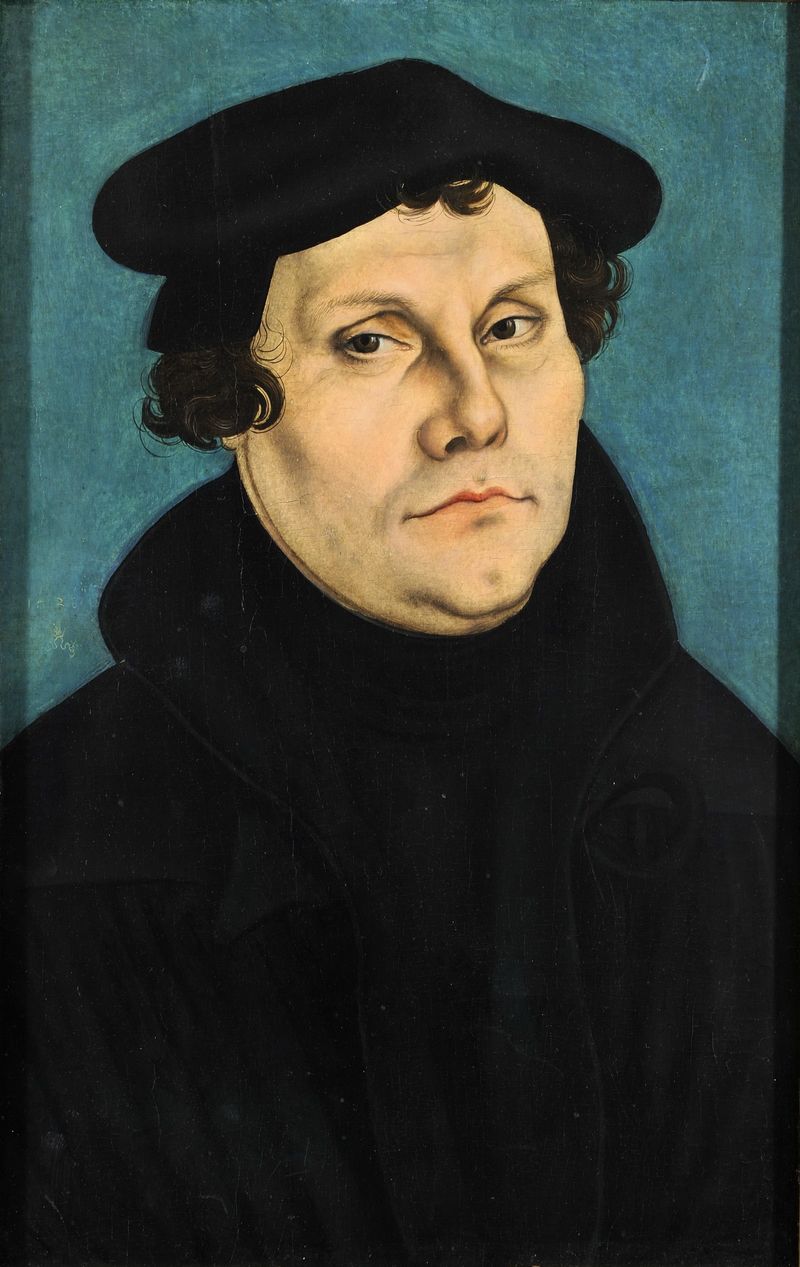
A balanced Catholic assessment of Martin Luther: honest acknowledgment of medieval abuses he rightly condemned, examination of his theological claims, and rigorous critique of his solutions and later works.
The First Vatican Council (1869-1870)—What It Taught and Why It Matters
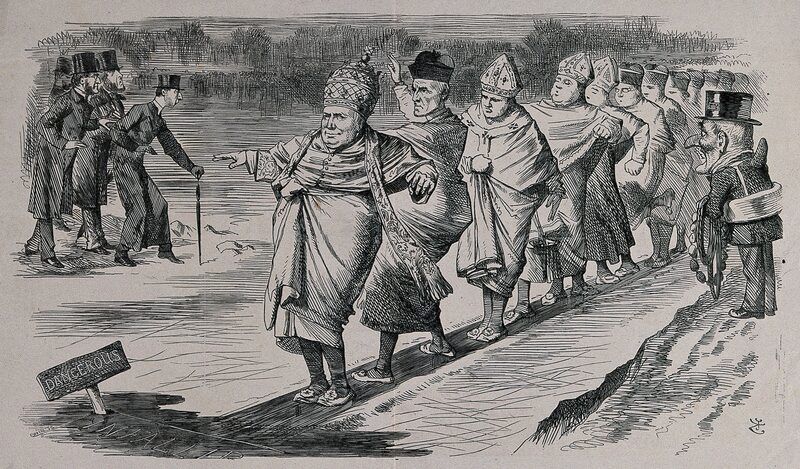
Vatican I defined papal infallibility and primacy while defending faith against rationalism. Explore its two major constitutions, the context that prompted it, and its enduring significance for Catholic theology.
Stay Informed
Get new writing on faith, law, and service delivered to your inbox.
No spam. Unsubscribe anytime.