A Guide to Church History: Councils, Schisms, and the Development of Christian Doctrine
On This Page
Understanding where the Church has been is essential to understanding where it is — and where it’s going. Church history isn’t a dry academic exercise; it’s the story of how the faith we profess today was hammered out through centuries of debate, persecution, political intrigue, and genuine seeking after truth.
I’ve been writing about church history since my time at Yale Divinity School, where I studied the development of Christian doctrine under some of the field’s leading scholars. This guide organizes that work into a single roadmap. Whether you’re a seminarian, a curious Protestant exploring Catholic and Orthodox traditions, or someone who simply wants to understand how Christianity got from Jerusalem to today, start here.
The Early Church and the Ecumenical Councils
The first five centuries of Christianity were defined by the great ecumenical councils — gatherings that defined the core doctrines of the faith. These councils weren’t abstract theological exercises; they were often messy, political, and deeply human events that nonetheless produced the creedal foundations every major Christian tradition shares.
- The First Council of Nicaea (325) — How the Church’s first ecumenical council settled the Arian controversy and produced the Nicene Creed.
- The Council of Chalcedon (451) — The council that defined Christ’s two natures and created lasting schisms that persist to this day. One of my most comprehensive articles, drawing on over 60 sources.
The Christological Heresies
The councils were called to address specific heresies about the nature of Christ. Understanding these heresies is key to understanding why the councils’ definitions matter:
- Apollinarius and His Heresy — The heresy that denied Christ’s full humanity by replacing his human mind with the divine Logos.
- Modalism Explained — The Trinitarian heresy that collapsed Father, Son, and Spirit into one person wearing different masks.
- Pelagianism and Semi-Pelagianism — The controversy over grace, free will, and human nature that shaped both Catholic and Protestant soteriology.
- The Meletian Schism — The Egyptian church crisis that shaped the politics of the Council of Nicaea.
Hellenism and the Development of Christian Thought
Christianity did not develop in a vacuum. It emerged in the Hellenistic world and was profoundly shaped by Greek language, philosophy, and culture:
- Hellenistic Christianity — How Greek culture shaped the language, concepts, and early theology of Christianity.
The Great Schism and the East-West Divide
The split between Eastern and Western Christianity is one of the most consequential events in church history. I’ve written extensively about the differences between the traditions:
- Why Did the Orthodox and Catholic Churches Split? — The political, theological, and cultural factors behind the Great Schism of 1054.
- Eastern Orthodoxy Explained — A comprehensive introduction to the Orthodox tradition from a Western perspective.
- Oriental Orthodox vs. Eastern Orthodox — The often-confused distinction between the two Orthodox traditions and their different roots.
- Orthodox vs. Catholic — The key theological and practical differences between the two ancient traditions.
- Orthodox vs. Protestant — How the Orthodox tradition compares to Protestantism.
- Orthodox, Catholic, and Protestant Compared — A side-by-side comparison of Christianity’s three major traditions.
- The Eastern Catholic Churches — The often-overlooked churches that are in communion with Rome but follow Eastern liturgical traditions.
- Orthodox Icons Explained — The theology and practice of icon veneration in the Eastern Church.
- Orthodox Monasticism — The monastic tradition that remains central to Orthodox spiritual life.
The Reformation and Counter-Reformation
- The Counter-Reformation — How the Catholic Church responded to Luther and reformed itself in the wake of the Protestant Reformation.
- The First Vatican Council — The council that defined papal infallibility and shaped modern Catholic ecclesiology.
- What Happened to the Jesuits? — A Catholic reflection on the rise, suppression, and transformation of the Society of Jesus.
Issues of Married Clergy
- Married Clergy — The history of clerical celibacy and the case for married priests in the Catholic Church.
Theological Foundations
Church history is inseparable from theological development. For deeper exploration of specific doctrines, see these companion articles:
- The John Prologue Series — A verse-by-verse Catholic commentary on John 1:1–18 that traces how the early Church’s understanding of the Logos developed.
- Is Jesus God? — The biblical and historical case for Christ’s divinity.
- Open Theism — A modern theological movement and how it relates to classical Christian theism.
- Romans 9–11: A Catholic Interpretation — How the Catholic tradition reads Paul’s most contested chapters on predestination and Israel.
- The Atonement — How different Christian traditions understand the saving work of Christ.
Where to Start
If you’re new to church history, I’d recommend beginning with the Council of Nicaea article — it sets the stage for everything that follows. From there, the Council of Chalcedon article traces how the early Church defined orthodox Christology, and the Great Schism article explains how Christianity’s two ancient halves drifted apart.
For those interested in how church history intersects with my personal journey, my Yale Divinity reflections offer a week-by-week account of studying these topics at one of the world’s leading divinity schools as a conservative evangelical veteran.

Garrett Ham
Garrett Ham is an attorney, military veteran, and holds a Master of Divinity from Yale Divinity School. He writes from Northwest Arkansas on theology, law, and service.
More about Garrett →Related Posts
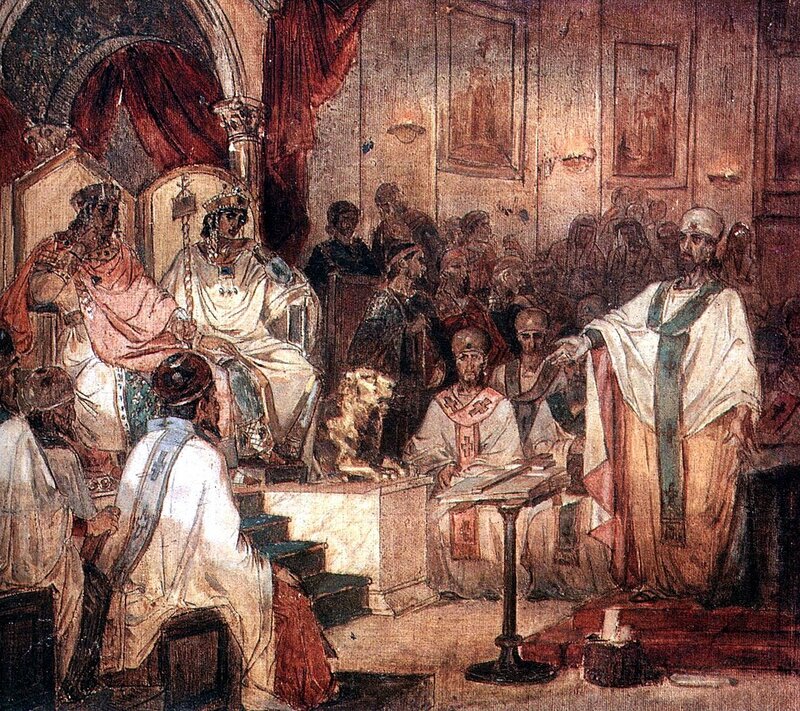
The Council of Chalcedon (451): How Political Rivalry Reshaped Christendom
Council of Chalcedon explained: the pivotal 451 AD ecumenical council that shaped Christology, church politics, and the Great Schism. Scholarly deep-dive.
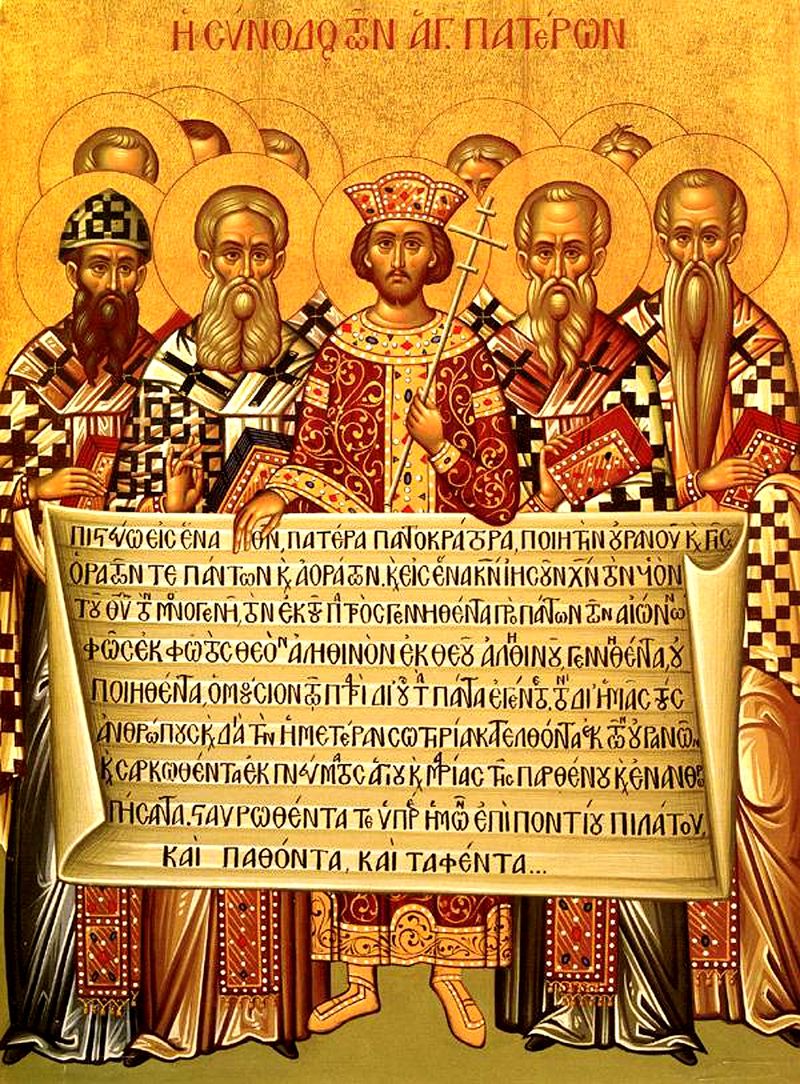
The First Council of Nicaea: What It Decided and Why It Matters
What happened at the First Council of Nicaea in 325 AD? A Catholic examination of the Arian crisis, the meaning of homoousios, and why the Nicene Creed still defines Christian orthodoxy.
Why Did the Orthodox and Catholic Churches Split?
The Great Schism of 1054 divided Christianity into East and West. Explore the theological, political, and cultural causes — from the Filioque to papal authority — and why the split endures.
Stay Informed
Get new writing on faith, law, and service delivered to your inbox.
No spam. Unsubscribe anytime.