The Buckley Program at Yale: Intellectual Diversity on a Progressive Campus

On This Page
I remember the dinner with Rich Lowry, editor-in-chief of National Review and author, as clearly as I remember my first week at Yale Divinity School. The Buckley Fellowship had arranged it—a small gathering of Fellows around a table in New Haven, a handful of young conservatives in a city that had been trying to convince us we were on the wrong side of history since orientation. Lowry arrived like a man who had long since made peace with disagreement, which at Yale felt almost exotic. The conversation moved easily from the craft of writing to the state of the movement to the peculiar loneliness of being a conservative at an institution where progressive assumptions had calcified into something resembling revealed truth. I found myself thinking: this is what intellectual diversity looks like. Not a token conservative invited to be intellectually thrashed on a panel. Not a visiting speaker treated as a curiosity before the audience retreated to consensus. But rather a sustained community of inquiry—people reading the same books, thinking seriously about the same questions, willing to argue with each other because they believed something true was at stake.
That dinner was one of my earliest experiences in the Buckley Program, named for the man who had looked at Yale in 1951 and asked a question that still echoes: God and Man at Yale. I was one of the few—perhaps the only—conservative student at the Divinity School, and the experience had been clarifying in ways that were not always comfortable. To walk into a classroom where Christian theology was discussed entirely through the lens of liberation and dismantling, where conservative intellectual traditions simply did not exist as options, was to understand something true about institutional consensus: it corrodes not because it is wrong, but because it goes unchallenged. The Buckley Program would change that equation for me. It remains the most important intellectual project on the Yale campus.
What the Buckley Program Is
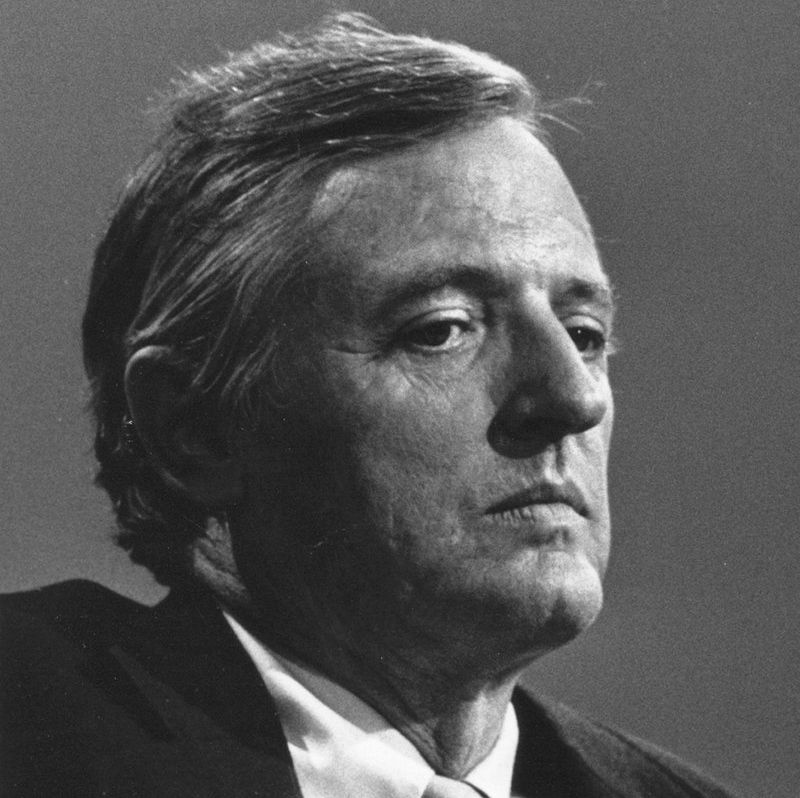
The William F. Buckley Jr. Program at Yale was founded in 2010 by a group of Yale undergraduates working with guidance from Professor Donald Kagan, the legendary historian and classicist—Sterling Professor in both departments—and a prominent conservative intellectual. It launched in the spring of 2011, emerging from a simple recognition: that a university claiming to educate students was presiding over a campus where certain ideas were so dominant that they no longer required defense. The program took its name and its animating purpose from Buckley’s 1951 polemic, a book that had accused Yale of promoting secularism over Christianity and collectivist economics over free-market individualism—while dismissing “academic freedom” as a shield for ideological bias. Seven decades later, the charge had not lost its force.
The Buckley Program is not a club for conservatives to hide in—though there is dignity in having a space where you need not explain yourself to every passerby. Rather, it is an institutional effort to restore intellectual diversity to campus discourse. It does this through lecture series that bring serious conservative thinkers to Yale, through the annual Buckley Conference, through the Firing Line Debate Series, inspired by Buckley’s legendary television program and modeled on its ethos of civil, substantive discourse across political lines. But perhaps its most distinctive initiative is the Disinvitation Dinner, launched in 2015. The idea is straightforward and devastating: invite speakers who have been disinvited from other campuses to speak at Yale. These are intellectuals who have said something that offended the progressive consensus elsewhere, and the dinner offers them a platform without apology. The message is subtle but clear: intellectual diversity is not something you practice when it is convenient, but when it costs you something to do so.
The Buckley Fellowship itself—the program that brought me into the orbit of this community—is open to all Yale students and now numbers more than 820 Fellows, offering access to events, dinners, speakers, and conferences. Separately, the Buckley Media & Public Policy Internship program places up to five students each summer at institutions like National Review, the Manhattan Institute, and the Foundation for Individual Rights in Education (FIRE), with a funded stipend. The internships are prestigious, yes, but more importantly, they connect emerging intellectuals to the institutions and mentors who have sustained the right’s intellectual project. They are, in other words, an investment in the health of conservative thought itself.
Why It Matters
I have learned that people who dismiss the need for intellectual diversity do so for a reason. They believe—genuinely—that the consensus view is correct, and that dissent is therefore not intellectual pluralism but obstruction. This is a recurring argument, and it deserves to be met directly rather than deflected.
The argument goes like this: if progressive policies are objectively better for society, then a progressive institution is simply reflecting reality. Intellectual diversity for its own sake is a kind of false balance, like giving equal time to flat-earth theorists. Why, the thinking goes, would we invite obstacles to enlightenment simply to honor the value of disagreement?
The answer is not that conservative ideas are obviously right, or that progressive ideas are obviously wrong. Rather, it is that contested questions—questions about how to order a just society, how to balance liberty and order, how to steward institutions and culture—these are not questions with obvious answers. They require the clash of serious minds, the pressure of opposing arguments, the discomfort of having your assumptions tested by someone who genuinely rejects them.
When an entire institution proceeds from shared assumptions, something corrosive happens. Those assumptions stop being examined. They become the water you swim in rather than the ground you stand on. They are right not because they have been tested and found true, but because they are the default, the consensus, the thing everyone sensible believes. At that point, education has become something other than education. It has become indoctrination.
Buckley understood this in 1951, and the case he made then has only grown stronger. The university is not supposed to be a political instrument. It is supposed to be a place where young people learn to think—which means learning to think against themselves, against the ambient assumptions of their time, against the powerful pressures toward conformity. That can only happen if serious opposition is present, if conservative ideas are represented not by straw men but by actual thinkers, if the case for ordered liberty is made by someone who believes it rather than someone dismissing it. The Buckley Program exists to ensure that this happens at Yale.
What I Found as a Fellow
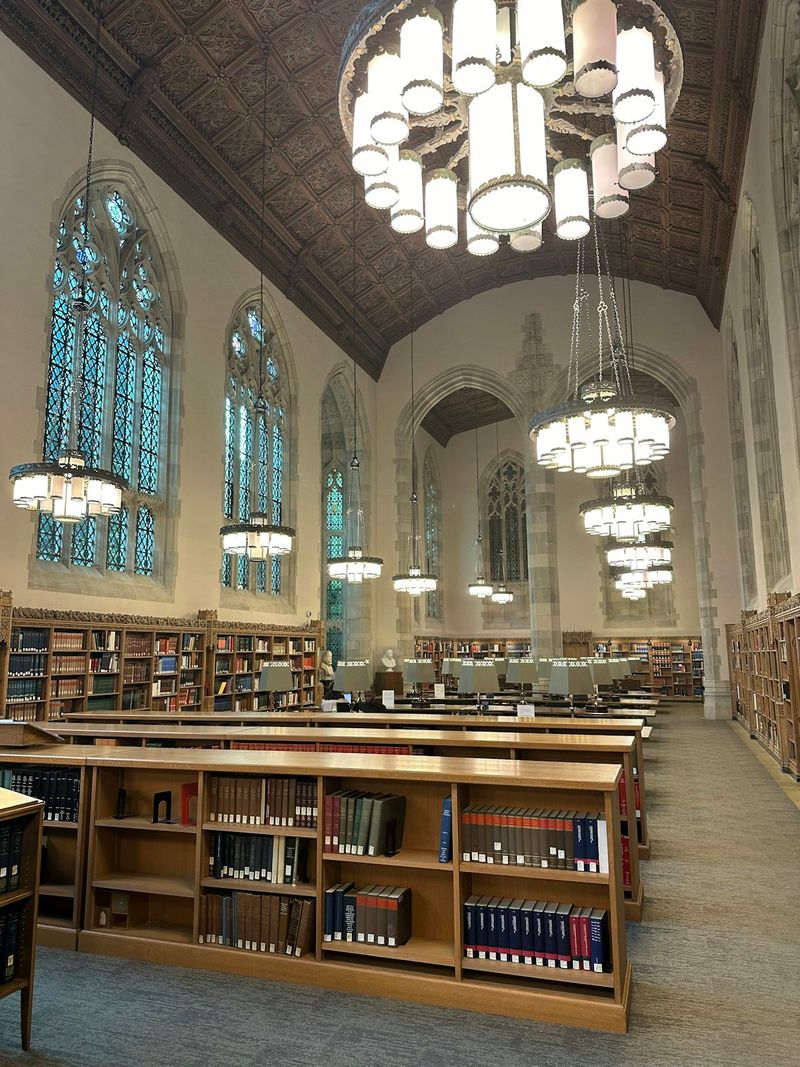
The Fellows dinners were unlike anything I had experienced at the Divinity School. These were not occasions for point-scoring or rhetorical combat, though both were occasionally present. Rather, they were gatherings of young people who had been told by the institutions they attended that their basic political convictions were not merely wrong but morally primitive—and who had nevertheless held to those convictions, or recovered them, or discovered them for the first time. There was gratitude in the room, a kind of relief at being able to speak seriously about ideas without needing to first establish the legitimacy of speaking about them at all.
I arrived at Yale Divinity School with a particular set of convictions—shaped by my formation at Ouachita Baptist University, deepened by years of reading, tested by the conviction that Christianity and politics were not separable questions. But at the Divinity School, the atmosphere was one of such settled progressivism that conservative theology was simply not a category that needed to be engaged. Liberation theology was the mode, social gospel the anthem, and any suggestion that Christian faith might sustain a conservative political vision was treated as a kind of category error—not wrong, but incoherent, a confusion of registers. The intellectual life of the place proceeded from certain axioms that were never, in my experience, defended. They were simply assumed. And when I tried to engage them, I discovered that pushback against progressive orthodoxy came with significant social costs—which is ultimately what the cancel culture incidents I witnessed made explicit.
The Buckley Program changed that. When Rich Lowry sat across from me and talked about what it meant to conserve rather than to innovate, to defend institutions rather than to deconstruct them, to suspect that the accumulated wisdom of tradition might contain truths that contemporary insight had not yet recovered—these were not novel ideas. But they were presented as serious ideas, by a serious person, in a community that took them seriously. That is a rarer gift than it should be.
The dinners with speakers, the conversations with other Fellows, the reading lists that connected contemporary argument to classic texts—all of this created something that the broader campus could not offer. We were not trying to convert Yale to conservatism. We were trying to ensure that at least somewhere on campus, conservative ideas could be examined as ideas rather than dismissed as symptoms of moral failure. The Buckley Program made that possible.
The Broader Case for Intellectual Diversity
This is not finally a partisan argument, though it serves the interests of conservatism. It is an argument about the health of institutions—any institution. A university that only hears one perspective on contested questions is not educating. It is catechizing. It is forming adherents rather than forming thinkers.
Consider what happens when an idea goes unchallenged within an institution. At first, perhaps, it is defended with care and precision—the case is made, evidence is marshaled, objections are anticipated. But over time, as the idea becomes dominant, as everyone sensible believes it, as dissenters become fewer and more marginal, something changes. The arguments grow slack. The case is no longer made; it is simply assumed. Nuance drops away. The idea hardens into dogma.
This has happened on elite campuses with progressive orthodoxy. I do not say this to claim that progressive ideas are false. I say it to observe what happens to any set of ideas when they become too dominant—they stop being thought and start being recited. The cost to intellectual life is enormous. Students learn to mouth the approved phrases, to signal allegiance to the consensus view, to treat disagreement as character defect rather than intellectual engagement. The most sophisticated critical thinking becomes devoted to defending the dominant view rather than questioning it.
The Buckley Program is not a solution to this problem, because you cannot finally solve the problem of institutional bias from within that institution. But it is a partial remedy. It says: at least here, at least sometimes, conservative ideas will be presented by serious people who actually believe them. It says: your political convictions need not be abandoned when you come to the university; they may be refined, questioned, tested—but they need not be repudiated as a condition of entry. It says: intellectual diversity is not a luxury, not a nod to inclusion, but a necessity for the university to fulfill its actual function.
Buckley understood something that contemporary progressives sometimes miss: a strong progressive argument requires the existence of a serious conservative opposition. When the opposition is weak or absent, progressivism devolves into something less than itself—it becomes unforced, unchallenged, its internal contradictions unexplored. The presence of serious conservative thought strengthens the entire intellectual ecosystem, because it requires everyone to think more carefully, to defend their positions more rigorously, to take seriously the possibility that they might be wrong about something important.
The Persistence of an Idea

What strikes me now, looking back on my time as a Buckley Fellow, is how fragile the whole enterprise is. The program depends on the continued commitment of donors who believe that intellectual diversity matters. It depends on the willingness of speakers to accept invitations to a campus they know will contain hostile audiences. It depends on young people—students who feel, as I did, that their convictions are not welcome—choosing to engage rather than to retreat into a kind of protective silence.
The program also demonstrates something that opponents of intellectual diversity sometimes fail to appreciate: that the defense of excluded perspectives is always difficult, always swimming against the current of institutional pressure, always dependent on the efforts of particular people in particular moments. It is easy to take for granted, once you are inside the institution that enforces conformity. It is easy to assume that the dominant view will always be challenged, that dissenting voices will always be heard. But they are only heard because people like Donald Kagan, like the students who founded the program, like donors who support it, have decided that this matters more than the comfort of consensus. My experience with cancel culture at Yale taught me just how fierce the resistance to genuine intellectual diversity can be when it threatens established orthodoxies.
I think of that dinner with Rich Lowry whenever I encounter the inevitable argument that intellectual diversity is not a real problem on elite campuses—that accusations of progressive domination are overblown, that conservatives are not actually marginalized, that the real issue is simply that progressive ideas are better and therefore more prevalent. The dinner is my answer. Not because a dinner proves an argument, but because it illustrates what it takes to create a space where conservative ideas can be discussed as ideas: intention, resources, institutional commitment, and a willingness to resist the gravity of consensus. That such things are necessary at a university claiming to educate freely is itself the indictment.
Closing
The Buckley Program matters because intellectual diversity matters—not as an abstract principle, but as the actual condition under which genuine education becomes possible. Walking into those dinners as a conservative at Yale, finding a community of serious thinkers who had refused to abandon their convictions when they became unpopular, discovering that my political instincts were not personal pathology but connected to a long tradition of conservative thought—all of this was formation in the deepest sense. It was a reminder that the university is not the only place where thinking happens, that institutions are not the only sources of authority, and that ideas worth holding are worth holding even when the institution tells you they are not.
That is what Buckley understood in 1951, and what the program that bears his name continues to demonstrate: that the health of a university—indeed, of a culture—depends on its willingness to take seriously the arguments of those who think differently. When that willingness disappears, something vital has been lost.
If you found yourself in that dinner with Rich Lowry, or if you’ve wondered what intellectual diversity looks like in practice, I’d encourage you to explore the work of the Buckley Institute and perhaps even consider applying for the Buckley Fellowship if you’re a Yale student looking for a community that takes serious ideas seriously.
Related posts:
Garrett Ham
Garrett Ham is an attorney, military veteran, and holds a Master of Divinity from Yale Divinity School. He writes from Northwest Arkansas on theology, law, and service.
More about Garrett →Related Posts
Why Conservatives Should Read Their Opponents
The case for engaging the strongest progressive arguments rather than caricaturing them—drawn from Buckley's example, Mill's logic, Aquinas's method, and three years at Yale Divinity School.
The Numbers Are In: The Buckley Institute’s Yale Divinity School Ideological Diversity Report
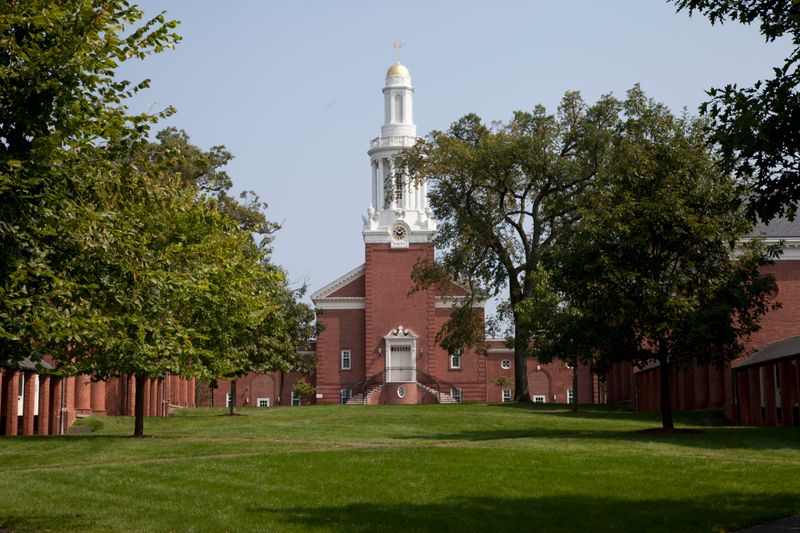
Yale Divinity School has zero Republican faculty. The Buckley Institute's 2026 report confirms what one conservative MDiv graduate saw firsthand. Here's what the data shows.

Week 8 at Yale: Cancel Culture Comes to YDS
A firsthand account of cancel culture at Yale Divinity School: how ideological conformity silences diverse perspectives, the consequences for free speech, and why this matters for conservative students.
Stay Informed
Get new writing on faith, law, and service delivered to your inbox.
No spam. Unsubscribe anytime.