Buckley's Fusionism and the Future of the Conservative Coalition
On This Page
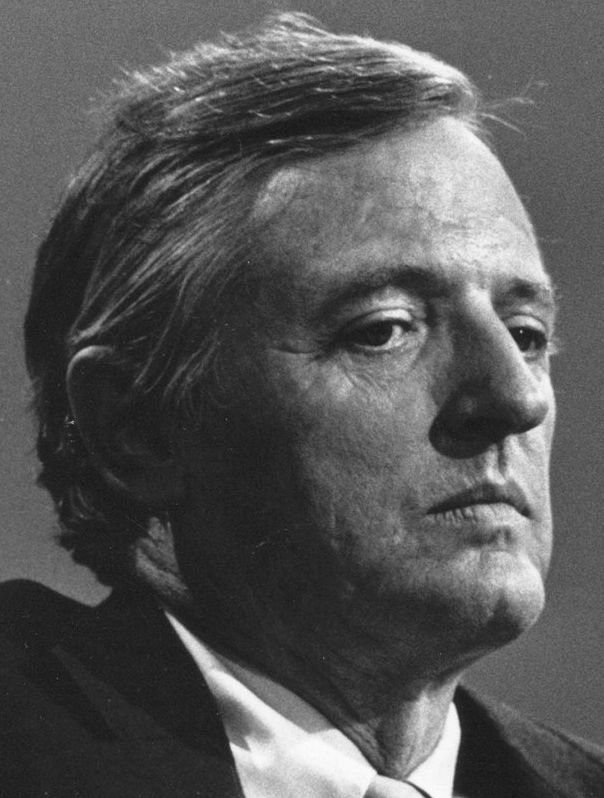
I came to National Review as a subscriber when I was a young attorney. The magazine arrived every other week, and I would read it not for the conclusions it reached—though those interested me—but for the way it reached them. Here were serious people disagreeing seriously, maintaining their differences without surrendering their common cause. Here was Buckley’s particular genius on display: not the imposition of orthodoxy but the modeling of how to think. The print subscription, held by hand, marked something almost extinct in our current moment—the signal of sustained intellectual engagement, the patience to sit with an argument over months, to change your mind or to deepen your conviction through repeated exposure to contrary views.
This magazine, and the philosophy that animated it, represented something called fusionism. It is a concept that most contemporary conservatives have never encountered, let alone understood. Yet it explains everything about how American conservatism held together for nearly fifty years, and it may contain clues about whether it can hold together at all in the future.
What Fusionism Actually Is
Frank Meyer did not invent fusionism. But he articulated it. Meyer was National Review’s senior editor from its founding in 1955 until his death in 1972, a philosopher of conservatism, and a man who had spent fourteen years inside Soviet-directed communist parties in both Britain and the United States—he had been a high-ranking party operative himself before breaking with it, before discovering that totalitarianism was the logical end point of the progressive trajectory. He understood the stakes.
In the 1950s and 1960s, American conservatism seemed to contain three irreconcilable parts. There was traditionalist conservatism—Russell Kirk’s conservatism, rooted in the classical and Christian past, emphasizing the organic nature of institutions, skeptical of abstract rationalism, concerned above all with the preservation of what was good in the existing order. There was libertarian conservatism—Friedrich Hayek and Ludwig von Mises, emphasizing individual liberty, skeptical of government power, convinced that free markets and limited government were not mere economic preferences but necessities for human flourishing and moral development. And there was anti-communism—the conviction that the Soviet Union represented an existential threat and that opposition to communism must be the organizing principle of foreign policy.
These seemed to pull in different directions. A traditionalist might fear that unrestrained capitalism would dissolve the social bonds that held communities together. A libertarian might fear that an appeal to tradition could become a mask for paternalism and state control. How could one person, one movement, hold all three commitments at once?
Frank Meyer’s answer was that they were not actually incompatible—they were complementary. Freedom, he argued, was not an end in itself but the necessary condition for pursuing the good. But freedom without understanding of the good—without tradition, without moral formation, without the lived encounter with transcendent truth—became mere appetite, mere drift. Equally, moral truth without freedom became tyranny. “Truth withers when freedom dies, however righteous the authority that kills it; and free individualism uninformed by moral value rots at its core and soon brings about conditions that pave the way for surrender to tyranny.”
The genius of this formulation was that it did not require anyone to surrender their deepest commitments. The traditionalist could say: I care about preserving moral order and the institutions that transmit it. The libertarian could say: I care about protecting individual liberty and limiting coercive state power. And both could recognize that these commitments were not in tension but in mutual dependence. You cannot transmit moral truth through a society that is uniformly unfree. You cannot maintain freedom in a society that has lost the wisdom tradition that shows what freedom is for. The three commitments to tradition, liberty, and anti-communism became a single, unified vision of what conservatism was and what it opposed.
This is what fusionism was. Not a compromise. A fusion—the integration of apparently disparate elements into a single coherent whole.
How Buckley Made It Work
Buckley did not invent fusionism, but he made it real. He did this in three ways. First, he created an institutional space where people who held these different emphases could encounter one another, argue with one another, and ultimately learn from one another. National Review was not a journal of pure traditionalism or pure libertarianism. It was a place where Whittaker Chambers could write his haunting reflections on the spiritual crisis of the modern world and where Ludwig von Mises could be quoted and debated. Where Russell Kirk’s essays could sit alongside Frank Meyer’s defenses of capitalism. This required a kind of editorial judgment that is almost unimaginable now—the willingness to publish views that the editor did not fully share, the trust that serious conversation would serve the movement better than ideological uniformity.
Second, Buckley understood that the coalition could survive only if it actively worked to purge itself of corrupting elements. In the late 1950s and early 1960s, he identified and opposed the John Birch Society—not because its members were not conservatives, but because they represented a kind of conspiratorial thinking that threatened the intellectual integrity of conservatism itself. He clashed sharply with Ayn Rand’s followers—not because he opposed capitalism or individual rights, but because Rand’s militant atheism and her reduction of human motivation to pure self-interest seemed to Buckley incompatible with the moral seriousness that conservatism required. He maintained an unswerving opposition to anti-Semitism, at a time when some elements of the right were willing to accommodate it (and unfortunately seem to be once again).
This was not done out of mere purity. It was done because Buckley understood—with an almost prophetic clarity—that the conservative movement could hold power only if it was intellectually honest. If you allow into your coalition people who have abandoned reason for conspiracy, people who see their opponents not as mistaken but as secretly evil, people who have surrendered the discipline of moral argument—then you have already lost the argument. You have already become the thing you claim to oppose.
Third, and perhaps most important, Buckley sustained the coalition through the force of his own personality and intellect. He demonstrated that one could be economically libertarian and religiously traditional. That one could defend capitalism and cite Augustine. That one could be skeptical of large government and yet acknowledge that some goods—community, spiritual truth, the conservation of what was beautiful in the past—could not be achieved through markets alone. He made fusionism work not as an abstraction but as a lived example. He wrote about it, debated it, embodied it.
There is a famous passage in Lionel Trilling’s The Liberal Imagination in which he declares that liberalism is “not only the dominant but even the sole intellectual tradition” in America, and that conservative impulses “do not, with some isolated and some ecclesiastical exceptions, express themselves in ideas but only in action or in irritable mental gestures which seek to resemble ideas.” Trilling valued literature precisely because it was “the human activity that takes the fullest and most precise account of variousness, possibility, complexity, and difficulty”—qualities he believed conservatism lacked. Buckley proved Trilling wrong. He demonstrated that a conservative could account for variousness, could inhabit different intellectual traditions without dissolving into them, could hold firm principles while remaining intellectually flexible and genuinely curious. The whole tradition of serious American conservatism—everything that has any claim to intellectual respectability—emerges from Buckley’s refutation of Trilling’s diagnosis.
The Tensions Were Always Real
But it is important not to be naive about what had made fusionism work. It had worked, in large part, because of a single overriding fact: the Soviet Union. Anti-communism was not merely one element of the conservative coalition; it was the glue that held the others together. A traditionalist could agree to defend capitalism because capitalism was the economic system of the free West. A libertarian could accept some role for moral authority because moral authority was what distinguished Western civilization from the godless materialism of communism. A business leader could listen to social conservatives because the alternative was leftism. The common external enemy imposed a kind of discipline on the coalition.
But there were deep tensions, even in the golden age of fusionism. Russell Kirk, the intellectual godfather of traditionalist conservatism, never fully accepted fusionism at all. He saw capitalism and conservatism as distinct, even antagonistic. He believed that unlimited commercial enterprise corroded the social fabric, that it dissolved the institutions—church, family, landed estates, settled communities—that conservatism depended on. He refused to have his name on National Review’s masthead—largely because he was leery of anyone who had been a member of the Communist Party, and several of NR’s editors, including Meyer, had been. He published essays that sounded almost like social critics from the left—essays about how capitalism was destroying traditional ways of life, atomizing society, replacing genuine community with mere contract.
Friedrich Hayek, whose classical liberalism became the intellectual foundation for free-market conservatism, was equally uneasy with the traditionalist wing. In a famous essay, he explained “Why I Am Not a Conservative.” Hayek saw conservatism as mere nostalgia, as an attempt to arrest change rather than to shape it. He believed that the free market, properly understood, was the only system compatible with human dignity and genuine progress. He was skeptical of appeals to tradition—skeptical that the past had any wisdom that rationality could not achieve more systematically and fairly.
Meyer worked to mediate these tensions. His argument was that Kirk and Hayek needed each other, that neither traditionalism nor libertarianism nor anti-communism could stand alone. But the mediation succeeded only because the external threat—the Soviet Union, the prospect of nuclear war, the ideological seduction of communism—imposed a kind of urgency on the coalition. We cannot afford to split, the logic went. We cannot afford to litigate every disagreement about capitalism and tradition and community. The Communists are outside the gates.
Where We Are Now
The Berlin Wall fell in 1989. The Soviet Union dissolved in 1991. The organizing principle of American conservatism for nearly fifty years simply ceased to exist. And almost immediately, the tensions that had been held in abeyance by external necessity began to emerge with new force.
The question that had been suppressed—what happens when traditionalists face the fact that capitalism, pursued relentlessly and without moral restraint, does tend to dissolve the communities and institutions they wish to conserve?—could no longer be avoided. The question that had been suppressed—what happens when libertarians face the fact that freedom without moral formation, without cultural and institutional anchors, tends to produce not flourishing but anomie?—could no longer be suppressed.
And then came populism. Trump’s rise, the insurgent movements that toppled the consensus candidate in 2016, the wholesale rejection of trade agreements that the conservative establishment had treated as settled matters of doctrine—all of this represented a challenge to key fusionist commitments. Trump questioned free trade. He promised not to defend democracy promotion globally but to defend American interests nationally. He spoke with contempt for the institutional constraints—the administrative state, the judiciary, the separation of powers—that libertarians and traditionalists alike had relied upon to limit executive overreach.
For the first time in a generation, younger conservatives began to ask: what has fusionism gotten us? Those influenced by figures like Patrick Deneen and Joshua Hawley articulated a critique that had real intellectual force. The critique went something like this: libertarians got everything they wanted. Corporations got deregulation. Markets got globalization. Capital got mobility. But Christians got the dissolution of the family structure. Traditionalists got the commercialization of everything sacred. Working people got the atomization of community and the perpetual disruption of stable employment. “We were told that free markets and limited government would produce flourishing. Instead, we got late-stage capitalism: hedge funds buying up single-family homes to turn them into rental properties, financialization hollowing out productive enterprise, families destroyed, communities shattered, the young unable to afford children.”
This is not a trivial critique. It deserves to be engaged honestly rather than dismissed as reactionary resentment.
What Endures
And yet. The core insight of fusionism—that freedom and virtue need each other, that a coherent conservatism cannot reduce human flourishing to either economic metrics or traditional constraints but must hold both in tension—remains true. Perhaps it is more true now than when Meyer articulated it, because we can now see what happens when either element is abandoned.
The left has spent fifty years arguing that freedom from traditional moral constraints is not a problem but a liberation. The results are before us: communities destroyed, the atomization of family life, the replacement of genuine social bonds with algorithmic connection, the young raised in what amounts to a permanent state of existential anxiety. The right, during the fusionist period, argued that unrestrained capital combined with traditional morality would produce a stable and flourishing society. But we can see what actually happened: that capital, unconstrained by any consideration except profit, proved stronger than tradition. It commercialized everything. It dissolved the very communities that transmit moral truth.
The future of conservatism—and indeed, the future of any serious political movement—depends not on abandoning fusionism but on revitalizing it. Not on choosing between freedom and virtue, between markets and tradition, but on insisting that any serious conservatism must understand their necessary interdependence.
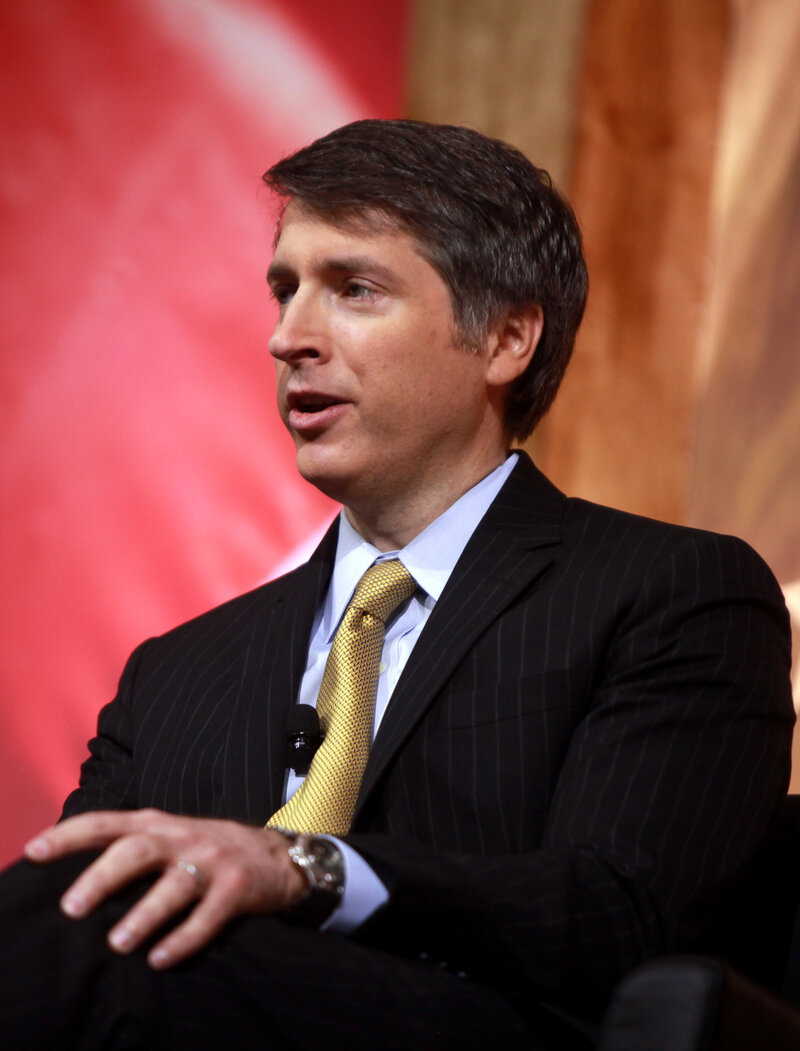
This is what Rich Lowry has attempted to preserve at National Review—the space where these conversations can happen, where traditionalists and libertarians and defense-minded conservatives and cultural conservatives can maintain their disagreements while recognizing their ultimate common cause.
This may sound impossibly optimistic. Perhaps it is. But Buckley and Meyer proved that it is possible to hold apparent contradictions together through the discipline of thought and the commitment to reasoning together. They proved that one can be serious about liberty and serious about virtue without surrendering either commitment. They proved that conservative thought, properly understood, is capacious enough to accommodate genuine disagreement about means while maintaining coherence about ends.
The Work Goes On
I think about this in my own small sphere of work—in Arkansas, in Benton County, where I have tried to exercise some influence in Republican politics. The temptation is always toward simplicity. It would be simpler to be a pure libertarian, to say: get government out of everything, let markets work, and stop trying to use politics to enforce morality. It would be simpler to be a pure traditionalist, to say: return to settled order, to hierarchy, to the authority of the past, and let the market worry about itself.
But simplicity is not available to anyone who takes politics seriously. Real governance is always a negotiation between what is possible and what is good. Between what the market can accomplish and what only tradition and moral authority can accomplish. Between the need for economic dynamism and the need for stable communities. Between individual choice and social responsibility. Buckley understood this. Meyer understood this. And they modeled the intellectual discipline required to hold these tensions without being destroyed by them.
The conservative coalition may change. Its foreign policy may shift. Its economic assumptions may be challenged and revised. But the fundamental insight—that freedom without virtue becomes chaos, and virtue without freedom becomes tyranny—is not a temporary political arrangement. It is an understanding of the human condition. And it is in the fidelity to that understanding, not in the particular policy coalitions that embody it, that the future of serious conservatism lies.
If you want to understand the philosophical architecture of American conservatism, read Frank Meyer—start with In Defense of Freedom, his sustained philosophical case for fusionism, and The Conservative Mainstream, which collects his essays. And return regularly to National Review and its founding mission statement—a document that still reads as a statement of purpose rather than as period artifact. The work that Meyer and Buckley began is not finished. It falls to this generation to carry it forward.
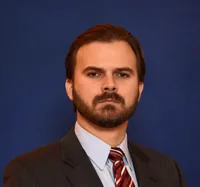
Garrett Ham
Garrett Ham is an attorney, military veteran, and holds a Master of Divinity from Yale Divinity School. He writes from Northwest Arkansas on theology, law, and service.
More about Garrett →Related Posts

God and Man at Yale: Why Buckley Still Matters Today
A personal reflection on William F. Buckley Jr.'s God and Man at Yale—what it got right and why its core argument is more relevant now than in 1951.

The Buckley Program at Yale: Intellectual Diversity on a Progressive Campus
A firsthand account of the William F. Buckley Jr. Program at Yale—what it does, why it matters, and what it's like to be a conservative Fellow on a campus that would rather you weren't.
Why Conservatives Should Read Their Opponents
The case for engaging the strongest progressive arguments rather than caricaturing them—drawn from Buckley's example, Mill's logic, Aquinas's method, and three years at Yale Divinity School.
Stay Informed
Get new writing on faith, law, and service delivered to your inbox.
No spam. Unsubscribe anytime.